
In photos: Hundreds board voluntary repatriation flight to Nigeria
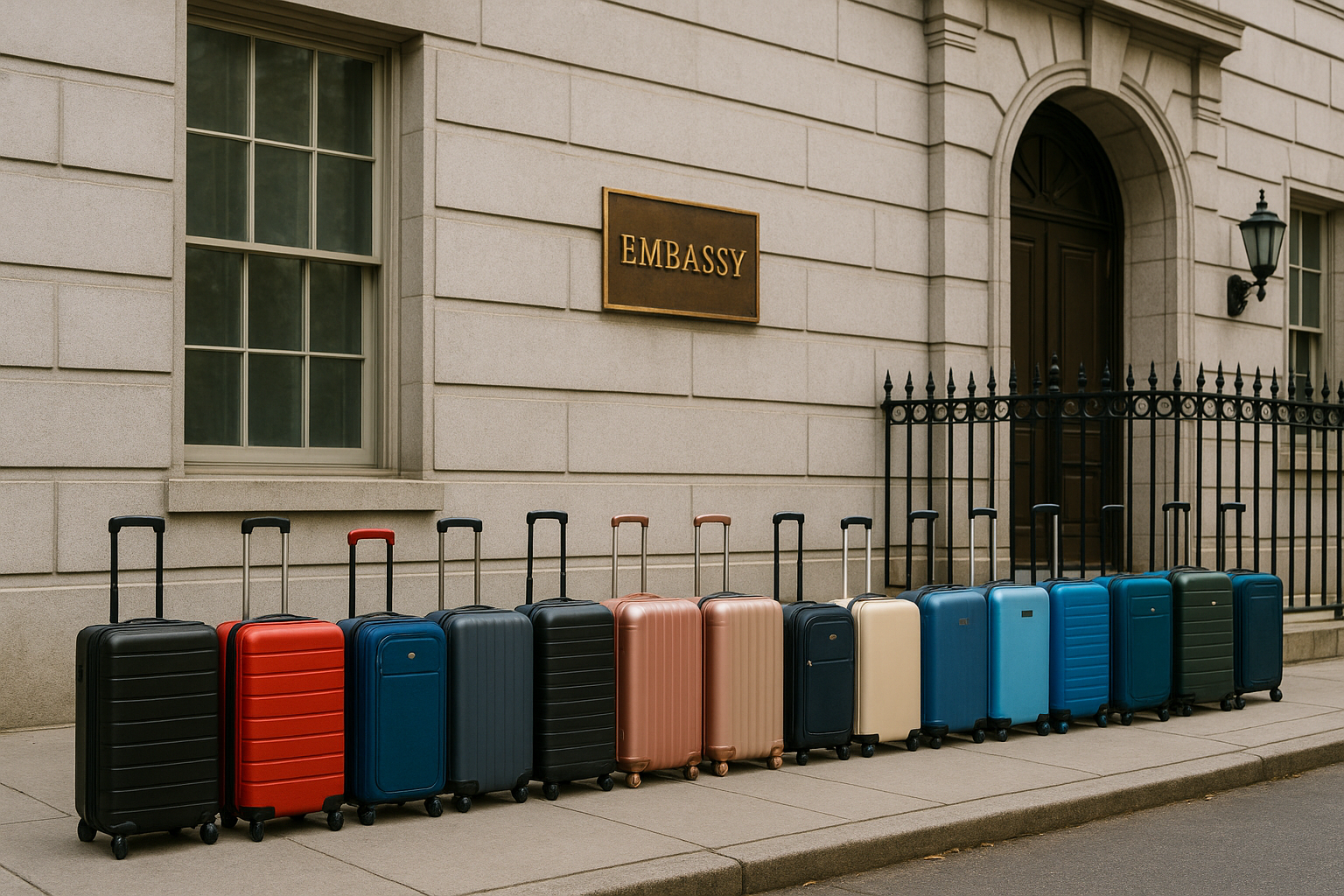
Nigerians in Pretoria voluntarily repatriate amid xenophobia fears. 270 board a charter flight, leaving South Africa for home.
Jacaranda Dawn tells the sad story of 270 Nigerian people leaving South Africa. They felt unsafe because of bad feelings against foreigners, called xenophobia. They packed their bags, full of memories and dreams, to fly back to Nigeria. It's a tale about people searching for safety and hope, even when it means saying good-bye to a place they once called home.
What is the "Jacaranda Dawn" article about?
The "Jacaranda Dawn" article describes the voluntary repatriation of 270 Nigerian citizens from South Africa, organized by the Nigerian High Commission. It details their experiences, motivations for leaving due to xenophobia, and the logistical process of their departure, highlighting themes of displacement, hope, and the human impact of geopolitical tensions.
Get Cape Town news in your inbox
Stay updated with the latest stories from the Mother City.
1. Before the Sun Climbed the Purple Canopy
6:30 a.m. Pretoria, Wednesday
Below a sky still blushing lilac, Jan van Riebeeck Avenue lay in half-shadow. Jacarandas, heavy with bloom, hung over the kerb like witnesses sworn to silence. Outside the cream-coloured Nigerian High Commission the pavement had already surrendered its geometry to a restless tide of travellers. Suitcases, taped shut with masking tape, stood in crooked rows while children balanced backpacks that dwarfed them. Ghost stripes - faded zebra crossings painted years ago by a long-forgotten crew - became unintended queuing lanes for 270 people who had begun arriving at 03:00.
The First Cry of Instructions
Every so often a consular officer stepped through the gates, voice rising above the shuffle: “Section A - passports, now!” Arms shot skyward, documents fluttering like miniature flags of surrender. Honour Charles, 38, kept his eyes fixed on the tyres of the white charter bus. Once he had renewed passports inside this very building; today he worried about rent he still owed on a Midrand storage cage. “Fourteen years here,” he said. “Leaving under these clouds hurts, but I don’t see another road.”
A Chain Reaction Born on a Screen
The exodus did not start with last night’s headlines. Its fuse was a shaky Facebook Live video shot in Diepsloot early August: burning tyres, a voice shouting “makwerekwere must go.” The clip ricocheted through group chats, whipping up fresh footage - looted shops in Alexandra, a mechanic dragged from his stall, a hawker silhouetted against fire. By the time President Ramaphosa condemned “violence against those who look different,” fringe activists had already circled 30 June on invisible calendars: the day all “illegals” should vanish.
2. The Calculus of Leaving
Rumours Written on the Body
Michael Maduka, a 29-year-old web designer from Owerri, felt the dread knot between his shoulder blades each time he opened X. Every swipe delivered another clip of a Nigerian face ringed by flames. “My South African PR is valid another three years,” he said, pink suitcase at his feet, “but rumours said even papers won’t save you.” A form titled “Request for Voluntary Repatriation - Lagos Charter” became his parachute.
Hope without a Ticket
Michael Yzor, 42, never filled out the form. He sells beaded slippers at Pan Africa Mall; sales died when two guards warned, “Nigerians are next.” Arriving with a bumbag and two Coles shopping bags stuffed with toddlers’ T-shirts, he gambled on a no-show passenger forfeiting a seat. “We know the government here can’t shield us. Home is the safer bet,” he whispered, eyes darting toward the manifest table.
The Queue as Biography
By 7:15 the gates swung inward. Inside, the reception lobby had been re-districted: Section A for passport checks, Section B for yellow-fever cards, Section C for weigh-bridging luggage. Photocopiers squealed, spitting duplicates of boarding passes. The smell of warm toner tangled with vetkoek frying at the curb where an opportunistic vendor sensed last-minute rands. Every stamp in red ink - looking like dried blood under neon - was a sentence ending mid-story: a half-finished duplex in Uyo, an unfinished diploma, a romance parked at a Berea traffic light.
3. Paper Walls and Human Voices
Two Governments, One Line
At the far table, South African Home Affairs officer Stephen van Neel flipped folders labelled “173 - Permit expired 2021,” “54 - No entry stamp,” “211 - Refugee appeal refused.” “We treat everyone the same,” he noted, voice even. Police fingerprinted each traveller against the criminal database; any warrant meant rerouting to Kgosi Mampuru. No names flashed red that morning.
Snapshots from the Human Maze
- Aisha Suleiman balanced a rolled sonogram in her palm. Five months pregnant, she had been told by her Pretoria gynae, “If you’re leaving the country, don’t book another scan.” She planned to greet her baby in Calabar.
- Chinedu Obi clutched a battered saxophone in a Hard Rock Café bag. A decade of busking on Nelson Mandela Bridge had filled his pockets with coins and a UCT music certificate. He would test the Lagos humidity soon.
- Sister Catherine Eze pressed prayer cards and water bottles into outstretched hands. For three weeks she had counselled mixed-nationality couples - Nigerian wives, South African husbands - whose marriages were collateral damage.
4. The Runway and the Weight of Maybe
Kilograms and Kindness
At 9:05 the Vulamanzini coach coughed to life, but luggage overflowed like urban landfills. A second truck arrived; still the pavement bloomed with boxed TVs, shrink-wrapped duvets, cartons of Indomie. Consul-General Ninikanwa Olachi Okey-Uche stepped from a silver Fortuner, wrapper fluttering. She had slept three hours a night since the evacuation window opened. “Abuja underwrote R4.5 million for this flight,” she told reporters. “Three more charters are slated before October - about 1,120 passengers in total.”
Seats, Bribes, and Empty Prayers
Names rang in alphabetical bursts. Each tick on the clipboard set off tears or relieved laughter. One desperate man waved R5 000 in crisp notes; he was politely removed and told the manifest was sealed. Across the street, a peanut hawker muttered, “Perhaps now we get jobs,” while a teenager streamed, caption blazing: “Good riddance.” The comment thread detonated before the bus even idled forward.
OR Tambo Terminal B, Gate A15
By early evening the convoy reached OR Tambo. Air Peace Boeing 777-200, green-white-green tail gleaming, waited like a thunderbird ready to swallow memories. Immigration tallied 137 men, 92 women, 41 children. Each received care packs: noodles, biscuits, a Nigeria-flag mask, and a card pointing to Abuja’s reintegration desk. Ground staff waved orange batons; bins bulged with generators and a boxed microwave that refused the overhead.
Captain Abubakar Yakubu walked the tarmac at 19:10, noting cargo a passenger jet seldom carries - a bass guitar, cartons of generator parts - while inside seat 42A Honour Charles pressed his forehead against cool perspiring glass. At 19:37 the wheels left South African soil. Below, Michael Yzor was already calculating odds for the 28 August flight. Inside the cabin, 270 lungs exhaled in unison above the drone of Pratt & Whitney engines. A flight attendant chalked the whiteboard: “07-Aug-2024 - Welcome Home.”
Neither ending nor beginning - just another line drawn across the continent’s restless map.
[{"question": "
What is 'Jacaranda Dawn' about?
", "answer": "\"Jacaranda Dawn\" details the voluntary repatriation of 270 Nigerian citizens from South Africa due to rising xenophobia. It covers their motivations for leaving, the logistical process organized by the Nigerian High Commission, and the emotional and personal impact of their departure.\n"}, {"question": "Why did these 270 Nigerian citizens leave South Africa?
", "answer": "They left primarily due to escalating xenophobia in South Africa. Reports of violence, looting, and widespread anti-foreigner sentiment, fueled by social media, made them feel unsafe and led them to seek voluntary repatriation back to Nigeria for their safety and hope for a better future.\n"}, {"question": "Who organized the repatriation of the Nigerian citizens?
", "answer": "The repatriation was organized by the Nigerian High Commission in South Africa. They facilitated the process, including setting up registration points, managing documentation, and chartering flights. The Nigerian government underwrote a significant portion of the costs for the flight.\n"}, {"question": "What challenges did the departing individuals face?
", "answer": "Individuals faced various challenges, including emotional distress from leaving behind lives they built (e.g., Honour Charles' 14 years), financial concerns (like outstanding rent), uncertainty about their future, and the practicalities of repatriation such as verifying documents, managing luggage, and navigating the administrative processes set up by both Nigerian and South African authorities.\n"}, {"question": "What was the role of social media in this exodus?
", "answer": "Social media played a significant role in fueling the exodus. A shaky Facebook Live video showing burning tyres and anti-foreigner rhetoric quickly spread, followed by other clips of violence and looting. This widespread online content intensified the fear and insecurity among foreign nationals, contributing to their decision to leave.\n"}, {"question": "Are there more repatriations planned?
", "answer": "Yes, according to Consul-General Ninikanwa Olachi Okey-Uche, three more charter flights were slated before October, aiming to repatriate about 1,120 additional passengers. This indicates an ongoing effort to assist Nigerian citizens wishing to return home from South Africa.\n"}]
Hannah Kriel is a Cape Town-born journalist who chronicles the city’s evolving food scene—from Bo-Kaap spice routes to Constantia vineyards—for local and international outlets. When she’s not interviewing chefs or tracking the harvest on her grandparents’ Stellenbosch farm, you’ll find her surfing the Atlantic breaks she first rode as a schoolgirl.
View all articles →