
Injury nightmare for Bok fly-half after URC quarter-final win
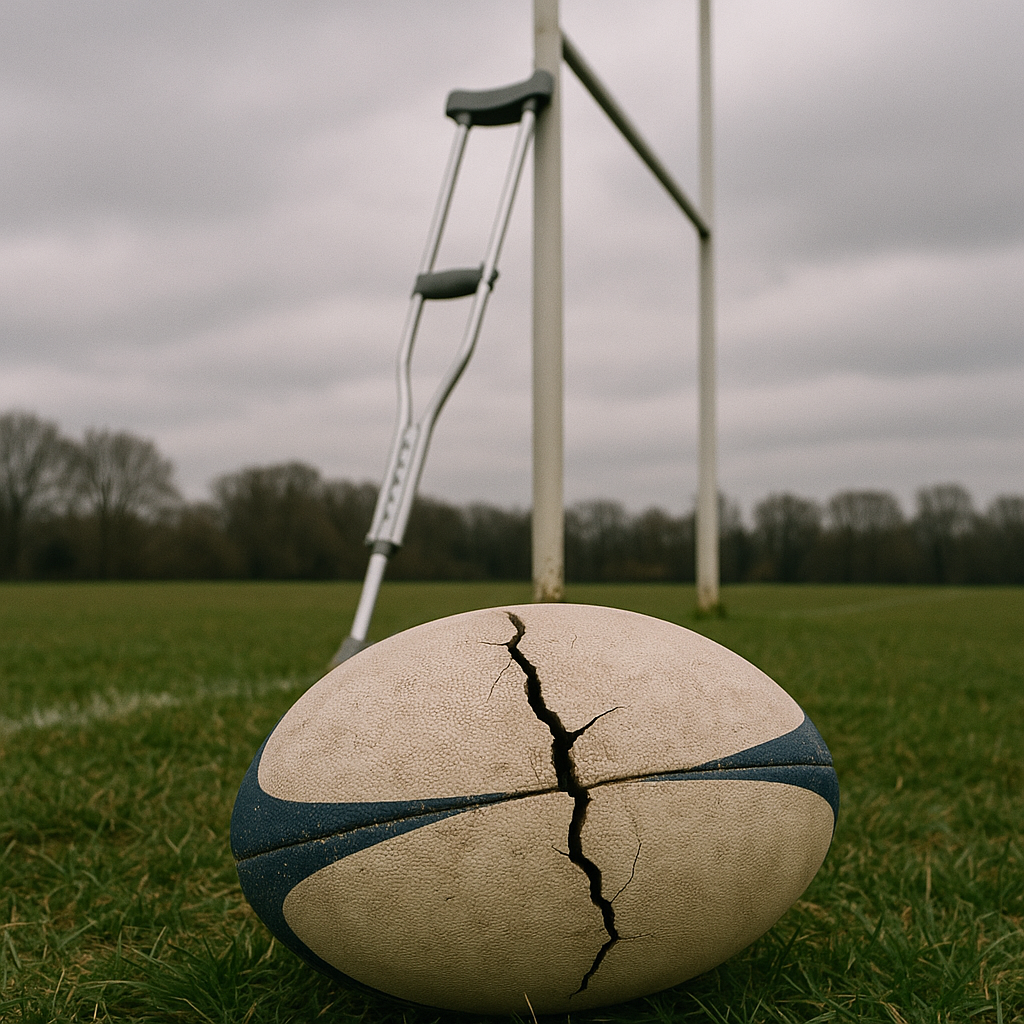
Sacha Feinberg-Mngomezulu's injury casts a shadow over the Stormers' win & Springbok future. Ligament damage threatens his season.
A rugby star's amazing try turned into disaster when he hurt his ankle badly. Doctors say it's a high ankle sprain, meaning he might need surgery and will be out for many weeks. This injury could mess up South Africa's big rugby plans for 2026, forcing the team to change who plays and how they play. Everyone is worried, as other key players are also hurt, making the team's future look wobbly.
What is a syndesmosis injury?
A syndesmosis injury, or high ankle sprain, affects the strong ligaments connecting the shin and calf bones. If severe, it may require surgery to stabilize the joint with a screw. Recovery is lengthy, often 12-16 weeks, and crucial for athletes like rugby players who need full ankle function for high-impact movements.
Get Cape Town news in your inbox
Stay updated with the latest stories from the Mother City.
A Sparkling Try, A Sudden Silence
The scoreboard still glowed with forty-four points when the night turned cold inside Cape Town Stadium. Sacha Feinberg-Mngomezulu had just carved the perfect modern fly-half try - delayed wrap, shoulders left then right, a swallow-dive beneath the black dot. Yet the roar vanished as he crashed to ground, leg folding beneath him, and the hush rolled across the stands like an Atlantic fog. He thumped the turf, raised one finger to summon the TMO, then hopped on the other boot while the medical buggy growled to life. Within seconds the quarter-final ticket to Dublin felt less like a prize and more like an evacuation flight.
Back in the change-rooms the mood lurched from celebration to triage. Ice bags thumped against benches, physios whispered “syndesmosis” and players stared at the ceiling rather than at highlight reels. One camera caught the moment Feinberg-Mngomezulu’s grin turned to a grimace, the same clip now looping on every sports bulletin in the country. Ankle ligaments rarely trend on Twitter; that changed before the team bus had even left the forecourt.
Stormers coach John Dobson, usually the man uncorking vineyard metaphors in press conferences, sounded more like a trauma registrar. “Scans at dawn,” he muttered, “but my gut says serious.” Three little words - “Dublin looks doubtful” - emptied the room of oxygen faster than any knock-on ever could.
Inside the Joint: Why Twelve Weeks Becomes Sixteen
Doctors will peer at MRI slices at Bellville’s High-Performance Centre before the sun is up, yet the anatomy lesson is already underway. The syndesmosis - think of it as a tight leather strap binding shin-bone to calf-bone - can stretch only a few millimetres before the strap frays. If the gap widens, surgeons thread a tight-rope screw to yank the bones back together. Add a deltoid-ligament tear and the calendar lengthens. A cautious surgeon demands sixteen contact-free weeks; an aggressive one armed with blood-flow restriction cuffs might hack off two, but every cut carries the risk of a 24-year-old joint that still has a decade of sidesteps to give.
Even the best-case rehab reads like a medical novella. Week one: zero gravity, compression boots humming at 3 a.m. Week four: hydro-treadmill, hands gripping pool railings, resistance jets roaring. Week eight: slow-motion fashion show in front of force-plates to prove the ankle can absorb six times body-weight before it clears a tackle-bag. By week twelve the ghost of Goosen’s 2014 knee scare still haunts the gym, reminding everyone that cartilage has a vindictive memory.
The stakes climb higher when the medical file is stapled to the national calendar. In past seasons Springbok coaches could shelter a prodigy through June, July, September, November. In 2026 the itinerary is a choke-hold: Barbarians, Twickenham double-header, Rugby Championship, then a one-off in New Jersey bright enough for prime-time NBC. One wobble between Johannesburg and Mbombela could re-tear what Cape Town sewed together.
Pollard, Libbok and the Sudden Door Ajar for Goosen
Handre Pollard returned from Leicester with another Premiership medal yet only 427 minutes of rugby since March. That is roughly seventy tackles’ worth of match-sharpness, and Rassie Erasmus keeps staring at the log like a man who’s left the oven on. Manie Libbok has the opposite problem: 1,800 minutes for Toulon but a scarred ledger that still shows the four missed place-kicks from the 2023 final. Coaches scribble rotations as though planning fuel stops at Le Mans: Pollard to duel England at Ellis Park, Libbok to tease Scotland in the Lowveld, both in tandem against Wales where the bench becomes a chess clock.
Hovering in the margin is Johan Goosen, the kid once hyped as the next Frans Steyn who morphed into a metronome at Montpellier. Sean Long has drilled a flat cross-kick into his repertoire and the Top 14 stats sheet shows an 84% success rate with the tee. He has not worn green since 2019, yet the selectors’ WhatsApp group pings every time he nails a fifty-metre touch-finder in the French drizzle. Goosen’s passport might be the insurance policy nobody planned to claim.
Beyond the numbers lies temperament. Pollard’s heartbeat slows in finals, Libbok’s accelerates. Goosen floats somewhere in the middle, a man who once retired at twenty-four and now savours every minute as bonus time. If Erasmus decides to resurrect the dual-playmaker blueprint originally sketched for Feinberg-Mngomezulu, Goosen’s hybrid boot could fill the silhouette without the same running theatrics.
The Wardrobe Malfunction – Locks, Nines and a Depleted Spine
Fly-half is merely the front-page gash. Turn the medical file sideways and the entire skeleton of the squad limps into view. RG Snyman will miss the entire campaign after surgeons harvested a new ACL from his own hamstring. Lood de Jager’s discs bulge like faulty airbags; contact waits until late summer. Jean-Luc du Preez nurses a foot bone that cracked under the weight of too many barbell squats. The second-row depth chart now reads like a casting call: Etzebeth and Mostert as veteran bookends, Nortjé and Moerat auditioning for heroic cameos, Marvin Orie summoned from semi-retirement like an ageing gunslinger.
At half-back the news is crueller. Morne van den Berg snapped a bicep doing box-kick reps - irony at its most savage - scuttling plans to spell Faf de Klerk in July. Cobus Reinach’s patella tendon grumbles, Jaden Hendrikse plays Sudoku with a moon-boot, and Grant Williams winces every time the physio says “groin.” De Klerk’s phone buzzed in Kyoto at 2 a.m. - the Wild Knights can wait, the Springboks’ ruck language needs its original accent. Thirty-three or not, De Klerk still tackles like a yorker aimed at off-stump.
Throw in Cheslin Kolbe nursing a shoulder, Lukhanyo Am recovering from cheekbone micro-fractures, and Malcolm Marx slowly reloading his repaired knee, and the hospital chart sprawls across four provinces. Siya Kolisi jokes that the team bus should come with IV drips instead of Wi-Fi. Nobody laughs for long.
Fixture Gridlock and the Global Chessboard
World Rugby’s new Nations Championship promises spectacle; it also guarantees carnage. South Africa must top England, Scotland and Wales inside three weeks just to earn a London semi-final. The schedule crams Ellis Park, Mbombela and Kings Park back-to-back, giving medics the same turnaround window a bruised boxer gets between rounds. A low-grade ankle sprain that survives Joburg could explode in humid Nelspruit, ending not just the tournament but the Rugby Championship and the looming Bledisloe-style trilogy with the All Blacks.
That trilogy finishes under the lights of MetLife Stadium, New Jersey, a Saturday spectacle for NBC viewers who still confuse a ruck with a hockey puck. Add a one-off against the Wallabies in Sydney and a November leg through Udine, Paris and Dublin, and the frequent-flyer miles read like a CEO’s expense report. SAREO quietly notes that travel insurance claims have jumped thirty-seven percent year on year, enough for provinces to renegotiate loss-of-play clauses. Western Province alone locked in a seven-figure payout for Feinberg-Mngomezulu if he misses more than half the season; other unions sprinted to copy the fine print before brokers closed the window.
Across oceans, rival coaches adjust PowerPoints. In Dublin Leo Cullen’s analysts shelve reels of Feinberg-Mngomezulu’s cross-kicks and cue up Damian Willemse’s tendency to rush reads instead. Marcus Smith’s ankle follows a parallel timeline in London gyms; collagen synthesis will decide whether he faces Pollard in Johannesburg or watches from a Twickenham sofa. In Sydney, Joe Schmidt fast-tracks 20-year-old Tom Lynagh, hoping a baby-faced fly-half can punish any wobble in Springbok depth. Even the All Blacks have asked for extra GPS straps; Ian Foster wants data on how often South Africa will blitz without their premier kicker.
Ticket Prices, Gin Ads and the Economy of Anxiety
Cape Town’s hospitality sector still remembers lockdown like a hangover it can’t shake. Every advertisement plastered across MyCiTi bus shelters was supposed to feature Feinberg-Mngomezulu hoisting a new Woodstock-distilled gin beneath the slogan “Crafted for Cheetahs.” The campaign now slides to October, pending medical clearance. Advertisers dislike variables; whispers of a six-week lay-off have already shaved fourteen percent off secondary-ticket prices for the All Blacks clash at Newlands. Restaurants along Bree Street fear empty tables during what should be a Lions-tour pre-season gold-rush.
Meanwhile, Bulls quietly signed 20-year-old Kade Wolhuter from Munster - an 88% schoolboy kicker who grew up barefoot in Hermanus sevens tournaments. He becomes insurance in size-10 boots, ready for cameo minutes while Pollard shoulders the load. The Blitzboks float the idea of a medical-joker contract should rehab drag to December, offering Paris 2027 Olympic qualifying minutes in lieu of heavy fifteens collisions. Cheslin Kolbe once returned faster via the same detour; lightning might strike twice.
From Green Jersey to Surgeon’s Table – Who Really Writes the Script
Attack coach Tony Brown flew in from Otago preaching a second-distributor shape straight out of the Highlanders playbook. The plan needed Feinberg-Mngomezulu’s glide to create late inside lanes for Kurt-Lee Arendse. Without that glide, Brown folds back to Pollard-first patterns but keeps the footnote: Arendse will now sprint ghost lines off Pollard’s hip instead of a second playmaker’s tip-on. Defence coach Jerry Flannery, too, must rewire. Pollard’s tackle technique is textbook upright; Marcus Smith’s sidestep and Ben Spencer’s snipe demand lower hips and fetcher support. Expect Marco van Staden’s jackal threat to earn more minutes, plus a throwback plan where Pieter-Steph du Toit morphs into a fetcher role unseen since the 2021 Lions tour.
Yet the largest script sits inside an MRI tube. A single ligament will decide whether Ellis Park thunders for Pollard, whether New Jersey witnesses a Goosen encore, or whether Cape Town billboards keep Feinberg-Mngomezulu’s smile frozen in absentia. Dynasties pivot on smaller hinges than most fans imagine; in 2026 the hinge is a 24-year-old ankle already famous from one dazzling swallow-dive and one ominous twist.
What is a syndesmosis injury, and why is it so serious for athletes?
A syndesmosis injury, commonly known as a high ankle sprain, involves damage to the strong ligaments that connect the two long bones of the lower leg, the tibia (shin bone) and the fibula (calf bone). Unlike a typical ankle sprain, which usually affects ligaments on the outside of the ankle, a high ankle sprain impacts the stability of the entire ankle joint. For athletes, especially in high-impact sports like rugby, this injury is particularly severe because it compromises the full range of motion and weight-bearing capability required for explosive movements, changes of direction, and powerful tackles. Recovery is often prolonged, typically ranging from 12 to 16 weeks, and in severe cases, surgery may be required to stabilize the joint with a screw, further extending the rehabilitation period.
How did Sacha Feinberg-Mngomezulu sustain his injury?
Sacha Feinberg-Mngomezulu, a promising rugby fly-half, sustained his high ankle sprain during a match at Cape Town Stadium. After scoring a brilliant try, his leg folded beneath him as he crashed to the ground. This mechanism of injury, where the foot is planted and the leg twists internally or externally, is a common cause of syndesmosis injuries. The immediate reaction from the medical team and the player's visible discomfort indicated the severity of the incident.
What are the potential impacts of Feinberg-Mngomezulu's injury on South Africa's 2026 rugby plans?
Feinberg-Mngomezulu's injury poses a significant threat to South Africa's 2026 rugby plans. As a key player, his absence, potentially for many weeks or months, will force the coaching staff to alter their team selections and tactical approaches. His role as a fly-half is crucial for orchestrating attacks and providing stability. The injury not only removes a talented individual from the squad but also adds to existing concerns about other key players who are already injured, including vital members in the lock and scrum-half positions. This confluence of injuries could destabilize the team's balance and depth ahead of a demanding international schedule.
Which other key Springbok players are currently sidelined with injuries?
Beyond Feinberg-Mngomezulu, the Springbok squad is facing a significant injury crisis across multiple positions. Key players currently sidelined include RG Snyman (ACL injury), Lood de Jager (back issues), Jean-Luc du Preez (foot injury) in the forwards. In the crucial half-back roles, Morne van den Berg (bicep), Cobus Reinach (patella tendon), and Jaden Hendrikse (foot) are all out, putting immense pressure on Faf de Klerk. Additionally, Cheslin Kolbe (shoulder), Lukhanyo Am (cheekbone), and Malcolm Marx (knee) are also recovering from injuries, highlighting a widespread availability challenge for the coaching staff.
How will the coaching staff adapt to the numerous injuries, particularly at fly-half?
With Feinberg-Mngomezulu out, the coaching staff, led by Rassie Erasmus, will need to make significant adjustments. At fly-half, the focus will likely shift to Handre Pollard and Manie Libbok. Pollard, despite a lack of recent match minutes, is a seasoned campaigner and a reliable kicker. Libbok, while having extensive playing time, has faced criticism for his goal-kicking under pressure. The door has also opened for Johan Goosen, a highly experienced player who has been performing consistently in France and offers a strong kicking game. The coaches might explore a dual-playmaker system or rely more heavily on specific strengths of each available fly-half to navigate the upcoming fixtures.
What is the financial and economic impact of such high-profile player injuries?
High-profile player injuries like Feinberg-Mngomezulu's have significant financial and economic ramifications beyond the pitch. For the player, it can impact their career trajectory and earning potential. For rugby unions, there are direct costs associated with medical treatment, rehabilitation, and potentially insurance payouts for lost playing time. Advertisers and sponsors, who often feature key players in their campaigns, may need to revise their marketing strategies, as seen with the delayed gin advertisement featuring Feinberg-Mngomezulu. Furthermore, injuries to star players can affect ticket sales and hospitality revenue, as fans might be less inclined to attend matches without their favorite athletes, leading to a ripple effect on local economies reliant on match-day crowds.

Chloe de Kock is a Cape Town-born journalist who chronicles the city’s evolving food culture, from township braai joints to Constantia vineyards, for the Mail & Guardian and Eat Out. When she’s not interviewing grandmothers about secret bobotie recipes or tracking the impact of drought on winemakers, you’ll find her surfing the mellow breaks at Muizenberg—wetsuit zipped, notebook tucked into her backpack in case the next story floats by.
View all articles →