
Ireland deports 42 South Africans in major immigration operation
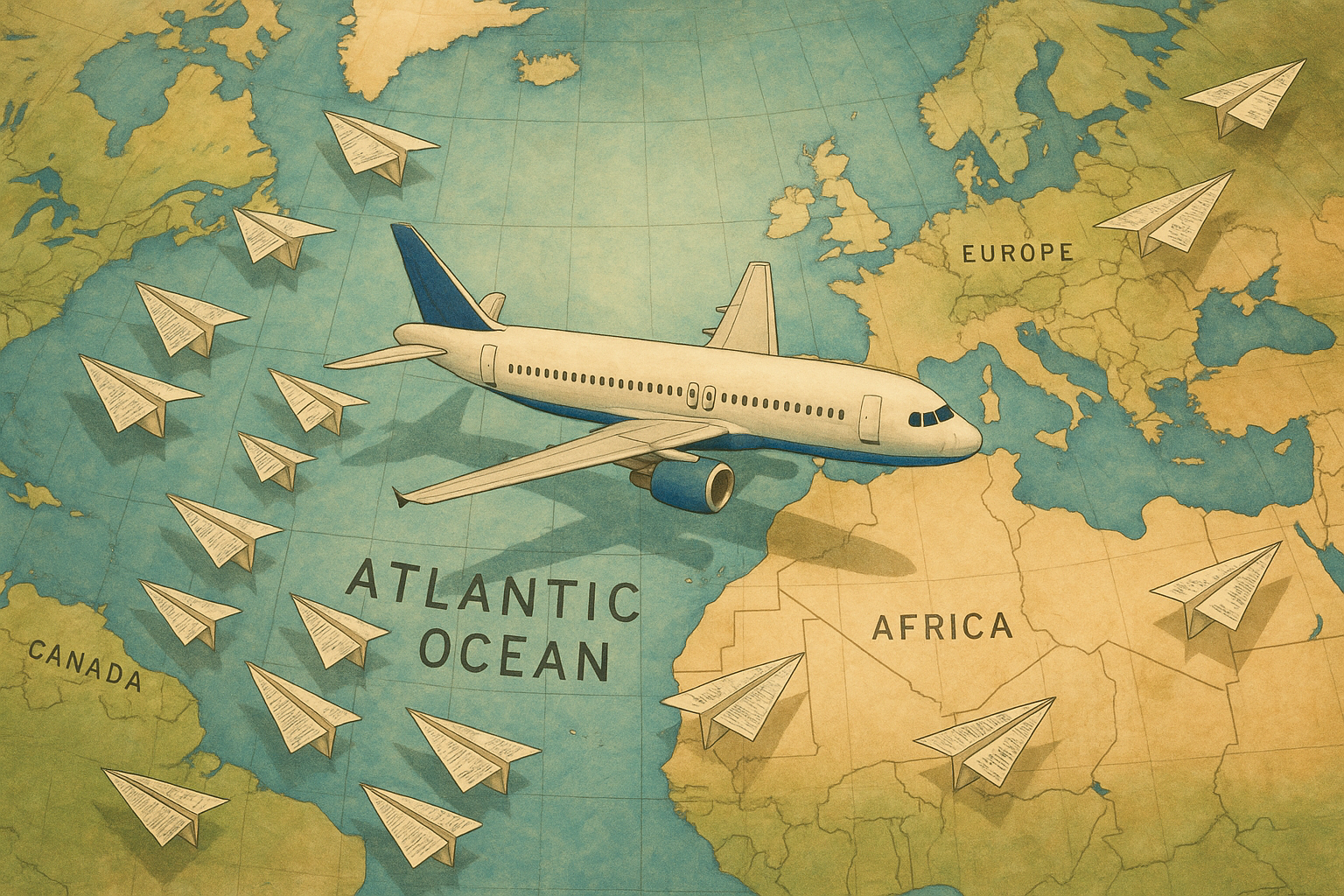
Unpacking the mechanics and human stories behind a single charter flight deporting 42 South Africans from Ireland.
A special plane flew 42 South Africans, including many kids, home from Ireland. It cost a lot of money, about €735,000, to make sure they left. Many of these people had lived in Ireland for years, and some children were even born there. This big trip showed that Ireland is serious about who can stay and who must go.
How much does it cost to deport someone from Ireland to South Africa?
The deportation of 42 South African nationals from Ireland cost approximately €735,000. Key expenses included €490,000 for aircraft wet-lease, €86,000 for security escorts, €52,000 for medical cover, €41,000 for food and supplies, and €66,000 for paperwork and political considerations like over-flight rights.
Get Cape Town news in your inbox
Stay updated with the latest stories from the Mother City.
1. Dublin, 05:47 – When the Skyline Is Still a Rumour
The southern apron of Dublin Airport lay under a flat grey sky when the Airbus appeared. Leased from HiFly Malta, the wide-body nosed past shuttered hangars and paused beside five minibuses painted an unmarked white. Their plates read GNIB-01 through GNIB-05, lined up like quiet dominoes. Behind the tinted glass sat forty-two South African nationals whose Irish residence clock had hit zero.
Some had flown in years earlier on holiday stamps and remained; others had touched down via Heathrow on doctored hotel vouchers. Between them they shared only two things: a translucent plastic bag - handed out in Cloverhill Prison - containing passports, boarding passes, spare masks, and long-seized phones, and the knowledge that sunrise would find them on a different continent. The youngest traveller had not yet turned three; the oldest had been plating fine-dining dishes in Johannesburg before his visa lapsed.
For the ground staff it was routine: a late-summer charter to Africa, tail number 9H-TAJ, payload manifest stamped “State Removal.” For those inside the buses it was the last quiet moment before the machinery of return became irreversible.
2. How a Bill Reaches Seven Figures
2.1. Line Items You Will Never See in a Press Release
Justice officials circulated an internal brief that put the flight’s price at €735 000. The number was not plucked from thin air; it is the exact tally of a machine built to move humans on short notice.
- Wet-lease of the aircraft: €490 000 - captains, cabin crew, circuity to pick up the empty jet in Malta the night before.
- Security escorts: €86 000 - one officer per four deportees, weekend standby pay, hotel rooms for the overnight crew.
- Medical cover: €52 000 - doctor and two paramedics plus airborne-evacuation insurance after a 2023 mid-air medical emergency.
- Food and fleece: €41 000 - halal and vegetarian trays from LSG Sky Chefs, 120 single-use blankets stamped with the Irish harp.
- Paperwork and politics: €66 000 - over-flight rights across Morocco and Algeria, tarmac-delay penalties at OR Tambo, and a reserve for “diplomatic surprises.”
An extra €30 000 may still land if Johannesburg’s Civil Aviation Authority imposes a late-night surcharge; negotiations are ongoing.
2.2. Where the Money Ends Up
HiFly’s largest shareholder is a Mozambican-Swiss holding group. Malta earns landing fees, Spain pockets overflight tolls, and South Africa’s Airports Company collects ground-handling euros. In the Department of Justice ledger the flight is booked under “Voluntary Returns - Enforced,” a column that must stay in the black to reassure a sceptical public that managed migration still has teeth - and receipts.
3. Legal Shortcuts and the Children Caught in Them
3.1. The “Safe Country” Label
In 2018 an obscure statutory instrument quietly added South Africa to Ireland’s safe-origin list. The label does not prohibit asylum claims; it accelerates them. Claimants have 21 days to prove an “individualised risk,” a bar solicitors call nearly impossible without fresh hospital or police reports smuggled out of South Africa. Since 2020 only eight percent of South African applicants cleared that hurdle. Once refused, removal is a scheduling problem, not a legal one.
3.2. Eleven Irish Birth Certificates on Board
Fifteen children boarded the Airbus. Eleven were born in Dublin hospitals and carry Irish birth certs, yet none are citizens. Ireland awards nationality by descent, not birthplace. Parents without status drag their children into the same legal eddy. Section 3(11) of the 1999 Immigration Act allows the Minister to defer removal “in the best interests of the child,” but this escape hatch has been used just twenty-two times in five years. Officials counter that parents may lodge guardianship requests so the children can stay behind - splitting families across hemispheres for paperwork’s sake.
4. South African Skies, Irish Echoes
4.1. Two Immigration Systems, One Flight Path
Mid-flight the seat-back map showed the Canary Islands drifting between Europe and Africa like punctuation marks. The same screen could have displayed a subtler symmetry. Dublin and Johannesburg anchor opposite ends of a corridor that once ferried missionaries north and iron ore south. Today the traffic is human, and the rules differ chiefly in direction. South Africa hosts 1.6 million undocumented migrants, Zimbabweans supplying nearly half. Operation Dudula patrols and vigilante raids make headlines, while Home Affairs quietly renews asylum-seeker permits every ninety days. Ireland, population five million for the first time since the Famine, now absorbs 77 000 net migrants a year - celebrated Ukrainians and vilified “unmanaged” arrivals alike. The return flight is the State’s retort: if we can welcome, we can also bid goodbye.
4.2. The Seats That Tell Stories
TD Bríd Smith forced the release of the aircraft seat plan. A redacted copy shows:
- *31A: * Thabiso M., 34, once a line cook in Portmarnock, removed after a cannabis sentence.
- *32C: * Nandi D., 29, mother of twins, asylum claim based on 2021 KwaZulu-Natal riots; evidence deemed “not contemporaneous.”
- *27B: * an unnamed toddler whose cot blanket, knitted by a Mosney volunteer, was confiscated as a “ligature risk.”
Names vanish; statistics endure. Forty-two souls become a bullet point in next week’s Dáil exchange.
5. Touchdown in Johannesburg – and the Loop Continues
5.1. What Happens After the Jetway Drops
The Airbus parked at a remote bay usually reserved for pandemic repatriation flights. South African officers stamped each adult “returning resident,” with no further detention unless a warrant existed. Officials handed out a single orange sheet - “Welcome Home: Reintegration Starts Today” - listing three NGOs and the Johannesburg Labour Centre. Children received crayons and a supermarket-sponsored colouring book titled My South Africa.
5.2. The Ledger That Never Balances
Dublin’s finance section will still be reconciling invoices at midsummer: extra fuel for a Manchester holding pattern, motion-sickness pills, an €18 carton of oat milk for a lactose-intolerant child. Every euro is justified by the mantra: the State must show it can enforce borders without appearing brutal, buying sovereignty on the open market at roughly €17 500 per passenger.
5.3. Absentees and Remainders
Two manifest names never boarded. A 41-year-old woman was pulled after a pre-flight X-ray flagged tuberculosis. A 19-year-old man sliced his forearm with a sharpened toothbrush and was taken to Beaumont Hospital. Seat 34F remained vacant the whole way south, a silent footnote in an equation whose remainders are human lives.
What was the purpose of the special flight from Ireland to South Africa?
The special flight, an Airbus wet-leased from HiFly Malta, was organized by the Irish government to deport 42 South African nationals, including several children, from Ireland back to South Africa. This action underscored Ireland's commitment to enforcing its immigration policies regarding who is permitted to reside in the country.
How much did this deportation flight cost?
The total cost for this single deportation flight was approximately €735,000. This figure includes significant expenses for the aircraft wet-lease (€490,000), security escorts (€86,000), medical cover (€52,000), food and supplies (€41,000), and various paperwork and political considerations like over-flight rights (€66,000). There was also a potential additional €30,000 for a late-night surcharge at Johannesburg's Civil Aviation Authority.
Why were these individuals deported, and how long had some lived in Ireland?
The individuals were deported because their Irish residence clock had expired, meaning their visas or asylum claims were refused, and they no longer had legal status to remain in Ireland. Many had lived in Ireland for years, with some initially entering on holiday stamps and overstaying, while others arrived via different routes. Some of the children on board were even born in Dublin hospitals.
How does Ireland's 'safe country' designation for South Africa impact asylum claims?
In 2018, South Africa was added to Ireland's list of 'safe origin countries.' While this doesn't prohibit asylum claims, it significantly accelerates the process, requiring claimants to prove an "individualised risk" within 21 days. This is a very high bar, and historically, only a small percentage of South African applicants have successfully cleared it.
Why were children born in Ireland also deported, and what are the rules regarding their citizenship?
Eleven of the fifteen children on the flight were born in Dublin hospitals and held Irish birth certificates. However, Ireland awards nationality by descent, not simply by birthplace. This means that if their parents do not have legal status in Ireland, the children do not automatically become Irish citizens, and are therefore subject to the same deportation orders as their parents. While there is a provision in the 1999 Immigration Act (Section 3(11)) to defer removal in the "best interests of the child," it has been rarely used.
What happens to deportees upon arrival in South Africa?
Upon arrival at OR Tambo International Airport in Johannesburg, South African officers stamped each adult as a "returning resident"; further detention was only imposed if there was an existing warrant. Individuals were provided with information on reintegration, including contacts for NGOs and the Johannesburg Labour Centre. Children received crayons and a colouring book. The Irish State views these costs as necessary to demonstrate its ability to enforce border controls and manage migration effectively.

Oliver Daniels is a Cape Town journalist who chronicles the intersection of food, migration and identity in South Africa's kitchens—from wood-fired Gugulethu braai spots to Constantia vineyards. Born and raised on the slopes of Devil’s Peak, he still starts each week with a dawn walk across Table Mountain to catch the first Atlantic light before filing copy.
View all articles →