
Irma Stern’s Malay Woman sells for R5m at auction
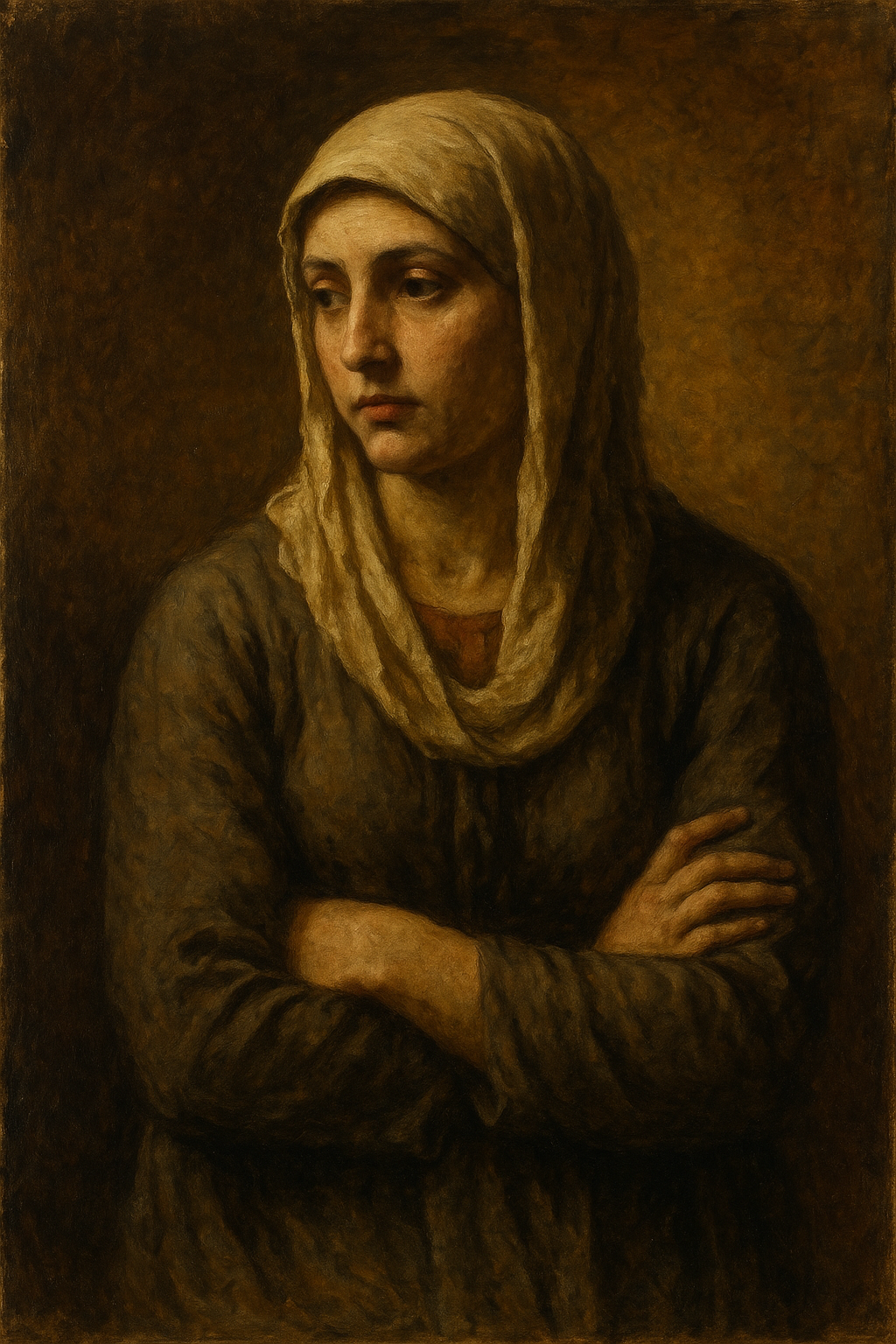
Irma Stern's "Malay Woman" sets a new record at auction, highlighting renewed interest in South African modernism and its complex cultural narratives.
Irma Stern's painting, "Malay Woman," recently sold for millions online, showing that people still really love her art. This sale highlights how the art market in Africa is changing, with online bidding from all over the world. The painting itself is special because it makes us think about old art from colonial times and how artists back then worked. It's a quiet picture that makes you think, and its high price proves it's still very important in the art world.
What is the significance of Irma Stern's "Malay Woman" painting?
Irma Stern's "Malay Woman" is significant as it represents a renewed institutional faith in Stern's art within the global modernist canon. The painting's sale, conducted entirely online, highlights the evolving African art market and contributes to ongoing scholarly discussions about early 20th-century European painters in colonial contexts.
Get Cape Town news in your inbox
Stay updated with the latest stories from the Mother City.
A Portrait’s Unexpected Ascent
On a Thursday that felt like any other online preview, Strauss & Co opened their virtual auction room and watched history in the making. Irma Stern’s mysterious 1936 likeness - an unnamed Malay sitter - closed at R5,032,500, a whisker above the top estimate yet light-years ahead of prevailing market sentiment. The event swiftly became more than a routine transaction; it was interpreted as renewed institutional faith in Stern’s stature inside a global modernist canon that is finally acknowledging southern outliers.
While the price tag turns heads, the deeper story is subtler: the sale unfolded entirely on-screen, a pandemic-born format now standard yet still fresh for African art. Registered viewers downloaded high-resolution condition reports and line-by-line provenance sheets, bidding from living rooms spread across three continents. That the work’s physical presence is now mediated by pixels only heightens the tension embedded in the canvas itself - the portrayed woman’s refusal to meet the viewer’s eye.
The result also lands amid turbulent scholarly conversations around early twentieth-century European painters who worked inside colonial or post-colonial spaces. Stern, once granted the shorthand label of “South Africa’s national modernist,” now stands under the same analytical light directed at Gauguin’s Tahiti or Picasso’s African masks. Buyers, curators, and critics must decide how to hold these two truths at once: aesthetic innovation and ethical entanglement.
Colour, Gesture, and Veiled Histories
Stern’s Formal Language
Folded arms form a triangle of burnt umber and raw sienna, anchoring the composition while also acting like architectural buttresses; nothing in this picture happens by accident. Stern shuns psychological melodrama - no parted lips, no moist eyes - favouring instead a measured orchestration of hues. Warm ochres wrestle with cool ultramarines across the hijab, creating depth without slipping into atmospheric haze. The result is a private silence that paradoxically shouts across the room.
This disciplined restraint distinguishes Stern from her European contemporaries. Where Lucian Freud would later drill into the sitter’s soul, Stern builds a monument of presence that refuses confession. The folded arms - often read as retreat - here function as geometry, locking the viewer out while giving the surface its rhythmic scaffolding.
Four Decades of Witness
Return to Cape Town in 1920, and you find the artist still buzzing from Max Pechstein’s Berlin studio. She launches her 1922 debut with Malay Girls in Twilight, planting seeds for a lifelong inquiry. Across forty more years Stern sketches adolescents in quiet reverie, market flower-sellers balancing baskets, brides preparing under communal songs, minstrel bands reviving hybrid memories, and imams lost in study. The difference from Orientalist cliché is simple yet radical: these are records of self-fashioned identity, not exotic trophies.
She keeps returning, canvas after canvas. Malay Woman therefore stands as one tile in a vast mosaic: not an isolated portrait but an entry in a visual census of ritual, labour, and dress. Seen in sequence, the works map how Cape Muslim communities staged their daily lives under the long shadow of segregation.
The Artist Between Two Worlds
Training and Return
Stern’s own biography reads like a palimpsest of twentieth-century displacement. Born in 1894 on the dusty margins of Schweizer-Reneke, she grew up inside a German-Jewish enclave that enjoyed colonial privilege yet felt the jabs of minority tension. In 1913 the family decamped to Germany, dropping the teenager into the ferment of Weimar avant-gardes. Max Pechstein, a founding Brücke firebrand, taught her to distrust prettiness and chase emotional voltage. Those lessons in distortion and saturated colour travelled back with her when she resettled in Cape Town in 1920, a portable toolkit she would aim at South African realities far removed from Berlin cafés.
Local Scandal, Global Laurels
Cape Town critics in 1922 recoiled. Newspapers sneered at “primitive daubs” and “sickly colour.” One reviewer suggested the canvases belonged in psychiatry textbooks, not galleries. Yet the same city that scorned her eventually wrapped her in institutional laurels. Venice Biennale appearances began in 1950; Peggy Guggenheim awarded her an international prize; Queen Elizabeth II acquired pieces for Windsor Castle. By mid-century Stern had become the reference point for any South African artist who wanted both local roots and international reach.
Prices, Prices, Prices - and the Questions Behind Them
Market Stratification
Numbers tell stories, but not the whole story. Arab Priest broke R34 million at Bonhams London in 2011, a benchmark that thrilled investors yet unsettled theologians. Was devotional imagery turning into tradable commodity? Fast-forward to 2023: Children Reading the Koran sold for R22.3 million on home soil, suggesting South African collectors now compete toe-to-toe with European or American museums.
This week’s Malay Woman result - R5 million hammer - may look modest by headline standards, yet it proves liquidity remains robust even amid global art jitters. Add the 52-lot cumulative haul of R12.7 million, and Strauss & Co’s online pivot feels vindicated. Bidders from Lagos to Los Angeles clicked their way through infrared scans, canvas-weave graphs, and 360-degree videos, a reminder that African art markets no longer orbit around physical salerooms.
When the Museum Door Closes
October 2024 delivered a jolt: the Irma Stern Museum locked its doors. Since 1971 the Rosebank house had welcomed the public into the artist’s private universe - her bead curtains, her travel curios, her personal trove of more than 500 artworks - only to be shuttered overnight. Provenance uncertainty hovered, then the Irma Stern Trust promised new permanent premises. The pause forced curators to ask how a mid-century European-South African hybrid should speak to a twenty-first-century audience shaped by land debates, restitution claims, and hashtags.
New Walls, New Conversations
Reframing Displacement
The Norval Foundation answered immediately, staging Irma Stern: A Life of Displacement through August 2026. The pair of words in the title - displacement - operates like a prism. Physical migration from Transvaal veld to Berlin studio and back again. Cultural dislocation of German-Jewish identity first under rising European antisemitism, later under codified South African racism. Aesthetic transplantation of Die Brücke distortions onto Cape Muslim faces and fabrics. Visitors walk through galleries that refuse easy hagiography, urged instead to weigh complicity alongside creativity.
Surface, Screen, and Future Gaze
Stern once warned against “glib narrative,” and her caution feels prophetic in the glow of today’s LED screens. Digital reproduction smooths impasto ridges and shrinks monumental canvases to laptop size, yet it also invites viewers who could never afford plane tickets to Cape Town. Malay Woman now lives simultaneously on museum walls and in JPEGs that travel at fiber-optic speed. The hijab’s folds flatten into data, but the sideward glance still refuses to resolve.
In that refusal lies the painting’s continuing relevance. Market valuation, curatorial framing, and Instagram reproduction all chase the sitter’s withheld gaze, and she withholds still. The R5 million price tag buys pigment, linen, provenance, and the privilege of joining a conversation that shows no sign of ending.
What is the significance of Irma Stern's "Malay Woman" painting?
Irma Stern's "Malay Woman" is significant as it recently sold for millions online, highlighting the continued high regard for her art and the evolving nature of the African art market with global online bidding. It also fuels discussions about early 20th-century European painters working in colonial contexts and is seen as a renewed institutional endorsement of Stern's place in the global modernist canon.
How did the sale of "Malay Woman" reflect changes in the art market?
The sale of "Malay Woman" for over R5 million (approximately 260,000 USD) was conducted entirely online, demonstrating the increasing adoption of virtual auction rooms and digital bidding from across continents. This suggests that African art markets are no longer solely dependent on physical salerooms, allowing for a broader, more international audience to participate, as evidenced by bidders from Lagos to Los Angeles.
What are the key artistic characteristics of "Malay Woman"?
Irma Stern's "Malay Woman" is characterized by its disciplined restraint and measured orchestration of hues. Stern avoids psychological melodrama, opting instead for a composition anchored by geometric forms, such as the folded arms forming a triangle. She uses warm ochres and cool ultramarines to create depth without atmospheric haze, resulting in a "private silence" that conveys a strong presence rather than a confessional narrative.
How does Irma Stern's background influence her art?
Born in 1894 into a German-Jewish family in South Africa and later studying in Weimar Germany with Max Pechstein, Stern's biography reflects 20th-century displacement. Her training in the avant-garde movement, particularly lessons in distortion and saturated color, informed her approach to South African realities. This fusion of European modernist techniques with local subjects, including Cape Muslim communities, allowed her to create records of "self-fashioned identity" rather than Orientalist clichés.
What controversies and acknowledgments has Irma Stern faced throughout her career?
Early in her career, Cape Town critics in 1922 initially scorned Stern's work as "primitive daubs" and "sickly colour." However, she eventually gained international acclaim, with appearances at the Venice Biennale, an international prize from Peggy Guggenheim, and acquisitions by Queen Elizabeth II. More recently, scholarly conversations have arisen regarding the ethical entanglement of European painters working in colonial spaces, prompting a re-evaluation of her work in the context of aesthetic innovation versus colonial implications.
What is the current status of the Irma Stern Museum and its future?
The Irma Stern Museum in Rosebank, Cape Town, which had operated since 1971, recently closed its doors in October 2024 due to provenance uncertainty. The Irma Stern Trust has promised new permanent premises. This closure has prompted curators to consider how Stern's legacy, as a mid-century European-South African hybrid, can be presented to a 21st-century audience grappling with land debates, restitution claims, and modern social issues, as exemplified by the Norval Foundation's exhibition, "Irma Stern: A Life of Displacement."

Thabo Sebata is a Cape Town-based journalist who covers the intersection of politics and daily life in South Africa's legislative capital, bringing grassroots perspectives to parliamentary reporting from his upbringing in Gugulethu. When not tracking policy shifts or community responses, he finds inspiration hiking Table Mountain's trails and documenting the city's evolving food scene in Khayelitsha and Bo-Kaap. His work has appeared in leading South African publications, where his distinctive voice captures the complexities of a nation rebuilding itself.
View all articles →