
July fuel price outlook brings welcome relief for South African motorists
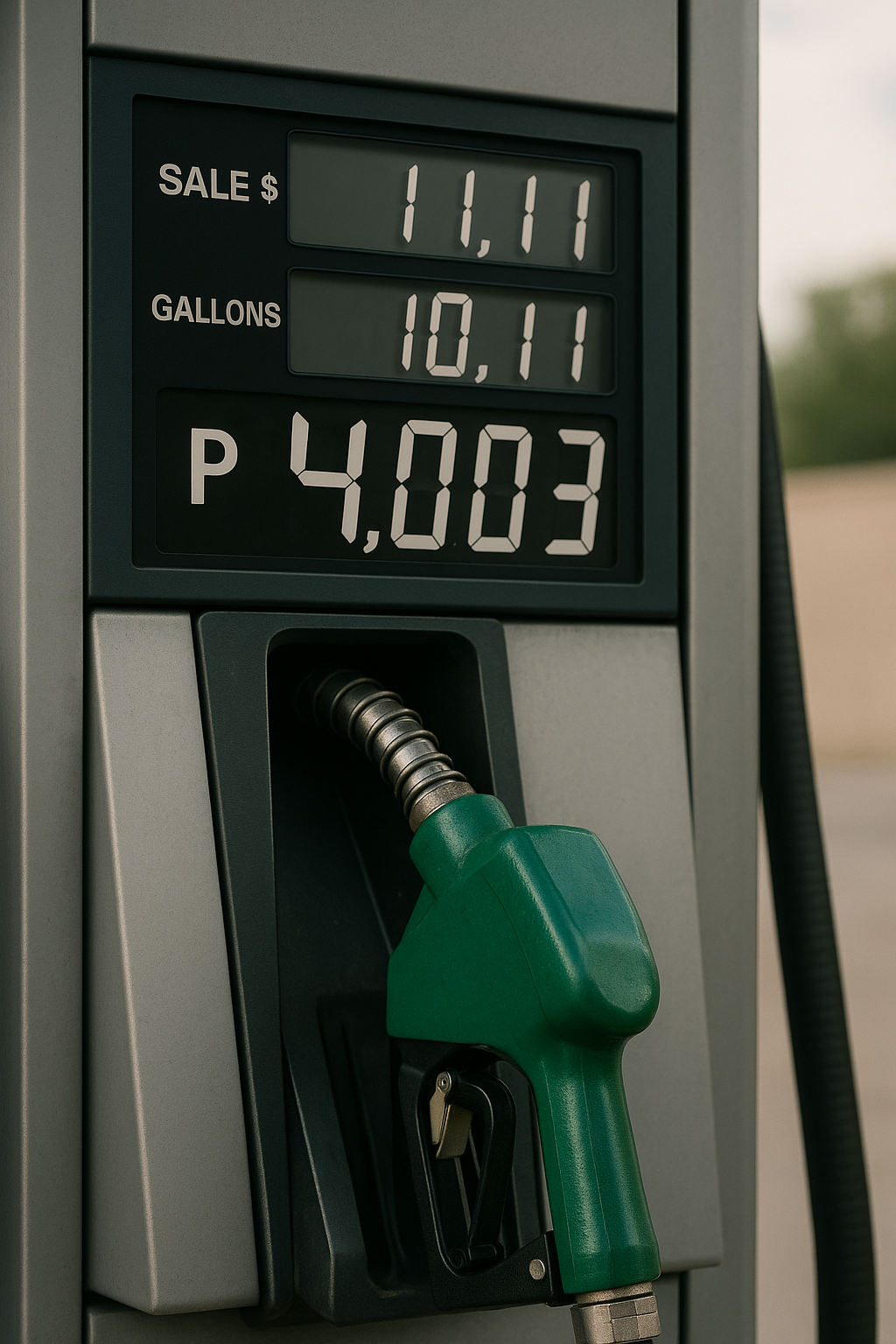
South Africa anticipates a significant fuel price drop on July 3, 2024, with petrol possibly falling by R2.90 and diesel by R5.00.
South Africa is about to get a huge break on fuel prices in July 2024! Petrol could drop by almost R3 per liter, and diesel by a massive R5. This big cut is happening because global oil prices are falling and the South African Rand is getting stronger. Get ready for some sweet relief at the pump!
What is the expected fuel price drop in South Africa for July 2024?
South Africa is anticipating a significant fuel price decrease in July 2024. Petrol prices are projected to fall by almost R3 per litre, while diesel and paraffin are expected to drop by approximately R5 per litre. This substantial reduction is primarily due to a decline in Brent crude oil prices and a strengthening Rand.
Get Cape Town news in your inbox
Stay updated with the latest stories from the Mother City.
1. The Scale of the Coming Relief
Motorists across every township taxi rank and corporate fleet office are exchanging screenshots showing the same jaw-dropping numbers. Central Energy Fund arithmetic suggests petrol prices could fall by almost R3 a litre, while diesel and paraffin look set to plunge by roughly R5. The last time the slate showed such dramatic “over-recovery” was during the demand collapse that followed the first Covid lockdown in June 2020.
The mid-June snapshot delivered these yardsticks:
- 93 unleaded petrol – 293.8 cents per litre in the consumer’s favour
- 95 unleaded – 289.7 c/litre
- Standard diesel (0.05 % sulphur) – 457.3 c/litre
- Cleaner diesel (0.005 %) – 497.1 c/litre
- Illuminating paraffin – 513.4 c/litre
These readings shift daily; the final calculation averages the 15 working days ending 27 June. Volatility can still trim 15–20 cents off the headline figure, yet even the most conservative scenario points to one of the ten biggest monthly cuts in the country’s recorded history.
2. Why Brent Crude Lost Its Swagger
Crude’s recent tumble did not begin in Durban harbour; it started over 7 000 km away, in the Middle East and in the options pits of London and New York.
-
Diplomacy tamps down risk*
On 13 April, Iran seized the container ship MSC Aries and Brent spiked to USD 92/bbl. By late May, discreet talks between Muscat, Washington and Tehran produced a de-escalation roadmap. Traders read the 31 May announcement that the U.S. Fifth Fleet would pause escort convoys as a green light; fear premium drained away. -
Inventories swell*
OECD countries’ crude stocks climbed 37 million barrels above the five-year average during May. Asian refiners pushed floating storage back onto the market, flooding short-haul routes with unwanted cargoes. -
The futures curve flattens*
Backwardation in the Brent prompt-month contract slid from USD 3.40 on 14 April to under 60 cents by 18 June, revealing that prompt supply no longer carried a scarcity premium. The physical benchmark for August delivery drifted to USD 81.50/bbl, a decline of 11 % since the beginning of the month. A sustained one-dollar drop in Brent shaves roughly 12–13 cents from South Africa’s Basic Fuel Price, so the retreat since late April alone hands motorists about R1.30 per litre even before currency or tax changes enter the equation.
3. The Rand’s Surprise Gift
Emerging-market currencies usually wilt whenever crude rallies, but the script flipped in June. Softer U.S. CPI prints on 12 June weighed on the dollar index (DXY) and the rand rebounded from beyond R19.10 to under R18.30 against the greenback. That swing alone added a further 25–30 cents to the over-recovery ledger. Currency desks warn that a hawkish turn at the 25–26 June Fed meeting or fresh domestic political noise could erode half those gains, yet the odds still favour the consumer.
-
Treasury claws back a slice*
-
5 April 2024 – the first 25 cents of GFL relief disappears
- 3 July 2024 – an extra 75 cents of GFL plus 10 cents for RAF returns
- 4 September 2024 – full restoration unless Parliament intervenes
Net effect: the July pump-price drop will be 85 cents lighter than the CEF’s raw figure. In Gauteng, 95 octane is likely to slide from today’s R25.43 to roughly R22.48 per litre. The motorist still pockets almost three rand, but the exchequer recovers about 30 % of the crude windfall.
4. Diesel, Paraffin and the Wider Economy
South Africa consumes 7.3 billion litres of diesel annually; half propels Eskom’s turbines, tractors and articulated trucks. A R4.50–5.00 cut percolates through logistics indices and lops 1.2–1.4 % off food-price inflation within six to eight weeks. In poorer homes, the double-digit rand saving on a 5-litre paraffin purchase equates to roughly R36 a month – meaningful when energy already chews up 14 % of grant-dependent budgets.
-
Global middle-distillate glut*
Singapore, Rotterdam and the U.S. Gulf Coast now hold 18-month highs in diesel inventory. Chinese refiners exported a record 3.7 million tonnes in May, and the crack spread crumbled from USD 35/bbl in March to below USD 14/bbl by mid-June. The oversupply explains why the cleaner 0.005 % diesel grade gazes at a 40–50 cent premium to the 0.05 % variant on the July slate. -
What if OPEC+ flips the script?*
On 1 July the producer bloc meets to decide third-quarter quotas. The base case is a rollover, yet an unexpected partial unwinding could clip another USD 3–4/bbl from Brent and enlarge the July over-recovery by 40–50 c/l. A deeper voluntary cut of 500 000 b/d would lift Brent above USD 85/bbl and slash the diesel bonanza to barely R2.50/litre. Logistics managers are quietly advised to lock in July volumes during the first week if forward curves remain in contango. -
Dashboards and pay-per-litre insurance*
The newly rebranded Department of Mineral and Petroleum Resources is beta-testing an open dashboard that refreshes over-recovery data hourly. Since its soft launch on 30 May, more than 140 000 unique users have bookmarked the link. Usage-based insurance start-ups are already indexing kilometre-driven premiums to the official fuel price; a July drop will shave 3–4 % off cover for low-mileage drivers.
Taxi Drivers, Municipalities and the Retail Chain
-
Minibus-taxi windfall*
For a long-haul taxi racks up 3 500 km on the Johannesburg-to-Durban corridor each week. A R4.50 diesel reduction feeds roughly R900 straight back into the owner’s pocket, cash usually channelled into maintenance or stokvel savings. History shows only 60 % of such relief reaches commuters; the Gauteng Provincial Regulatory Entity will revisit route tariffs in August to claw back at least 40 % for passengers. -
Where hedging hurts*
The City of eThekwini burned 40 million litres of diesel at water-pumping stations through the 2023/24 drought, yet 80 % was bought on the spot market. Officials have now pre-purchased 25 million litres via a six-month swap at R21.10/litre. Should July spot prices settle at R22.50, the hedge will book an immediate mark-to-market loss of around R35 million – a sobering illustration of how volatility can punish institutions that try to insure against it. -
Forecourt revival*
Releases from the Department of Energy leave the regulated retail margin untouched, but volume rebates from oil companies do respond to throughput. After two years of demand destruction, July may lift petrol volumes by 7–9 % and diesel by 10–12 %. Fixed costs at each site – rent, labour, utilities – dilute across larger sales, pushing pre-tax profit per litre to around 57 cents, up from the recent 48 cents.
EVs, Franchises and the CPI Link
-
Electric cars feel the ripple*
Naamsa reports 1 104 fully electric cars and 2 386 plug-in hybrids registered between January and May. These vehicles predominantly replaced premium-95 users. Deloitte’s Africa Automotive Model shows a R2.90 cut narrows the EV running-cost edge from 34 cents to 30 cents per kilometre – not enough to stall adoption but sufficient to postpone fleet-switching payback by several months. -
Food and burger prices on pause*
The Bureau for Food and Agricultural Policy calculates a sustained R3.00 fuel drop knocks 0.6–0.8 percentage points off headline CPI within 90 days. Transport, bakery, dairy and beverage channels drive most of the effect. Quick-service giants such as KFC SA and Debonairs have told suppliers they will freeze August menu price increases – but only if July’s cut lands in full. -
Retail margins and site profitability*
Higher throughput improves the dilution of fixed costs, and industry models suggest pre-tax profit per litre at service stations could jump from 48 cents to 57 cents. After two bruising years of load-shedding-induced demand dips, forecourt owners view July as an unexpected lifeline rather than a simple windfall.
Watch This Space
Motoring associations urge drivers to delay fill-ups until after midnight on 2 July; logistics firms are racing to renegotiate clauses that peg contract rates to the Department’s scheduled price. Somewhere between the Hormuz Strait, the Treasury vault and the township stokvel, South Africa’s fragile economy is about to catch a rare gust of global tailwinds.
What is the expected fuel price drop in South Africa for July 2024?
South Africa is anticipating a significant fuel price decrease in July 2024. Petrol prices are projected to fall by almost R3 per litre, while diesel and paraffin are expected to drop by approximately R5 per litre. This substantial reduction is primarily due to a decline in Brent crude oil prices and a strengthening Rand.
Why are fuel prices dropping so significantly in July 2024?
The primary reasons for the substantial fuel price drop are a decrease in global Brent crude oil prices and the strengthening of the South African Rand against the US Dollar. A de-escalation of geopolitical tensions in the Middle East, swelling crude inventories in OECD countries, and a flattening futures curve have all contributed to the decline in oil prices. The Rand's rebound, influenced by softer U.S. inflation data, has also played a crucial role.
How much will the government claw back from this fuel price reduction?
While the raw figures from the Central Energy Fund show a larger drop, the South African Treasury will claw back approximately 85 cents per litre. This is due to the full restoration of the General Fuel Levy (GFL) and the Road Accident Fund (RAF) levy. This means that although motorists will still see a significant reduction, the overall price drop will be slightly less than the initial projections.
What will be the wider economic impact of this fuel price drop?
The reduction in diesel prices, specifically, is expected to have a positive ripple effect throughout the economy. It could lead to a 1.2–1.4% reduction in food-price inflation within six to eight weeks, as logistics costs decrease. Poorer households using paraffin will also experience meaningful savings. The fuel drop is also expected to boost petrol and diesel sales volumes, helping forecourt owners improve profitability and potentially leading to a pause in menu price increases by quick-service restaurants.
How will this fuel price drop affect taxi fares and public transport?
For minibus taxi owners, the significant diesel reduction will result in substantial savings, potentially around R900 per week for long-haul routes. However, history suggests only about 60% of such relief reaches commuters. The Gauteng Provincial Regulatory Entity is expected to revisit route tariffs in August to ensure at least 40% of the savings are passed on to passengers.
How does this fuel price drop impact electric vehicle (EV) adoption?
While electric vehicles still offer a running-cost advantage, a R2.90 cut in petrol prices will narrow this gap. Deloitte's Africa Automotive Model suggests the EV running-cost edge will reduce from 34 cents to 30 cents per kilometre. This might not halt EV adoption but could slightly postpone the payback period for fleet-switching to electric vehicles.

Thabo Sebata is a Cape Town-based journalist who covers the intersection of politics and daily life in South Africa's legislative capital, bringing grassroots perspectives to parliamentary reporting from his upbringing in Gugulethu. When not tracking policy shifts or community responses, he finds inspiration hiking Table Mountain's trails and documenting the city's evolving food scene in Khayelitsha and Bo-Kaap. His work has appeared in leading South African publications, where his distinctive voice captures the complexities of a nation rebuilding itself.
View all articles →