
KAIZER CHIEFS ARE NO MATCH FOR BOTH SUNDOWNS AND PIRATES – BEN YOUSSEF
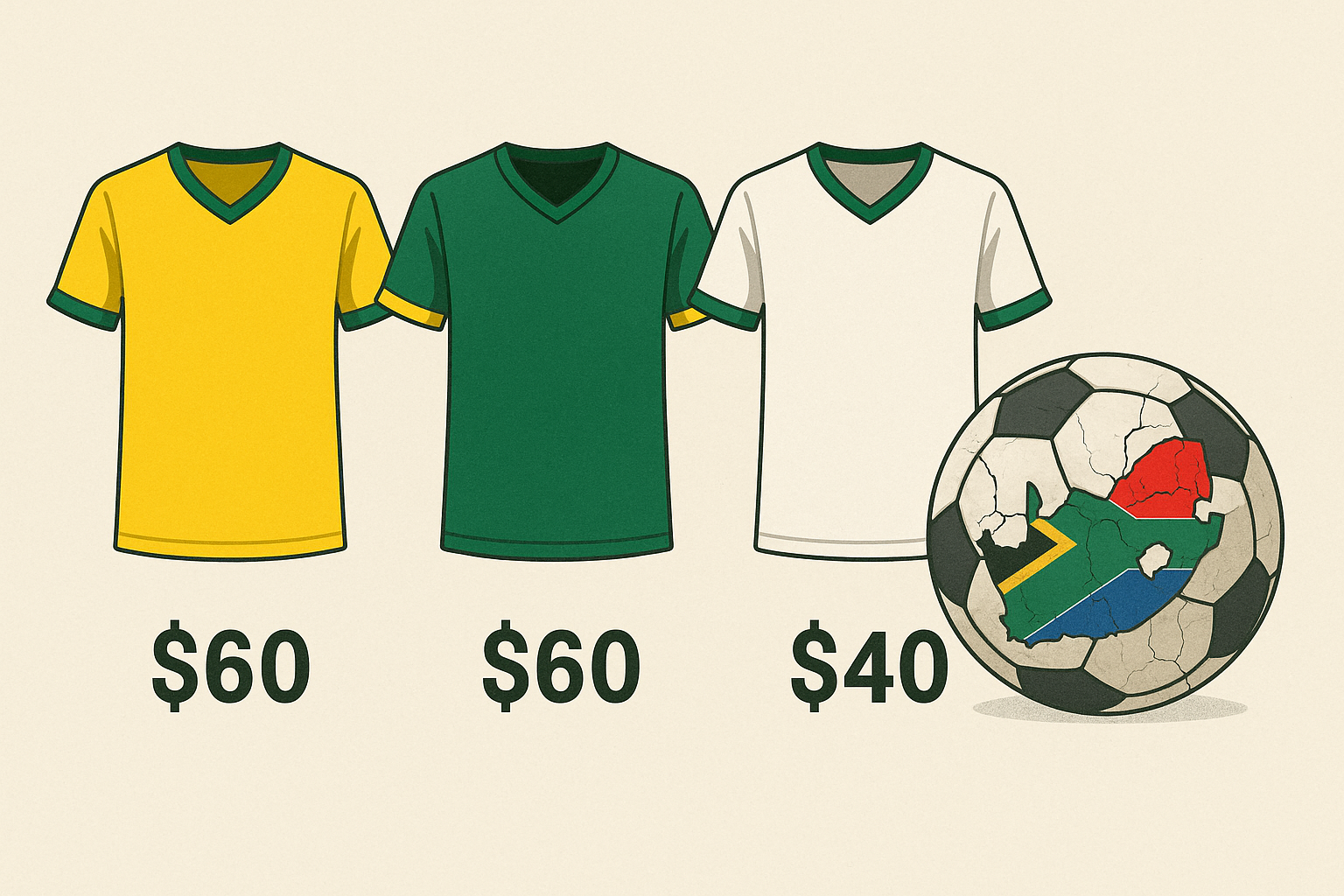
Chiefs, Sundowns, Pirates: South African football's talent divide deepens. Chiefs lag as Sundowns dominates & Pirates rise.
Kaizer Chiefs, once a top South African football team, are now struggling. They have less money than rivals, fewer players on the national team, and use old-fashioned tactics. Their academy is not producing good players, and they don't use modern data like other teams. This means they are falling behind Mamelodi Sundowns and Orlando Pirates, who are much smarter with their money and team building.
What are the key reasons for Kaizer Chiefs' decline in South African football?
Kaizer Chiefs' decline stems from several factors: a significantly lower squad valuation compared to rivals, poor national team representation, outdated tactical approaches like a low press, failed transfer strategies, a struggling academy, lack of modern data partnerships, and a weakening pipeline for European exports. These issues have left them trailing behind Mamelodi Sundowns and Orlando Pirates.
Get Cape Town news in your inbox
Stay updated with the latest stories from the Mother City.
The Sound-Bite That Wouldn’t Die
Late on a Monday, Metro FM’s producers promised listeners a tidy twelve-minute segment with Khalil Ben Youssef. Forty-two minutes later, the switchboard jammed, Twitter spaces were buckling under the weight of live conversation, and a single clip had already cracked seven-digit views. The trigger was blunt: Kaizer Chiefs, long treated as the yard-stick of local dominance, have slid to third place in the national pecking order – behind Orlando Pirates, who themselves lag an almost mythical Mamelodi Sundowns.
The Tunisian analyst did not insult anyone; he merely voiced the league’s worst-kept secret. Sundowns vacuum up the crème of the talent pool, Pirates harvest the next layer, and Chiefs scramble for whatever remains, hoping the occasional gem survives the polishing process before it is sold abroad or breaks down from over-use.
By midnight the fallout had left board members in Naturena scrambling for statements while Pirates and Sundowns fans traded memes celebrating their new-found, ever-widening gap. The interview stopped being an interview; it became a referendum on the architecture of South African football.
Cash, Caps and Chemistry – How the Trio Stack Up
Wallet Weight and Wage Logic
Transfermarkt’s May 2024 update gives Sundowns a squad valuation just shy of R1.45 billion. Pirates sit at roughly R720 million, while Chiefs register a modest R385 million. Beyond sticker shock, the financial spread reveals a deeper design: Sundowns can pay each starting-minute at R78 000, Pirates at R93 000, yet Chiefs burn R161 000 for the same measure because a raft of fringe squad members collect full wages while watching from the stands.
National Service Numbers
Bafana Bafana’s latest 26-man squad is instructive: nine Sundowns players rotate or start, Pirates contribute seven – four of whom are automatic choices – while Chiefs manage a single representative, defender Bradley Cross, who never left the bench during the June qualifiers. The takeaway is brutal: if you aspire to the national shirt, the path increasingly bypasses Naturena.
Invisible Margins – xT and Press Height
Expected Threat per possession sequence, a metric few supporters quote at braais, shows Sundowns at 0.11, Pirates at 0.08 and Chiefs limping in at 0.05 – below Richards Bay and only just ahead of Cape Town Spurs. Similarly, when Opta defines a “high press” trigger, Sundowns’ defensive line averages 42.3 metres from their own goal, Pirates 39.7 m, while Chiefs cower at 33.5 m because the centre-backs lack the acceleration required for an aggressive off-side trap.
One Window, Two Directions – Contrasting January Journeys
Instant Impact from South America
When scans revealed Peter Shalulile’s partial ACL tear, Sundowns’ sporting director Flemming Berg activated a standing agreement. Within 72 hours Colombian striker Brayan León arrived from Deportivo Pereira, scored twice on debut against Pirates, and re-energised an already ruthless forward line. The message: contingency plans were pre-cooked, not improvised.
The Search That Collapsed in Naturena
Chiefs’ winter striker hunt looked ambitious on paper: Iqraam Rayners, Bongokuhle Hlongwane, veteran Tunisian marksman Taha Yassine Khenissi. Talks dragged, agents haggled, and none landed. The chequebook finally snapped shut on 32-year-old journeyman Guy Lusadisu from Tanzania – one goal in fourteen starts this season. The headline became punch-line.
Fallout in Fan Forums
Online sentiment trackers logged a 600 % spike in the hashtag #ChiefsRebuild the same evening Lusadisu’s signing was confirmed. By comparison, Sundowns’ supporters spent the night debating whether León would start ahead of Lucas Ribeiro – a pleasant headache – while Pirates fans celebrated the fact they were at least hunting in the same supermarket aisle as the Brazilians.
Academies, Analytics and an Image Problem
The Production Line Scoreboard (2018-2023)
Over the last five seasons Sundowns’ academy has delivered 14 players who have each logged more than 1 000 senior minutes in the PSL. Pirates, boosted by feeder side Pele Pele, produced seven. Chiefs managed a paltry two – Nkosingiphile Ngcobo and Happy Mashiane – both now stalled behind recycled veterans on multi-year contracts.
Partnerships and Petabytes
Since 2022 Sundowns share data with City Football Group, Pirates inked a similar deal with Aspire Academy in Qatar. These agreements supply early tactical trends, injury-forecast algorithms and first look at South-American prodigies. Chiefs’ last technical partnership ended when the Nike contract expired in 2021; today many of their scouts still rely on WhatsApp clips and DVD compilations.
Europe’s Vote of Confidence
Bundesliga clubs attended 38 % more Pirates fixtures last season than Chiefs fixtures, citing “tactical clarity” in their reports. Sundowns matches are so densely populated with European observers that accreditation badges sometimes run out. Chiefs’ last export to Europe, Njabulo Blom, left in January 2023 – the pipeline is narrowing, hurting both sporting value and balance-sheet resale projections.
Fixing the Aircraft While It’s Flying
Three Drastic but Viable Steps
Ben Youssef never uttered the word “relegation,” yet whisper networks now include it. To turn the liner around, the club must:
- Publish a Five-Year Plan – board-approved, metrics-linked, and most importantly, un-cancelable by the next executive reshuffle.
- Hard Salary Cap – no player pockets more than R400 000 per week unless he is a certified national-team starter, forcing squad planners to chase impact over reputation.
- Appoint an All-Powerful Sporting Director – a figure like former Burnley analyst James French, armed with veto authority over every football decision, from training drills to transfer fees.
Can the Fans Endure Another Re-Build?
FNB Stadium still draws 44 000 league gates on average, but the emotional contract is fraying. Ticket prices for derby day have jumped 38 % in three seasons while returns on the pitch have nosedived. Social-listening data shows supporters are willing to stomach short-term pain – but only if the pain comes with a transparent blueprint.
A Glimpse at the 2025-26 Dream Spine
Imagine a Chiefs XI that finally offers six bona-fide Bafana starters: Hugo Nyame between the posts; Reeve Frosler and Bradley Cross as full-backs; Rushwin Dortley and Thatayaone Ditlhokwe at centre-back; a midfield double-pivot of a Sphephelo Sithole clone and Jayden Adams; wing threats in Oswin Appollis and Elias Mokwana; creative spark from Pule Mmodi; and Evidence Makgopa battering defences up front. The total bill? Roughly R96 million – less than Sundowns once paid for Lucas Ribeiro, but twice Chiefs’ net spend across the last two windows.
Whether those names ever pull on the gold and black depends less on cheque-signing than on whether the club chooses to build a runway while the plane is still in the air – or waits until it lands in the second tier to finally pour concrete.
[
{
"question": "What are the main reasons for Kaizer Chiefs' decline in South African football?",
"answer": "Kaizer Chiefs' decline is attributed to a combination of factors including a lower squad valuation compared to rivals, poor representation in the national team (Bafana Bafana), outdated tactical approaches such as a deep low press, ineffective transfer strategies, a struggling youth academy that produces few first-team players, a lack of modern data analytics partnerships, and a weakening pipeline for exporting players to European leagues. These issues have allowed Mamelodi Sundowns and Orlando Pirates to surpass them in performance and club development."
},
{
"question": "How do Kaizer Chiefs' finances and player wages compare to Mamelodi Sundowns and Orlando Pirates?",
"answer": "According to Transfermarkt's May 2024 update, Kaizer Chiefs' squad valuation is significantly lower at R385 million, compared to Mamelodi Sundowns' R1.45 billion and Orlando Pirates' R720 million. Furthermore, Chiefs exhibit inefficient wage logic; they spend R161,000 per starting minute, whereas Sundowns spend R78,000 and Pirates R93,000. This disparity is due to a large number of fringe players at Chiefs collecting full salaries without significant playing time."
},
{
"question": "What is the state of Kaizer Chiefs' academy and its contribution to the first team?",
"answer": "Kaizer Chiefs' academy has been underperforming. Over the last five seasons (2018-2023), it has only produced two players, Nkosingiphile Ngcobo and Happy Mashiane, who have each logged over 1,000 senior minutes in the PSL. This is a stark contrast to Sundowns' 14 and Pirates' 7 (boosted by their feeder side Pele Pele), indicating a significant failure in developing talent and integrating them into the senior squad."
},
{
"question": "How do Kaizer Chiefs utilize modern data analytics compared to their rivals?",
"answer": "Kaizer Chiefs lag significantly in modern data analytics. While Mamelodi Sundowns have shared data with City Football Group since 2022 and Orlando Pirates have a similar deal with Aspire Academy in Qatar, Chiefs' last technical partnership ended with their Nike contract in 2021. Their scouting relies on outdated methods like WhatsApp clips and DVD compilations, missing out on crucial tactical insights, injury forecasting, and early identification of talent that their rivals benefit from."
},
{
"question": "What are some proposed solutions to help Kaizer Chiefs recover and improve?",
"answer": "To reverse their decline, several drastic steps are proposed: 1. Publish a transparent, board-approved, metrics-linked Five-Year Plan that is resistant to executive reshuffles. 2. Implement a hard salary cap, limiting weekly wages to R400,000 unless a player is a certified national-team starter, forcing a focus on impact over reputation. 3. Appoint an 'all-powerful' Sporting Director with veto authority over all football decisions, from training to transfers, to ensure a cohesive and modern strategy."
},
{
"question": "Why are European clubs showing less interest in Kaizer Chiefs players compared to Sundowns and Pirates?",
"answer": "European clubs are showing significantly less interest in Kaizer Chiefs players. Bundesligaclubs, for instance, attended 38% more Pirates fixtures than Chiefs matches last season, citing 'tactical clarity' in Pirates' play. Sundowns matches are heavily scouted by European observers, often leading to accreditation shortages. Chiefs' last export to Europe, Njabulo Blom, left in January 2023, indicating a narrowing pipeline that negatively impacts both the club's sporting value and potential resale projections."
}
]

Tumi Makgale is a Cape Town-based journalist whose crisp reportage on the city’s booming green-tech scene is regularly featured in the Mail & Guardian and Daily Maverick. Born and raised in Gugulethu, she still spends Saturdays bargaining for snoek at the harbour with her gogo, a ritual that keeps her rooted in the rhythms of the Cape while she tracks the continent’s next clean-energy breakthroughs.
View all articles →