
KFC plans 100 new South African restaurants in major expansion drive
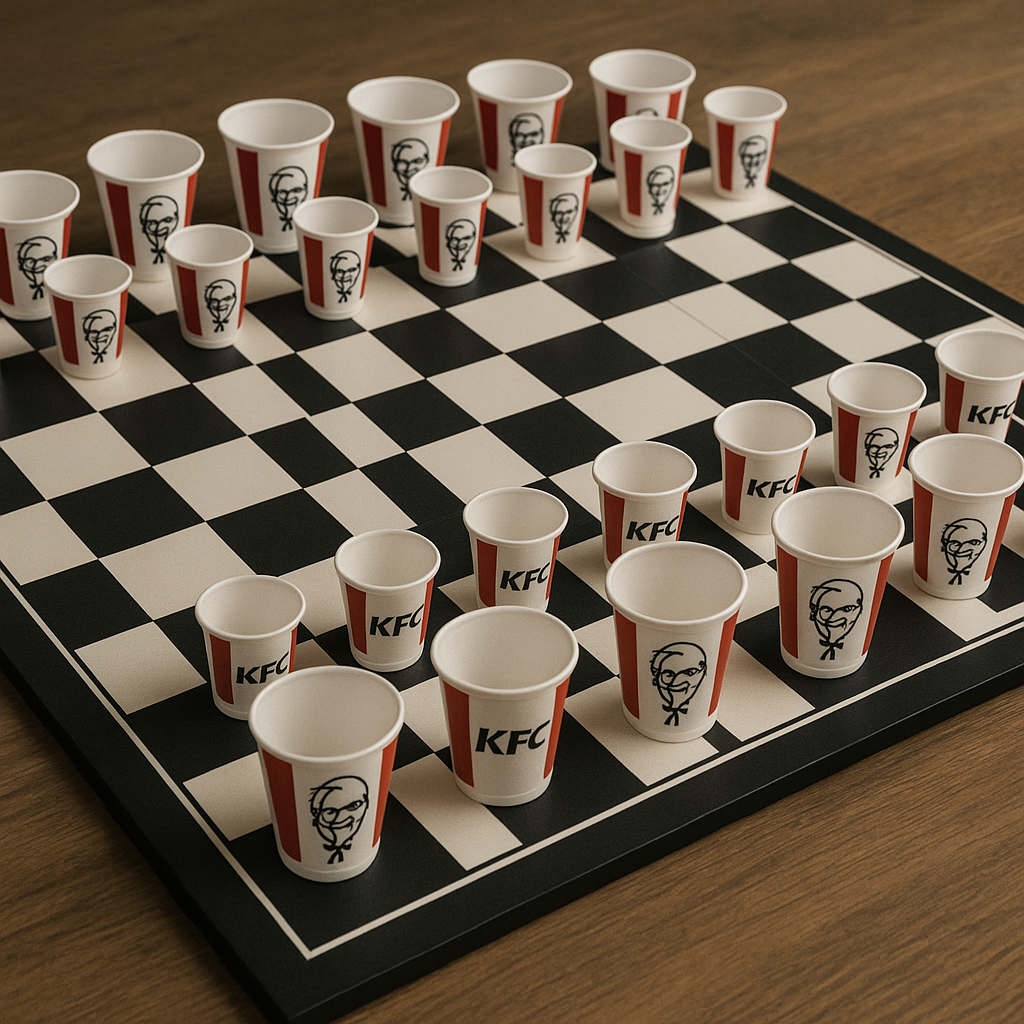
KFC's "Next 100 SA" plan reveals a strategic expansion, leveraging data, tech, and localized tactics amidst a competitive market.
KFC is adding 100 new stores across South Africa to conquer the chicken market! They're picking busy spots, making sure to have drive-thrus, and even adding power backups for when the electricity goes out. They're super smart about when and where to open, like before big events and paydays, to make the most money. They're also making sure their food gets to stores easily and quickly, and they're using apps for fast ordering and delivery. It's all about making it easy for customers to get their fried chicken, no matter what!
How is KFC expanding in South Africa?
KFC plans to open 100 new stores in South Africa by the end of 2024, strategically timed with national paydays and events. These new locations will prioritize high-traffic areas, offer drive-thrus, and include power backup for load-shedding. They are also optimizing supply chains and leveraging digital ordering for efficiency.
Get Cape Town news in your inbox
Stay updated with the latest stories from the Mother City.
1. The Roll-Out Chessboard: Timing, Traffic and Tactical Spacing
KFC’s plan to drop one hundred new restaurants across South Africa before the end of 2024 is less a land-grab and more a meticulously timed three-act drama.
Act One closes thirty doors before the June soccer internationals, Act Two adds another forty ahead of the spring school break, and Act Three locks in the final thirty so they trade through the December bonus tsunami.
Each wave is pinned to macro pulses - government grant cycles, national paydays and stadium fixtures - because internal analytics prove that a site flinging buckets two weeks before Bafana Bafana runs onto home soil out-earns a quiet-month launch by 22 % in its first ninety days.
The traffic rulebook has hardened.
Where 35 000 cars a day once sealed the deal, the barrier is now 50 000, yet the customer radius has collapsed from three kilometres to 800 metres - exactly how far locals will brave dark streets, hijack risk and cable-theft detours.
Corners that feed two separate taxi routes deliver 80 % more baskets than one-sided strips, while drive-thrus - once an SA novelty - will anchor 62 % of the new builds.
Power chaos is baked into the template.
Every permit assumes Eskom will slash the lights for forty-five minutes daily, so stores ship with 22 kVA inverters and twelve rooftop panels sturdy enough to keep fryers, tills and neon humming for four hours.
Old Mutual’s infrastructure fund buys the batteries outright and leases them back, trimming franchisee capex by 11 % and dragging the average payback down to 3.2 years.
2. People, Poultry and Paper: The Hidden Supply Chain Shuffle
Head-counts are now written in stone and elastic at the same time.
A satellite dining room with fewer than thirty seats runs on twenty-six crew and four managers, while a flagship topping seventy seats can scale to fifty-two staff and seven supervisors.
The secret glue is an eight-to-twelve-member “flex squad” trained to flip burgers in three nearby outlets on the same shift, absorbing the 30 % sales bump that hits when manual tills replace offline POS during load-shedding.
Suppliers must dance the same jig.
Logistics partners sign contracts that let KFC yank a 12-ton truck and replace it with three 4-tonners ninety minutes before load-shedding strikes so deliveries glide through green traffic lights.
Durban’s Dube TradePort now houses Yum! Brands’ Africa-wide procurement hub, pooling poultry, spice blends and packaging into one rand-sheltered, dollar-rebate machine that claws back 38 % of input costs and cushions the 17 % currency slide seen since January 2024.
Local chicken kings - Astral, Country Bird and RCL Foods - have been handed five-year taper deals that start at 95 % home-grown birds and only open the door to 15 % American leg-quarters when domestic supply dips 8 % below forecast.
The carrot is volume visibility; the stick is expansion.
Four brand-new deboning lines are already rising in Mpumalanga and the Western Cape, promising 1 200 additional abattoir paycheques before the hundredth store lights up.
3. Digital Shelves, Ghost Kitchens and the Race for 11-Minute Delivery
KFC’s app already pushes 28 % of national meals through the cloud, but among 18- to 34-year-old South Africans that figure rockets to 44 %.
Every rookie store launches with a “digital shelf” - a temperature-zoned cubby wall where Dash, MrD and Uber drivers grab sealed bags without breaching the kitchen.
Pilot suburbs have watched average delivery time plunge from nineteen to eleven minutes, and in-app re-order rates have doubled.
The data exhaust is now a profit centre.
Anonymised heat maps showing chicken demand in 200-metre blocks are peddled to city planners and rival retailers, clawing back roughly 3 % of each store’s rent bill.
Competitors are scrambling: Nando’s is beta-testing pure-play ghost kitchens in Observatory and Rosebank at a quarter of normal build cost, while Hungry Lion will ram 200 petrol-station micro sites into the gap KFC ignores because of oil-company fryer clauses.
Even sibling brand Fishaways is crashing the party, rolling a masala-spiced hake-and-chicken combo timed for Ramadan, when halal-certified KFC stores shutter for nightly prayers.
Down in Durban, container start-up Jozi Chicki funds its managers into 19 % ownership after two profitable years, holding annual turnover under 14 % - half the industry norm - and tempting KFC shift supervisors with a modest 8 % wage lift sweetened by profit-share that can double net pay.
4. Grants, Grid Collapse and the 280-Million-Litre Fryer Bet
Municipalities, desperate for revenue, are selling kerbside access for R2 500 a month plus 2 % of sales, letting operators bypass eighteen-month rezoning hell.
KFC’s response is pure guerrilla marketing: partner with NGOs, erect pop-up chicken stalls at taxi ranks on election day, then fossilise the best-performing stalls into fully fledged stores within six weeks - long before rivals secure permits.
Lower-income wallets are firmly in the cross-hairs.
Households in LSM groups 4–6 now deliver 38 % of KFC’s till tape, up from 27 % five years ago, lured by the R29 Streetwise Two - cheaper than raw chicken in many supermarkets.
Grant Wednesdays, the first of every month, trigger 42 % spikes in basket size, so new stores time their ribbon-cutting to coincide with SASSA payday.
Unions call the strategy predatory; KFC cites a 14 % sodium reduction since 2019 and free tap water on demand.
Entry-level crew still earn 11 % above sectoral determination, yet 4 100 hopefuls recently queued in Katlehong for 90 jobs, and a 290-hour online boot-camp filters out 28 % of applicants, producing mystery-diner scores 17 % higher than rival chains.
Future tech is already in the pipeline.
A self-cleaning pressure fryer using ultrasonic waves will land in 2026, slashing water use by 70 % and saving 280 million litres - enough to fill 112 Olympic pools - while trimming R18 million off the national utility bill.
AI models that weld Eskom’s load-shedding timetable to historic sales now predict hourly demand within 4 %, letting managers thaw 50 kg instead of 200 kg of chicken, sparing freezer wattage when the grid gasps.
Inflation rages - poultry up 19 %, palm oil 34 %, paper 22 % - yet hub savings and a 6 % menu price lift have widened gross margin by 120 basis points without denting footfall.
BMI Research still bets the local quick-service market will balloon at a 9 % compound annual pace, with chicken’s share climbing from 41 % to 45 % by 2028, an extra R17 billion in annual spend.
If the forecast holds, the next hundred stores will be full before the paint dries - and the hundred after that already pencilled into traffic-count spreadsheets and grant-day calendars.
[{"question": "
What is KFC's expansion strategy in South Africa?
KFC is implementing a 'Next 100 SA' playbook to open 100 new stores across South Africa by the end of 2024. This aggressive expansion focuses on strategic timing, high-traffic locations, and robust operational resilience.
", "answer": "KFC's strategy involves opening new stores in phases, timed with national paydays, government grant cycles, and major events like soccer internationals or the December bonus season. They prioritize locations with high daily car traffic (over 50,000 vehicles) and a customer radius of 800 meters, often targeting corners that feed multiple taxi routes. A significant portion (62%) of new builds will include drive-thrus, and all new stores are equipped with power backup systems (22 kVA inverters and twelve rooftop solar panels) to counteract load-shedding, with Old Mutual's infrastructure fund leasing back batteries to reduce franchisee capital expenditure."}, {"question": "How is KFC addressing load-shedding in its new stores?
KFC is proactively integrating solutions to mitigate the impact of South Africa's load-shedding challenges into its new store designs and operations.
", "answer": "Every new KFC store is designed with power chaos in mind. They will be equipped with 22 kVA inverters and twelve rooftop solar panels capable of keeping fryers, tills, and neon signs operational for up to four hours during power outages. This approach ensures uninterrupted service. Old Mutual's infrastructure fund helps by purchasing the batteries outright and leasing them back to franchisees, which reduces initial capital expenditure by 11% and shortens the average payback period to 3.2 years for franchisees."}, {"question": "What innovations is KFC implementing in its supply chain and logistics?
KFC is re-engineering its supply chain and logistics to ensure efficient and cost-effective operations for its expanding footprint in South Africa.
", "answer": "KFC is implementing several innovations in its supply chain. Logistics partners have contracts allowing KFC to switch from 12-ton trucks to three 4-tonners on short notice (90 minutes before load-shedding) to navigate traffic more efficiently during power outages. Furthermore, Yum! Brands' Africa-wide procurement hub at Durban's Dube TradePort consolidates poultry, spice blends, and packaging, generating rand-sheltered, dollar-rebate savings that claw back 38% of input costs and cushion against currency fluctuations. They also have five-year taper deals with local chicken suppliers, guaranteeing volume visibility and encouraging expansion, with four new deboning lines already under construction to increase local supply."}]
Michael Jameson is a Cape Town-born journalist whose reporting on food culture traces the city’s flavours from Bo-Kaap kitchens to township braai spots. When he isn’t tracing spice routes for his weekly column, you’ll find him surfing the chilly Atlantic off Muizenberg with the same ease he navigates parliamentary press briefings.
View all articles →