
Khayelitsha girl rescued after ground collapse sparks fears over sewer pipeline danger
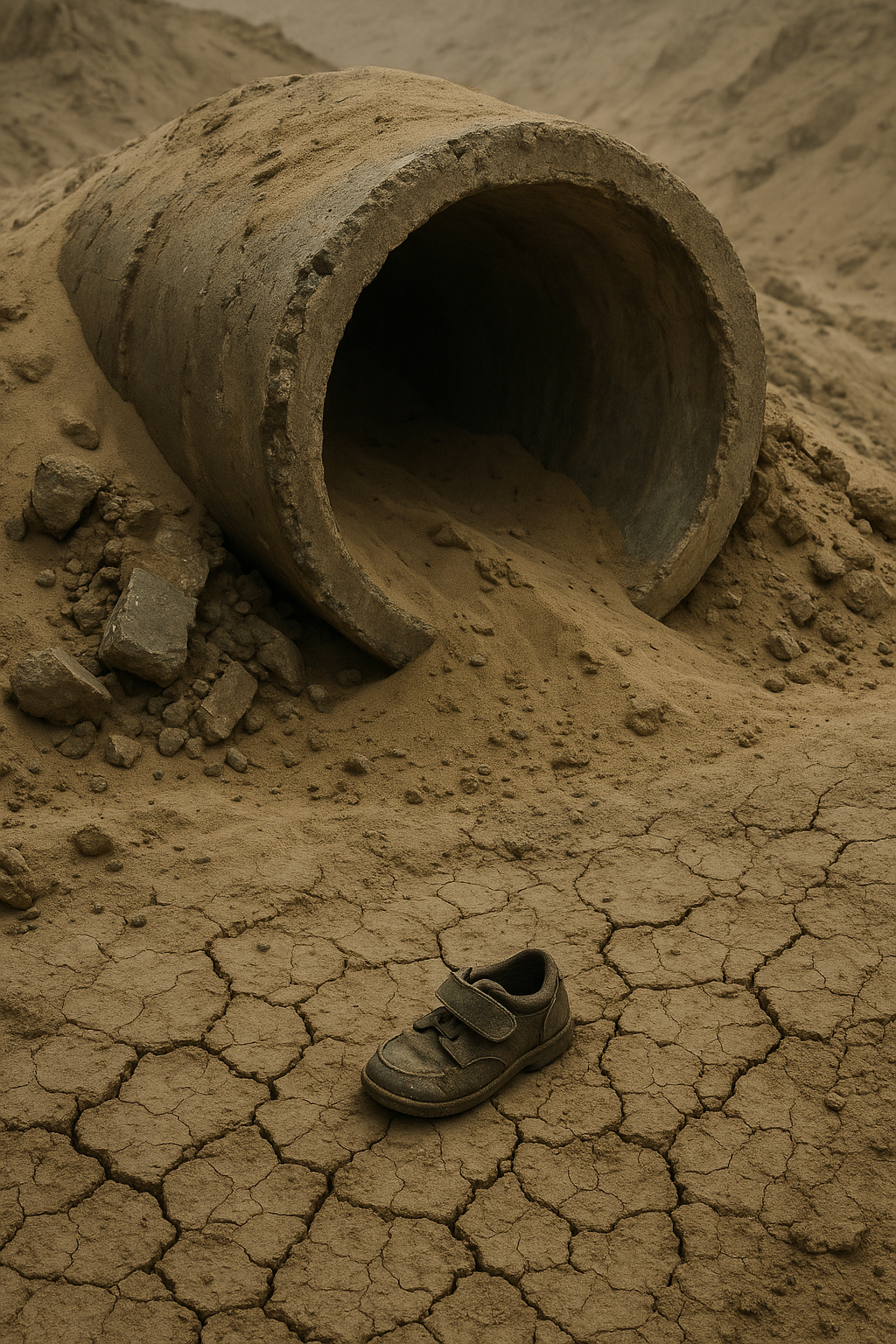
A child's rescue in a Cape Town informal settlement exposes the dangers of aging infrastructure and systemic neglect beneath homes.
In Khayelitsha, a little girl fell into a sudden hole, showing a big problem under their homes. An old, broken sewer pipe is leaking, washing away the sand and making deadly sinkholes. The city knew about these dangers but didn't fix them properly, blaming the people living there. Now, residents want to know exactly where it's unsafe so they can protect their children from the ground that might open up again.
What caused the ground to collapse in Khayelitsha, endangering residents?
The ground collapses in Khayelitsha are caused by a corroded 1.8-meter diameter outfall sewer pipe, built in the late 1970s, which was not designed for the dense settlement above it. Hydrogen-sulphide corrosion has eaten away the pipe, causing leaks. This leaking effluent washes away fine sand from the surrounding soil, creating hollow spaces that migrate upwards until the surface collapses, forming sinkholes.
Get Cape Town news in your inbox
Stay updated with the latest stories from the Mother City.
A Five-Year-Old’s Disappearance Shakes an Overcrowded Neighbourhood
In Wetland, a warren of shacks pressed between Cape Town’s highways and marshes, playtime turned to terror when the soil simply gave way. A little girl who had come to visit family sank waist-deep into a sudden crater of sand and broken bricks, vanishing before the eyes of other children. Within seconds, the settlement’s usual soundtrack - laughter, hawkers’ calls, the clatter of pots - was replaced by raw panic. Adults sprinted across narrow alleyways, abandoning cooking fires and sewing machines. No one dialled emergency services; instead, neighbours formed a human chain and clawed at the ground with their fingers, convinced the child was already suffocating.
Lulama Jodo, a street committee member, was among the first to reach the lip of the hole. “Only the top of her head showed,” she recalled, voice still trembling days later. “We scraped like mad dogs. When her eyelid fluttered, we knew we had seconds, not minutes.” After twenty frantic minutes, the girl was hauled out alive, coated in grey dust but breathing. Relief lasted only moments: water began bubbling up from below, turning the cavity into a muddy well. Residents realised that any further erosion could have drowned the child or swallowed rescuers as well.
The incident, captured on cell-phone video and shared across Cape Town, did more than traumatise a family - it exposed a lethal secret beneath 12 000 shacks. City engineers arrived the next morning to erect neon tape and corrugated-iron barricades, yet the questions lingered: how does a metropolis allow people to raise children on ground that can drop without warning?
What Lurks Under the Makeshift Streets
A week-long technical survey confirmed residents’ worst suspicions. Directly below the alley where the girl disappeared runs a 1.8-metre-diameter outfall sewer, one of the arterial lines that ferry most of Khayelitsha’s waste to the treatment works near the airport. Built of pre-cast concrete segments in the late 1970s, the pipe was never designed to carry the load of a densely populated settlement above it. Years of hydrogen-sulphide corrosion have eaten away the crown of the pipe; leaking effluent has washed fine sand from the surrounding soil, creating hollow spaces that migrated upward until the surface “bridge” collapsed.
Sinkholes above failing sewers follow a predictable script: first, hairline cracks appear on nearby footpaths; next, doors begin sticking as soil shifts; finally, a plug of liquefied sand punches through, pulling everything above it into the void. Wetland has ticked every box. Residents showed visiting journalists a row of dwellings where corner posts now lean at drunken angles, and a communal tap that dropped 30 cm in two years. “We told the councillor this place was moving,” said resident Nombulelo Mkaza, pointing to fresh plaster on her walls - repairs made after every new tremor of subsidence.
Because the pipeline corridor is officially designated “servitude,” municipal bylaws forbid any permanent structure within five metres of its centre line. Yet aerial images reveal that more than 600 shacks straddle the servitude, some with foundations anchored less than a metre from the pipe crown. Evicting them would require the City to find alternative land in a market where even vacant plots on the urban edge sell for more than R600 000. Instead, the metro has adopted a policy of “managed neglect,” sending inspection teams only when blockages cause sewage to erupt onto nearby sports fields.
Ignored Alarms and Political Hot Potato
Ward committee minutes dating back to 2018 record at least nine complaints about “ground sinking” along the same 400-metre stretch. Each entry closes with the identical line: “Matter referred to Water & Sanitation for technical report.” No report has ever been circulated to residents. After the latest collapse, MMC Zahid Badroodien admitted that his department had logged 17 sewer collapses in the vicinity within five years, but blamed “illegal occupation” for making repairs “logistically impossible.”
The statement triggered fury in Wetland. Community leader Thobeka Nodada argues the City reverses causality: “They say we are blocking them, yet they laid the pipe through land that was empty only because apartheid planners zoned it a ‘buffer’ between coloured and African areas.” Indeed, archival maps show the bulk line was routed across the Cape Flats dune belt because white neighbourhoods refused to host it. When democracy dawned, landless families moved to the very corridor the City had treated as worthless. Today, relocating them would mean compensating private landowners further out or fast-tracking the long-promised N2 Gateway housing project - both politically toxic options.
Negotiations over relocation have dragged on for more than a decade. In 2014, the province approved a 22-hectare parcel in Driftsands for 4 000 Wetland households, but budget shortfalls and title-deed disputes stalled the plan. Subsequent attempts to shift families to far-flung peri-urban sites collapsed when residents visited the areas and found no schools, no clinics, and taxi fares that would consume half a labourer’s daily wage. The deadlock suits no one, yet inertia is cheap; so the metro continues to patch the pipe instead of moving the people.
Engineering on a Tightrope: What Can Still Be Done
Specialists insist the pipe can be saved without mass evictions. Trenchless technologies - such as inserting a resin-soaked liner that hardens into a new pipe within the old shell - require only two access pits, each the size of a single shack. The snag is cost: R45 000 per metre, or roughly R90 million for the 2 km Wetland segment. That equals one-third of the City’s annual sewer maintenance budget for the entire metro.
An interim safeguard, however, is within reach. Fibre-optic sensors can be lowered through manholes to listen for the hiss of soil particles trickling into voids; the acoustic signature spikes 48 to 72 hours before a collapse. A six-month pilot along 500 metres of the line would cost under R2 million - money that could be re-allocated from the Mayoral urban-waste awareness campaign. If successful, the early-warning network could be replicated above other ageing bulk infrastructure, from fuel pipelines to high-voltage cables.
For residents, the first demand is simpler: transparency. They want live dashboards showing inspection schedules, sensor data, and repair timelines. Community mapper Zukiswa Peter has already crowd-sourced a WhatsApp map that logs every fresh crack or sewage leak; she dreams of overlaying it onto the City’s GIS portal. “Information is armour,” she says. “If we know exactly where the ground is hollow, we can keep our kids away.”
South Africa’s constitution guarantees everyone the right to an environment that is not harmful to health. A single dramatic rescue has turned an abstract legal principle into a five-year-old’s sandy fingernails and the terror in her rescuers’ eyes. Until Cape Town re-engineers either its pipes or its politics, the next footstep in Wetland could reopen the void.
[{"question": "What caused the ground collapses and sinkholes in Khayelitsha?", "answer": "The ground collapses are primarily caused by a severely corroded 1.8-meter diameter outfall sewer pipe, constructed in the late 1970s. This pipe was not designed to withstand the dense settlement built above it. Hydrogen-sulphide corrosion has eaten away at the pipe, leading to leaks. These leaks wash away fine sand from the surrounding soil, creating underground hollow spaces that eventually migrate upwards until the surface collapses, forming dangerous sinkholes."}, {"question": "What is the main danger posed by these compromised sewer pipes?", "answer": "The main danger is the unpredictable formation of sinkholes, which can open up suddenly and without warning. As seen in the incident where a child fell in, these sinkholes can be deep and rapidly fill with water or mud, posing a significant threat of entrapment, injury, or even death, especially to children. The structural integrity of nearby homes is also compromised, with buildings leaning and foundations shifting."}, {"question": "What actions has the city taken regarding these known dangers?", "answer": "The city has been aware of the issue, with ward committee minutes dating back to 2018 recording complaints about 'ground sinking.' The Water & Sanitation department has logged 17 sewer collapses in the vicinity within five years. However, the city has largely adopted a policy of 'managed neglect,' blaming 'illegal occupation' for making repairs 'logistically impossible.' They have primarily focused on patching the pipe rather than addressing the root cause or relocating residents."}, {"question": "Why haven't residents been relocated, despite the clear dangers?", "answer": "Relocation efforts have been stalled for over a decade. A 2014 plan to move 4,000 households to Driftsands was hampered by budget shortfalls and title-deed disputes. Subsequent attempts to move families to peri-urban sites failed because residents found these areas lacked essential services like schools and clinics, and taxi fares would be prohibitively expensive. The city also faces the political and financial burden of compensating private landowners or expediting the N2 Gateway housing project."}, {"question": "Are there any engineering solutions to fix the sewer pipe without mass evictions?", "answer": "Yes, specialists suggest trenchless technologies, such as inserting a resin-soaked liner into the old pipe, which then hardens to form a new, sturdy pipe. This method requires only two access pits, each the size of a single shack, minimizing disruption to residents. However, the cost is substantial, estimated at R45,000 per meter, totaling approximately R90 million for the 2 km Wetland segment, which is a significant portion of the city's annual sewer maintenance budget."}, {"question": "What immediate steps can be taken to prevent future collapses and protect residents?", "answer": "An interim safeguard involves implementing fiber-optic sensors in manholes to detect the acoustic signature of soil particles trickling into voids, which can provide 48 to 72 hours of warning before a collapse. A six-month pilot for this system would cost under R2 million. Additionally, residents are demanding greater transparency, including live dashboards with inspection schedules, sensor data, and repair timelines, to empower them with information to protect themselves and their children."}]

Liam Fortuin is a Cape Town journalist whose reporting on the city’s evolving food culture—from township kitchens to wine-land farms—captures the flavours and stories of South Africa’s many kitchens. Raised in Bo-Kaap, he still starts Saturday mornings hunting koesisters at family stalls on Wale Street, a ritual that feeds both his palate and his notebook.
View all articles →