
Kira Matiwane: The inspiring rise of South Africa’s Whale Whisperer
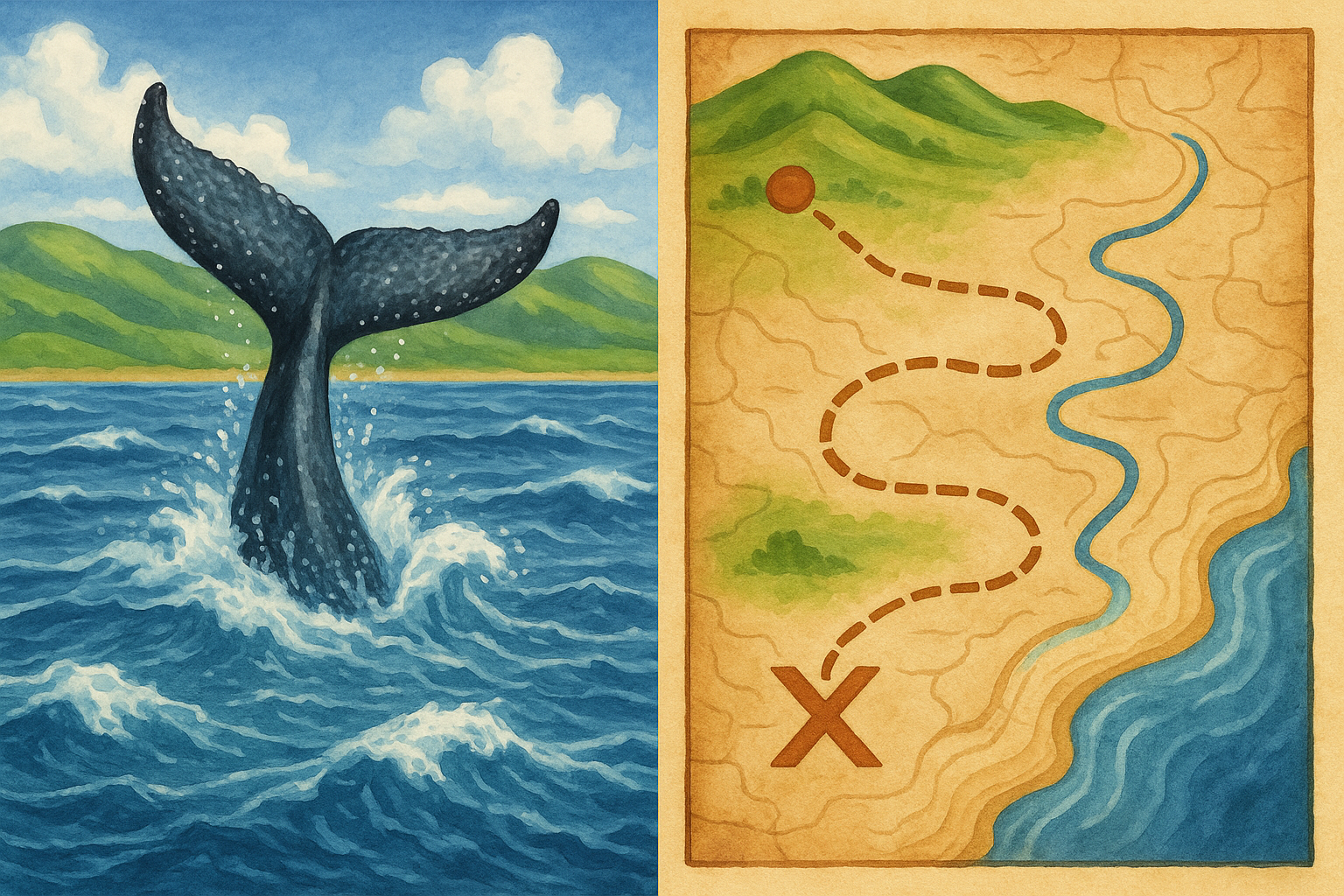
Journey from rural Eastern Cape to celebrated whale spotter: Zwelandile "Kira" Matiwane's inspiring marine tourism success story.
Kira Matiwane, from a village far from the sea, became a famous whale spotter. He started as a deckhand, working hard and learning everything about the ocean. Kira watched the whales closely and studied the sea, becoming incredibly good at finding them. His amazing dedication changed him from a boy who had never seen the ocean into an expert guide.
How did Zwelandive "Kira" Matiwane become a whale spotter?
Zwelandive "Kira" Matiwane, originally from an inland village, became a renowned whale spotter by dedicating himself to learning the ocean's intricate language. He started as a deckhand, meticulously observing whale behaviors, sea conditions, and environmental signs, eventually developing an unparalleled ability to locate whales. His dedication transformed him from a landlocked youth into an expert guide.
Get Cape Town news in your inbox
Stay updated with the latest stories from the Mother City.
A Village Where the Sea Was Only a Story
In the ochre folds of the Eastern Cape, where aloes claw at the wind and maize fields cling to hills like patchwork quilts, Bhukwini village sits two hours from the nearest shoreline. Children here grow up on stories of the ocean - whispers that arrive on the backs of trucks and Sunday sermons - yet most will never dip a toe in salt water. Zwelandive “Kira” Matiwane was one of those children. Born in 1983, he herded his grandmother’s goats along ridges so high that winter fog felt like the edge of the world. At night he listened to taxi drivers describe a place called Gansbaai where, they swore, mountain-sized animals surfaced to breathe. The idea sounded like folklore; nobody in his circle knew a single person who had seen a whale.
By 2003, the village’s only employer, a co-op maize mill, had closed. Youth unemployment hovered at seventy percent and the tar road stopped fifteen kilometres short of Bhukwini. Matiwane packed a canvas bag with two shirts, his matric certificate, and R180 earned from selling two goats. He thumbed a ride south-west, chasing the rumour of construction work on the coast. When the Indian Ocean finally flashed into view, the horizon was so wide it made him laugh out loud. He had never imagined anything that refused to end.
That first winter he slept in a backyard storeroom in Gansbaai, paying rent by fixing fishing nets before dawn. The harbour smelled of diesel, kelp, and opportunity. Every June, word spread that “the big blacks” had returned - local slang for southern right whales. Curious, Matiwane volunteered to wash dive-kit for a shark-cage operator. In exchange, skippers let him ride along on afternoon trips. He quickly noticed that tourists tipped better when someone pointed out whales before anyone else could. Spotting, he realised, was a marketable talent - and he was starting from zero.
Learning to Read the Language of the Horizon
Within a season he had ditched the storeroom for crew quarters on the jetty. Mornings began with chipping rust off boat trailers; afternoons meant mopping decks slick with fish slime. Yet every free minute he stood at the rail, scanning. He taught himself to tell a whale’s footprint - a glassy oval left on the surface - from wind slicks. He learnt that terns hovering low meant baitballs, and baitballs often meant whales lunge-feeding below. He kept a notebook, sketching dorsal shapes: the straight edge of a right whale’s back, the sickle fin of a humpback, the triangular notch of a Bryde’s. Pages yellowed with salt still fill a plastic folder he guards like treasure.
By winter 2007, skippers were quietly delaying departure until “Kira” stepped aboard. Tourists began asking for “the guy who finds whales from the parking lot.” He could read horizon haze the way his grandfather once read clouds over sorghum fields. If a south-easterly buster stacked whitecaps like dinner plates, he stayed ashore; if a light northerly ruffled the sea into cat-paws, he knew blows would stand out like exclamation marks. His personal record: picking up a right-whale pair at 2.1 kilometres, a distance most deckhands swear is impossible. The trick, he says, is to relax the eyes until they notice the rhythm of something breathing.
Recognition brought responsibility. Marine Dynamics CEO Wilfred Chivell challenged him to log 200 sea-hours and sit the national coxswain exam. Evenings after charter, Matiwane studied charts at the kitchen table, memorising lighthouses, reef locations, and the 300-metre legal buffer around whales. He learned to throttle a twin-diesel catamaran, to drop anchor without spooking a mating pod, and to deliver safety briefings in English, Afrikaans, and the rapid-fire German favoured by winter visitors. In 2012 he passed with 92 percent, the highest mark the maritime office had seen from a deckhand candidate that year. The certificate hangs framed beside his bunk, next to a faded photo of his grandmother still in her maize field.
From Deckhand to Ambassador: What One Visible Role Can Shift
Matiwane’s promotion changed more than his pay-slip; it altered the narrative children hear on the harbour. Local teens who once saw marine tourism as “white people’s weekend fun” now watch a man from the same soil skipper a R4-million boat. Township schools invite him to career days; he arrives in gumboots, towing a five-metre inflatable, letting learners handle flukes of fibreglass while he explains how a whale’s baleen filters more water in a day than a rural village uses in a month. Last year, 1,300 pupils from Zwelihle and Masakhane joined outreach trips he helmed. For many, it was their first boat ride; several have since signed up for maritime studies at the technical college in Caledon.
The economic ripple spreads. Every tourist he guides spends, on average, R1,800 ashore - restaurant meals, craft beers, petrol, local art. Multiply by 120 passengers a day across five peak months and the quiet arrival of whales translates into roughly R18 million circulating through a town of 12,000 residents. Matiwane insists at least 40 percent of that benefit should reach households historically excluded from coastal wealth. To prove the point, he sources crew lunches from a township bakery, rotates souvenir displays with craft cooperatives, and hires trainee spotters from fishing families displaced by diesel price hikes. “Conservation that doesn’t pay school fees,” he likes to say, “is just rich people’s scenery.”
Internationally, his presence reframes South Africa’s wildlife brand. German travel agents market “Tour mit Kira - der Wal-Flüsterer,” while BBC crews interview him on how apartheid spatial planning once reserved ocean views for a minority. He uses such platforms to lobby for stricter ship-speed limits and a mandatory observer programme on squid vessels that still kill an estimated 100 whales a year through entanglement. His fluency in both ocean science and lived inequality makes him a rare bridge between policy chambers and the deck of a rubber-duck packed with tourists clutching cameras worth more than his childhood home. In 2023, the tourism board flew him to Berlin’s ITB fair as a headline speaker; he opened his keynote with a Xhosa click phrase that translates: “The sea belongs to no one, but its care belongs to all of us.”
The Art Behind the title of Whale Whisperer
On board, Matiwane’s craft unfolds in micro-gestures. He’ll cut engines 400 metres out, letting momentum slide the vessel into the whale’s acoustic comfort zone. Raising a flattened palm, he silences passengers so the only soundtrack is the hollow sigh of a surfacing calf. He times his narration to surfactant bursts - those heart-shaped puffs of mist - explaining that each blow contains 2,000 litres of exhaled air and enough whale DNA for researchers to identify individuals like fingerprints. When a 40-ton mother breaches, sending up a thunderous rainbow in the backlight, he waits three full beats before speaking, allowing awe to settle into memory. The pause is deliberate: studies show tourists retain conservation messages 40 percent better when guides weave facts after emotional peaks.
Behind the scenes, the job demands meteorological vigilance. Matiwane checks three weather models before 5 a.m., tracking the ridgeline of the Azores High that fends winter cold fronts north. A millibar drop can turn a mirror-flat bay into a churning grey trench unsafe for small ribs; misjudge and he risks 40 seasick clients and a citation from marine authorities. He also logs sightings into a national database - date, GPS, pod composition, behaviour. Over 11 seasons, his entries account for 2,300 southern right encounters, forming one of the longest continuous datasets for the south-western Cape. Scientists at the University of Pretoria consult his logs when calving success fluctuates, tying drops to El Niño years or increased shipping noise.
Looking ahead, Matiwane dreams bigger. He is mentoring two cousins through maritime safety courses and saving commission money to buy a minority stake in a second vessel. Ownership, he believes, is the final frontier of transformation: “Until we sign the ownership papers, we’re still guests on our own ocean.” He also plans to take a sabbatical to volunteer with humpback researchers in Madagascar, learning how Indian Ocean populations compare to the Atlantic whales he knows like neighbours. When he finally returns to Bhukwini, it will be on a road he hopes is fully tarred, carrying stories of another ocean so that children there can start believing the horizon is not a wall but a pathway.
[{"question": "How did Kira Matiwane become a renowned whale spotter?", "answer": "Kira Matiwane, originally from an inland village where the sea was only a story, began his journey as a deckhand. Through meticulous observation of whale behaviors, sea conditions, and environmental signs, he developed an unparalleled ability to locate whales. He learned to 'read the language of the horizon,' identifying 'whale footprints' on the water, understanding bird behavior as indicators of baitballs, and sketching different whale dorsal shapes. His dedication transformed him into an expert guide, earning him the nickname 'the guy who finds whales from the parking lot.'"}, {"question": "Where is Kira Matiwane from, and what was his initial connection to the ocean?", "answer": "Kira Matiwane hails from Bhukwini village in the Eastern Cape, located two hours from the nearest shoreline. Growing up, the sea was only a story, and he had never seen it. His initial connection to the ocean came when he moved to Gansbaai in 2003, seeking work after his village's maize mill closed. His first glimpse of the Indian Ocean left him amazed by its vastness."}, {"question": "What challenges did Kira face in his early career on the coast?", "answer": "In his early days, Kira slept in a backyard storeroom, paying rent by fixing fishing nets. He worked hard, chipping rust off boat trailers and mopping decks. Despite these humble beginnings, he used every free moment to learn about the ocean, standing at the rail and scanning for whales, recognizing the commercial value of spotting them."}, {"question": "How did Kira Matiwane advance from deckhand to a certified skipper?", "answer": "By winter 2007, Kira's exceptional spotting skills were recognized by skippers and tourists alike. Challenged by Marine Dynamics CEO Wilfred Chivell, he logged 200 sea-hours and studied diligently for the national coxswain exam. He learned to operate a catamaran, drop anchor, and deliver safety briefings in multiple languages. In 2012, he passed the exam with an impressive 92 percent, becoming a fully certified skipper."}, {"question": "What impact has Kira Matiwane had on his community and the marine tourism industry?", "answer": "Kira's success has had a profound impact. He changed the narrative for local children, showing them that marine tourism is a viable career path. He actively engages with township schools, bringing marine education to them. Economically, he ensures that the benefits of tourism reach historically excluded households by sourcing crew lunches from local bakeries and hiring trainee spotters from fishing families. Internationally, he promotes South Africa's wildlife brand and advocates for stricter environmental policies, bridging the gap between ocean science and social inequality."}, {"question": "What are Kira Matiwane's future aspirations and dreams?", "answer": "Kira dreams of greater transformation. He is mentoring his cousins in maritime safety and saving to buy a minority stake in a second vessel, viewing ownership as the 'final frontier of transformation.' He also plans a sabbatical to Madagascar to research humpback whales, expanding his knowledge beyond the Atlantic species. Ultimately, he hopes to return to Bhukwini, sharing his stories of the ocean to inspire children to see the horizon not as a wall but as a pathway."}]
Emma Botha is a Cape Town-based journalist who chronicles the city’s shifting social-justice landscape for the Mail & Guardian, tracing stories from Parliament floor to Khayelitsha kitchen tables. Born and raised on the slopes of Devil’s Peak, she still hikes Lion’s Head before deadline days to remind herself why the mountain and the Mother City will always be her compass.
View all articles →