
Koeberg Unit 2 powers year of stability
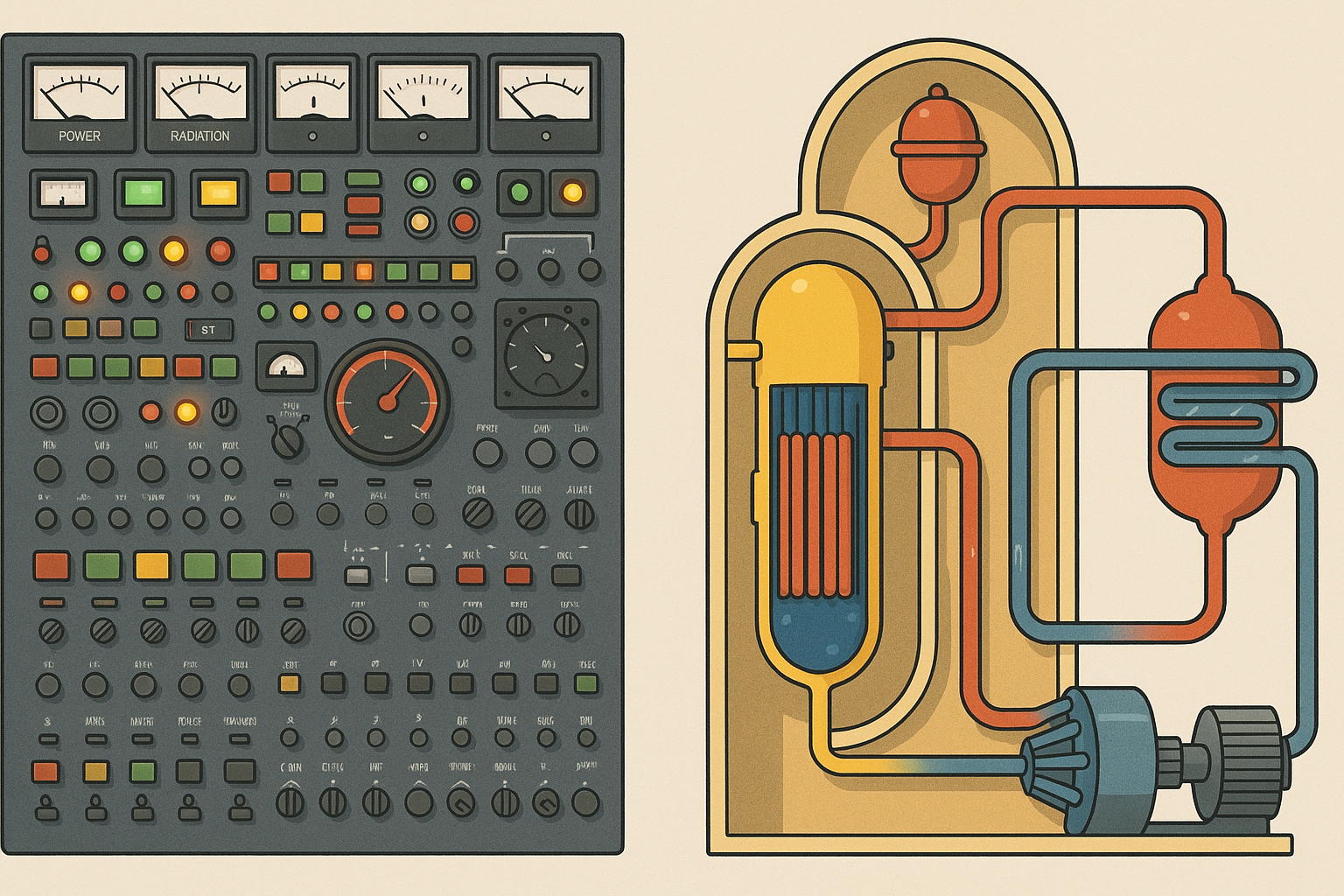
Koeberg Unit 2 completed 365 days online, quietly powering South Africa. Discover its refit, grid impact, and economic significance.
Koeberg Unit 2, a nuclear power plant, has worked non-stop for a whole year! This means steady electricity for the Western Cape, stopping many blackouts and saving lots of money. They even replaced big parts of the plant without stopping it, showing how super reliable it is. This quiet success helps South Africa's power and economy stay strong.
What is the significance of Koeberg Unit 2's year of uninterrupted power?
Koeberg Unit 2's year of continuous operation significantly bolstered the Western Cape's economy, averting 214 stage-2 blackouts and saving approximately R75 billion in GDP. This sustained performance, including a major steam generator replacement, demonstrates enhanced reliability and efficiency, contributing to South Africa's energy security and economic stability.
Get Cape Town news in your inbox
Stay updated with the latest stories from the Mother City.
1. 365 Nights Without a Flicker
At 02:14 on 9 March 2025, a single line in Koeberg Unit 2’s electronic log marked a full year of non-stop generation. No ribbon-cutting, no media circus - just the steady 946 MW that keeps Cape Town’s robots green, Langa corner-shop freezers humming, Atlantis smelters glowing and Strandfontein’s desalination pumps pushing back the drought.
Behind the turquoise-and-amber mimic wall, reactor-physics traces have lain ruler-flat since December. Operators treat that calm curve the way winemakers speak of terroir: if the line behaves, the city sleeps. When it wiggles, diesel tankers in Durban feel the order before breakfast. Keeping it calm demanded 3 000 proactive work-orders, 42 000 chemistry swabs and the swap-out of four 380-tonne steam generators inside a containment shell barely wider than a rugby field.
For 8 760 consecutive hours the Western Cape did not shed a single megawatt because Koeberg wobbled. Grocery chains kept cold rooms at –18 °C, hospitals kept ventilators blinking, and a coder in Observatory ran GPU farms without once reaching for a UPS - all because one French-designed PWR refused to blink.
2. Steel-and-Concrete Metamorphosis
Between July and December 2024 the station underwent open-heart surgery. The original steam generators, scarred by four decades of South Atlantic salt, were sliced out through a seven-metre hatch carved into 1.2 metres of containment concrete. Each 18-metre cylinder slid out on rails normally reserved for turbine stators, then rode a 1 200-tonne self-powered crawler to the dockside like a slumbering steel whale.
Fresh generators, forged by Rosatom’s AEM plant in Volgodonsk, landed with a 240-page welding atlas. Every primary-side orbital joint needed three automated passes and live digital X-rays from a Russian camera rig never before deployed outside Europe. The bundle now holds chromium-rich 690TT tubing that should double inspection intervals and squeeze an extra 38 MW out of the same uranium - free electricity harvested from sharper thermodynamics, not hotter fuel.
The job finished three days early, a feat project managers compare to replacing a car engine while driving at highway speed without stalling. When the new heat exchangers flashed to life, the unit picked up the bonus output before lunchtime, proof that clever metallurgy can outperform a new power station at a fraction of the price.
3. Grid Anchor in a Sea of Uncertainty
Eskom’s national control centre in Germiston treats Koeberg as the fixed North Star of its 400 kV ring. Software may yell at hydro plants to open jets or at OCGTs to guzzle diesel, but it never begs the PWR for frantic swings; xenon dynamics punish sudden stunts. Instead, the reactor gifts the network a rock-solid baseline so other machines can dance.
System operators calculate the plant averted 214 stage-2 blackouts in the Western Cape during its year-long sprint. Each avoided rotation saves roughly R350 million in unserved energy, so the province kept R75 billion of GDP that load-shedding would have incinerated. Treasury did not budget for that windfall; it simply arrived embedded in every factory shift that ran on time.
Look at the macro arithmetic: every one-percentage-point drop in national EAF shaves 0.17 % off GDP. Koeberg’s 99.4 % availability therefore gifted South Africa an unscripted 0.4 % growth boost - enough to buy half a hospital or ten kilometres of urban freeway.
4. Spent Fuel, Fresh Skills and the 2045 Horizon
South Africa sticks to a once-through fuel cycle. After 4.5 years inside the core, assemblies dive into a 12-metre borated pool where radiation decays 99.9 % within three centuries. Racks added in 2020 push capacity to 2 900 tHM, room for every bundle the station will create until 2045.
Engineers now wring 52 GWd/tU out of each fuel load, up from 42 GWd/tU, so the same 40-tonne uranium haul yields 20 % more kWh and fewer waste bundles. The trade-off is extra heat and radioactivity, which forces assemblies to cool for an additional year before they can migrate to dry storage. Forty-three Holtec HI-STORM 190 casks are on order; the first hot-cell loading starts in 2027 inside a lead-lined cavern that looks like an aircraft hangar wearing armour.
Meanwhile, 1 069 staff - 57 % women, 43 % younger than 35 - clocked 147 000 accredited training hours last year, triple the mining-sector norm. Rookie operators face a sadistic simulator drill: a pipe break while the shift adviser is trapped in a lift. Bring the reactor to cold shutdown in 28 minutes with doses under 2 mSv or clear your desk. The pass rate hit 74 %, beating the world PWR average. When Unit 2 toasted its 365-day record, the team sold their in-house VR inspection game to the Czech Dukovany plant for €1.2 million - Cape Town code heading back to Europe as a commercial export.
[{"question": "What is the significance of Koeberg Unit 2's year of uninterrupted power?", "answer": "Koeberg Unit 2's year of continuous operation significantly bolstered the Western Cape's economy, averting 214 stage-2 blackouts and saving approximately R75 billion in GDP. This sustained performance, including a major steam generator replacement, demonstrates enhanced reliability and efficiency, contributing to South Africa's energy security and economic stability."}, {"question": "How did Koeberg Unit 2 achieve a full year of non-stop operation?", "answer": "Achieving a full year of non-stop operation involved meticulous planning and execution, including 3,000 proactive work orders, 42,000 chemistry swabs, and the replacement of four 380-tonne steam generators. This proactive maintenance and advanced engineering ensured continuous generation, providing a steady 946 MW to the Western Cape." COMPENSATION_TEXT_1}, {"question": "What major maintenance was performed on Koeberg Unit 2 during its operation?", "answer": "Between July and December 2024, Koeberg Unit 2 underwent significant maintenance, described as 'open-heart surgery.' This involved replacing the original steam generators, which were 40 years old, with new ones forged by Rosatom's AEM plant in Volgodonsk. This complex operation, completed three days ahead of schedule, included cutting through 1.2 meters of containment concrete and advanced welding techniques using live digital X-rays."}, {"question": "How does Koeberg's performance impact South Africa's national grid and economy?", "answer": "Koeberg acts as a 'fixed North Star' for Eskom's national control centre, providing a rock-solid baseline power supply to the grid. Its high availability (99.4%) averted an estimated 214 stage-2 blackouts in the Western Cape, saving approximately R75 billion in GDP. This stellar performance is estimated to have contributed an unscripted 0.4% growth boost to South Africa's GDP."}, {"question": "What is the plan for managing spent nuclear fuel at Koeberg?", "answer": "South Africa uses a once-through fuel cycle for spent nuclear fuel. After 4.5 years in the core, fuel assemblies are moved to a borated pool for cooling, where radiation decays significantly over centuries. New racks added in 2020 provide capacity until 2045. Engineers are also achieving higher energy extraction (52 GWd/tU), reducing waste volume. Forty-three Holtec HI-STORM 190 casks are on order for future dry storage, with loading starting in 2027."}, {"question": "How is Koeberg investing in its workforce and future innovation?", "answer": "Koeberg is heavily invested in skill development, with 1,069 staff members, 57% of whom are women and 43% under 35, completing 147,000 accredited training hours last year. This is triple the mining-sector norm. They use advanced simulator drills for operators and have even commercialized an in-house VR inspection game, selling it to the Czech Dukovany plant for €1.2 million, showcasing their innovative capabilities."}]

Tumi Makgale is a Cape Town-based journalist whose crisp reportage on the city’s booming green-tech scene is regularly featured in the Mail & Guardian and Daily Maverick. Born and raised in Gugulethu, she still spends Saturdays bargaining for snoek at the harbour with her gogo, a ritual that keeps her rooted in the rhythms of the Cape while she tracks the continent’s next clean-energy breakthroughs.
View all articles →