
Lanzerac receives international recognition at Tourism Film Festival
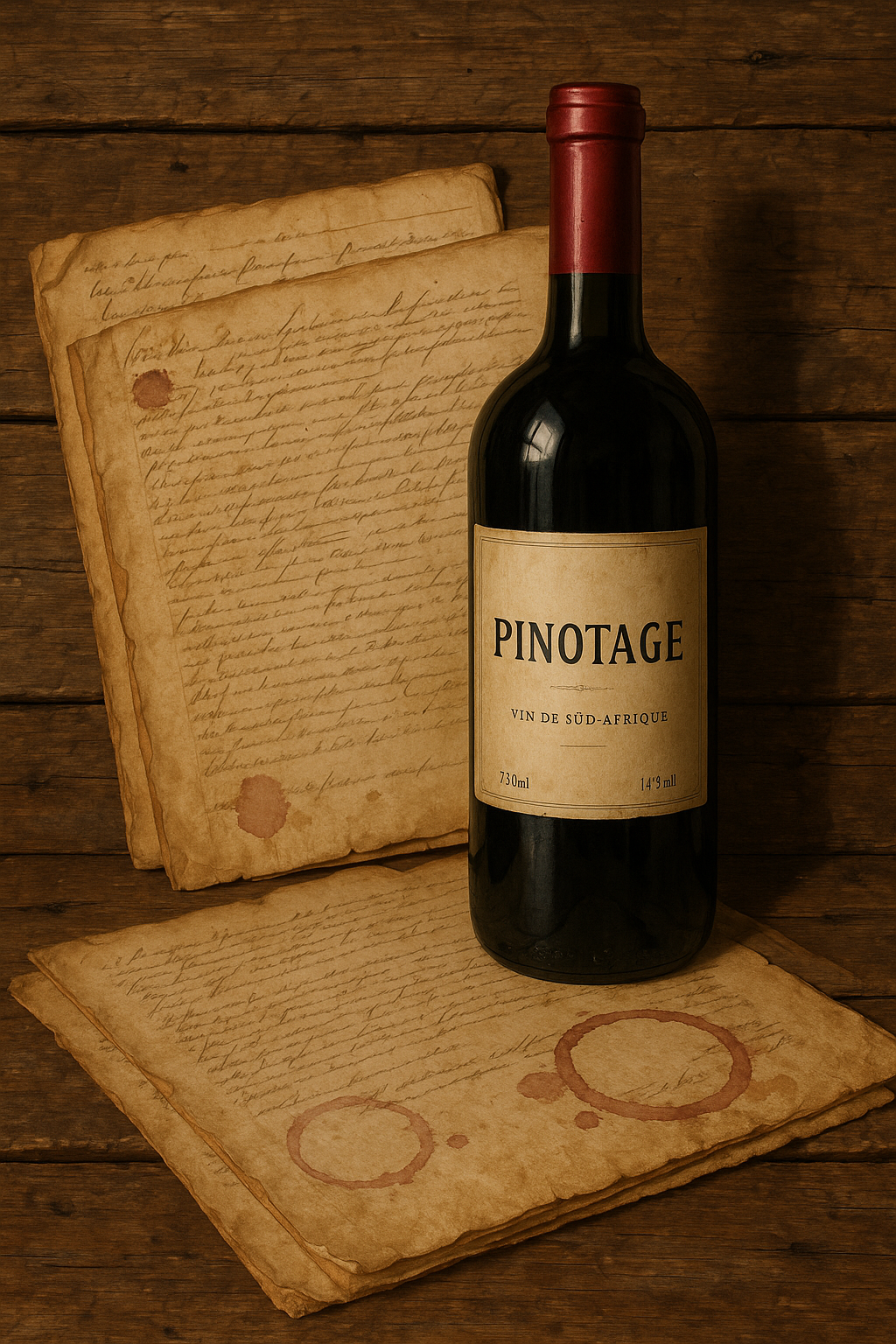
Lanzerac's film "Of Vine & Memory" won Silver at ITFFA, celebrating South African wine heritage & terroir-driven storytelling.
Lanzerac's film "Of Vine & Memory" isn't just a movie; it's a deep, beautiful story about Pinotage wine. It won an award for telling its tale in a super unique way, focusing on old records, the hard work of vineyard staff, and the magic of nature. This film uses clever camera tricks and sounds to make the vineyard feel alive. It shows how South African wine can tell its own powerful story, captivating audiences around the world.
What is Lanzerac's *Of Vine & Memory* film?
Lanzerac's Of Vine & Memory is an 18-minute film that won Silver at the International Tourism Film Festival Africa. It tells the story of Pinotage, focusing on historical records, vineyard workers' experiences, and the natural elements of the Lanzerac estate, using unique cinematic and audio techniques to bring the terroir to life.
Get Cape Town news in your inbox
Stay updated with the latest stories from the Mother City.
Dawn in Jonkershoek: When Vineyards Learned to Speak Cinema
Lanzerac, the Stellenbosch icon that first took root in 1692, has uncorked something no Bordeaux château or Napa estate has managed: a film festival medal that smells like fermenting berries. In May 2024 the estate’s new short Of Vine & Memory scooped Silver at the International Tourism Film Festival Africa, leaving 600 rival productions from 47 countries in its lees. The award matters because ITFFA is the African arm of the global ICTFF network; a silver here fast-tracks the piece to the 2025 Grand Prix in Valencia where it will spar with the best from Montenegro, Lille and New York.
The trophy is more than PR tinsel. It is the loudest confirmation yet that South African terroir, told on its own stubborn terms, can seduce juries who have seen every drone-swoop cliché on the planet.
The film was never meant to be a glossy advert. There is no price list super-imposed over drone panoramas, no grinning winemaker promising “lifestyle”. Instead, viewers watch parchment ledgers from 1925 crack open to reveal the first recorded Pinotage trial at Lanzerac. We feel the swollen knuckles of vineyard foreman Elias Syster as he trims a 1964 block still thriving on its original rootstock. We hear dawn break over blue-gum canopies when the estate’s Victorian bell clangs pickers in from the cold. Spoken text comes straight from the 1930–31 letters of Elizabeth de Villiers to her son; the Kaaps-Afrikaans is left intact and subtitled in fluid English script, creating an intimacy that no corporate narrator could fake.
Harvest as Director: Method in the Mist
Fourteen March mornings in 2023 were the entire shooting calendar. The crew could plan nothing beyond the next dusk because each sunrise delivered new fruit, new fog, new surprises. Instead of storyboards they followed grapes: bruised berries and chilled thermals dictated shot lists hour by hour.
Cinematographer Thapelo Mokhosi - veteran of National Geographic lion hunts and Beyoncé stadium behemoths - paired 1970s Zeiss Super Speed primes with an 8K RED sensor. The marriage gives dew-dressed furrows the clarity of HDTV yet wraps Pinotage clusters in the creamy halation of old glass. Inside the candle-lit 1815 cellar, Dutch-Master shadows bounce off brick vaults without a single LED panel in sight.
Audio consumed the team. Contact mics glued to stainless-steel tanks caught the barely audible heartbeat of fermenting must; those pulses were later cut into a rhythmic score that carries the second act. Archival reel-to-reel recordings from 1954 resurrect Professor Abraham Perold’s voice describing his Pinotage crossing: “Cinsault, Hermitage x Pinot Noir - delicate yet tenacious, like the soul of Africa itself.” Past and present sound layers blend into what festival jurors dubbed “a sonic terroir you can nearly chew.”
Forgotten Notebooks and Midnight Scores
Xpotential, the Cape Town agency behind the lens, skipped mood-boards in favour of anthropology. CEO Lizanne Vos spent three weeks interviewing cellar rats, viticulturists and third-generation Jonkershoek families before the clapperboard ever snapped. Luck struck when 91-year-old Sannie April revealed her father’s leather-bound notebook detailing overnight temperatures during the catastrophic 1945 rains that almost killed Lanzerac’s nascent Pinotage blocks. That rain-speckled relic now anchors the film’s emotional crest, lit only by candles and accompanied by a lone cello line struck on Lanzerac’s 1890 Bechstein grand. To conjure an earthier bass, the instrument’s low strings were slackened until they hummed like a didgeridoo.
Instead of sepia stills, director Carin Krauss re-staged pivotal history beats with present-day actors. Current viticulturist Wim Viljoen dons a 1950s lab coat and performs Perold’s crossing experiment with the very pipette used by the four cellar masters before him. Modern wristwatches are painstakingly blurred out in post to stress that land and labour stretch uninterrupted across decades.
The film’s 18-minute 47-second runtime is no accident; it mirrors how long a 225-litre barrique needs to empty by gravity racking. Aspect ratio morphs like ripening fruit: it opens at Instagram-friendly 4:5 to hook mobile scrollers, blossoms to CinemaScope 2.39:1 when the valley swallows the lens, then contracts to 1.19:1 for flashbacks bound between book pages. Colour grading took place at Hogent University’s XR Lab in Belgium, where technicians built custom LUTs that replicate the exact Pantone of Lanzerac’s 1998 vintage label - a garnet so iconic auction houses still use it as a reference.
From Cellar to Cabin: A Distribution Plan that Travels
Forget YouTube ads. Lanzerac’s rollout strategy is deliberately slow, human-scaled and experiential. Six micro-screenings unfolded inside the original 1815 fermentation cellar, projected on a voile sheet scented with toasted oak shavings. Each audience of thirty concluded with a vertical tasting - six single-block Pinotages from 1977 to 2019 - and walked away clutching a hand-numbered copy of the coffee-table book whose spine is bound in leather tanned from an antique Pinotage press cloth. Seats sold out in 48 hours; scalped tickets doubled on classified sites.
South African Airways and Emirates are negotiating to screen a six-minute inflight cut on Europe and North-America routes during the coming summer season. The Smithsonian’s National Museum of African Art wants to pair the film with artefacts - Perold’s grafting knife, the 1945 storm notebook - while Cape Town’s Zeitz MOCAA proposes an 11-channel gallery installation where the chapters (leaf, soil, barrel, bottle) loop in separate alcoves, each laced with matching aromas. Zeitz is pitching it as the world’s first synesthetic viticultural gallery.
A QR code slipped inside every book triggers an AR vignette: aim your phone at a soil map and watch a 3-D Pinotage cluster swell through veraison as Emile Langehoven explains micronutrient shifts. Spotify hosts the official playlist, weaving the film’s cello-and-didgeridoo motifs with Abdullah Ibrahim’s Cape Jazz - because legend claims Ibrahim penned “Mannenberg” on Lanzerac’s stoep during a 1974 thunderstorm.
The Ripple Effect: Sales, Sustainability, Scholarship
Since the soft launch on 12 April, Lanzerac’s Pinotage sales have leapt 37 % month-on-month, propelled by export markets previously indifferent to the cultivar. Dutch chain Gall & Gall tripled its 2022 single-vineyard order after customers bombarded stores with “the film wine” requests. The tasting room counts 62 % more non-resident bookings than the same slot last year. Luxury operator &Beyond is prototyping a four-day Pinotage Film & Food Safari that blends cellar screenings with foraging hikes along the Hottentots-Holland ridge and pop-up dinners curated by chef Bertus Basson.
Sustainability wasn’t an afterthought. Flights for the Belgian colour-grading crew were offset via carbon-capture wine caps - recycled corks infused with biochar. Wardrobe was thrifted in Stellenbosch and Paarl, then over-dyed in leftover Pinotage skins. Catering generated zero trash: surplus grapes became raisins, coffee grounds went straight to the estate compost. Total CO₂e for the entire shoot: 4.2 t, well under half the PGA Green Initiative benchmark.
Lanzerac and Xpotential donated the film to education. Under a Creative Commons BY-NC-ND licence, any non-profit can screen it royalty-free so long as the credits remain intact. Over 200 universities and schools registered in the first three weeks; quarterly Zoom Q&As between students and key creatives keep the knowledge exchange flowing.
Finally, the project reclaims language. By letting traditional Kaaps-Afrikaans carry the voice-over without sanitising, the film re-centres a dialect once mocked as “Kitchen Dutch”. Subtitles preserve idiom: die wingerd praat met die stof is translated as “the vineyard speaks with the dust”. Linguists at the University of the Western Cape are now compiling a lexicon of wine-specific Kaaps terms, calling the short “a living archive” for future generations.
Harvest 2025 is already pencilled in for a sequel. Rumour hints at a trilogy: Pinotage as past, Chenin as present, and a drought-resistant future knitted from fynbos DNA. Whether or not that vision ferments, one truth is clear - Lanzerac has proved that wine can narrate itself when a camera simply listens to the land remembering out loud.
[{"question": "
What is Lanzerac's Of Vine & Memory film?
", "answer": "Lanzerac's Of Vine & Memory is an 18-minute film that won Silver at the International Tourism Film Festival Africa. It tells the story of Pinotage, focusing on historical records, vineyard workers' experiences, and the natural elements of the Lanzerac estate, using unique cinematic and audio techniques to bring the terroir to life. It's an award-winning \"love letter\" to Pinotage, focusing on authentic storytelling rather than traditional advertising."}, {"question": "What awards has Of Vine & Memory won?
", "answer": "The film scooped Silver at the International Tourism Film Festival Africa (ITFFA) in May 2024, beating 600 rival productions from 47 countries. This award also fast-tracks the film to the 2025 Grand Prix in Valencia, where it will compete with the best films globally."}, {"question": "How does the film tell the story of Lanzerac Pinotage?
", "answer": "The film uses a unique approach, avoiding traditional advertisements. It delves into historical records like 1925 parchment ledgers showing the first Pinotage trials at Lanzerac, features the experiences of vineyard foreman Elias Syster, and incorporates local sounds and voices, including Kaaps-Afrikaans text from 1930-31 letters. It even uses contact mics on fermentation tanks to create a rhythmic score and archival recordings of Professor Abraham Perold's voice."}, {"question": "What makes the cinematography and audio of the film so distinctive?
", "answer": "Cinematographer Thapelo Mokhosi used 1970s Zeiss Super Speed primes with an 8K RED sensor to achieve both clarity and a creamy, vintage feel. The audio design is highly immersive, featuring sounds like the 'heartbeat' of fermenting wine from contact mics and Professor Perold's voice from 1954 recordings. The film's 'sonic terroir' was praised by festival jurors."}, {"question": "How was the production of Of Vine & Memory sustainable?
", "answer": "Sustainability was a key focus. Flights for the crew were offset using carbon-capture wine caps, wardrobe was thrifted and over-dyed with Pinotage skins, and catering generated zero waste, with surplus grapes made into raisins and coffee grounds used for compost. The total CO₂e for the shoot was significantly below industry benchmarks."}, {"question": "What is the cultural and educational impact of the film?
", "answer": "The film reclaims the Kaaps-Afrikaans dialect by featuring it prominently and subtitling it, leading linguists at the University of the Western Cape to compile a lexicon of wine-specific Kaaps terms. It has also been donated under a Creative Commons license for royalty-free screening by non-profits, with over 200 universities and schools registering to use it for educational purposes."}]
A Russian-Spanish journalist and Cape Town native, channels his lifelong passion for South Africa into captivating stories for his local blog. With a diverse background and 50 years of rich experiences, Serjio's unique voice resonates with readers seeking to explore Cape Town's vibrant culture. His love for the city shines through in every piece, making Serjio the go-to source for the latest in South African adventures.
View all articles →