
Law on naming sexual offence suspects challenged in court
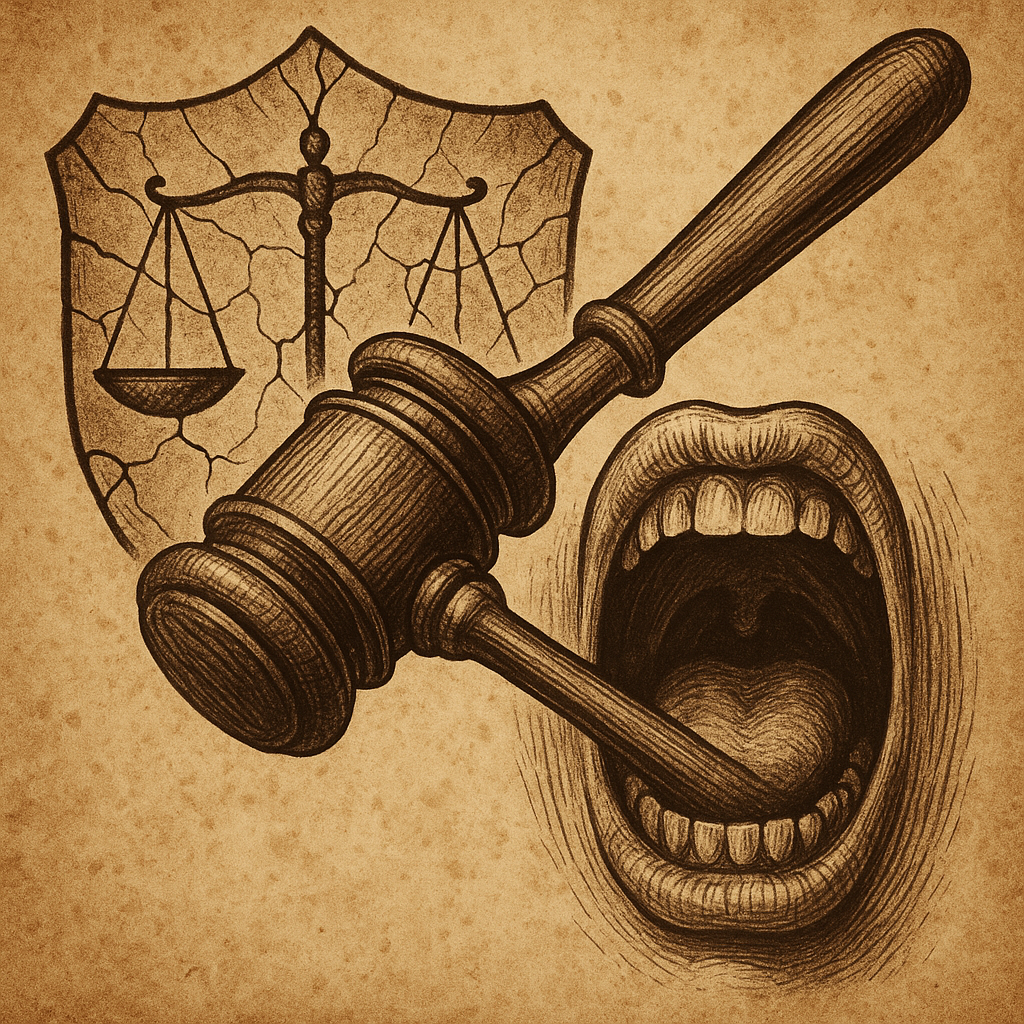
Cape Town court to hear challenge against law banning naming of sexual offense accused. A GBV activist faces jail for tweeting a name.
A brave activist in South Africa is fighting a super old law that stops anyone from naming people accused of sexual offenses until they plead guilty. She tweeted a coach's name after a young girl he allegedly hurt tried to end her life, and now she might go to jail! This legal battle could change everything, making it easier for victims to speak out and for the public to know who the accused are, shaking up a law that some say protects predators instead of people who are hurt.
What is the current law regarding naming sexual offense accused in South Africa?
In South Africa, it is illegal to publish the name of anyone accused of a sexual offense before they formally plead to the charge. This 1917 law, known as section 154(2)(b), criminalizes revealing the accused's identity, with no public-interest exceptions, leading to potential imprisonment and criminal records for those who violate it.
Get Cape Town news in your inbox
Stay updated with the latest stories from the Mother City.
A Centenary Law Faces Its Day in Court
Cape Town’s High Court is about to referee a legal showdown that has been simmering since 1917.
On 3 and 4 March, judges will listen to the first full-blown constitutional assault on the 31-word clause that criminalises uttering the name of anyone charged with a sexual offence before the accused formally pleads. The challenger is Caroline Peters, a gender-violence activist who tweeted a coach’s identity last year after hearing that the 14-year-old girl he allegedly groomed had tried to take her own life. Within hours the Hawks opened a docket; Peters now risks three years in prison and a criminal record. The Women’s Legal Centre is driving her case, while Justice Minister Nkhensani Kubayi defends the provision. A single prosecution has mushroomed into a national argument about whose privacy the state really protects.
The court papers landed amid growing frustration that the blackout can stretch on for years.
If an accused skips bail, dies, or simply secures endless postponements, the ban stays in force indefinitely. Court rolls, police dockets and even casual WhatsApp forwards all fall under the prohibition. The National Prosecuting Authority has already charged journalists, Facebook users and, in Peters’ instance, a survivor-run NGO. What critics brand a “gag for predators” is, according to the state, a shield against trial contamination and vigilante justice. The upcoming hearing will decide which narrative triumphs.
Inside the Blackout Machine
The wording of the rule is almost brutally simple:
“No person shall at any stage before the accused has pleaded to the charge publish in any manner whatever any information relating to the charge which reveals or may reveal the identity of the accused.”
Unlike the portions that protect complainants and witnesses, the subsection gives magistrates zero wiggle room. There is no public-interest escape hatch, no expiry date, no allowance for dead or absconding defendants. In practice this means a Western Cape priest continued preaching to teenagers for three years while his case crawled through the system; a KwaZulu-Natal headmaster quietly transferred schools because parents could not lawfully discover why he had been arrested; a Johannesburg businessman skipped the country leaving unpaid salaries, and creditors only learnt of the rape charge once he was beyond reach.
Prosecutors insist the measure prevents “trial by media,” yet their own data undercuts the claim.
A 2021 Medical Research Council audit of 2 456 rape dockets found that 42 % of alleged perpetrators were family members, teachers or neighbours - people the complainant already knew. Victims feared eviction, loss of school fees or violent reprisal, but almost none worried about press coverage, and fewer still knew that naming the accused was illegal. Among 120 senior prosecutors surveyed, 78 % admitted the ban had no measurable impact on reporting rates; still, 64 % wanted it kept to avoid prejudicing juries - even though South African trials are judge-alone. No study has ever shown that the country’s dismal 8 % conviction rate would sink further if suspects’ names were public.
From Victim-Consent to Predator-Protection: A 106-Year Journey
The first incarnation of the rule, in 1917, actually allowed a complainant to lift the veil.
Magistrates could authorise publication after “consulting the complainant,” a nod to an era when a woman’s “unchastity” could wreck her marriage prospects. When the 1977 Criminal Procedure Act replaced the statute, that victim-consent clause vanished. National Party lawmakers spoke of safeguarding men from “unfounded rumours” and helping the acquitted “return to normal life.” The Women’s Legal Centre now argues the switch flipped the law’s centre of gravity: instead of shielding the accuser from scandal, it arms the accused with a reputational force-field. In short, the legislature swapped victim-protection for predator-protection, and nobody noticed for decades.
Caroline Peters’ personal journey illuminates the modern fallout.
Her organisation, the Callas Foundation, offers court support and trauma counselling to rape complainants. After she posted “# NameHim” in March 2022, the coach in question had already appeared in Durban’s regional court nine times; each appearance ended with another postponement and a judicial reminder to reporters that the name remained taboo. Peters’ tweet drew instant backlash: the Directorate for Priority Crime Investigation opened a docket, and she faces fines, imprisonment and the possible closure of her NGO. She elected to fight rather than plead, turning a misdemeanour prosecution into a constitutional test case that could redraw the boundaries of speech and silence.
Global Shifts and Local Resistance
South Africa’s stance looks increasingly lonely on the world stage.
Sweden scrapped automatic anonymity for rape suspects in 1984; Norway followed in 2006. Courts in both countries may still impose temporary gags when there is concrete risk of jury contamination or retaliation, but the default is open justice. The United Kingdom protects complainants, not defendants, except in rare offences such as blackmail or certain terrorism charges. A 2010 Home Office review warned that shielding rape suspects would “fuel a false narrative that false allegations are common” and chill other victims from coming forward. South Africa, by contrast, has widened the accused’s shield while tightening the complainant’s, producing a legal asymmetry almost unique among democracies.
Campaign for Free Expression and Media Monitoring Africa have piled in as amici, cataloguing “absurdities” produced by the ban.
Their 54-page brief cites cases of employers, landlords and even parents left in the dark while accused offenders move through society unimpeded. Meanwhile, activists have opened a second front: the “Nxme Him” portal lets survivors type perpetrators’ names into an encrypted chat-bot that converts each letter into emoji strings stored on a blockchain ledger. Once section 154(2)(b) falls, the keys will be released, flooding timelines with thousands of deferred identities. In its first two weeks the site logged 1 700 entries, 62 % from repeat users - suggesting serial offenders. The project openly relies on a court victory; until then, the emoji rebellion keeps the issue in public view without technically breaching the law.
As the hearing date nears, political parties tread carefully.
No outfit wants to look lenient on rapists, yet none is eager to defend a provision that can jail rape survivors for tweeting. The Constitutional Court has twice struck down absolute bans - on prisoner photography and on reporting corruption investigations - insisting that “necessity must be proven case by case.” Whether that logic extends to a rule whose victims and beneficiaries align so starkly along gender lines is the doctrinal tightrope the court must walk. Whatever the Western Cape bench decides, an appeal to the apex court is virtually certain. Until the final gavel falls, every rape docket opened after 3 March will be scrutinised by prosecutors, reporters and survivors who understand that the next click of the share button could redraw the map between accountability and oblivion.
What is the current law regarding naming sexual offense accused in South Africa?
In South Africa, it is currently illegal to publish the name of anyone accused of a sexual offense before they formally plead guilty to the charge. This law, Section 154(2)(b) of the Criminal Procedure Act, was enacted in 1917 and criminalizes revealing the accused's identity, carrying a potential sentence of up to three years in prison and a criminal record for violators.
Why is this law being challenged now?
The law is being challenged by gender-violence activist Caroline Peters, who tweeted the name of a coach accused of sexually grooming a 14-year-old girl after the girl attempted suicide. Peters now faces potential imprisonment. This case has brought to light concerns that the law, which has no public-interest exceptions, may protect predators rather than victims and can delay justice, as the ban remains in force indefinitely if an accused skips bail, dies, or secures postponements.
What are the arguments for keeping the law in place?
The National Prosecuting Authority (NPA) argues that the measure prevents "trial by media" and vigilante justice. Some prosecutors also believe it helps avoid prejudicing juries, even though South Africa primarily uses judge-alone trials. The Justice Minister, Nkhensani Kubayi, is defending the provision in court.
What are the arguments against the law?
Critics, including the Women's Legal Centre, argue that the law, which originally allowed for victim consent for publication, shifted to primarily protect the accused's reputation. They brand it a "gag for predators" that allows alleged offenders to continue their lives unimpeded while cases drag on. Furthermore, studies have shown that the ban has no measurable impact on reporting rates, and South Africa's stance is increasingly isolated globally, with countries like Sweden and Norway scrapping similar automatic anonymity for rape suspects.
What could be the outcome of this legal challenge?
The Cape Town High Court will hear the constitutional challenge on March 3rd and 4th. If the court rules in favor of Caroline Peters and the Women's Legal Centre, it could lead to the invalidation or significant amendment of Section 154(2)(b), making it easier for victims and the public to identify alleged sexual offenders before a plea. Regardless of the High Court's decision, an appeal to the Constitutional Court is highly likely, meaning the final resolution could take time.
How are activists circumventing the current law?
Activists have developed innovative ways to highlight alleged perpetrators without directly violating the current law. For example, the "Nxme Him" portal allows survivors to input perpetrators' names into an encrypted chatbot, which converts each letter into emoji strings stored on a blockchain ledger. The keys to these identities will be released if Section 154(2)(b) falls, providing a public record of alleged offenders while legally sidestepping the current ban.

Sizwe Dlamini is a Cape Town-based journalist who chronicles the city’s evolving food scene, from boeka picnics in the Bo-Kaap to seafood braais in Khayelitsha. Raised on the slopes of Table Mountain, he still starts every morning with a walk to the kramat in Constantia before heading out to discover whose grandmother is dishing up the best smoorsnoek that day.
View all articles →