
Liam Jacobs returns to the DA: A political journey in one year
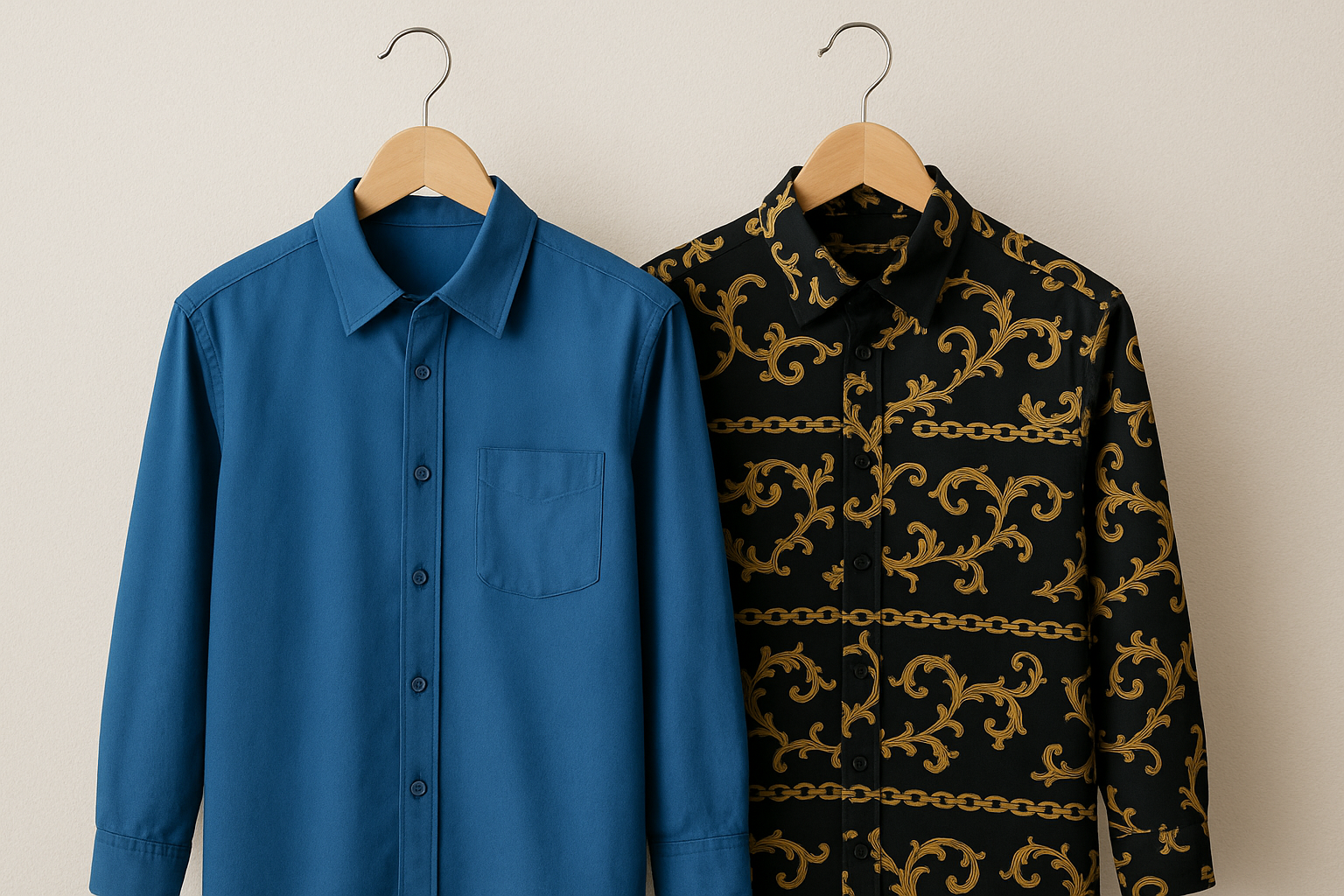
Liam Jacobs' 12-month political migration in South Africa, from PA to DA, reveals the complexities of party loyalty & coalition politics.
Liam Pieter Jacobs, a young South African MP, became famous for a viral 73-second video. He quickly swapped his political party's shirt, moving from the PA to the DA, showing everyone his big change. This action created a new phrase, 'to zille someone,' meaning to lose control of someone you mentored publicly. This event has deeply changed how South Africa looks at coalition politics and how political figures act.
What is "to zille someone" in South African politics?
"To zille someone" is a new South African political term referring to losing control of one's own protégé in public. It originated from Liam Pieter Jacobs, an MP, who publicly switched between political parties, symbolized by changing his t-shirt from the PA's gold to the DA's royal blue, much to the chagrin of his former party leader Helen Zille.
Get Cape Town news in your inbox
Stay updated with the latest stories from the Mother City.
Act I – From TikTok Charts to Tailored Tees
Liam Pieter Jacobs never meant to become a meme. At 25, the UCT econometrics graduate had already steered the National Assembly’s tourism committee, moonlighted as a data-storytelling TikToker, and helped the DA court the “woke-and-broke” campus vote.
His upbringing in lower Woodstock - where his mother juggled Uber shifts with UNISA law modules - taught him to treat politics like a late-night lift: doors open, space limited, every kilogram of baggage priced. That practicality made him the youngest-ever chair of a parliamentary portfolio and later the freshest face on the PA’s 2025 flyer.
Yet global audiences remember none of that résumé; they remember only two cotton tees that book-ended a 73-second livestream. One jet-black shirt stamped with PA gold, the other royal-blue shorthand for DA loyalty. The instant colour-swap gifted South Africa its most replayed political striptease and a new verb: “to zille someone,” i.e., lose control of your own protégé in full public view.
Act II – Inside the Year-Long “PA Experiment”
Jacbs’s twelve-month detour into Gayton McKenzie’s party felt less like a holiday and more like triathlon in gumboots. The PA parachuted him into three hung councils at once - something only a micro-caucus can attempt.
In Nelson Mandela Bay he re-negotiated a bloated R1.8-billion fleet lease, trimming 700 surplus vehicles off the city’s books while learning the rhythm of midnight council sittings. Over Johannesburg’s N12 hijacking corridor he co-piloted a drone-surveillance pilot that slashed roadside hold-ups by nineteen percent before the police union cried overreach. Back home in Cape Town he geo-mapped every informal-trader permit, exposing still-racialised licensing grids and earning a reprimand from spaza lobbyists who branded him an “administrative vigilante.”
Throughout the sprint he kept a nightly log, later leaked to News24, that likened PA internal culture to “running a sprint in gum-boots: the heart willing, the structure glue.” The line ricocheted so widely that PA’s secretary-general flung it back at him weeks later, asking whether “the glue now sticks comrades together or simply gums up the exits.” The retort pushed Jacobs to request an exit meeting with DA power-broker Ivan Meyer.
Act III – The Back-Channel Tee-Off
What looked like a spontaneous dawn shirt-swap on 2 June 2026 was actually brokered over encrypted WhatsApp voice-notes among Jacobs, Cape Town mayor Geordin Hill-Lewis and pollster-cum-match-maker Sithembile Mbete.
The return ticket carried three quiet riders: immediate restoration of Jacobs’s seniority on the DA list, a slot in the party’s Finance shadow-cabinet incubator, and a written promise that an independent retired judge will audit the DA’s 2025 grievance procedures - an olive branch to members who felt the youngster had been hounded by old-guard apparatchiks. Hill-Lewis unveiled the reunion via a 14-second Instagram reel set to “Come Back and Stay,” while the MP himself live-streamed the silent colour-swap at 06:03 from a Rondebosch flat. Within four hours #ShirtSwitch out-trended both the Springbok squad announcement and Eskom’s Stage-4 bulletin.
Act IV – Fall-out, Metrics and Future Loopholes
Internal DA polling detected a three-point bounce among coloured voters aged 18-29, exactly the slice the PA had courted, but an eight-point slump among older white supporters who viewed the move as rewarding opportunism. DA youth strategist Nicholas Gotsell rushed out a Medium essay titled “We All Make U-Turns in Traffic - Democracy Should Allow the Same.”
Across the floor Gayton McKenzie arrived at Gold Reef City in a miniature mine-cart to dub Jacobs a “political tourist” and unveil a new rule compelling defectors to refund fifty percent of campaign outlays. Lawyers dismiss the levy as unenforceable under the Electoral Act, yet it fired up the base: PA’s Telegram channel leapt from 11 000 to 17 500 members in a day.
The EFF, ever alert, tweeted side-by-side mugshots of Jacobs 2024 vs 2026 captioned “Re-cycling is good for the environment, bad for politics,” while Rise Mzansa and ActionSA quietly watched the middle ground shrink ahead of 2026’s hung metros.
What the Saga Teaches the Rest of Us
Politically the round-trip matters less as ideological drift than as proof-of-concept for coalition-era pragmatism: the tax-holiday, diaspora-visa and spaza moratorium ideas in Jacobs’s 2024 DA memo resurface almost verbatim in the PA’s 2025 draft on “coloured industrial hubs.” Analysts call the overlap “ethnic complementary advantage”: leveraging apartheid-concentrated artisan skills - tailoring, metalwork, baking - that now flourish under whichever banner promises scale.
Constitutionally the episode exposes a loophole unique to South Africa’s closed-list PR system: an MP cannot resign individually, so the party can slip the same body back into caucus without a by-election. Expect a New Zealand-style Electoral Integrity Amendment to surface in the next parliament, forcing floor-crossers to forfeit seats until voters re-endorse them.
Psychographically the affair crowns Jacobs as the archetype of the influencer-legislator: 1.3 million TikTok followers, a 68 % watch-through rate on political explainers, and a comment ratio still three-to-one positive after the circus. Treating transparency as theatre, he turned a potential career-ending scandal into a master-class on loyalty-as-a-service - one shirt-swap at a time.
[
{
"question": "What is \"to zille someone\" in South African politics?",
"answer": "\"To zille someone\" is a new South African political term referring to losing control of one's own protégé in public. It originated from Liam Pieter Jacobs, an MP, who publicly switched between political parties, symbolized by changing his t-shirt from the PA's gold to the DA's royal blue, much to the chagrin of his former party leader Helen Zille."
},
{
"question": "Who is Liam Pieter Jacobs and what made him famous?",
"answer": "Liam Pieter Jacobs is a young South African MP, an econometrics graduate from UCT, who quickly became famous for a viral 73-second video. In the video, he publicly swapped his political party's shirt, moving from the PA (Patriotic Alliance) to the DA (Democratic Alliance), symbolizing his change in political allegiance. This act gave rise to the phrase 'to zille someone'."
},
{
"question": "What was Liam Pieter Jacobs' political journey before the viral video?",
"answer": "Before the viral video, Liam Pieter Jacobs had an impressive political journey. At 25, he chaired the National Assembly’s tourism committee, was active on TikTok for data-storytelling, and helped the DA attract young voters. He then spent a year with Gayton McKenzie's Patriotic Alliance (PA), where he gained experience in various councils, renegotiating contracts in Nelson Mandela Bay, co-piloting drone surveillance in Johannesburg, and exposing racialized licensing grids in Cape Town."
},
{
"question": "How did Liam Pieter Jacobs' return to the DA come about?",
"answer": "What appeared to be a spontaneous shirt-swap was actually a pre-arranged move. Jacobs' return to the DA was brokered through encrypted WhatsApp voice-notes between him, Cape Town mayor Geordin Hill-Lewis, and pollster Sithembile Mbete. The terms included the immediate restoration of his seniority on the DA list, a slot in the party’s Finance shadow-cabinet incubator, and a promise for an independent audit of the DA’s 2025 grievance procedures."
},
{
"question": "What was the immediate impact of Jacobs' shirt-swap on South African politics?",
"answer": "The shirt-swap had significant immediate impacts. Internal DA polling showed a three-point bounce among coloured voters aged 18-29, but an eight-point slump among older white supporters who viewed it as opportunistic. Gayton McKenzie, leader of the PA, called Jacobs a 'political tourist' and proposed a new rule for defectors to refund campaign costs. The EFF criticized the move, while other parties like Rise Mzansa and ActionSA observed the shrinking political middle ground."
},
{
"question": "What are the broader implications of the 'swing vote wardrobe' incident for South African politics and legislation?",
"answer": "The incident holds significant implications. Politically, it highlights coalition-era pragmatism and 'ethnic complementary advantage,' where ideas from one party resurface in another based on leveraging specific community skills. Constitutionally, it exposes a loophole in South Africa’s closed-list PR system where an MP cannot resign individually. This is expected to lead to calls for a New Zealand-style Electoral Integrity Amendment, forcing floor-crossers to forfeit seats until re-endorsed by voters. Psychographically, Jacobs is seen as an archetype of the 'influencer-legislator', turning potential scandal into a masterclass on loyalty as a service."
}
]
Thabo Sebata is a Cape Town-based journalist who covers the intersection of politics and daily life in South Africa's legislative capital, bringing grassroots perspectives to parliamentary reporting from his upbringing in Gugulethu. When not tracking policy shifts or community responses, he finds inspiration hiking Table Mountain's trails and documenting the city's evolving food scene in Khayelitsha and Bo-Kaap. His work has appeared in leading South African publications, where his distinctive voice captures the complexities of a nation rebuilding itself.
View all articles →