
Mass shooting leaves four dead in suspected taxi-related attack in Nyanga
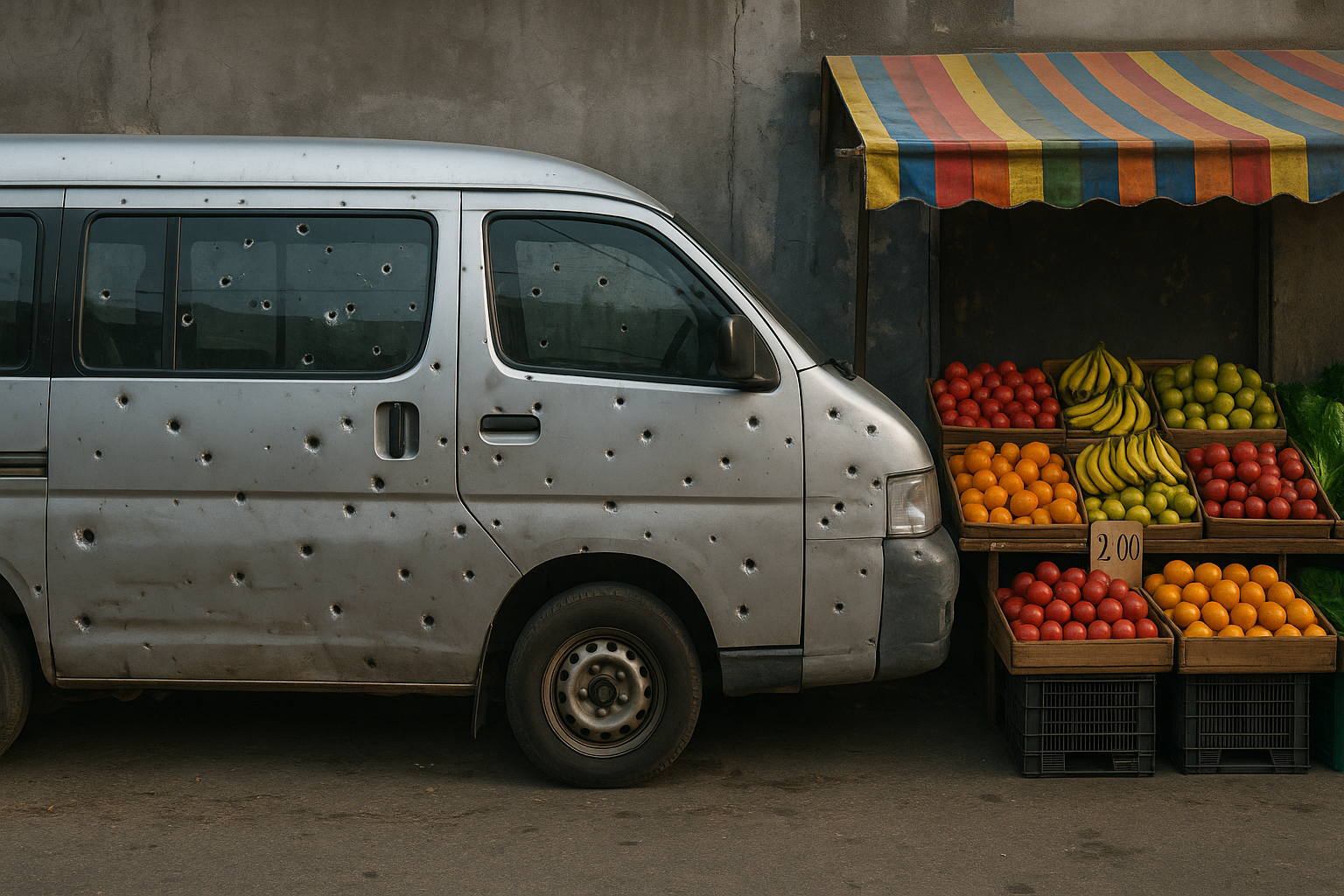
Anatomy of a shocking morning massacre in Nyanga, revealing the brutal taxi wars, their history, and the ongoing investigation.
Nyanga’s quiet streets turned into a deadly battleground when long-standing taxi disputes over routes erupted into tragic violence. A shocking ambush, fueled by permit conflicts and illegal firearms, left several people dead and injured. These incidents are a stark reminder of South Africa's deep-rooted issues like unemployment and the struggle for resources, turning everyday commutes into a desperate fight for survival. This has left the community scarred, seeking peace amidst the ongoing conflict.
What caused the recent taxi violence in Nyanga?
The recent taxi violence in Nyanga stems from long-standing disputes over routes and permits, exacerbated by a trigger event where CATA enforcers confiscated a CODETA permit. This incident escalated existing tensions, leading to a deadly ambush. Underlying issues include an abundance of illegal firearms and high unemployment.
Get Cape Town news in your inbox
Stay updated with the latest stories from the Mother City.
The Eight-Second Ambush
08:31. Morning commuters queued for vetkoek and gossiped under the plane trees on Moonwood Drive when a silver Avanza nosed up to a white Quantum. Eight seconds later, thirty-two shell casings glittered on hot tarmac, the air heavy with diesel and gun-smoke. Apple crates exploded as rounds sliced through fruit and flesh alike; paw-paw pulp splashed across windscreens like orange blood. Bystanders dived behind wheelie-bins, four men crumpled in the roadway, two marshals crawled toward the pavement leaving crimson tracks on broken crates.
Sirens closed in within minutes, yet the shooters had already vanished toward Govan Mbeki Road, an unmarked Avanza now wearing different plates. The only echoes left were spent brass stamped “9 mm LUGER” and the stunned silence of a neighbourhood that had learned - again - that no hour is safe.
The Human Toll
No official names yet; SAPS withholds them to shield grieving families from reprisals. Still, word travels faster than radio: three brothers in livery belonged to CATA, the fourth to CODETA. Ages ranged from late twenties to mid-forties; all had taken their turns as drivers, rank marshals, breadwinners. Two survivors, both CATA men, were raced to Groote Schuur with bullets lodged in lung and thigh. By noon they lay behind guarded curtains, IV drips ticking like metronomes of an unfinished war.
Parents collected shell-shocked children from Siyazama Primary; the Grade-Four vomit on the playground tiles told its own story. A grandmother known simply as Gogo Ntombizanele erected a circle of candles and a cow-hide drum, beating a slow farewell to ancestors she hoped would guide the fallen home. Traffic later resumed, but footfall at nearby spazas dropped by seventy percent as traders moved two streets south, convinced the shooters would circle back.
How Taxi Routes Became Fault Lines
Routes, Permits and Rage
The roots snake back to 1987. Apartheid planners dumped Black workers far from the city, then handed out route permits like gold dust. Post-1994 re-registration overlapped boundaries, sowing the seeds of turf wars that have sprouted corpses ever since. Nyanga’s rank has repeatedly changed hands; every new permit issued by provincial offices triggers fresh disputes over who may load passengers for Cape Town or Philippi.
Between 2018 and 2022, the Western Cape logged 124 murders traced to taxi spats. Nyanga consistently crowns the top-three precinct list. A UCT study calculates that a conductor on the B97 run can pocket R1 800 on a busy Friday - but must surrender R300 “protection” to whoever dominates that week, making every queue a political border.
The Langa Trigger
Two Saturdays ago CATA enforcers in Langa confiscated a CODETA permit, igniting a chain of WhatsApp threats. Voice notes swore that CODETA had “declared war for the Delft corridor.” The Avanza used in Tuesday’s ambush was itself once impounded for overloading, then re-birthed with cloned plates. Ballistics already link its magazine to thirty-eight prior shootings across Mitchells Plain, Delft and Khayelitsha - a single handgun that has done murderous overtime.
The Hunt for Gunmen and the Long View
Eyes, Ears and Algorithms
Lieutenant Colonel Donovan Heuvel commands the Serious and Violent Crime Taxi Unit. By afternoon his detectives had seized CCTV from an ENGEN forecourt and three private homes. One clip shows a passenger swapping licence plates at a red light; tower-dump data from Vodacom and MTN masts is now combed for the phones that shadowed the Avanza’s route. A mobile command post squats at Zwelitsha and Klipfontein, doubling as a tip-off centre for residents too scared to walk into Nyanga station.
Across the suburb, community volunteers are handing out five hundred pre-loaded SIM cards: one gigabyte, one anonymous email address, zero fear of retaliation. It is an experiment in digital witness protection; last year an SMS tip-line received 4 300 messages yet yielded only seven usable statements. Heuvel hopes connectivity will narrow the gap between noise and evidence.
Guns, Gangs and Ghost Bullets
An ISS study estimates that seven out of ten taxi killings use military-grade hardware: AK-47s, R5 rifles, 9 mm pistols recycled from Mozambican civil-war caches. April’s SAPS strike on a Bellville South warehouse netted forty-five AK magazines and six suspects with legitimate taxi-industry badges. Every impounded bakkie or minibus risks becoming tomorrow’s gun platform; mechanics in backyard workshops can strip and rebuild a stolen chassis in under four hours.
Unemployment hovers at forty percent. In that vacuum, driving or conducting offers both livelihood and battlefield. A vehicle impounded for illegal overloading can hurl an entire household into instant debt; retaliation becomes both vengeance and balance-sheet surgery.
Mirrors from Medellín to Michoacán
South Africa is not alone. In 1990s Medellín, rival bus syndicates hired sicarios to clear contested routes. The city broke the cycle only after uniting fragmented unions under one regulator and launching subsidised bus rapid-transit that absorbed former gunmen. Michoacán’s taxi assassinations, meanwhile, are now tangled with drug-cartel logistics. Cape Town’s MyCiTi BRT attempted a similar buy-out in 2016, but CODETA’s demand of R120 000 per vehicle stalled talks. Treasury balked; the guns kept firing.
Between Prayer and Policy: Next Steps for a Wary Community
Candles, Cameras and Cash-backs
Tonight, hundreds will gather at the NY78 sports ground for a 24-hour prayer vigil. Tomorrow, “Operation Night-Light” encourages residents to leave porch bulbs burning from dusk to dawn, weaving a civilian surveillance net. Solar-powered cameras installed by non-profit Open Nyanga stream encrypted footage to a Telegram channel monitored by the Community Police Forum; early pilot data show a modest dip in street robberies. Ride-hailing start-up LulaCape offers commuters a R2 rebate for every trip taken during declared “peace hours,” siphoning rush-hour fares away from warring cabs.
Law-Makers and Law-Breakers
On Thursday the provincial legislature will debate the Taxi Violence Bill, proposing life sentences for rank assassinations and outlawing overlapping permits. Commissioner Patekile has pledged a 72-hour “stabilisation surge”: drones with thermal lenses, Public Order Police, Tactical Response Teams. Critics dismiss it as reactive theatre; Nyanga’s detective-to-case ratio remains 1:120, five times the UN norm. Emergency summits scheduled for next Monday echo the failed accords of 2019 and 2021, raising the question of how much talking can still achieve.
The Quiet Body Count
Four bodies await autopsy in Salt River; two survivors cling to ventilators. By Friday, traffic cones will replace bouquets at Moonwood and Sheffield, detergent and sunlight already bleaching away the last red echoes. Behind the fresh tarmac, deeper fractures persist - route economics skewed by overlapping permits, a river of illegal guns, and an unemployment rate that turns every taxi queue into a recruitment centre. Until those drivers lose, the city’s pulse will keep skipping beats at 08:31 on otherwise ordinary mornings.
What caused the recent taxi violence in Nyanga?
The recent taxi violence in Nyanga stems from long-standing disputes over routes and permits, exacerbated by a trigger event where CATA enforcers confiscated a CODETA permit. This incident escalated existing tensions, leading to a deadly ambush. Underlying issues include an abundance of illegal firearms and high unemployment.
What was the immediate aftermath of the ambush on Moonwood Drive?
Following an eight-second ambush on Moonwood Drive, thirty-two shell casings were found, and four men were critically injured or killed. Bystanders sought cover, and the shooters vanished quickly. Sirens arrived within minutes, but the perpetrators had already fled. The community was left in shock, with schools affected and local businesses experiencing a significant drop in foot traffic.
What is the historical context of taxi route disputes in the Western Cape?
The roots of taxi route disputes in the Western Cape trace back to 1987, when apartheid planners allocated route permits to Black workers. Post-1994 re-registration led to overlapping boundaries, creating turf wars. Nyanga, in particular, has seen its rank change hands repeatedly, with new permits frequently sparking conflicts over passenger loading rights for various destinations like Cape Town or Philippi. Between 2018 and 2022, 124 murders in the Western Cape were linked to taxi violence.
How are authorities investigating the Nyanga ambush?
Lieutenant Colonel Donovan Heuvel's Serious and Violent Crime Taxi Unit is investigating by seizing CCTV footage from various locations. They are also analyzing tower-dump data from mobile phone masts to track the Avanza's route and its occupants. A mobile command post has been established for tip-offs, and community volunteers are distributing pre-loaded SIM cards to encourage anonymous reporting through a digital witness protection experiment.
What broader societal issues contribute to the ongoing taxi violence?
Deep-rooted issues like high unemployment (hovering at forty percent) and the struggle for resources are significant contributors. The taxi industry, for many, provides a livelihood, but also becomes a battlefield due to intense competition. The prevalence of illegal firearms, some military-grade, recycled from older conflicts, further escalates the violence. Additionally, the impounding of vehicles for violations can plunge households into debt, making retaliation a desperate act.
What measures are being taken to address the violence and its aftermath?
In response to the violence, the community is holding prayer vigils and participating in "Operation Night-Light" to enhance civilian surveillance. Non-profit organizations are installing solar-powered cameras. Legislatively, the provincial legislature is debating the Taxi Violence Bill, proposing severe penalties and outlawing overlapping permits. Law enforcement is planning a 72-hour "stabilisation surge" with drones and tactical units. However, concerns remain about the effectiveness of these measures given past failed accords and the high detective-to-case ratio.

Sarah Kendricks is a Cape Town journalist who covers the city’s vibrant food scene, from township kitchens reinventing heritage dishes to sustainable fine-dining at the foot of Table Mountain. Raised between Bo-Kaap spice stalls and her grandmother’s kitchen in Khayelitsha, she brings a lived intimacy to every story, tracing how a plate of food carries the politics, migrations and memories of the Cape.
View all articles →