
Milnerton Flea Market still charms Cape Town locals
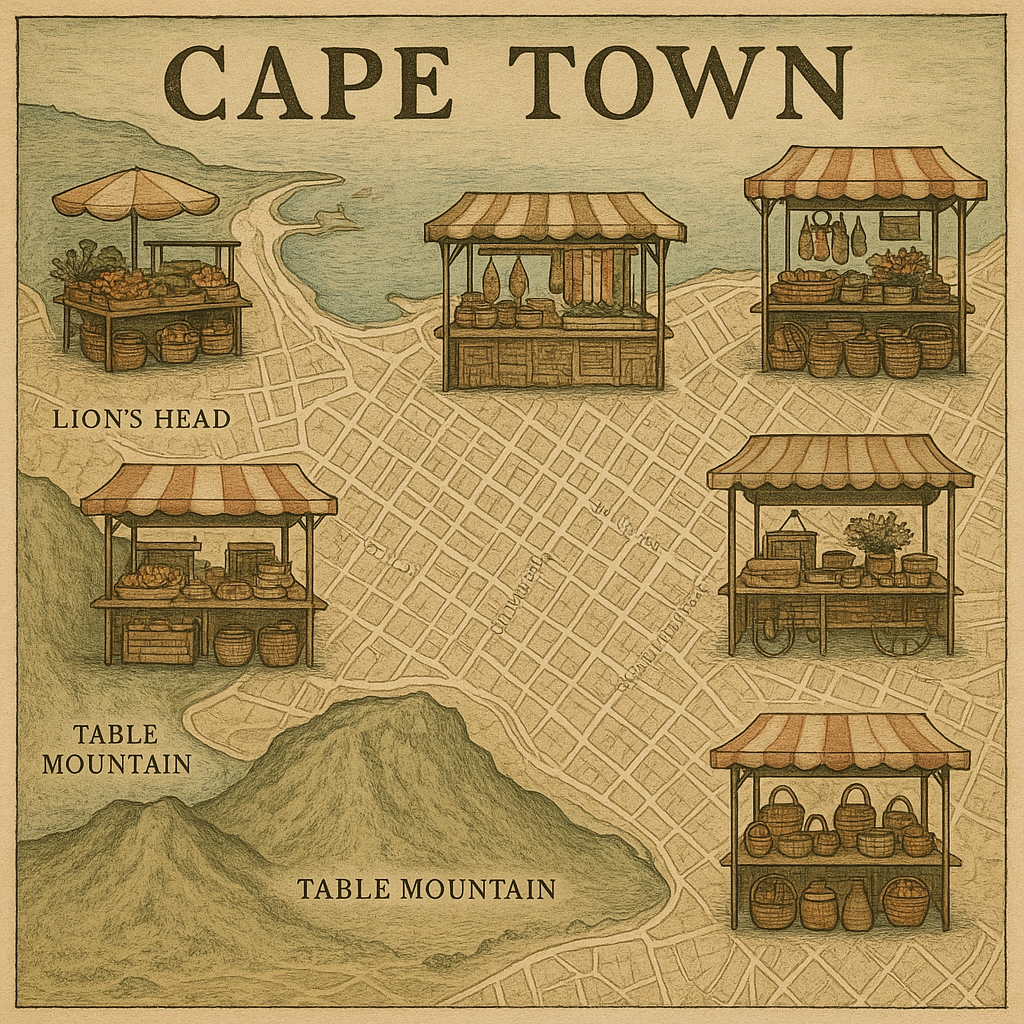
Explore Milnerton Flea Market: Cape Town's vibrant hub of collective memory, where history, stories, and unique treasures await.
The Milnerton Market in Cape Town is like a magical treasure chest, overflowing with unique finds from different times. Imagine old things, handmade crafts, and repurposed items all mixed together, waiting for you to discover them. It's a place where people trade with money, kindness, and trust, making it a truly special experience. Every item has a story, whispering about lives lived, and the market itself feels alive, constantly changing and offering new surprises.
What is the Milnerton Market?
The Milnerton Market in Cape Town is a vibrant open-air flea market where diverse eras and items converge. It's a place for unique finds, from vintage goods and handmade crafts to repurposed items. The market fosters an "economy of regard" through cash, credit, and kindness, making it a unique cultural experience.
Get Cape Town news in your inbox
Stay updated with the latest stories from the Mother City.
The Pink Sky Drop-Off
The pre-sun hush on Marine Drive ends when bakkies nose between Paddocks Centre and the lagoon at half past six. Tailgates clank down like castle bridges onto folding tables and canvas roofs. Salt still rides the southeaster, yet within forty-five minutes the air turns thick with paraffin fumes, frying onions and the fine grey dust that every second-hand item exhales. Insiders call the brief corridor between arrival and the 7 a.m. whistle market meantime - a private quarter-hour when tables can be flipped, prices redrawn and entire crates quietly exchanged between traders who first swapped goods through newspaper classifieds before cellphones existed.
Marketplace Sediment
Forget neat signage and QR codes; Milnerton behaves like an open-air trench. Picture three compressed eras stacked on one another. The top layer: last week’s flash bargains still folded in supermarket plastic. Beneath: sideboards from deceased Berea estates, tea sets stamped Made in GDR and cartons labelled Mom, 1988. At bedrock lie survivors of forced removals, divorces and border skirmishes. A walnut writing box reveals a springbok-shaped opener and a dog-eared 1951 ration guide; the hinge smells of Sunlight soap and cheap lamp oil. Each object carries the perfume of lives already spent.
Cash, Credit and Kindness
Coins remain sovereign, yet the market invents its own tender. Golden Krugerrands migrate for a stack of 1970s Scope magazines plus a half-jack of witblits. A creased pensioner handshake reserves a Bakelite wireless until the next social-grant payout. A mint-condition record may buy four guaranteed lifts back to Atlantis. Sociologist Keith Hart dubbed these swaps the economy of regard - wealth stored in eye contact, memory and reputation rather than banking apps.
Voices Among the Crates
Auntie Soraya’s Lace Laboratory
Ex-District Six fabric maven Soraya drags vintage linens across two trestles. She can rattle off stitch counts and demonstrate the contrast between 1930s French knots and lacquer-stiffened 1980s knock-offs in the time it takes to sip a cup of tea. Touch a cloth without permission and receive a lecture on thread tension older than apartheid itself.
Uncle Karel’s Smoky Railway
Retired South African Railways fitter Karel’s stall reeks of axle grease that clings to overalls like aftershave. Brass oilcans, cast-iron signs and signal-lamp lenses glow under the tarp. Pensioned drivers appear as if magnetised, sniffing the air and swapping stories of steam runs to Kimberley.
Mother-and-Daughter Lightworks
Lindiwe and Thandi rewire ceramic pendants from crumbling Observatory homes so they hum with modern safety. Thandi, still in her twenties, drops polarity lessons while her mother sorts Bakelite plugs. Spectators squat in the sand, mesmerised by the sparks and chatter.
Vinyl Hunters
Three Observatory friends alphabetise chaos: Township Jive leans against Springbok Radio jingles beside German Mango Groove pressings. They trade anecdotes like currency and will drop the price for anyone who can sing the chorus of “Hellfire” in key.
Hidden Lanes and Liquid Time
The Runway
Veterans slip down a western sand spine nicknamed Die Loopbalk. The strip is barely shoulder-wide; late-morning sun slices through tin gaps like theatre spots. Here, moonlighting architects flip Eames chairs, sound engineers cache reel-to-reel tapes and a retired UCT botanist sells pressed fynbos only between 11 and 12. Three languages overlap, weaving a soundtrack richer than any playlist.
Edible Waypoints
Samosas arrive as single triangles wrapped in yesterday’s Cape Times. Vetkoek is split and stuffed with mango pickle by vendors who double as informal bankers. Black drip coffee - no sugar - moves from dented kettle to enamel mug on a return-or-keep honour system. These meals are paragraph breaks between episodes of haggling.
The Lagoon’s Ledger
Behind the aisles, the Milnerton lagoon mirrors the bazaar’s layers. High tide pushes brine into cardboard seams; low tide exposes porcelain shards from 19th-century wrecks, oyster shells and the occasional rusted horseshoe. Every item that skitters off a table and lands in the sand becomes another entry in an even slower catalogue.
Afterlives and Invisible Curators
Reincarnation Cycle
A 1950s chrome cocktail set may resurface four Sundays later sporting mismatched coasters; a bakelite telephone returns handset-free, now cradling succulents. Purchasers morph into secondary librarians, circulating goods as their own stories twist. The market behaves like a living archive where readers reshelve the books.
Future Artefacts
Obsolete CRT television sets tower beside HDMI converters; tacky 1990s “I ♥ CT” mugs cuddle up to 3-D printed keychains shaped like Table Mountain. The flea ground is a palimpsest of consumer hopes, endlessly scraped yet never fully erased.
Storm Drift & Night Shift
When winter southeasters pounce, traders yank canvas walls and double tarps. Soaked sand funnels into miniature rivers, re-curating displays overnight. At 2 p.m. the main exodus begins, yet recyclers appear after dark, harvesting copper wire and orphaned shoes. The night market is quieter but just as loquacious: a warped LP still belts Brenda Fassie’s laugh across the dim lanes.
How to Navigate
• Reach the gates when Blouberg clouds blush pink and the lagoon looks like molten metal.
• Slide small notes into the left pocket; keep the right free for handshakes and surprise brass telescopes.
• Walk clockwise against the human tide to meet sellers still caffeinated and generous.
• Pack a thick canvas tote; it becomes a stool when you kneel over dusty Cape Argus archives.
• Never scoff at dust - it is merely time in powder form.
• Follow the cardamom-and-onion aroma to samosas dished out with ladles older than the Constitution.
• When a thumb-piano rendition of “Stimela” drifts by, ditch the itinerary; music is the fastest route to the extraordinary.
[{"question": "
What is the Milnerton Market?
", "answer": "The Milnerton Market in Cape Town is a vibrant open-air flea market where diverse eras and items converge. It's a place for unique finds, from vintage goods and handmade crafts to repurposed items. The market fosters an \"economy of regard\" through cash, credit, and kindness, making it a unique cultural experience. It's often described as a \"magical treasure chest,\" where every item tells a story, and the market itself feels alive with constant change and new surprises."}, {"question": "When is the best time to visit the Milnerton Market?
", "answer": "To catch the freshest finds and experience the unique atmosphere, it's recommended to arrive early when the market opens. Traders start setting up before sunrise, around 6:30 AM, and the market officially begins at 7 AM. This early hour, known as \"market meantime,\" allows for a glimpse into the behind-the-scenes exchanges and the opportunity to discover items before the crowds. The market typically operates on Saturdays and Sundays, but it's always good to check local listings for specific operating days and times."}, {"question": "What kind of items can I expect to find at Milnerton Market?
", "answer": "The market is a treasure trove of diverse items spanning different eras. You can find everything from antique furniture and vintage clothing to handmade crafts, repurposed goods, and unique collectibles. There are stalls specializing in specific items like vintage linens, old railway memorabilia, rewired ceramic pendants, and a vast collection of vinyl records. Each item is imbued with history, from everyday objects to rare finds, often carrying the \"perfume of lives already spent.\""}, {"question": "How does the \"economy of regard\" work at Milnerton Market?
", "answer": "The \"economy of regard\" is a unique system of trade at Milnerton Market that goes beyond just monetary transactions. While cash is sovereign, traders also accept other forms of payment and exchange, such as bartering (e.g., Krugerrands for magazines and spirits), credit based on trust and future payments (like reserving an item until the next social-grant payout), and even services or favors (e.g., a record for guaranteed lifts). This system is built on eye contact, memory, and reputation, fostering strong community bonds among vendors and frequent visitors."}, {"question": "Who are some of the notable traders at the market?
", "answer": "The market is home to a colorful cast of characters, each with their own unique stall and story. You might encounter Auntie Soraya, a \"fabric maven\" with an encyclopedic knowledge of vintage linens; Uncle Karel, a retired railway fitter whose stall is filled with brass oilcans and signal lamps; Lindiwe and Thandi, a mother-and-daughter duo who re-wire antique light fixtures; and various vinyl hunters who trade anecdotes along with their records. These traders contribute significantly to the market's vibrant and personal atmosphere."}, {"question": "What are some tips for navigating the Milnerton Market?
", "answer": "To make the most of your visit, consider these tips: arrive early (when the Blouberg clouds blush pink), carry small notes for transactions, walk clockwise against the human tide to encounter more energetic sellers, pack a sturdy canvas tote bag (it doubles as a seat!), and embrace the dust as \"time in powder form.\" Don't forget to follow the aroma of cardamom and onions for delicious samosas and allow yourself to be led by the market's unique sounds, like a thumb-piano rendition of \"Stimela,\" as music is often the \"fastest route to the extraordinary.\""}]
Isabella Schmidt is a Cape Town journalist who chronicles the city’s evolving food culture, from Bo-Kaap spice merchants to Khayelitsha microbreweries. Raised hiking the trails that link Table Mountain to the Cape Flats, she brings the flavours and voices of her hometown to global readers with equal parts rigour and heart.
View all articles →