
Multiple petrol stations run out of diesel across South Africa
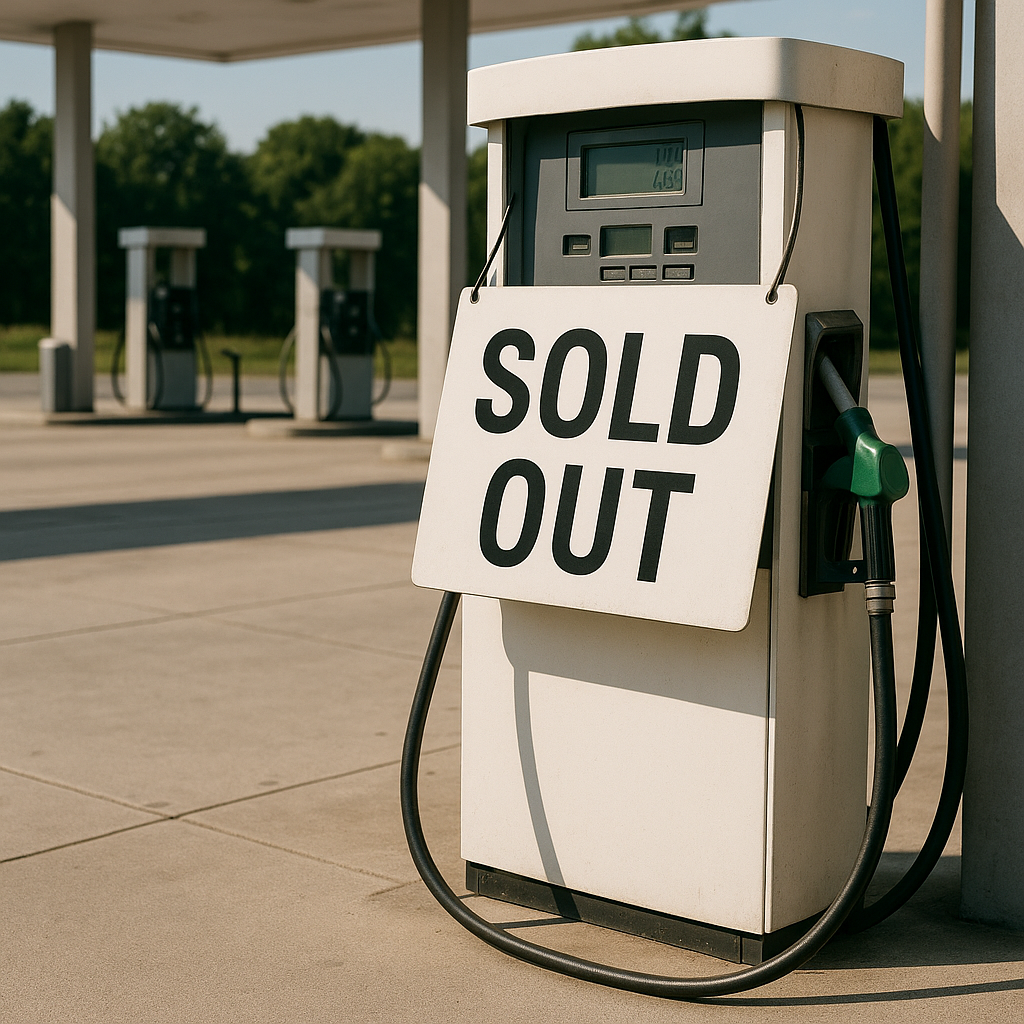
South Africa faces a severe diesel shortage due to fragile supply chains, import reliance, and rand vulnerability, impacting vital services.
South Africa is facing a severe diesel shortage. This is because local refineries have closed, making the country rely on expensive imports. Geopolitical issues and a weak currency make fuel even pricier. The government's plan to control wholesale fuel has made things worse, leading to empty pumps and long lines for trucks. This shortage is hurting many parts of the economy, from transport to mining and communication networks.
Why is South Africa experiencing a diesel shortage?
South Africa's diesel shortage stems from the closure of local refineries, making the country reliant on imports. Geopolitical events and currency fluctuations increase import costs, while a government cap on wholesale releases, intended to be prudent, creates a gap between supply and demand. This forces hauliers to drive further and pay more, impacting various sectors from transport to telecommunications and mining.
Get Cape Town news in your inbox
Stay updated with the latest stories from the Mother City.
Empty Pumps, Full Queues: The Human Face of a Fuel Famine
By the third week of March 2025, every South African with a smartphone had seen the pictures: yellow cardboard squares reading “50 ppm Diesel Finished” flapping on pump handles, lines of refrigerated rigs snaking outside Coega depots, WhatsApp voice notes begging for a contact in Mahikeng who still has a working nozzle. What started as a single closed lane in Bellville South has become a living map of red crosses stretching across Gauteng, KwaZulu-Natal, the Eastern Cape, North West and the Free State. Each cross means the same thing: no diesel today, maybe tomorrow, maybe not.
The shortage is not a dramatic national shutdown; it is a slow-motion unravelling. One 42 000-litre road tanker leaves City Deep with 32 000 litres instead of the usual 38 000. That invisible 6 000-litre gap is enough to idle a 30-ton grain truck for an entire shift, or silence the backup generator of a 250-bed district hospital for a full day. Because the network is meshed, stress jumps within hours: hauliers drive 200 km out of route to secondary depots, burning 8–12 % of the fuel they are trying to load. Every extra kilometre is a litre subtracted from tomorrow’s national balance sheet.
Consumers feel the pinch in stages. First comes the whispered warning - “don’t let your tank drop below half.” Next, the cancelled delivery slot because the supplier’s truck is stuck in a three-hour queue. Finally, the blunt reality of a nozzle turned backwards. By then, the price on the illuminated totem board is academic; what matters is whether any litre will still flow when you reach the front of the line.
Why the Refineries Went Quiet and the Tankers Took Over
South Africa stopped covering its own fuel needs three years ago. SAPREF’s partial closure in 2022 knocked out 180 000 barrels per day; Engen’s Durban plant is now a glorified storage park; Chevron’s Caltex facility is being reborn as an import-only terminal; PetroSA’s gas-to-liquids unit in Mossel Bay runs only when offshore flaring costs less than a takeaway coffee. The upshot: two out of every three litres of diesel burned in the country are born in Bahrain, India or Kuwait, then spend 18–24 days on an MR-class tanker plough across the Indian Ocean.
That geographical gap turns local buyers into hostages of any Middle-East hiccup. On 4 March, a Houthi salvo struck the Al-Dabbiya terminal near Abu Dhabi. Brent crude leapt US $4.60 in ninety minutes; the rand slipped 1.3 % after a stronger-than-expected United States payroll report. Those two market blinks alone stacked R2.40 onto the landed price of every litre before insurance, freight or wharfage were even invoiced. South Africa’s only cushion is a 25-day government stock mandate, but the mandate is measured in days-of-supply, not litres-in-tank. When importers throttle back because the price curve terrifies them, the days evaporate faster than beer at a braai.
The importer-of-last-resort is the Central Energy Fund (CEF), whose planners run a model called “import cover.” The model told them to cap wholesale releases at 85 % of last year’s offtake, a figure that looks prudent on a spreadsheet and lethal on a loading rack. In truth, demand has not fallen; it has simply been pushed into the grey market where litre prices are already R4–R6 above the regulated ceiling. The gap between what the model allows and what the economy needs is being filled by human ingenuity: double shifts, longer routes, and a growing army of plastic jerry-cans strapped to the backs of bakkies.
Rand, Risk Premiums and the R7.50-per-Litre Shockwave
Every weekday at 14:00, the CEF publishes its “over/under recovery” slate, a ritual as closely watched as horse-racing tips. The numbers, however, are already stale: they average three- to five-day-old cargo quotes that themselves embed a volatility premium. On the day this article was filed, the slate showed an under-recovery of R6.80 on 50 ppm diesel. Add the scheduled R1.40 increase in road-transport tariffs and the R0.26 lift in the Slate Levy, and the April pump price could jump R7.50 in a single adjustment. Inland motorists - those furthest from Durban and Cape Town berths - may face R28 per litre by the first Wednesday of April, a level that wipes out every cent of the 2024 fuel-tax relief dangled in the National Budget.
The hidden maths is brutal. A 400 kVA generator at a small shopping centre burns 32 litres an hour at 75 % load. At R28, that is R896 per hour just to keep fridges and point-of-sale machines alive. A typical centre running load-shedding stages 4–6 for eight hours a day will watch R7 200 leave the building every day, before a single loaf of bread is sold. Multiply that by 30 days and the diesel bill eclipses the monthly rent. Mall owners are already drafting clauses to pass the cost straight to tenants; tenants are modelling closures. The spiral is textbook: higher input cost, lower footfall, job losses, even less demand for fuel.
Forward-cover traders warn the picture could worsen. The April Brent futures curve is in steep backwardation, a structure that rewards sellers to hold cargoes offshore in floating storage rather than discharge at Richards Bay. If even two extra cargoes decide to loiter near Singapore waiting for higher prices, South Africa’s 25-day cover shrinks to 21 days, then 18. At that point, the government can either pay a ransom premium or risk physical stock-outs at the coast. Either way, the rand will take the knee-jerk hit, adding yet another layer of cost to every litre that finally lands.
The Invisible Guzzlers: Towers, Mines and the Data Centres You Never See
Television crews film queues of trucks and tractors, but three quieter clusters burn diesel at scales that never appear in retail statistics:
-
Mobile telecom towers* – Roughly 6 000 base stations beyond the Eskom grid rely on 500 kVA diesel gensets. Each unit sips 120 litres per day during higher-stage load-shedding. That is 720 000 litres nationally per day, enough to fill 18 road tankers that never pass a public pump. Network operators lease bulk tanks farmed out to third-party logisticians; when those contractors cannot source supply, entire towers go dark, dropping calls and mobile-money transactions in rural constituencies that vote in May’s provincial elections.
-
Open-cast mines* – A single 400-ton haul truck burns 3 300 litres in a 12-hour shift. A mid-tier iron-ore pit runs 28 such trucks; if half the fleet stands idle for lack of fuel, daily output falls 14 000 tons. Export sales are priced in dollars, but the diesel invoice is in rand at R28. The maths destroys marginal pits first, then creeps up the cost curve. Mining houses have already started “cascading” supply: prioritising flagship shafts and letting marginal ones hibernate, a polite word for mothballing jobs.
-
Data centres and banks* – A 10-megawatt server hall needs 2 700 litres per hour of standby diesel to maintain uptime guarantees. Most facilities hold only 96 hours of on-site storage because insurers refuse larger quantities in urban catchments. If a third-party haulier misses a 48-hour delivery window, the chief information officer must choose between shutting down servers or violating insurance terms. Either decision ripples outward: card machines fail, ATMs switch off, cloud-hosted medical records become unreachable. The economy is now a Jenga tower whose diesel blocks are being pulled out one by one.
The combined drain from these hidden users is conservatively 3.5 million litres per day, a figure equal to 8 % of South Africa’s daily diesel imports. None of that demand can be “shed” like electricity; it is binary - run or die. When government models talk about “demand destruction,” they imagine motorists leaving cars at home. In reality, the first casualties are the very infrastructures that keep the formal economy breathing.
[{"question": "Why is South Africa experiencing a diesel shortage?", "answer": "South Africa's severe diesel shortage is primarily due to the closure of local refineries, making the country heavily reliant on expensive imports. Geopolitical issues and a weak currency further escalate import costs. The government's decision to control wholesale fuel releases has exacerbated the problem, leading to a significant gap between supply and demand and creating empty pumps and long queues for commercial vehicles."}, {"question": "When did the diesel shortage become highly visible to the public?", "answer": "By the third week of March 2025, the diesel shortage became highly visible across South Africa. Smartphone users were inundated with images of '50 ppm Diesel Finished' signs at fuel pumps, long lines of refrigerated trucks, and desperate WhatsApp messages circulating about fuel availability in various provinces like Gauteng, KwaZulu-Natal, the Eastern Cape, North West, and the Free State."}, {"question": "What caused South Africa to become so dependent on imported diesel?", "answer": "South Africa stopped covering its own fuel needs approximately three years ago. Major refineries like SAPREF and Engen's Durban plant have either partially closed or been converted into import-only terminals. PetroSA's gas-to-liquids unit in Mossel Bay operates inconsistently. As a result, two out of every three litres of diesel consumed in the country are now imported from distant locations like Bahrain, India, or Kuwait, a journey that takes 18-24 days by sea."}, {"question": "How do global events and currency fluctuations impact the cost of diesel in South Africa?", "answer": "South Africa's reliance on imports makes it highly vulnerable to global market fluctuations. For instance, a Houthi attack on an oil terminal can cause Brent crude prices to jump, and a stronger-than-expected US payroll report can lead to a depreciating rand. These events directly increase the landed price of diesel by significant amounts, even before insurance, freight, or wharfage costs are factored in."}, {"question": "What is the \"R7.50-per-Litre Shockwave\" and how does it affect businesses and consumers?", "answer": "The \"R7.50-per-Litre Shockwave\" refers to a potential massive increase in diesel prices, driven by factors like a high under-recovery rate on 50 ppm diesel (e.g., R6.80), scheduled road-transport tariff increases, and an uplift in the Slate Levy. This could push inland pump prices to R28 per litre by early April, effectively nullifying any fuel tax relief. For businesses, this translates to exorbitant operational costs, such as R896 per hour for a 400 kVA generator, leading to potential closures, job losses, and a downward economic spiral as costs are passed on to consumers."}, {"question": "Which sectors are \"invisible guzzlers\" of diesel and how are they impacted by the shortage?", "answer": "Three major 'invisible guzzlers' of diesel, not typically seen in retail statistics, are mobile telecom towers, open-cast mines, and data centres/banks. Mobile telecom towers rely on diesel generators for network uptime, consuming 720,000 litres daily nationally, impacting rural connectivity. Open-cast mines use massive amounts of diesel for haul trucks, leading to production cuts and job losses as marginal pits are mothballed. Data centres and banks require diesel for standby generators to maintain uptime guarantees, risking service failures and insurance violations if fuel deliveries are missed. The combined drain from these sectors is conservatively 3.5 million litres per day, representing 8% of South Africa's daily diesel imports, and their inability to operate affects the fundamental infrastructure of the economy."}]

Aiden Abrahams is a Cape Town-based journalist who chronicles the city’s shifting political landscape for the Weekend Argus and Daily Maverick. Whether tracking parliamentary debates or tracing the legacy of District Six through his family’s own displacement, he roots every story in the voices that braid the Peninsula’s many cultures. Off deadline you’ll find him pacing the Sea Point promenade, debating Kaapse klopse rhythms with anyone who’ll listen.
View all articles →