
Nando’s Hot Young Designer 2026 opens entries for SA’s rising creatives
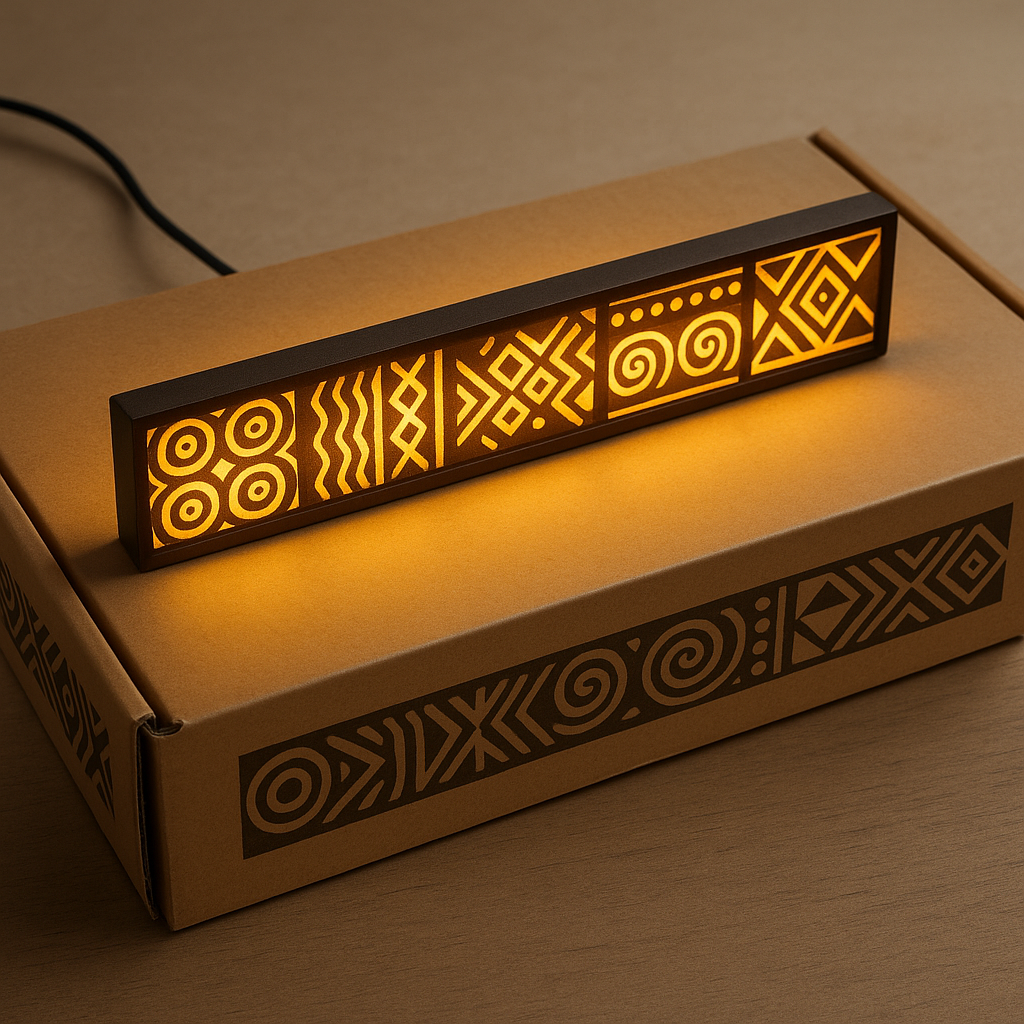
Explore the 2026 Nando's Hot Young Designer brief: craft a Pan-African luminaire, understand the judging DNA, and see how a light is made.
The Nando's Hot Young Designer competition lets talented designers create a special light fixture that shows off African culture. These lights need to be strong, look great, and tell a story, with the winning design getting a chance to shine in Nando's restaurants all over the world. Designers can earn money from their creations and help share African art with everyone, making a big impact on their careers and communities. It's a fantastic way to bring African creativity to a global audience, one beautiful light at a time.
How does the Nando’s Hot Young Designer competition work?
The Nando’s Hot Young Designer (HYD) challenge tasks designers with creating a linear light fixture that embodies Afro-Luso soul, meets strict technical specifications, and tells a compelling story. Submissions are judged on craftsmanship, commercial viability, and narrative resonance, with the winning design entering Nando's global pipeline and earning royalties.
Get Cape Town news in your inbox
Stay updated with the latest stories from the Mother City.
01 The Spark that Lit the 2026 Race
At 08:00 sharp on a Tuesday the submission gate for the 2026 Nando’s Hot Young Designer (HYD) challenge cracked open. By lunchtime the hashtag had climbed the regional trends on X, WhatsApp threads for final-year product developers were vibrating non-stop, and a ceramics student in Pretoria was already polling strangers for CNC advice on LinkedIn. The commotion is the new normal: since 2016 this bi-annual search has morphed from corporate kindness into a career trampoline that braids making, money and modern African identity.
The numbers explain the hype. Nando’s has placed more than 1 200 outlets on six continents; every new build must carry a proudly Southern-African narrative inside its walls. A single winning luminaire therefore lands in a global pipeline that can top 350 installs a year. For a twenty-something creator that is faster exposure than any gallery or trade-fair circuit can offer. Add a royalty split that pushes seventy percent to the designer and the buzz starts making sense.
What competitors may not know is that the brief is already stress-tested in Abu Dhabi humidity, London limescale and Joburg hail. If a prototype survives those torture chambers the designer is fast-tracked into an 80-store pilot that stretches from Sandton to Sheffield to Sharjah. In short, the chain does not merely decorate restaurants; it exports African craft at the speed of chicken.
02 The Blueprint You Must Crack
The hero product is deceptively simple: a linear light that ships in a standard Nando’s crate, assembles in fifteen minutes with no power tools and still whispers Afro-Luso soul around tables built for sharing flame-grilled food. Judges will measure every millimetre against a checklist that is brutal yet transparent.
First come the immovable metrics. The fitting may stretch 1.4 m tip-to-tip but must stay under 28 kg so a single waiter can hang it. Beam angles have to glide between 25° and 55° to spotlight peri-peri prawns without blinking guests. Courtyard stores in Maputo monsoons or Jo’burg thunderstorms demand IP44 sealing, while consecutive units must click flush for seamless 15 m runs. Maintenance has to be tool-free: a 5 mm Allen key is the only aid allowed. Every 300 mm segment is capped at 12 W so retrofit budgets stay appetising.
Then there is the materials nudge list. Indigenous hardwoods, up-cycled bottle glass, aluminium spun from retired cookware and Ilala palm fibres score top marks. Collaborations with collectives like the Keiskamma Art Project or Rorke’s Drift weavers are explicitly rewarded because they move rural skills into high-traffic spaces. Entrants must also submit a 150-word “origin myth” that waitstaff can recite when diners point upward and ask, “What is that?”
Storytelling is not window dressing; it is locked at forty percent of the final score. Jurors want a micro-narrative that folds the continent’s vast visual lexicon into a bite-sized icon capable of travelling across hemispheres. If the tale does not travel, neither will the product.
03 Inside the Jury Brain
HYD uses a triad scoring grid. Craftsmanship - joinery, tolerances, surface finish - carries thirty percent. Commercial viability, meaning bill-of-materials cost at 500-unit scale, flat-pack efficiency and mid-size factory readiness, claims another thirty. Narrative resonance gobbles the remaining forty, tipping the scales toward cultural meaning rather than pure margin.
The 2026 panel mixes Lagos market memory with Silicon-Drakensberg tech savvy. British-Nigerian colour alchemist Yinka Ilori brings playground energy steeped in market hues. Mpho Vackier of TheUrbanative fuses Setswana patterns with 3-D-printed steel. Khensani Jurczok-de Klerk mines matrilineal design memory through Johannesburg’s Matri-Arch collective. Tracy Lynch, creative director of Clout/SA, guards the brand’s global DNA. A fifth seat is handed to whoever wins the TikTok live-stream vote on 14 June, injecting raw public sentiment straight into the calculus.
The process is ruthless but transparent. Short-listed candidates enter the Salt River FabLab for six weeks, receive R35 000 micro-grants, and must upload a digital twin into Autodesk Fusion 360. That file is hurled against virtual sand-storms, flash-rain and 45 °C kitchens before a single LED ever lands in a real store. Only after the simulation smiles do the top three designs move into an 80-unit pilot tagged with NFC chips. Diners who tap their phones unlock maker bios, buy limited-edition prints or book weekend workshops back home.
04 From Winning Model to Pan-African Beacon
Victory is only the starter. Once pilot data proves diner engagement and low maintenance headaches, the winning lamp is baked into Nando’s new-build budget for up to 350 refurbishments and green-field stores each year. Royalties are channelled through the Makers Trust, a 70/30 split favouring the designer while ring-fencing payments for the rural collectives that supplied bead, weave or carve elements.
Past champions show the arc. Thabisa Mjo’s 2016 “Marry-Me” pendant - hand-woven cowhide disks echoing Zulu ceremonial beadwork - now levitates above Cape Town’s V&A Waterfront, London’s Design-Museum café and an Ace Hotel in Chicago. Justin Davies’ 2018 “Kasi Chandelier,” forged from re-appropriated street-pole copper, catapulted him from bartender to employer of fourteen in Woodstock. Tania Habimana fused Rwandan Imigongo geometry with LED filaments to illuminate outlets in Nairobi and Washington DC while sustaining thirty potters in Kayonza District.
The 2026 intake faces loftier hurdles. Jurors want disassembly without glue, flat-pack density below 0.026 m³ per metre, one hand-scar every 500 mm for “soul,” and a multi-sensory flourish such as cedar aroma that re-emerges when the fitting warms. They secretly hope someone will weaponise thermochromic glaze that flushes peri-peri red when grill heat rises - this year’s rumoured ghost brief.
Yet the reward is historic. A quietly circulated Clout/SA memo reads: “We are not merely lighting tables; we are wiring African futures - one glowing filament at a time.” Whether that future smells of cedar smoke, shines through turmeric-amber polycarbonate or carries GPS-coded Easter eggs under its lens, the next wave of makers now hold the open brief. Submissions close at 23:59 SAST on Youth Day, 16 June, punctual to the second.
[{"question": "
What is the Nando's Hot Young Designer competition?
", "answer": "The Nando's Hot Young Designer (HYD) competition is a bi-annual challenge that invites talented designers to create a special light fixture that showcases African culture and embodies \"Afro-Luso soul.\" The winning design gets the opportunity to be featured in Nando's restaurants globally, offering significant exposure, career advancement, and a royalty split to the designer."}, {"question": "What kind of light fixture are designers tasked with creating?
", "answer": "Designers are tasked with creating a linear light fixture that is both aesthetically pleasing and technically robust. It needs to ship in a standard Nando's crate, assemble in fifteen minutes without power tools, and weigh under 28 kg so a single waiter can hang it. The design must also meet specific technical requirements like beam angles (25°-55°), IP44 sealing for outdoor use, and a maximum of 12W per 300mm segment. Crucially, it must tell a compelling story, or 'origin myth,' that reflects African identity."}, {"question": "How are submissions judged in the Nando's Hot Young Designer competition?
", "answer": "Submissions are judged using a triad scoring grid: Craftsmanship (joinery, tolerances, surface finish) accounts for 30%, Commercial Viability (bill-of-materials cost at 500-unit scale, flat-pack efficiency, factory readiness) for another 30%, and Narrative Resonance (the 'origin myth' and cultural meaning) takes the largest share at 40%. Judges look for authentic storytelling that can travel across hemispheres."}, {"question": "What are some of the key requirements for the design regarding materials and collaboration?
", "answer": "The competition encourages the use of indigenous materials such as hardwoods, up-cycled bottle glass, aluminium from retired cookware, and Ilala palm fibres. Collaborations with African art collectives like the Keiskamma Art Project or Rorke's Drift weavers are explicitly rewarded, aiming to bring rural skills into high-traffic, global spaces."}, {"question": "What benefits does the winning designer receive?
", "answer": "The winning designer's luminaire enters Nando's global pipeline, potentially landing in up to 350 new builds and refurbishments annually. They receive a royalty split of seventy percent through the Makers Trust, with provisions made for rural collectives involved in the design. This offers unparalleled global exposure, financial reward, and a significant boost to their career, as demonstrated by past champions like Thabisa Mjo and Justin Davies."}, {"question": "What is the timeline for the 2026 Nando's Hot Young Designer competition?
", "answer": "The submission gates for the 2026 Nando’s Hot Young Designer challenge opened at 08:00 on a Tuesday. The competition is bi-annual. Submissions for this year's challenge close at 23:59 SAST on Youth Day, June 16th. Shortlisted candidates will enter the Salt River FabLab for six weeks, receive micro-grants, and undergo rigorous digital and physical prototyping before the final selection."}]
Emma Botha is a Cape Town-based journalist who chronicles the city’s shifting social-justice landscape for the Mail & Guardian, tracing stories from Parliament floor to Khayelitsha kitchen tables. Born and raised on the slopes of Devil’s Peak, she still hikes Lion’s Head before deadline days to remind herself why the mountain and the Mother City will always be her compass.
View all articles →