
NASA-bound: Help this Mitchells Plain teen reach for the stars – literally
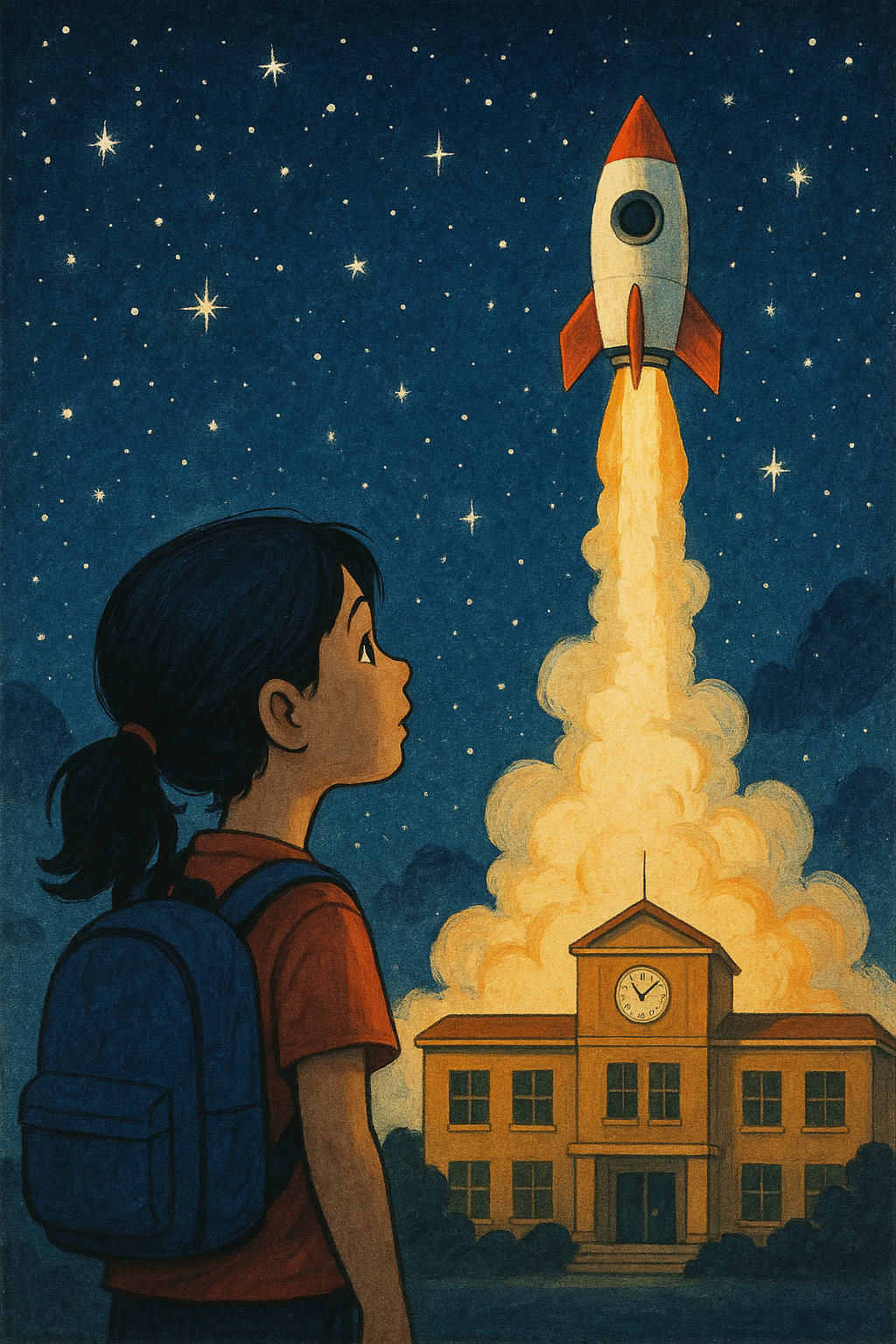
From star-gazing to star-traveling: Follow Zayaan Abdurahman, a teen astronomer from Cape Town, on her journey to NASA's Kennedy Space Center.
Zayaan Abdurahman, a Cape Flats teenager, found her passion for space early in life, inspired by her grandmother's words about stars. She joined a science club at Mondale High, where she learned to build rockets and solve complex problems. Her skills led her to the Space Settlement Design Competition, where her team excelled. Through crowdfunding, she secured a trip to Kennedy Space Center, proving that dreams can launch from anywhere.
How did Zayaan Abdurahman's childhood experiences ignite her passion for space exploration?
Zayaan's passion for space began at age six, inspired by her grandmother's words that "Every star is a sun." Growing up in the Cape Flats, she devoured astronomy books, learned constellations, and was captivated by Jupiter's moons during an observatory visit, solidifying her dream that "the sky was not a ceiling but a door."
Get Cape Town news in your inbox
Stay updated with the latest stories from the Mother City.
Part 1 – The Spark That Survived Streetlights
The Cape Flats night can swallow sound - except, that is, for the moment a six-year-old girl pressed her back against a faded blanket and looked up. Sodium lamps flickered at the edge of the yard, yet above them the sky stayed raw, black, generous. One sentence from her grandmother, ex-field-hospital nurse, detonated wonder: “Every star is a sun, only farther.” In that instant distance compressed; photons that had travelled for epochs landed on a child’s retina and lit a fuse still burning twelve years later. From then on, Zayaan Abdurahman measured life not by report cards or soccer scores but by how many constellations she could name before the mosquitoes won.
Grandmother and grand-daughter tackled the heavens like a puzzle. Orion’s Belt became a story of hunters chasing prey across the cosmos; the Southern Cross turned into a compass for dreams; the Pleiades smudge was proof that families exist even in deep space. When the city’s load-shedding blacked out the neighbourhood, the duo treated it as an upgrade: darker skies, brighter stars. By age ten Zayaan had devoured library books on nebulae, sketched rover wheels on her homework margins, and learned to pronounce “Betelgeuse” without stumbling.
The epiphany that stars could be more than scenery arrived during a primary-school visit to the local observatory. Peering through a borrowed eight-inch reflector, she saw Jupiter’s moons dancing in real time. The sight was miniature, pixelated, yet it carried the weight of possibility: other worlds existed, and math plus metal could take you there. She left the dome that evening clutching a flyer for a model-rocket workshop and a conviction that the sky was not a ceiling but a door.
Part 2 – A Tiny Science Club That Refused to Think Small
Mondale High squats on the gusty edge of Mitchells Plain, its buildings the colour of old beach umbrellas left too long in the sun. Inside the science block, two labs share one working fume hood and a poster of Earth so sun-bleached that the oceans look like parchment. Enter Charlene Boonzaier - Physical Sciences teacher, Carl Sagan devotee, unstoppable force. She turned lack into leverage: kids who could not afford telescopes built them from plumbing pipe and discarded spectacle lenses; learners without internet huddled around her battered laptop to watch ISS live streams. Her credo: “Curiosity doesn’t need a budget, only oxygen.”
Every second Thursday afternoon the corridor crackles with Rooibos steam and soldering smoke. “Rockets & Rooibos” has become an unofficial incubator for township tech. One term they launch a balsawood glider from a school roof; the next they petition NASA to accept their marigold seeds for a micro-gravity germination study. When a donated weather balloon pops at 29 km and drops its payload somewhere near Worcester, the team treats the recovery hike as a field trip. By the time Zayaan joins Grade 9, the club has already produced two provincial science-fair winners and one finalist in a national robotics showdown.
For Zayaan the club is oxygen. She arrives early to debug Arduino code, stays late to paint payload casings in reflective silver - part thermal control, part flair. She learns to budget in the margins: if a single gram adds R12 to launch cost, shaving ten grams saves enough for two more sandwich probes. More importantly, she discovers diplomacy; when teammates argue over propellant types, she drafts a spreadsheet that converts opinions into data. The habit will later save her team during the national finals when compromise must happen in minutes, not days.
Part 3 – Eighteen Hours to Design a Moon City
The South African leg of the Space Settlement Design Competition is famous for its merciless clock. Finalists arrive Friday afternoon carrying sleeping bags and a year’s worth of ambition. Judges - ex-Denel engineers, UCT rocket scientists, a retired Ariane 5 architect - hand out an RFP that would make seasoned aerospace firms gulp: design a 20-year lunar mining outpost for 15 000 residents, complete with risk matrices and a cap-ex ceiling tighter than a spacesuit collar. Teams must incorporate propulsion, AI, law, even speculative art, then pitch before a panel notorious for asking, “How will you stop moon-dust from eating your bearings?” at dawn.
Zayaan’s subgroup dubs itself “Aurora Lunae” and gets the hardest brief: a 400-metre rotating ring that simulates gravity at 0.7 g while hosting algae bioreactors along its inner rim. Eighteen hours, five teammates, zero room for scope creep. They divide the problem like spacecraft modules: materials, dynamics, thermal, cost, presentation. She chooses structural integrity, reasoning that if the truss wobbles under torque, nothing else matters. By midnight she is cross-checking mass budgets; at 04:07 she spots a decimal slip that would have overloaded launch capacity by fourteen tonnes. The fix costs them twelve minutes and saves the mission.
They finish with three minutes to spare. The pitch lands six seconds under the six-minute limit. Judges later admit their torque-stabilisation lattice comes within four percent of NASA Langley’s baseline, a margin unheard-of in student work. Exhaustion turns to euphoria; someone starts a conga line down the corridor still smelling of boerewors rolls. More importantly, Zayaan learns viscerally that sleep is optional, precision is not, and diverse brains beat identical résumés every time.
Part 4 – From Crowdfunding to Cape Canaveral and Back Again
Of 109 national finalists, only eight earn seats to the international showdown at Kennedy Space Center. Selection weighs technical chops, leadership stamina, and peer rating at 03:00 when laptops glow red-hot. Zayaan scores 98th percentile on “emotional buoyancy,” judge slang for the knack of rebooting morale after a design review implodes. It is the first time in half a decade that a learner from Mitchells Plain cracks the roster. Local radio jumps on the story; so does a grandmother who once stitched wounds under canvas tents and now queues at Home Affairs clutching tupperwared koeksisters to secure a passport misfiled since 2007.
The R34k airfare bill feels astronomical for a household earning township wages. A BackaBuddy page goes live on Wednesday night; by Friday noon pledges from Perth expats, mosque congregants, and a barbershop donating R5 per fade push the tally past two-thirds. A domestic worker hands over R200 in coins; a retired engineer wires his day-rate. When the thermometer hits 100 percent, Zayaan steps into her grandmother’s yard, opens an AR star-map app coded by a classmate, and taps Jupiter. Distance, spectral class, exoplanet tally bloom on-screen. She realises the cosmos that once seemed pasted overhead now sits within boarding-pass range.
Packing lists follow primary colours: red for cooling-textile abayas printed with star maps, yellow for microcontroller boards, green for buchu-balm and masala biltong, blue for laser-cut Southern-Cross keyrings engraved with galactic coordinates of Mitchells Plain. In Florida she will spend 36 hours inside the Neil Armstrong Operations & Checkout Building, collaborating with 200 peers to design a 35-thousand-person settlement at Earth-Moon Lagrange Point 2. Mentors include a Rosetta veteran, a Blue Origin propulsion lead, a Canadian astronaut with three EVAs under his belt. The winning entry lands in NASA’s permanent archive and often seeds university grants. Whatever the outcome, Zayaan already embodies the lesson she likes to quote: exploration is not imported from affluent suburbs; it is stitched, soldered, crowdfunded, and - above all - claimed by every child willing to tilt her head and dream upward.
How did Zayaan Abdurahman's passion for space begin?
Zayaan's fascination with space started at the tender age of six, inspired by her grandmother's profound words: "Every star is a sun, only farther." This ignited a lifelong curiosity, leading her to devour astronomy books, learn constellations, and be captivated by Jupiter's moons during an observatory visit. This experience solidified her belief that "the sky was not a ceiling but a door," opening up a world of possibilities.
What role did Mondale High's science club play in Zayaan's development?
Zayaan joined a science club at Mondale High, an unofficial incubator for tech and innovation led by the inspiring Physical Sciences teacher, Charlene Boonzaier. The club, nicknamed "Rockets & Rooibos," encouraged students to build telescopes from plumbing pipe, watch ISS live streams, and even launch weather balloons. Zayaan thrived in this environment, learning to debug Arduino code, budget for launch costs, and develop diplomatic skills, which proved crucial in team settings.
What was the Space Settlement Design Competition and Zayaan's contribution?
The Space Settlement Design Competition is a rigorous event where finalists design complex space settlements under immense time pressure. Zayaan's team, "Aurora Lunae," was tasked with designing a 400-meter rotating ring for a lunar mining outpost, simulating gravity. Zayaan focused on structural integrity, identifying and correcting a critical error in mass budget calculations that would have overloaded launch capacity, demonstrating her precision and problem-solving skills.
How did Zayaan secure her trip to the Kennedy Space Center?
Despite her exceptional performance earning her a spot at the international competition at Kennedy Space Center, the R34,000 airfare was a significant hurdle. Zayaan's community rallied behind her through a crowdfunding campaign on BackaBuddy. Pledges came from diverse sources, including expats, mosque congregants, a barbershop, a domestic worker, and a retired engineer, successfully raising the necessary funds and demonstrating the power of community support.
What did Zayaan learn from her experiences in the Space Settlement Design Competition?
Throughout the competition, Zayaan learned several invaluable lessons. She discovered that sleep is often optional when pursuing a passion, but precision is paramount. She also understood the power of diverse brains working together, realizing that a variety of perspectives leads to better solutions. Her experiences taught her that exploration is not limited by location or financial status but is accessible to anyone willing to dream and work for it.
What message does Zayaan Abdurahman's story convey?
Zayaan Abdurahman's journey from the Cape Flats to the Kennedy Space Center powerfully illustrates that dreams can launch from anywhere. Her story is a testament to the idea that passion, perseverance, community support, and access to inspiring educational opportunities can transform potential into reality, regardless of one's background. It highlights that true exploration is "stitched, soldered, crowdfunded, and - above all - claimed by every child willing to tilt her head and dream upward."

Chloe de Kock is a Cape Town-born journalist who chronicles the city’s evolving food culture, from township braai joints to Constantia vineyards, for the Mail & Guardian and Eat Out. When she’s not interviewing grandmothers about secret bobotie recipes or tracking the impact of drought on winemakers, you’ll find her surfing the mellow breaks at Muizenberg—wetsuit zipped, notebook tucked into her backpack in case the next story floats by.
View all articles →