
Netflix’s Avatar Season 2: A steadily improving fantasy adventure
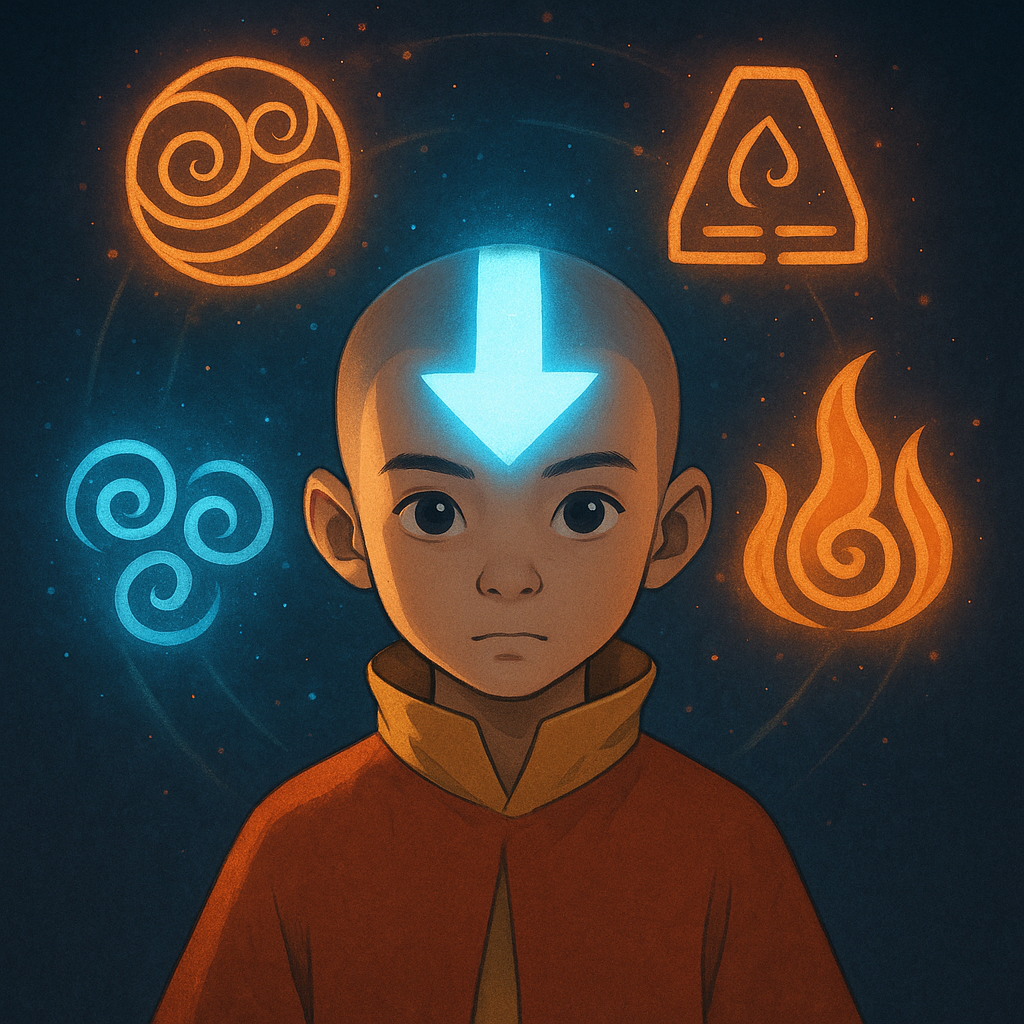
Netflix's Avatar: The Last Airbender Book Two course-corrects with structural changes, stunning visuals, and deep character development.
Netflix's Book Two of "Avatar: The Last Airbender" made a huge comeback! They used real places and effects instead of fake computer graphics, which made the world feel much more authentic. The story was told better and faster, keeping you hooked. Even the actors helped make their characters feel more real and deep. It's like they learned from their past mistakes and created something truly amazing.
What improvements did Netflix make in Book Two of *Avatar: The Last Airbender*?
Netflix's Book Two of Avatar: The Last Airbender significantly improved by embracing tangible locations and practical effects over digital environments, restructuring the narrative for better pacing, and deepening character portrayals through actor input and practical adjustments. The season also incorporated expanded lore, technical mastery in stunts and visuals, and refined sound design.
Get Cape Town news in your inbox
Stay updated with the latest stories from the Mother City.
A Second Chance in the Material World
Netflix's live-action Avatar: The Last Airbender landed in February 2024 with all the subtlety of a firebender's explosion. The debut season split the fandom down the middle: half celebrated the young cast's energy, while the other half roasted green-screen environments that evoked early-2000s video game graphics. Sixteen months later, the streaming giant dropped Book Two - seven hour-long chapters covering the same territory as 2006's animated "Book Two: Earth." The pressure towered higher than the Serpent's Pass itself. Expectations? Buried deeper than a badgermole's tunnel. Yet remarkably, this new season emerges as a masterclass in franchise rehabilitation, acknowledging past missteps without sweeping them under the rug.
The sophomore effort demonstrates how a property can evolve while honoring its roots. Rather than doubling down on digital environments, the production team embraced tangible locations and practical effects. This shift signals creative humility - a rare quality in blockbuster adaptations. The result satisfies longtime fans who craved authenticity while welcoming newcomers who never experienced the original Nickelodeon run.
What makes this turnaround particularly noteworthy involves the compressed timeline. Modern streaming productions rarely course-correct this dramatically between seasons. Netflix essentially granted the creative team a mulligan, and they capitalized by rebuilding their foundation from bedrock up.
Structural Reinvention and Global Production
Season one required eight episodes approaching an hour each to adapt twelve twenty-three-minute cartoons. Season two tackles twenty animated episodes across seven installments, averaging fifty-three minutes apiece. Show-runner Albert Kim's writers confronted this mathematical impossibility by merging three distinct narrative threads into a unified engine: Aang's hunt for an earthbending mentor culminating in Toph's arrival, the traveling party's journey through the Serpent's Pass and refugee settlement of Gaoling, plus the political intrigue consuming Ba Sing Se's walled capital.
This compression yields something closer to a "greatest-hits" compilation than shot-for-shot recreation - familiar themes executed with fresh instrumentation. The pacing sacrifices some breathing room but gains propulsive momentum that carries viewers through dense plotting.
The visual approach transformed radically between seasons. Where Book One relied heavily on the Volume - Industrial Light & Magic's LED-wall virtual production stage made famous by The Mandalorian - the crew now boarded cargo planes for actual locations. Principal photography launched among snow-capped peaks of New Zealand's South Island (standing in for Western Air Temple flashbacks), migrated to Vietnam's karst limestone formations at Tràng An (the Serpent's Pass), and concluded within Cape Town's nineteenth-century Bo-Kaap district, redressed as Ba Sing Se's Middle Ring.
Cinematographer Michael Marshall captured nearly everything on 35mm film stock, imbuing even the Dai Li's indoctrination chambers with grainy, physical presence unattainable through pixel walls. Costume designer Farnaz Khaki-Sadigh reconstructed Earth Kingdom attire using subdued celadon silks and Ming-dynasty shoulder armor weighing nearly six kilograms. This heft serves narrative purpose: whenever Katara cradles Momo, the lemur's claws snag the fabric microscopically - tiny imperfections insisting this world exists beyond the screen.
Character Growth and Performance Evolution
Gordon Cormier celebrated his thirteenth birthday during the Vietnam shoot, having been eleven when filming Book One. While digital techniques smooth the transition, puberty's arrival proves narratively fortuitous. Aang's mounting dread regarding the impending invasion now cracks his voice with barely perceptible strain, externalizing internal pressure without melodrama.
Kiawentiio engineered practical adjustments to deepen her portrayal. She requested her water-skin pouches relocate from back to hips, enabling more natural arm movements. Choreographers rewrote water-whip sequences around this lower center of gravity, granting Katara a boxer's jabbing rhythm absent from the animated original. These details accumulate into lived-in physicality.
Ian Ousley utilized the hiatus studying Māori whakapapa - genealogical recitation - and persuaded writers to incorporate Sokka sharing oral histories around campfires. This improvisation solidifies his role as group anchor. The investment pays dividends in Episode 3, where Sokka pacifies a refugee caravan by mapping constellations into a "map of hope" - replacing the animated series' psychedelic cactus-juke hallucination with equivalent transcendence minus forced meme energy.
Miya Cech's Toph Beifong arrives fashionably late, appearing ninety-seven minutes into Episode 4 - a gamble echoing her animated counterpart's meteoric entrance. Selected from twelve hundred global auditions, the fourteen-year-old Japanese-Australian performer brings legal blindness that renders fight sequences authentically kinetic. She trained eight weeks at Hong Kong's Cathay Pacific School of Wushu mastering "grounding" techniques - combat from lowered stances detecting enemy footfalls through footwear. The script merges Toph's championship arc with the Gaoling rescue, so her inaugural seismic strike occurs in a marble-dusted quarry under moonlight. Vibrations manifest as visible radial shockwaves through 120 buried subwoofers pumping forty-hertz bass through the soil.
Elizabeth Yu's Azula underwent significant recalibration after Season One criticism regarding excessive coldness. The twenty-two-year-old Princeton drama graduate collaborated with dialect coach Samara Bay, replacing clipped cartoon diction with preternatural serenity that fractures only when lightning erupts from her fingers. Eighty-five-millimeter lenses press intimately against her face, inviting microscopic inspection. Khaki-Sadigh dressed her in beetle-wing sequins reading black under neutral illumination but refracting copper-blue near flame - subliminal commentary on perfectionism's blinding nature. Writers additionally incorporated material from F.C. Yee's 2019 novel The Shadow of Kyoshi, revealing Azula memorized Fire Lord genealogies back to the first ruler, believing history constitutes a chain she might reforge into weaponry.
Standalone Brilliance and Expanded Mythology
Episode 5 ("Ten Thousand Things") constitutes the season's hidden triumph. Writers fuse animated classics "Zuko Alone" and "The Tales of Ba Sing Se" into a fifty-six-minute neo-Western. The exiled prince drifts through a dust-bowl village modeled on South Africa's Karoo. Dialogue remains sparse; Marshall's camera instead studies cicadas, parched earth, and the metallic whisper of Zuko's broadswords clearing scabbards. Dallas Liu adopted a protein-restricted diet to hollow his cheeks and studied Toshiro Mifune's silent samurai for physical vocabulary. The climax features a single-take duel photographed at golden hour, firebending achieved through practical flamethrowers rather than digital augmentation - nodding to Mad Max that renders blue-fire impact viscerally immediate.
Ba Sing Se's inner wall now suggests Cold War Berlin: Dai Li agents occupy chicane-cornered rooftops like Stasi officers, their rock-gloves swapped for collapsible meteor-hammers. Production designer Jonathan Carlos constructed quarter-scale city sections within Cape Town's decommissioned Athlone power station, where LED cloud panels shift from cotton-candy pink to imperial jade - visual shorthand for regime temperament. The brainwashing sequence maintains PG friendliness while borrowing Christopher Nolan's rotating hallway from Inception , except horizontal rotation evokes a record player slowly erasing memories.
Book readers receive additional layers: the season sneaks in Yangchen-era lore about Earth Kings commissioning "mind-map" tapestries charting internal conspiracies. Jet's returning portrayal by Sebastian Billingsley-Rodriguez features graffiti tags that unravel this tapestry - literalizing the proverb about protruding nails receiving hammers.
Easter eggs reward attentive viewers without overwhelming narrative flow. Cactus juice appears as neon-green aloe shots peddled by a traveling sand-bender - no hallucinations, merely acknowledgment. During a Lower Ring tavern brawl, Sokka shelters behind a parasol bearing Kyoshi Warrior insignia, foreshadowing Suki's verbally confirmed Season Three return. Avatar Wan's statue hides behind spirit-library shelving during Wan Shi Tong's cameo, its falcon eye-glow matching The Legend of Korra's harmonic convergence palette. A refugee recites "The air is alone, yet never lonely" - verbatim from The Dawn of Yangchen (2022). Traveling circus posters tease the Kemurikage masked spirits from 2015 Dark Horse comics, suggesting future antagonists should the adaptation reach post-war narratives.
Technical Mastery and Future Horizons
The stunt department constructed four distinct martial approaches: earthbending employs Bajiquan (Akira's Tetsuo inspiration), short-range elbow and hip strikes mirroring stone's blunt force; firebending utilizes Northern Shaolin's extended stances and explosive reach, reflecting aggressive expansion; waterbending combines Tai Chi's fluid redirection with Filipino escrima stick-grabs enabling Katara to hook and freeze spears mid-combat; airbending incorporates Baguazhang circle-walking, with Aang now wielding carbon-fiber glider staffs light enough for genuine wushu tassel spinning.
Composer Samuel Kim re-orchestrates The Track Team's original leitmotifs for ninety-piece orchestra. Listen for the duduk's mournful cry when Zuko's morality wavers - the same Armenian woodwind underscored Iroh's "Leaves from the Vine," musically binding uncle and nephew across seasons.
Visual effects evolved substantially. Season one's rubbery digital doubles gave way to Wētā FX. Episode 1's giant sea serpent devours a Fire Nation cruiser through footage rendered at forty-eight fps then step-printed to twenty-four, imparting dreamlike motion blur without high-frame-rate soap opera gloss. For Toph's seismic sense, animators rotoscoped Cech's on-set footprints, growing stalagmites exclusively along actual pressure points - authenticity tricks convincing audiences that ninety-pound girls can topple battlements.
The season's signature image - Azula's lightning meeting Zuko's redirection - unfolded across stormy Wellington dusks. Crew waited four nights for 170 km/h wind alignment. The final composite married practical 200,000-amp Tesla rigs with digital doubles shattering stone courtyards into precisely 7.2 million voxels - matching Ba Sing Se's claimed population.
Supervising sound editor Brent Burge (The Lord of the Rings) built custom libraries recording granite slabs dragged across rugby pitches for earth, and suspending condenser microphones within Iceland's dormant magma vents for fire's subsonic rumble. During the climactic catacombs confrontation, the mix plummets to negative two decibels for three full seconds - auditory blackout synchronized with Azula's post-lightning exhalation. This vacuum lets audiences hear their own heartbeats, transforming viewers into involuntary benders.
Netflix released all seven episodes globally at 7:00 AM PST, yet quietly provided critics four installments under embargo, encouraging episodic rather than cinematic treatment. The strategy succeeded: TikTok's #AzulaMindWarp and #TophBlindBandit hashtags trended in staggered waves across ten days, extending discourse and preventing the "one-weekend flame-out" afflicting other effects-heavy fantasies.
Until then, Book Two streams in 4K Dolby Vision, awaiting veterans and newcomers to determine whether reimagined adventure can coexist alongside hand-drawn classics still haunting collective memory like half-remembered Spirit World dreams.
[{"question": "What improvements did Netflix make in Book Two of Avatar: The Last Airbender?", "answer": "Netflix's Book Two of Avatar: The Last Airbender significantly improved by embracing tangible locations and practical effects over digital environments, restructuring the narrative for better pacing, and deepening character portrayals through actor input and practical adjustments. The season also incorporated expanded lore, technical mastery in stunts and visuals, and refined sound design."}, {"question": "How did the production of Book Two differ visually and geographically from Book One?", "answer": "Book Two radically shifted from Book One's heavy reliance on 'The Volume' (LED-wall virtual production) to principal photography in actual global locations. This included New Zealand's South Island for Western Air Temple flashbacks, Vietnam's Tràng An for the Serpent's Pass, and Cape Town's Bo-Kaap district for Ba Sing Se's Middle Ring. Cinematographer Michael Marshall captured nearly everything on 35mm film stock for a more physical and grainy aesthetic."}, {"question": "How did the narrative structure of Book Two adapt the original animated series?", "answer": "To adapt twenty animated episodes into seven hour-long installments, show-runner Albert Kim's writers merged three distinct narrative threads: Aang's search for an earthbending mentor (leading to Toph's arrival), the Gaang's journey through the Serpent's Pass and Gaoling, and the political intrigue within Ba Sing Se. This compression resulted in a 'greatest-hits' compilation with propulsive momentum, sacrificing some breathing room for faster pacing."}, {"question": "What are some examples of character growth and actor contributions in Book Two?", "answer": "Actors contributed significantly to their character's development. Gordon Cormier's Aang subtly conveyed his growing dread. Kiawentiio (Katara) requested practical adjustments like relocating her water-skin pouches for more natural movement. Ian Ousley (Sokka) used Māori whakapapa to incorporate oral histories, solidifying his role as group anchor. Miya Cech (Toph) brought legal blindness, enhancing fight authenticity, and Elizabeth Yu (Azula) recalibrated her portrayal with a dialect coach and drew from expanded lore to show her character's internal complexity."}, {"question": "What technical advancements and practical effects were used in Book Two?", "answer": "Book Two featured significant technical mastery. Practical flamethrowers were used for firebending, stunt work incorporated four distinct martial arts styles (Bajiquan for earth, Northern Shaolin for fire, Tai Chi/Escrima for water, Baguazhang for air), and Wētā FX handled enhanced visual effects. Practical Tesla rigs were used for Azula's lightning, and supervising sound editor Brent Burge created custom sound libraries for the bending elements, including recording granite slabs for earthbending and using Iceland's dormant magma vents for fire."}, {"question": "Are there any Easter eggs or expanded lore elements for fans in Book Two?", "answer": "Yes, the season is rich with Easter eggs and expanded lore. This includes Yangchen-era lore about 'mind-map' tapestries, a non-hallucinatory neon-green aloe shot for 'cactus juice,' Sokka sheltering behind a parasol with Kyoshi Warrior insignia, a statue of Avatar Wan, a quote from The Dawn of Yangchen, and posters teasing the Kemurikage masked spirits, hinting at potential future antagonists from the comics.", "extra_info": "The detailed attention to practical effects, character-driven adjustments, and narrative compression mark Book Two as a significant improvement over its predecessor, demonstrating Netflix's commitment to rehabilitating the live-action adaptation of Avatar: The Last Airbender. The use of real-world locations and tangible elements contributed to a more immersive and authentic viewing experience, resonating with both long-time fans and new audiences."}]
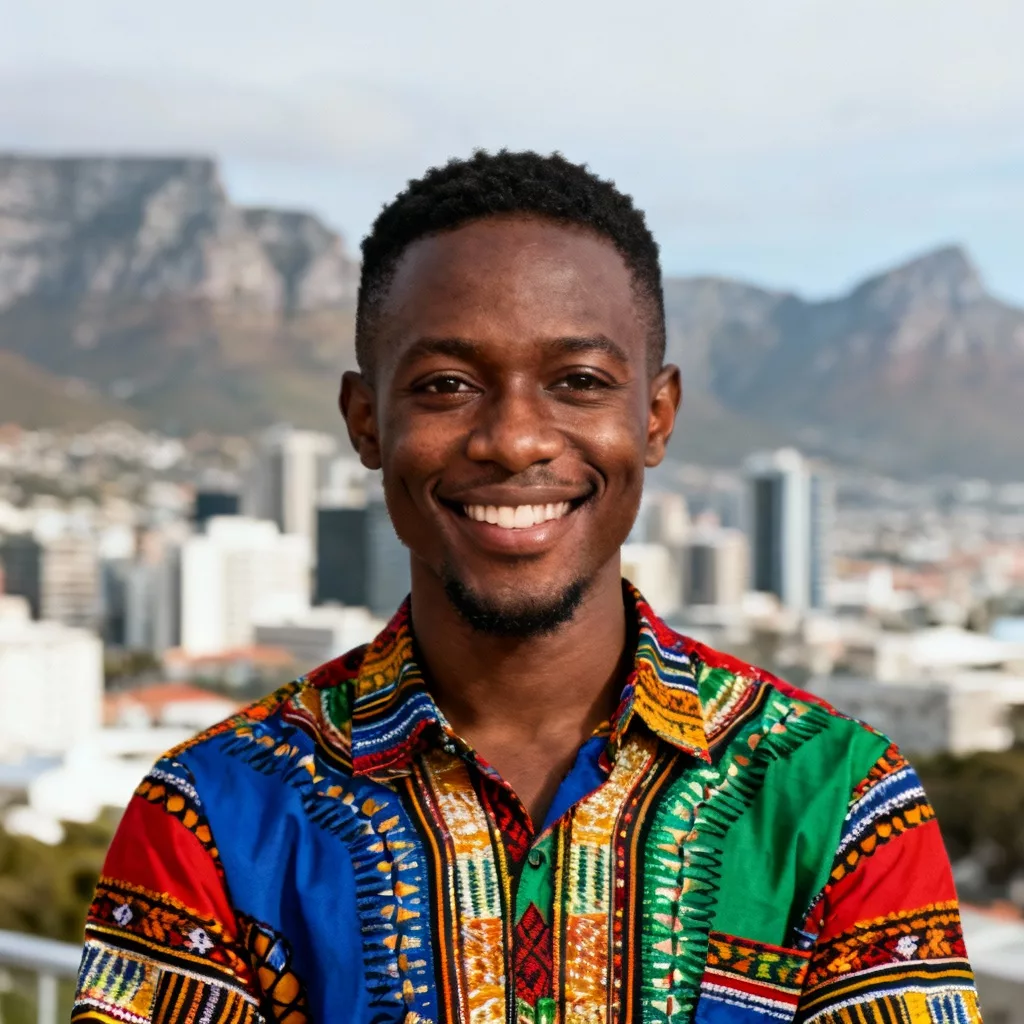
Thabo Sebata is a Cape Town-based journalist who covers the intersection of politics and daily life in South Africa's legislative capital, bringing grassroots perspectives to parliamentary reporting from his upbringing in Gugulethu. When not tracking policy shifts or community responses, he finds inspiration hiking Table Mountain's trails and documenting the city's evolving food scene in Khayelitsha and Bo-Kaap. His work has appeared in leading South African publications, where his distinctive voice captures the complexities of a nation rebuilding itself.
View all articles →