
Only 10% of South African children with mental health issues receive care
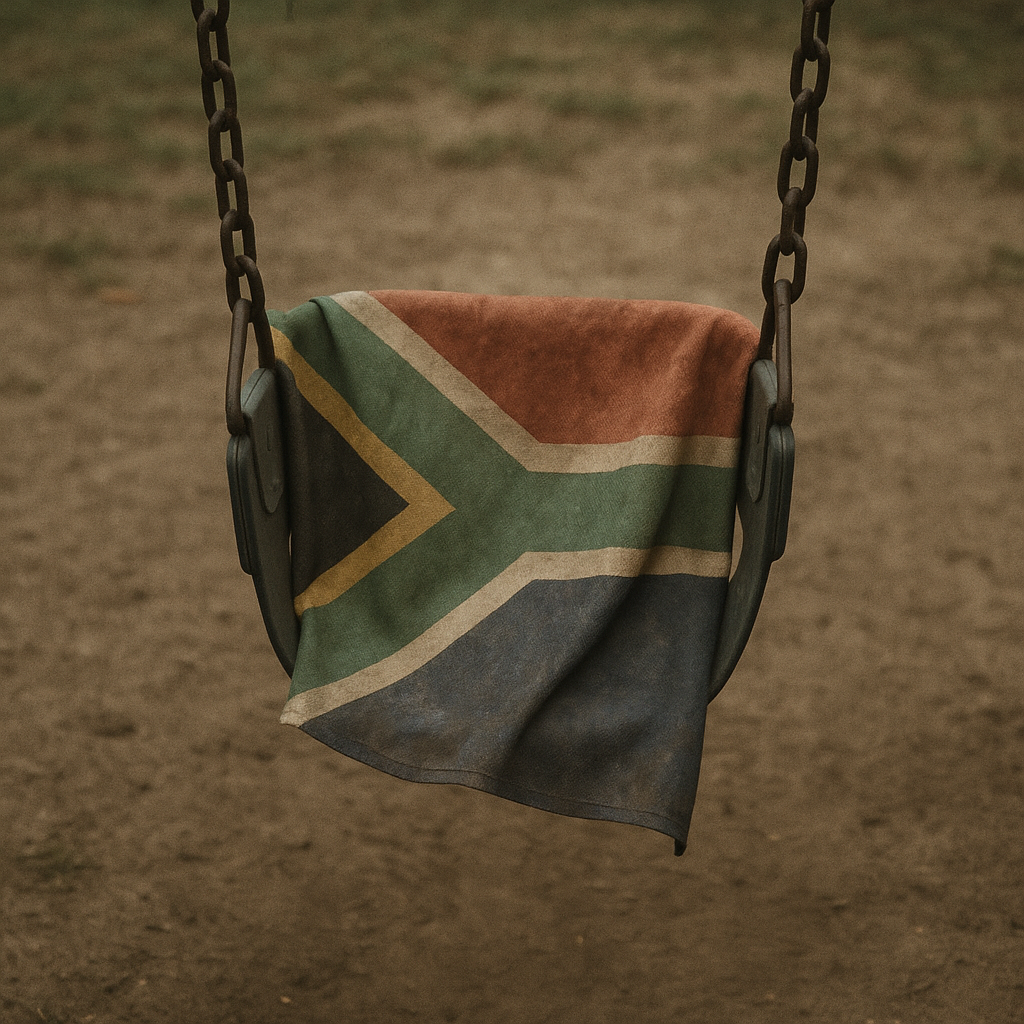
South Africa's mental health gap silently disables a generation. Only 1 in 10 children get help, leading to severe long-term consequences.
South Africa is facing a serious problem where many children are struggling with mental health issues like sadness, worry, and bad memories. Not many of these kids get the help they need because there isn't enough money, not enough doctors who specialize in kids' mental health, and places to get help are hard to reach. This neglect is causing long-term damage to their minds and futures. It's like a silent thief stealing their potential, and if things don't change, it will hurt the whole country.
What is the state of youth mental health in South Africa?
South Africa faces a severe youth mental health crisis, with millions of children experiencing depression, anxiety, and trauma yet lacking adequate support. Only one in ten receives professional help, largely due to underfunding, a critical shortage of child psychiatrists, and inaccessible facilities, leading to long-term developmental and societal consequences.
Get Cape Town news in your inbox
Stay updated with the latest stories from the Mother City.
1. The Morning After the Parade
When the last balloon droops and the politicians’ microphones fall silent, Human Rights Day is over for most citizens. For 5.5 million children, however, the calendar simply flips to another 24 hours in which depression, panic or the memory of abuse is as ordinary as breakfast. The Constitution has guaranteed “the best interests of the child” since 1996, yet only one in ten youngsters will speak to a psychologist, psychiatrist or even a trained social worker before they turn 18. The remaining nine march back to packed classrooms, rural clinics that lock their doors at lunchtime, or police holding cells labelled “places of safety.” Their supposed right to mental care expires the moment they set foot on cracked pavements outside public facilities - if those facilities exist.
The hashtags fade, but the internal storms do not. In the Eastern Cape, a Grade-7 girl wakes up already exhausted from nightly flashbacks of her mother’s AIDS-related death. She cares for three younger siblings and meets every diagnostic marker for prolonged-grief disorder, yet the district hospital has no psychologist and the single psychiatric nurse is on maternity leave. In Mitchells Plain, a nine-year-old boy spends more time in the corridor than in class because no teacher recognises the tell-tale facial features and mood volatility of foetal-alcohol-spectrum disorder. Multiply these two stories by a million and the country faces a youth mental-health deficit large enough to bend future labour statistics and crime curves.
Behind every PowerPoint statistic stands a child whose hippocampus is literally ageing faster than it should. Chronic violence, hunger and environmental toxins oxidise neural lipids, shaving off up to ten years of healthy brain development. Epigeneticists add that poor folate and omega-3 intake leave molecular “scars” that predispose still-growing minds to depression, impulsivity and cognitive lag. In short, the biology of despair is being etched into the country’s next generation while the cameras are pointed elsewhere.
2. The Price of Neglect in Rands and Lives
Treasury channels roughly R1.3-billion to mental health each year - 0.4% of the total health purse. Less than a hundredth of that sliver ever reaches children, which works out to about R22 per child annually, cheaper than a single KFC Streetwise Two. Meanwhile, researchers at Wits University calculate that untreated disorders drain at least R35-billion yearly through lost earnings, disability grants and incarceration costs. The ledger is brutally simple: government forfeits eighteen rand for every rand it refuses to spend upstream.
The geographic imbalance compounds the fiscal sting. Nine provinces share only 38 registered child psychiatrists, 28 of whom work exclusively in the private sector. Public-sector kids therefore rely on one psychiatrist for every 2.2-million peers, a ratio worse than Sierra Leone. Tele-health could shrink the distance, but only 14% of rural clinics enjoy stable broadband. Short-wave radios that once linked remote stations have been decommissioned, so a suicidal teenager in Lusikisiki may travel 300km to Mthatha, queue for eight hours, then be told to come back next quarter because the psychologist pitches up only four times a year. Too often, the acute-risk window closes before the appointment opens.
Schools have become accidental psychiatric wards, yet the Basic Education Department budgets a comical R4.50 per learner for all health screening - vision, dental, deworming and, nominally, “psychosocial support.” Manuals urge teachers to spot “red flags,” but offer no script once a learner whispers that her uncle rapes her nightly. Many educators default to “therapeutic nihilism”: they either pretend they heard nothing or dispatch the child to a social-worker post that has stood vacant since 2019. Provinces that experiment with 40-hour lay-counsellor crash courses discover that, without professional supervision, well-meaning novices sometimes re-traumatise victims. One Gauteng counsellor confesses she still advises rape survivors to “forgive and forget” because she owns no trauma-focused therapy toolkit.
3. Innovators, Algorithms and the Missing Numbers
While paperwork gathers signatures in government corridors, grassroots actors hack the void. In KwaZulu-Natal, ThinkZA trains unemployed youth as “mental-health first-aiders” and stations them at taxi ranks and football fields. Early figures show a 37% jump in clinic referrals for self-harm, proving that outreach works and costs less than R80 per teenager. In the Western Cape, librarians repurposed overdue-fine envelopes as anonymous “crisis postcards”; within six months, 1,200 teens dropped notes confessing suicidal thoughts, each triggering a mobile-crisis visit. These micro-solutions outperform many multimillion-rand task teams on the simple metric of lives touched.
Digital tools arrive with their own dilemmas. A CSIR chatbot called “Noluthando” delivers cognitive-behavioural therapy modules in isiXhosa, isiZulu and Afrikaans and retains 78% of 15- to 24-year-old users. Yet its training data were scraped mainly from English Reddit posts, so the algorithm occasionally hallucinates cultural advice - once suggesting that “amadlozi” might be a misspelling of “Adidas.” Privacy law further complicates rollout: the Protection of Personal Information Act demands parental consent for under-18s, an impossible ask in child-headed households. Without legislative tweaks, the country’s most scalable innovation risks tripping over its own consent forms.
Even the scale of adolescent suicide remains a guessing game. StatsSA halted publication of 10-to-19-year-old suicide figures in 2017 after spotting coding errors. A leaked 2022 provincial mortuary list counted 684 cases, yet academics believe the real toll tops 1,200 once misclassified “undetermined injuries” are recoded. Because no one watches in real time, clusters such as the 2018 Strand contagion - five Grade-9 learners in three weeks - explode before authorities notice. A low-cost fix already exists: enforce ICD-10 coding compliance and pipe mortuary data straight into the District Health Information System. The tool is ready; the political trigger is not.
4. Blueprints for a Different Ending
Rwanda’s “one-stop” Isange Centres show what smart integration looks like. Located inside police stations but staffed by nurses trained in WHO mental-health protocols, they merge rape kits, trauma counselling and legal aid under one roof. South Africa piloted a similar model in 2011, then let funding evaporate. A revived, teen-friendly version - adding educational advocates and career advisers - could turn 50 police precincts into adolescent hubs covering 80% of the population within 30km. Each site costs about R3-million, a rounding error in the current justice budget.
Money need not even leave the fiscus; it only has to travel across silos. The Integrated Early Childhood Development Policy already allows Health, Social Development and Basic Education to pool funds. Diverting a 2% “mental-health top-slice” from each department’s ECD allocation would instantly free R1.1-billion - enough to train 5,000 child counsellors, open 200 school-based clinics and fund a national 24-hour helpline. Treasury’s Medium-Term Expenditure Framework, tabled in February 2025, offers the next - and perhaps final - window to redirect existing billions before demographic cement sets the crisis in stone.
No one is waiting for permission everywhere. On the outskirts of Polokwane, a Grade-11 hobbyist nicknamed “Radio” builds crystal sets from scrap copper and toothpaste tubes. After dark he transmits lo-fi hip-hop peppered with self-care tips: “When your chest beats like taxi drums, press here - between thumb and finger.” His signal travels barely a kilometre, yet three listeners have already sought help. Radio has never read the National Mental Health Policy Framework, but he practises its spirit: the right not merely to survive youth, but to broadcast a future louder than the static. If a teenager with spare wire can hack the silence, the only question left for the Republic is why its policymakers still will not.
[{"question": "
What is the current state of youth mental health in South Africa?
", "answer": "South Africa is experiencing a severe youth mental health crisis. Millions of children are silently battling issues like depression, anxiety, and trauma. Despite constitutional guarantees for children's best interests, only about one in ten receives professional mental health support before turning 18. This widespread neglect leads to significant long-term developmental and societal consequences, impacting their potential and the country's future."}, {"question": "What are the main barriers to accessing mental healthcare for children in South Africa?
", "answer": "Several critical barriers prevent children from accessing mental healthcare. These include chronic underfunding, with only a tiny fraction of the health budget allocated to child mental health, amounting to roughly R22 per child annually. There's also a severe shortage of child psychiatrists, with only 38 registered nationwide, and most working in the private sector. Furthermore, facilities are often inaccessible, especially in rural areas where clinics may be far away, understaffed, or lack stable broadband for telehealth options. Schools, though often the first point of contact, are also under-resourced and lack the trained personnel and proper protocols to handle complex mental health issues effectively."}, {"question": "How does the neglect of child mental health impact South Africa economically and socially?
", "answer": "The neglect of child mental health has profound and costly impacts. Researchers estimate that untreated disorders drain at least R35 billion annually through lost earnings, disability grants, and incarceration costs. This indicates that for every rand not spent on upstream mental health care, the government forfeits eighteen rand in later societal costs. Beyond the financial implications, chronic stress and trauma experienced by children can lead to neurological damage, impacting brain development, increasing the risk of depression, impulsivity, and cognitive lag, thus affecting future labor statistics and crime rates."}, {"question": "Are there any innovative solutions or initiatives addressing this crisis?
", "answer": "Despite the systemic challenges, innovative grassroots initiatives are emerging. In KwaZulu-Natal, ThinkZA trains unemployed youth as 'mental-health first-aiders' to increase referrals. In the Western Cape, librarians used 'crisis postcards' to identify suicidal teens, leading to mobile crisis visits. Digital tools like the CSIR's 'Noluthando' chatbot offer cognitive-behavioral therapy in local languages, showing promise for scalable solutions, though regulatory hurdles like privacy laws for minors pose challenges. These efforts demonstrate that effective, low-cost solutions can significantly increase access to care."}, {"question": "What policy changes or investments could improve child mental health services?
", "answer": "Several policy changes and investments could make a significant difference. Reviving integrated 'one-stop' centers, similar to Rwanda's Isange Centres, that combine health, legal, and social services could create accessible adolescent hubs. Financially, reallocating funds by implementing a 2% 'mental-health top-slice' from existing Integrated Early Childhood Development Policy budgets across health, social development, and basic education departments could free up R1.1 billion. This funding could train thousands of child counselors, establish school-based clinics, and fund a national 24-hour helpline. Additionally, improving data collection for adolescent suicide and ensuring ICD-10 coding compliance in mortuaries would provide crucial real-time insights to address epidemic clusters more effectively."}, {"question": "Why is it difficult to get accurate statistics on adolescent suicide in South Africa?
", "answer": "Obtaining accurate statistics on adolescent suicide in South Africa is challenging due to several factors. StatsSA halted the publication of 10-to-19-year-old suicide figures in 2017 due to coding errors. While a leaked 2022 provincial mortuary list cited 684 cases, academics believe the true number is much higher, potentially topping 1,200, as many cases are misclassified as 'undetermined injuries.' The lack of real-time monitoring and consistent data collection means that suicide clusters, like the 2018 Strand contagion, often go unnoticed until they become severe. Implementing better ICD-10 coding compliance and integrating mortuary data into the District Health Information System are proposed solutions to address this critical information gap."}]
Zola Naidoo is a Cape Town journalist who chronicles the city’s shifting politics and the lived realities behind the headlines. A weekend trail-runner on Table Mountain’s lower contour paths, she still swops stories in her grandmother’s District Six kitchen every Sunday, grounding her reporting in the cadences of the Cape.
View all articles →