
Out of Mined documentary exposes mining damage on SA’s West Coast
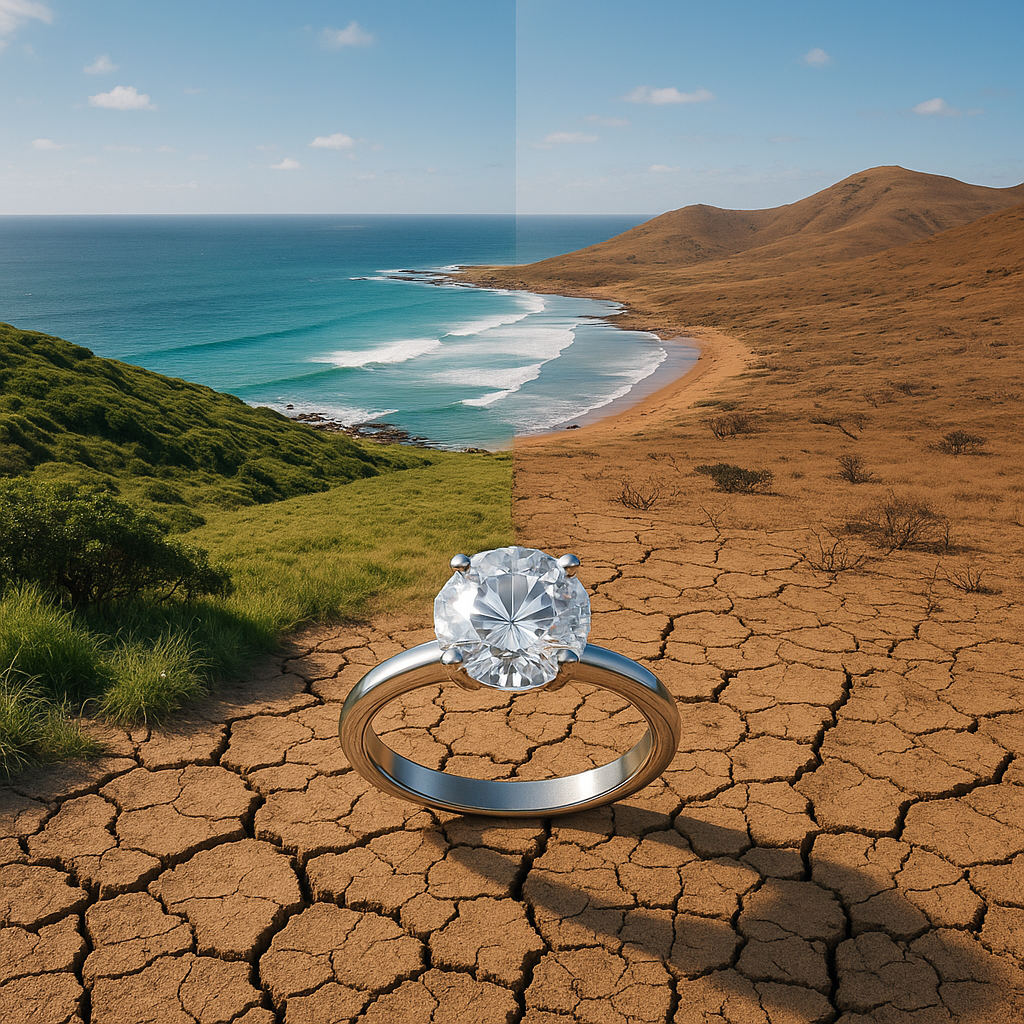
Out of Mined: a powerful South African film exposing the devastating environmental and human cost of the world's diamond addiction.
This powerful documentary, "Out of Mined," shows how our love for diamonds hurts South Africa's beautiful West Coast. It reveals how mining destroys nature, harms local people, and changes the land forever. The film makes us ask hard questions about how much damage we're willing to cause for these sparkling stones.
What is *Out of Mined* about?
Out of Mined is a documentary by Arthur Neumeier that explores the devastating ecological and social impact of diamond mining along South Africa's West Coast. It highlights how the planet's demand for diamonds leads to environmental destruction, affects local communities, and transforms the landscape, prompting urgent conversations about sustainability.
Get Cape Town news in your inbox
Stay updated with the latest stories from the Mother City.
1. A Quiet Premiere That Shook the Nation
On a chilly Wednesday evening, 24 June, at exactly 19:30, a new documentary slipped onto South African screens without the usual red-carpet fanfare. Within minutes, Arthur Neumeier’s Out of Mined had ignited conversations from Langebaan to Lambert’s Bay, spilling onto Vimeo On-Demand and into makeshift pop-up halls. The 104-minute feature, shot across three migratory seasons, hugs 400 kilometres of shoreline between the Orange River’s briny mouth and Cape Columbine’s granite headland. Though every frame stays inside South Africa, the subject itself - the planet’s unquenchable hunger for diamonds - quickly feels global, throttling viewers like an invisible chokehold.
Critics already rank the film alongside the landmark 2006 documentary Black Gold. The difference is that Neumeier’s lens never leaves home soil, yet the emotional aftershock crosses oceans. That restrained focus sharpens the tension: we watch our own coastline being bled, so we can’t pretend the damage is someone else’s problem. By the closing credits, the question hangs in the air - how many more carats can we stomach before the throat of the land itself gags?
2. A Coastline Pried Apart
This stretch of Atlantic shore is no idle postcard. Roughly 13 000 plant species carpet the dunes - almost half exist nowhere else on Earth. Six of the world’s seven sea-turtle species cruise offshore. Beneath them, kelp forests inhale carbon faster, hectare for hectare, than the Amazon, while the Benguela Current upwelling keeps fisheries astonishingly fertile. Layer these living riches against translucent blue concession maps drafted long before 1994, and the picture fractures.
Start at the Orange River mouth. Back-to-front dredge pits chew through 3 000 hectares, pulverising ghost-crab colonies into scarlet sludge. Head south to Koingnaas–Kleinzee: “rehabilitated” dunes remain bald after three decades, monitored by drones because a salary for field staff is now deemed an extravagance. Slide further to Elands Bay–Dwarskersbos: prospecting rights granted in 2019 smother 42 kilometres of fossil oyster beds older than humankind. Offshore, suction dredgers 600 metres from the beach vacuum 2 000 cubic metres of seabed every hour, spewing lifeless sludge in their wake.
Put together, the coast resembles a patchwork where whole ecosystems have been peeled away to let the sparkle slip through.
3. Inside the Lens – Filming a Battlefield Without Tanks
Arthur Neumeier cut his teeth filming in Ukraine’s grey zones and Gaza’s buffer strips before realising that certain battlefields come dressed in fluttering plastic sample trays and sonar buoys instead of tanks. His drone squadron - some patched together from retired crop-spraying aircraft - flies low enough to read serial numbers on prospector pegs, then rises to reveal scars etched like planetary tattoos.
Act I, “Footprints in the Sand”, opens in extreme slow-motion, 400 frames per second, so every quartz grain hangs like a tiny comet. Elderly Nama matriarch Katrina Apollus traces ostrich-shell beads in the dust beside a 1920 De Beers pit that still sprouts not a single green shoot. Act II, “The Living and the Dead”, splits the screen - 1980s State Library footage on the left, contemporary drone capture on the right. Kelp forests shrink to stubble; jackass penguins give way to jack-up rigs. Act III, “Carbon & Carats”, features Congolese rapper Chéri Samba spitting verses over aerial shots of diesel shovels and ending each bar with a sneering question, “A girl’s best friend?”
The camera never flinches. Silence is earned, not given.
4. People Caught in the Blast Radius
The West Coast’s human tapestry is thinly woven but culturally dense.
- Small-scale fishers from Hondeklip Bay log GPS waypoints for traditional lobster traps; by the next tide, dredge barges eclipse those coordinates.
- A University of Cape Town geochemist passes a portable X-ray scanner over black mussels still steaming in a household pot, showing mercury, lead, and thorium levels far above food-safety limits.
- Chief Martinus Fredericks sits beneath a flapping canvas awning, ancestral burial grounds now corralled behind razor wire.
- An 11-year-old Afrikaans learner recites a poem about the last Black Harrier vanishing over reed beds; an endnote confirms the species has forfeited 70 % of its nesting habitat since 1995.
Each testimony is delivered without melodrama, letting the facts strangle the viewer instead.
5. One Stone, Eleven Days, Endless Fallout
The filmmakers chase a single diamond downstream. Eleven days after it leaves the sorting belt at Alexander Bay, it re-emerges in a platinum solitaire on Strand Street - barely 18 kilometres from where it was clawed out of the earth.
Day 1: diplomatic pouches to Johannesburg.
Day 3: Kimberley Process paperwork stamped - distance travelled on paper: 0 km.
Day 5: parcel sold to an Indian trader in Antwerp.
Day 7: polished in Surat, the world’s cutting room.
Day 11: boxed under velvet lights on Cape Town’s tourist drag.
Every node of the journey overlays the ecological invoice: litres of diesel burned, seawater displaced, kilowatt-hours devoured, carbon receipts left unpaid. The ring dazzles; the screen bleeds red.
6. The Science That Missed the Final Cut
While editors raced toward a locked picture, marine biologist Dr Judy Mann crunched emergency data commissioned by the Protect the West Coast (PTWC) coalition. Her preliminary bullets landed too late for the cut, but they are now one QR-code click away:
- Seabed plumes slash primary productivity by 65 % for at least two years within a five-kilometre corridor behind dredgers.
- Tailings contain ilmenite and monazite rich in thorium and uranium; radiation 50 metres from slag dumps triples the public-park limit.
- Simpleton dunes - two-million-year-old formations - lose 28 % of their seed bank after one mechanical scrape, making natural recovery impossible on human timescales.
The database updates every six months, ensuring the film ages into sharper focus rather than fading into yesterday’s outrage.
7. Swells, Stickers and Legal Waves
Surfing arrived here in the 1960s when SADF soldiers lugged longboards across saltbush. Today, breaks at Elands Bay and Donkergat lure pilgrims from every continent. Yet the same bathymetric contours that sculpt perfect waves also hoard garnet and zircon.
Neumeier gifts twelve unbroken minutes to surfers. Big-wave rider Frank Solomon threads a dawn line-up while a dredger hovers like a mechanical shark. Days after the Cannes sidebar premiere, the International Surfing Association sent a pointed letter to the Minerals Council - citing the film - and petitioned for an environmental moratorium. More than 300 surf brands, from Patagonia to backyard shapers in Muizenberg, now stamp the film’s wave-and-barcode logo on new boards. A R5 royalty per board flows straight into PTWC’s court war chest.
8. A Standing Ovation and the Streaming Rebellion
Cannes’ “Cinema for the Climate” strand welcomed a South African environmental documentary for the first time since 1989. When the lights rose, the audience stood and clapped for six solid minutes. Rumours swirled of a Netflix seven-figure offer; Neumeier turned it down. Instead, he aligned with South Africa’s Indigenous Film Collective and with WaterBear, a free global sustainability streamer. The upshot: every West Coast shack with a signal can watch, rewind, and weaponise the footage.
Within 72 hours, #OutofMined trended in eight countries, turbo-charged when Elon Musk retweeted a thread linking diamond lust to cobalt extraction, adding 17 million involuntary impressions.
9. Policy Tectonics
The documentary acts like a slow-release chemical in parliament’s bloodstream.
- 26 June: the Department of Mineral Resources & Energy grants an extra 60 days for public comment on 87 West Coast prospecting bids.
- 1 July: MPs attend a special screening inside Parliament’s Good Hope Chamber - an unprecedented event.
- 3 July: the Chief Land Claims Commissioner accepts a communal-title claim spanning 18 000 hectares, citing film evidence.
- 5 July: the Coastal Justice Front launches, uniting NGOs, fishers, and surfers under one constitutional demand - trigger Section 24 and force a Strategic Environmental Assessment before any new licence sees daylight.
10. Blockchain, Comics and Muzzled Voices
Two weeks post-premiere, PTWC rolled out “Diamond Shield,” an NFT experiment. Each token represents one square metre of untouched coast or seabed. Owners can trade, but a 3 % slice of every sale feeds a conservation trust. Early celebrity adopters include Jordy Smith and Idris Elba, who snapped up 10 000 m² outside St Helena Bay for his daughter.
Education followed suit. A free trilingual children’s comic, Umnatha noMphanga, pits kids against sunglass-wearing Mine-Master Grootoog. Pupils tear out the final paper “mining licence” and post selfies recycling it; the hashtag #LicenseToLitter races across eco-club WhatsApp groups.
Still, some voices stay muffled. After eighteen months of pleading for an on-record dredge captain, the crew improvised: a DIY hydrophone buoy captured the mechanical heartbeat that now replaces whale song for 37 silent seconds before the credits roll. The screen is black; the message blares.
11. Surf Trucks, Courtrooms and Future Balance Sheets
A solar-powered cinema truck - painted turquoise to match the Benguela’s shallows - will tour 42 coastal towns from September to December. Entry is free; the exit fee is two indigenous seeds pushed into the sand. The tour calendar lives on the film’s site, seats bookable by SMS if data is scarce.
Meanwhile, marine biologists fed the sound designer ten years of whale-song hydrophone data. Slowed to a crawl and layered over Caterpillar engine drones, the resulting collage forces the ear to hold both lullaby and bulldozer at once - one water column, two irreconcilable soundtracks.
The epilogue flashes an economic face-off. Conservation International calculates that every intact hectare of West Coast dunes gifts USD 94 000 in annual ecosystem services, while mined land yields only USD 23 000 and leaves a toxic tab for future taxpayers. The numbers tick across the screen like a stock exchange of possible futures.
12. Open Files, Open Coasts
Unlike traditional documentaries that bow and exit, Out of Mined offers source code for resistance. Raw satellite imagery sits on GitHub under Creative Commons; Telegram bot @MineWatchBot crowdsources real-time alerts. Within its first weekend, 764 user reports landed; twelve have already become legal evidence submitted to the Department of Mineral Resources.
Art gets the last word. Twelve split-screen frames showcase creative counter-strikes: a necklace of Strandloper shells threaded with shredded mining permits, drone-lit graffiti shouting “STILL WILD” above a tailings dam at night, a surfboard wax sculpture studded with glass “diamonds” melting under the sun while gulls peck at the glitter. Every frame carries a QR code linking to an open repository of geo-referenced photographs, ready for any future courtroom.
The film ends, but the platform lives - because the tide, unlike the miners, refuses to sign a non-disclosure agreement.
[{"question": "
What is 'Out of Mined' about?
", "answer": "'Out of Mined' is a 104-minute documentary by Arthur Neumeier that premiered on June 24th, 2024. It exposes the devastating ecological and social impact of diamond mining along South Africa's West Coast. The film highlights how the global demand for diamonds leads to environmental destruction, affects local communities, and permanently alters the landscape, prompting urgent conversations about sustainability and the true cost of these precious stones."}, {"question": "What specific environmental damage does the documentary reveal?
", "answer": "The documentary details extensive environmental damage, including the pulverization of ghost-crab colonies by dredge pits, the failure of 'rehabilitated' dunes to recover after three decades, and the destruction of 42 kilometers of ancient fossil oyster beds by prospecting rights. Offshore, suction dredgers vacuum vast amounts of seabed, spewing lifeless sludge. The film emphasizes that these actions significantly reduce primary productivity in marine ecosystems, contaminate water with radiation from tailings, and destroy ancient dune formations, making natural recovery impossible."}, {"question": "How does 'Out of Mined' highlight the human impact of diamond mining?
", "answer": "'Out of Mined' showcases the profound human impact through various testimonies. It shows small-scale fishers losing their traditional fishing grounds to dredge barges and reveals high levels of mercury, lead, and thorium in black mussels consumed by local communities. The film also features an indigenous chief whose ancestral burial grounds are now behind razor wire and highlights the drastic loss of nesting habitat for species like the Black Harrier, which directly affects local biodiversity and cultural heritage."}, {"question": "What is the 'journey of a single diamond' sequence in the film?
", "answer": "The 'journey of a single diamond' sequence tracks a diamond from its extraction at Alexander Bay to its sale in Cape Town in just eleven days. It illustrates the complex global supply chain: from diplomatic pouches to Johannesburg, Kimberley Process paperwork, sale to an Indian trader in Antwerp, polishing in Surat, and finally, its placement in a platinum solitaire on Strand Street. This sequence starkly overlays the ecological cost – diesel burned, seawater displaced, and unpaid carbon receipts – against the dazzling end product."}, {"question": "How has the film impacted policy and public awareness?
", "answer": "Since its premiere, 'Out of Mined' has had a significant impact. Within days, the Department of Mineral Resources & Energy extended public comment periods for prospecting bids, and Members of Parliament held an unprecedented screening of the film. It also led to the acceptance of a communal-title claim based on film evidence and the launch of the Coastal Justice Front, uniting various groups to demand a Strategic Environmental Assessment before new mining licenses are granted. The film also trended globally, boosted by figures like Elon Musk, and inspired conservation initiatives like the 'Diamond Shield' NFT experiment."}, {"question": "What creative and technological approaches did Arthur Neumeier use in 'Out of Mined'?
", "answer": "Neumeier, with experience in conflict zones, used drones (including repurposed crop-spraying aircraft) to capture both intimate details and large-scale scars on the landscape. The film uses a three-act structure: 'Footprints in the Sand' with slow-motion imagery, 'The Living and the Dead' with split-screen comparisons of historical and contemporary footage, and 'Carbon & Carats' featuring Congolese rapper Chéri Samba. The camera unflinchingly captures the silence and stark realities, even employing a DIY hydrophone to record the mechanical heartbeats replacing whale song, creating a powerful auditory contrast. The film also makes its raw satellite imagery and other data openly accessible via GitHub and Telegram bots for public engagement and legal action."}]
Sarah Kendricks is a Cape Town journalist who covers the city’s vibrant food scene, from township kitchens reinventing heritage dishes to sustainable fine-dining at the foot of Table Mountain. Raised between Bo-Kaap spice stalls and her grandmother’s kitchen in Khayelitsha, she brings a lived intimacy to every story, tracing how a plate of food carries the politics, migrations and memories of the Cape.
View all articles →