
Petrol stations in SA may close at night as fuel price pressure intensifies
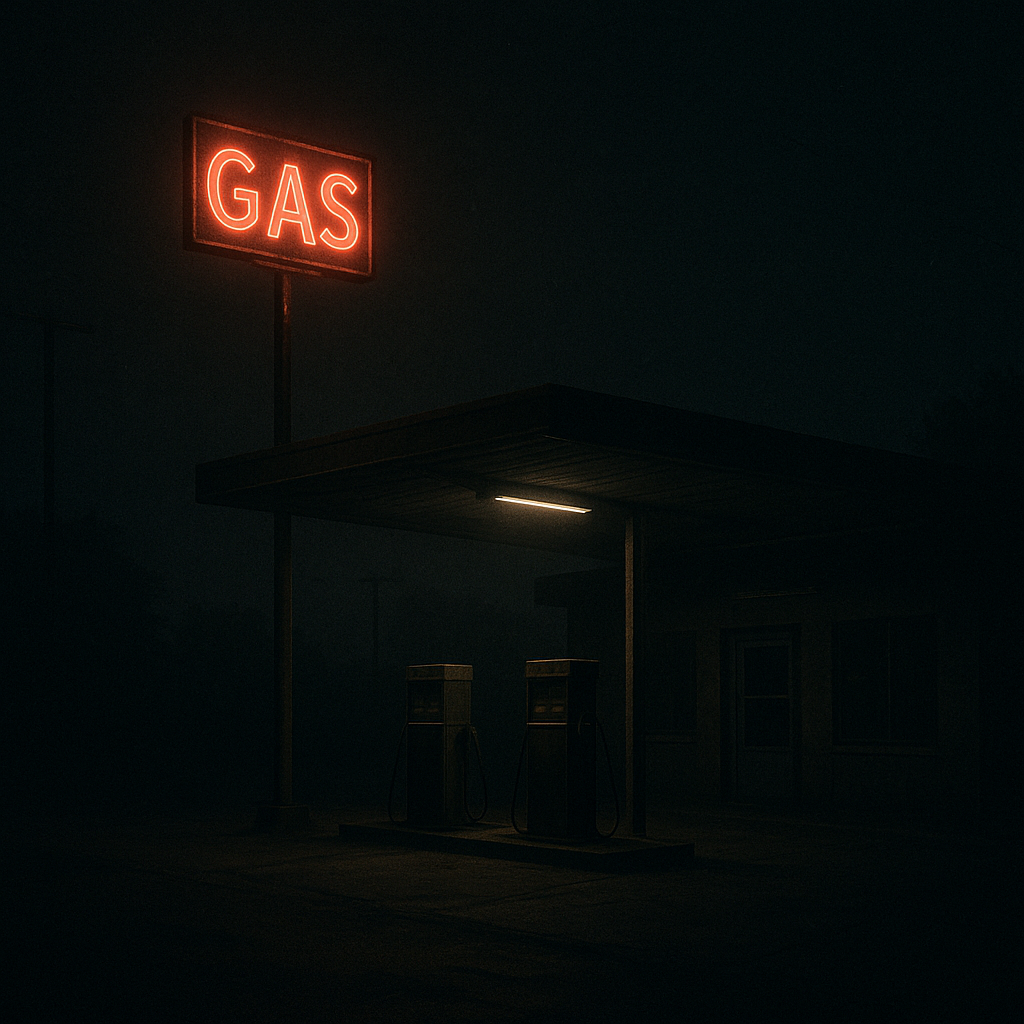
Soaring petrol prices are forcing South African fuel stations to shrink 24-hour operations, impacting logistics & the night economy.
South African petrol stations are struggling to stay open at night because of rising costs and fixed fuel prices.
Why are South African petrol stations struggling to operate at night?
South African petrol stations are struggling at night due to a fixed legal margin on fuel sales, rising security costs, high electricity tariffs (especially during load shedding), and increased crime like drive-offs. These factors make overnight operations unprofitable, pushing many stations towards reduced hours or closure.
Get Cape Town news in your inbox
Stay updated with the latest stories from the Mother City.
The Hidden Logistics Empire That Runs While You Sleep
Beyond the last city lights, a single canopy glows at 02:15 on the N12 near Potchefstroom. One attendant thumbs through TikTok while four CCTV feeds flicker above her. Only three motorists have braved the dark since midnight: one took R100 of 93-octane, the others bought airtime. Still, the forecourt keeps bleeding rand: armed patrols bill R185 every round, the standby generator drinks diesel at R6,20 a litre, cloud data charges 28 cents per card swipe, and the graveyard wage sits at R45,82 an hour after the latest sectoral ruling. Scale that pattern across 7 400 licensed service stations and you glimpse an invisible network - South Africa’s unheralded overnight logistics sector - hauling more litres and burning more rubber between dusk and dawn than any courier fleet in the country.
Yet the same maths that keeps the pumps primed is now pushing them toward the precipice. A fixed legal margin - R2,09 per litre of inland 95 unleaded - has to cover rent, tank upgrades, card fees and, lately, an explosion in theft. Security labour inflation has outrun the consumer-price index for five straight years, but the margin has crept up barely four percent since 2019. When diesel for generators, licence-plate recognition cameras and pre-authorisation card holds join the bill, the night shift stops being a business line and starts looking like corporate charity.
Put differently, every litre sold at 3 a.m. now carries three invisible surcharges: the diesel needed to keep the lights alive, the guard who keeps the diesel safe, and the camera that watches the guard. Multiply those surcharges by 150 000 litres a month - the national median - and many dealers slip into negative cash-flow by week six. In the bottom quartile, volumes have already past the critical break-even line altogether. What was once a milk-run has become a slow self-immolation.
When Prices Rise and Tanks Shrink
Economists call it the “tank-fill gap”: when the per-litre price spikes, the size of each visit shrinks faster than the kilometres driven. After the 2022 shock, Tracker’s telematics showed motorists cutting distance by seven percent, yet bank-card logs revealed a nineteen percent drop in litres per transaction. Managers describe snaking queues of five cars, each inserting a contactless card for exactly R100 - pumps stay busy but throughput halves. A rural site needs roughly 150 000 litres a month to breathe; the national median is drifting toward 200 000, but the back quarter is already below water.
Crime rides shotgun with the tariff sheet. SAPS lists aggravated robberies at fuel sites up thirty-one percent year-on-year. Drive-offs - where drivers gun away unpaid - hit R216 million last year, up from R94 million before the pandemic. Higher pump prices raise both temptation and the average loss per incident. Each lane now carries an R38 000 licence-plate camera, while banks insist on pre-authorisation holds of R200–R1 000. Ironically, these controls slow each purchase, nudging night drivers - already risk-averse - to skip the stop altogether.
The electricity ledger is another knife twist. Stage 4 load-shedding compels a sixteen-pump site to run a 150 kVA diesel generator six hours a night. The burn: 36 litres of diesel daily, worth R1,2 million a year just to keep tills and fridges alive. Eskom’s 2024 tariff schedule punishes 24-hour traders with surcharges of R3,08 a kWh between 23:00 and 05:00 - hours when volumes are thinnest. Many owners have calculated the grim crossover: sell fewer than 600 litres between dusk and dawn and the electricity cost alone swallows the R2,09 margin.
Snapshots from Two Ends of the Highway
At Shell Ultra City on the N3 in Harrismith, the yard resembles a small airport after 22:00. Three-hundred-and-fifty trucks line up, prepaid fleet cards in hand, while the clinic treats sore backs and the tyre bay replaces shredded treads. Night throughput tops 90 000 litres - closing the doors at 20:00 would torch R1,8 million in monthly margin. Everything here is built for scale: triple-bay diesel islands, high-mast lighting bright enough for surgeons, and a private ambulance idling on retainer.
Two provinces south, Engen’s One-Stop in Jamestown (population 4 300) is a quieter affair. Daily sales hover at 2 600 litres, barely 18 % of them after sunset. Two armed robberies in eight months have left staff rattled, the security-guard carousel spins weekly, and rumours swirl that the pump-price squeeze may force the shutters down at 22:00. That closure would save R42 000 a month in wages and floodlights but could surrender the dawn taxi trade if a competitor down the road stays open.
Between these extremes lies a spectrum of fates determined by nothing more glamorous than litres after midnight. Regional malls and provincial hospitals now calculate ambulance range from the nearest still-lit forecourt: every closure elongates emergency response loops. Logistics firms that have fine-tuned routes around 600-kilometre fuel range schedules now redo spreadsheets because three dark sites on the N1 would drag their trucks 120 kilometres and two extra hours through Bloemfontein. The choice is binary: keep paying the ransom or let entire corridors close down.
Policy, Pilots and the Road Ahead
Treasury’s decision to claw back the R3 “temporary” levy relief is only the teaser. A Retail Margin Benchmarking Study is due in Q4 2024 - the first full re-base since 2010. SAPRA is pushing for a thirty-five percent uplift, citing wage, security and power inflation; Treasury fears any hike will feed directly into a CPI already stuck at 5,2 %. A compromise tabled at Nedlac suggests a rural differential - an extra 30–40 cents in places like Jamestown - modelled loosely on Australia’s Remote Area Allowance.
Meanwhile, technology gallops ahead of legislation. Shell’s Midrand pilot swapped cashiers for card-only pumps and cloud tills, cutting graveyard labour hours by seventy percent. Yet South Africa classifies unmanned sites as hazardous, forcing an operator within five kilometres; a labour-law amendment snagged at NedlAC since mid-2023. Mobile apps such as FuelPay and Zapper trim forty-five seconds off every card sale, but adoption outside Gauteng limps at twenty-two percent.
The Western Cape is running a quieter revolution. Since December 2023 the provincial Department of Economic Development quietly pays R0,50 a litre for sales between 20:00 and 05:00 at forty-two rural stations. Casino-levy surplus funds the subsidy; first-quarter data show night volumes up eleven percent, 168 shifts saved, and zero closures. National Treasury is watching; a country-wide roll-out would cost R2,1 billion a year but could stave off 3 900 retrenchments.
Global rehearsals for the South African dilemma already play out on other continents. In 2014–2016 Canada shuttered 1 300 low-volume rural sites at night, sparking federal rebates that now cover fifty percent of wages if volumes stay below 120 000 litres a month. Brazil’s Petrobras discounts wholesale deliveries after 23:00. Australia’s FuelWatch publishes tomorrow’s prices at 14:00, giving stations legal cover to close at 22:00 without accusations of price-fixing.
The final twist may come from the plug rather than the pump. Eskom’s 2024 Transmission Plan earmarks 122 fast-charging hubs for existing forecourts, most running 150 kW DC units. Early electric-vehicle penetration will cluster demand in morning and evening peaks, but once five percent of the national fleet is battery-powered - projected by 2029 - the night-time dwell time for recharging could keep lights blazing and kiosks humming. Until then, South Africa’s garages face a nightly duel between economics and necessity, each litre sold at 2 a.m. a fragile vote for keeping the country’s after-dark heartbeat alive.
[{"question": "
Why are South African petrol stations struggling to operate at night?
", "answer": "South African petrol stations face significant challenges operating at night due to several factors: a fixed legal margin on fuel sales (R2.09 per litre of inland 95 unleaded), escalating security costs (armed patrols, CCTV cameras, licence-plate recognition systems), high electricity tariffs exacerbated by load shedding (requiring expensive diesel generators), and increased crime rates like aggravated robberies and 'drive-offs'. These combined pressures make overnight operations largely unprofitable, forcing many stations to reduce hours or close."}, {"question": "What are the 'invisible surcharges' affecting petrol stations at night?
", "answer": "Every litre of fuel sold at 3 a.m. effectively carries three 'invisible surcharges' due to the operational costs: the diesel required to run generators and keep the lights on during load shedding, the salary for the security guard protecting the premises, and the cost of the surveillance cameras monitoring the entire operation, including the guard. These additional costs severely erode the already tight profit margins."}, {"question": "How do rising fuel prices and crime impact night-time sales?
", "answer": "Rising fuel prices lead to a 'tank-fill gap,' where motorists buy smaller quantities of fuel per transaction, even if they drive similar distances. This means more transactions for less volume, increasing card processing fees and slowing throughput. Concurrently, crime, including aggravated robberies and 'drive-offs' (which increased from R94 million pre-pandemic to R216 million last year), adds further financial strain. While security measures like licence-plate cameras and pre-authorisation card holds are implemented, they ironically slow down transactions, potentially deterring already risk-averse night drivers."}, {"question": "How does load shedding impact the profitability of 24-hour petrol stations?
", "answer": "Load shedding significantly increases operational costs for 24-hour petrol stations. A typical 16-pump site running a 150 kVA diesel generator for six hours during Stage 4 load shedding consumes about 36 litres of diesel daily, amounting to R1.2 million annually just for power. Additionally, Eskom's 2024 tariff schedule includes surcharges of R3.08 per kWh between 23:00 and 05:00, punishing 24-hour operations during their lowest volume periods. Many owners find that if they sell fewer than 600 litres between dusk and dawn, the electricity cost alone negates the R2.09 per litre margin."}, {"question": "What policy changes and technological advancements are being considered to address these challenges?
", "answer": "Several initiatives are underway: a Retail Margin Benchmarking Study is due in Q4 2024, with SAPRA advocating for a 35% margin uplift. A proposed compromise suggests a rural differential (an extra 30-40 cents per litre) for areas like Jamestown. Technologically, Shell's Midrand pilot explored card-only pumps and cloud tills to reduce graveyard labour, though South African law currently requires an operator within five kilometres. Mobile payment apps like FuelPay and Zapper also aim to speed up transactions. The Western Cape is piloting a R0.50 per litre subsidy for night sales at rural stations, funded by casino levies, showing promising results in increased night volumes and saved jobs."}, {"question": "What future trends might impact petrol stations, particularly at night?
", "answer": "Beyond current challenges, the rise of electric vehicles (EVs) is a significant future trend. Eskom's 2024 Transmission Plan includes earmarking 122 fast-charging hubs for existing forecourts. While initial EV charging demand will likely peak in mornings and evenings, once 5% of the national fleet is battery-powered (projected by 2029), the night-time dwell time for recharging could keep stations busy and kiosks operational, potentially providing a new revenue stream and helping maintain night-time viability."}]
Hannah Kriel is a Cape Town-born journalist who chronicles the city’s evolving food scene—from Bo-Kaap spice routes to Constantia vineyards—for local and international outlets. When she’s not interviewing chefs or tracking the harvest on her grandparents’ Stellenbosch farm, you’ll find her surfing the Atlantic breaks she first rode as a schoolgirl.
View all articles →