
‘Phanzi, Afrophobia!’ – Cape Town artists and activists reject afrophobia
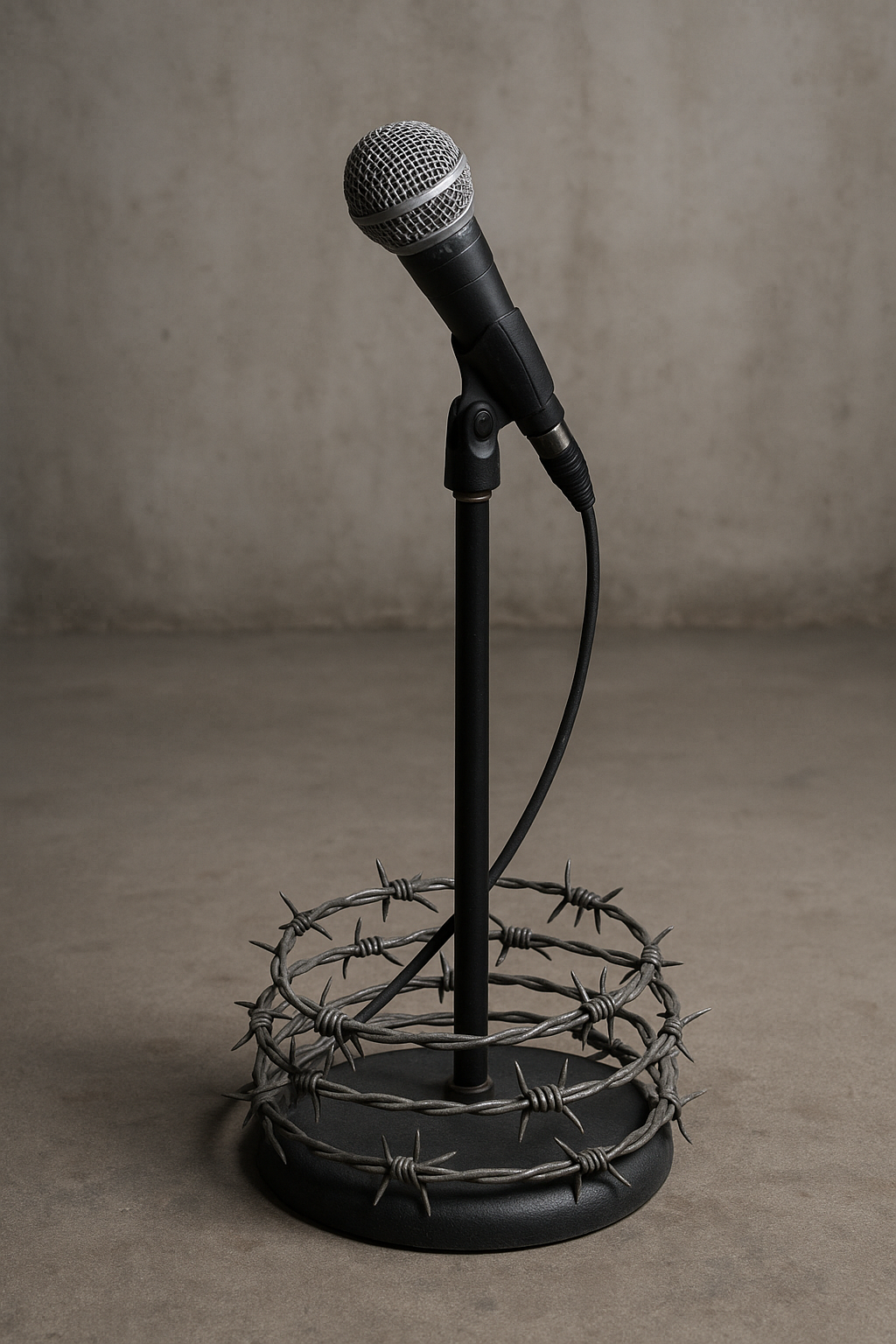
In Cape Town, musicians turn a church into a sanctuary for migrants, using music as a shield against deportation and xenophobia.
In Cape Town, a church became a powerful stage for displaced musicians. They gathered, turning the space into a refuge, where music became their voice and protest. Instruments made from car parts buzzed with tunes of struggle and hope. This 'Saturday Jam' was more than a concert; it was a defiant stand, offering temporary safety and community through shared melodies. It showed how art can build walls of protection against harsh realities.
What is the "Saturday Jam" at Cape Town's Central Methodist Mission?
The "Saturday Jam" was a unique musical event held at Cape Town's Central Methodist Mission, organized by the Ad Hoc Committee for Organising Musicians (AHCOM). It served as a temporary sanctuary and a form of protest for displaced musicians and those with precarious legal status, using music to create a space of safety and community.
Get Cape Town news in your inbox
Stay updated with the latest stories from the Mother City.
1. A postcard shrinks to the size of a sanctuary
Cape Town still advertises itself as the spot where two oceans kiss, a blue-green collage that looks fabulous from a chopper’s belly. On 20 June the panorama narrowed to a single Victorian shell: the 1892 Central Methodist Mission, its iron fence laced with leftover razor coils from last year’s blackout protests. Somali shopkeepers queued for cash vans up the pavement; inside, pews had been dragged away so the drum-kit - welded from a retired taxi’s front bumper - could stand centre stage. Each plastic seat wore a paper tag: “RESERVED FOR THE DEPORTED.” By 14:00 bodies packed the nave and the spill-over flattened their faces against stained-glass sheets, inhaling on every bass drop.
The city’s tourist brochures never list the church as a port of entry, yet it functioned like one that afternoon. Taxi horns provided the arrival chimes, not cathedral bells. Children balanced on their mothers’ shoulders, holding ballots from 2019 that had been turned into song request cards. Cape Town sells sunshine; the church sold safety for three hours - no tariffs accepted, only stories.
Outside, a vendor hawked vetkoek filled with beans and Zimbabwean sorrow. Next to him, a Congolese barber clipped hairlines while streaming the sound-check to a WhatsApp group titled “Borderless Barbers.” The air smelled of yeast, Citronella candles and the nervous sweat of people who had learned that music, not mercy, is sometimes the last visa available.
2. A committee born of a single voice-note
Ten days earlier, the Ad Hoc Committee for Organising Musicians (AHCOM) did not exist. At 23:14 on 10 June, Asher Gamedze – trumpeter by night, archivist by conviction – dropped a 37-second voice-note into a group chat. Under the hiss of old amps he looped a 1939 field clip of Ndebele miners singing on payday and typed: “We need a stage that works like a shield.” By sunrise ninety-two players had replied with red-framed emojis, the underground code for “I’ll smuggle the cables, I’ll cook the rice.” No spreadsheets, no city permits; the church elders merely unlocked the side door and quoted Exodus: “The Lord once carried no papers in Egypt - play.”
The organising thread had three rules:
– Bring your own instrument or borrow one from the swap-pile labelled “Strangers’ Strings.”
– List the last country you were told to leave.
– Bring at least one person whose legal status is “pending.”
What began as chat chatter morphed into rosters chalked onto Sunday-school blackboards. A Malawian drum-tech drew frequency charts shaped like route maps. A Lesotho guitarist tuned his axe to the taxi rank’s departure whistle. No one knew who paid R17 for the chalk; everyone knew who wrote the set-list in capital letters: “PLAY OR PERISH.”
3. A line-up stitched from flight manifests
Because the printer jammed, the poster was printed upside-down on the blank side of spoiled election ballots. You could still peel off the ink if you rubbed it under a tap. The reversed order read:
Stanislav “Stanley” Sibande – born in Lusaka, raised on Kraaifontein dust, whose 2019 bedroom-produced single “Green-Listed Son-in-Law” never hit radio but topped 30 k Facebook views from South African women asking Zambian men to translate polygamy in slow motion.
Thabang Bhili – theatre maker once toured a one-man piece titled “F**k, I’m Finally Zimbabwean”, banned in three provinces for portraying Robert Mugabe as a marimba ghost reciting detention diaries.
Asher Gamedze – trumpeter whose vinyl-only album “Reed Dance in Exile” (200 copies) was smuggled inside hollowed-out UNHCR folders now lounging in Berlin flea-markets.
Pamela “Mama” Mtoto – seventy-three, Kenyan nyatiti player, marched into Cape Town in 1988 with a Portuguese passport she can’t renew because Maputo closed that consulate in 2017.
4. Rehearsal as border interrogation
Sound-check began at 15:30. Every wedge faced the altar, flipping the pulpit into a passport counter. A Zimbabwean alto sax tested a riff that, to Afrikaans ears, resembled an unsung national anthem. A plain-clothes immigration agent filmed performers’ fingerprints as they tapped cymbals. Between songs, the stage manager shouted asylum numbers instead of names; the crowd answered in polyrhythms mixing Shona clicks, Sesotho rolls and Xhosa pops, languages that survive once English sheds its verbs. One light flickered - an electrician muttered it was sending Morse for “delayed.” Everyone kept tempo anyway.
The monitor engineer, a Ghanaian student, labelled each channel: “Zim-exile,” “Springs-DRC,” “Sisulu-Transit.” He refused to turn up the white noise labelled “Home Affairs Hotline,” claiming it fed back into real raids. A Congolese dancer rehearsed a foot-stamp that matched the Home Affairs rubber-stamp rhythm - three stamps forward, two steps detained - until the floorboards memorised the pattern.
At 16:05 the church’s clock stopped. Someone had connected it to the subwoofer; each bass drop pushed the minute hand backwards. The audience cheered; time was finally on their side, or at least undecided.
5. “Phanzi, Afrophobia, phanzi!” – when the chant learned its own feet
At 16:07 Stanley stepped up, baby drooling on his hoodie. He began a lullaby in Bemba, then pivoted mid-breath to Sesotho, recounting how Zambian mothers hid ANC cadres in maize trucks and how those same trucks carried guns disguised as school desks back south. The baby woke; the throng understood the kick as choreography and belted the refrain louder. On the balcony, a DRC activist embroidered the chant onto a bedsheet still smelling of 2012 SADC summit banners. Hands clapped the SOS rhythm: three short, three long, three short, swallowing the city’s 18:00 curfew alarm before it could inhale.
Between choruses, women threaded plastic roses through razor wire, turning the fence into a hedge. Children pinned the roses to their T-shirts, renaming thorns “microphones.” In the organ loft, an Eritrean violinist looped the lullaby into double-stops that spelled out “ASYLUM” in sol-fa code. No one needed a translation; the baby’s hiccup kept perfect 7/8 time.
6. Black A5 sheets turned into instant citizenship
At 16:45, Mothers4Gaza arrived with boxes of black card once meant for anti-bombardment placards. They flipped the card over and slammed a potato-carved stamp that read “TEMPORARY HUMAN.” Audience members lined up as if receiving communion: name, surname, DOB, country of first refuge, favourite lullaby. By 17:00, 247 fluttering cards formed paper kites above the pews. A seven-year-old tugged the Eswatini bassist’s sleeve: “My crayon says I stay until the last note.” He tuned his open A to her pitch and decreed the nave a buffer zone until the sun surrendered.
Volunteers stapled the cards into necklaces. An Ethiopian barista used espresso grounds to age the edges; “older visas look more official,” he claimed. A Congolese tailor stitched the cards into a patchwork poncho that draped over the pulpit like a graduation gown for an unmade nation. Outside, Somali drivers leaned on their kombi horns - B-flat major - the agreed signal that the cash vans had arrived, but no one left the line until every card had been stamped.
7. Sea Point’s silent corridor
Three kilometres west, Sea Point promenade lay empty of cars. Mothers4Gaza walkers dressed in black created a human corridor from the lighthouse to McDonald’s, where Ethiopian Uber drivers usually queue for petrol loans. Each participant carried a placard with nothing but a QR code; scan it and you entered a Google Drive labelled “Eviction notices translated into lullabies.” A drone shot, live on Cape Town TV, revealed that from the Protea Hotel rooftop the queue spelled “REFUGEES ARE HUMAN TOO.” Honeymooners in R68-per-straw cocktails watched, debating whether to clap or complain about the noise on TripAdvisor.
Inside the McDonald’s, kitchen staff played the Drive’s audio through the P.A. system. A lullaby in Somali replaced the ice-cream jingle. Customers paused mid-bite, Big Macs suspended like microphones, as the refrain looped: “Home is where the hum begins.” A tourist from Düsseldorf filmed herself crying into fries, captioning the clip “I came for penguins, I leave with questions.”
8. Encore performed in orange overalls
Back at the church, 19:00 arrived but stage lights had vanished - bulbs pocketed by Malawian guards who barter them at roadblocks. The only glow came from cell-phone torches taped to rafters, turning bodies into silhouettes. The programme teased “mystery headliner – 33°55′46″S 18°25′26″E.” At 19:09 a siren outside matched Asher’s trumpet note. Doors burst open and twenty-two figures in orange overalls stencilled “DHA” filed in, hauling shipping pallets refashioned into marimbas. They launched “Border Jumper’s Lullaby,” its melody built from deportees’ ID numbers wiped that morning from the Refugee Reception server. Zero meant rest; 1–9 equalled micro-tones outlawed by Western tuning. The piece ran seven minutes - the exact interval needed to herd deportees onto a C-130. When the last hammered plank fell silent, the nave exhaled.
The performers bowed like factory employees ending a shift. A toddler climbed onto a pallet and began drumming the rhythm of her own asylum number; security let her finish before reclaiming the wood. The DHA workers turned out to be ex-detainees who had stolen the overalls from a laundry van; the stencils were applied in transit using shoe polish and fear.
9. Exiting in single file through yesterday’s headlines
By 19:30 the router was yanked; organisers blamed unpaid data, insiders swore a raid was triangulating the signal. No one checked screens. Performers and listeners merged into a human chain, palms on strangers’ shoulders, eyes closed, rehearsing the path from sanctuary to Nyanga rank, the only safe artery after dusk. They stepped past the Portuguese bakery trading loaves for photocopied asylum papers, past the Nigerian salon where passports fill a notebook shaped like a record sleeve. At the gate, a banner declared: “Show ends when Comair lifts off.” Comair had, of course, grounded itself three weeks earlier over unpaid landing fees; the statement worked like a collective inhale held until the last foot crossed the threshold.
10. Leftovers that no broom can sweep into silence
At 22:00 the cleaners found what they labelled “post-national debris”:
– Twelve kilos of wristbands snipped with children’s scissors, lined up in SADC-flag colours like surrendered rainbows.
– Forty-seven rubber stamps reading “TEMPORARY HUMAN,” their potato faces still leaking starch and tears.
– Three cracked monitors frozen on the last frame of the livestream: an alto saxophonist’s left hand signing “asylum” in SASL, index finger drilling the floor.
– A trumpet mouthpiece scarred with bite-marks matching dental charts of a Lindela detainee whose name now rhymes with every song’s bridge.
– Two coils of razor wire restrung as bass strings, tuned to 432 Hz - said to scramble airport fingerprint readers for exactly four hours.
The cleaner, a Zimbabwean grandmother, pocketed the mouthpiece. “Souvenir or evidence,” she shrugged. “Depends who asks.”
11. Monday’s eviction attempt and the caretaker’s new tempo
On Monday morning the Cape Town Philharmonic Society emailed the caretaker requesting the church for a “Handel’s Messiah” rehearsal. The reply arrived in under three minutes: “Sanctuary booked for displaced musicians until further notice. Deposit accepted in asylum letters only. Sheet music must include at least one banned chord.” The email server auto-flagged the response as spam. It had never seen a key signature that sharp.
[{"question": "What was the 'Saturday Jam' at Cape Town's Central Methodist Mission?", "answer": "The 'Saturday Jam' was a unique musical event held at Cape Town's Central Methodist Mission. It served as a temporary sanctuary and a form of protest for displaced musicians and people with precarious legal status, using music to create a space of safety and community. It was organized by the Ad Hoc Committee for Organising Musicians (AHCOM)."}, {"question": "Who organized the 'Saturday Jam' and how did it start?", "answer": "The 'Saturday Jam' was organized by the Ad Hoc Committee for Organising Musicians (AHCOM), a group that formed spontaneously from a single voice-note dropped into a group chat by trumpeter Asher Gamedze. He proposed creating a 'stage that works like a shield,' and within hours, numerous musicians committed to participating, bringing their own instruments or borrowing from a 'Strangers' Strings' swap-pile." Compensation for the chalk used to write on the Sunday-school blackboards was not known, but the message 'PLAY OR PERISH' was clearly communicated as the set-list."}, {"question": "What unique instruments and materials were used at the 'Saturday Jam'?", "answer": "The 'Saturday Jam' featured highly resourceful and symbolic instrumentation. A drum-kit was welded from a retired taxi's front bumper, and instruments were sometimes borrowed from a 'swap-pile' labelled 'Strangers' Strings.' Later, during an 'encore,' shipping pallets refashioned into marimbas were used by performers in orange overalls, playing melodies built from deportees' ID numbers. Even razor wire was restrung as bass strings."}, {"question": "How did the 'Saturday Jam' challenge the concept of borders and legal status?", "answer": "The event explicitly challenged conventional notions of borders and legal status. Attendees were asked to list the last country they were told to leave and bring at least one person whose legal status was 'pending.' Paper tags on seats read 'RESERVED FOR THE DEPORTED,' and during the event, black cards were stamped with 'TEMPORARY HUMAN' and distributed, functioning as a form of instant, albeit temporary, citizenship. The church itself functioned as a 'port of entry,' offering safety instead of tariffs, and operating on 'stories' rather than official documents."}, {"question": "What was the significance of the musical performances and the atmosphere at the 'Saturday Jam'?", "answer": "The musical performances were deeply symbolic and emotionally charged. They included lullabies in various African languages, protest chants like 'Phanzi, Afrophobia, phanzi!' and music that incorporated rhythms of border interrogations and asylum numbers. The atmosphere was one of defiance, community, and temporary refuge, where time itself seemed to bend, with a church clock connected to a subwoofer that pushed the minute hand backward with each bass drop, giving attendees a sense that 'time was finally on their side.'"}, {"question": "How did the 'Saturday Jam' resonate beyond the church walls?", "answer": "The event's impact extended beyond the Central Methodist Mission. Outside, a 'Borderless Barbers' WhatsApp group streamed the sound-check, and vendors sold food alongside 'Zimbabwean sorrow.' Three kilometers away, Mothers4Gaza created a human corridor spelling 'REFUGEES ARE HUMAN TOO,' with QR codes linking to 'Eviction notices translated into lullabies.' Even the church's caretaker, in a follow-up email, defiantly reserved the sanctuary 'until further notice,' requesting 'at least one banned chord' in any future sheet music, indicating a lasting shift in perspective and purpose."}]

Lerato Mokena is a Cape Town-based journalist who covers the city’s vibrant arts and culture scene with a focus on emerging voices from Khayelitsha to the Bo-Kaap. Born and raised at the foot of Table Mountain, she brings an insider’s eye to how creativity shapes—and is shaped by—South Africa’s complex social landscape. When she’s not chasing stories, Lerato can be found surfing Muizenberg’s gentle waves or debating politics over rooibos in her grandmother’s Gugulethu kitchen.
View all articles →