
PIC fund faces scrutiny after billions lost in failed investments
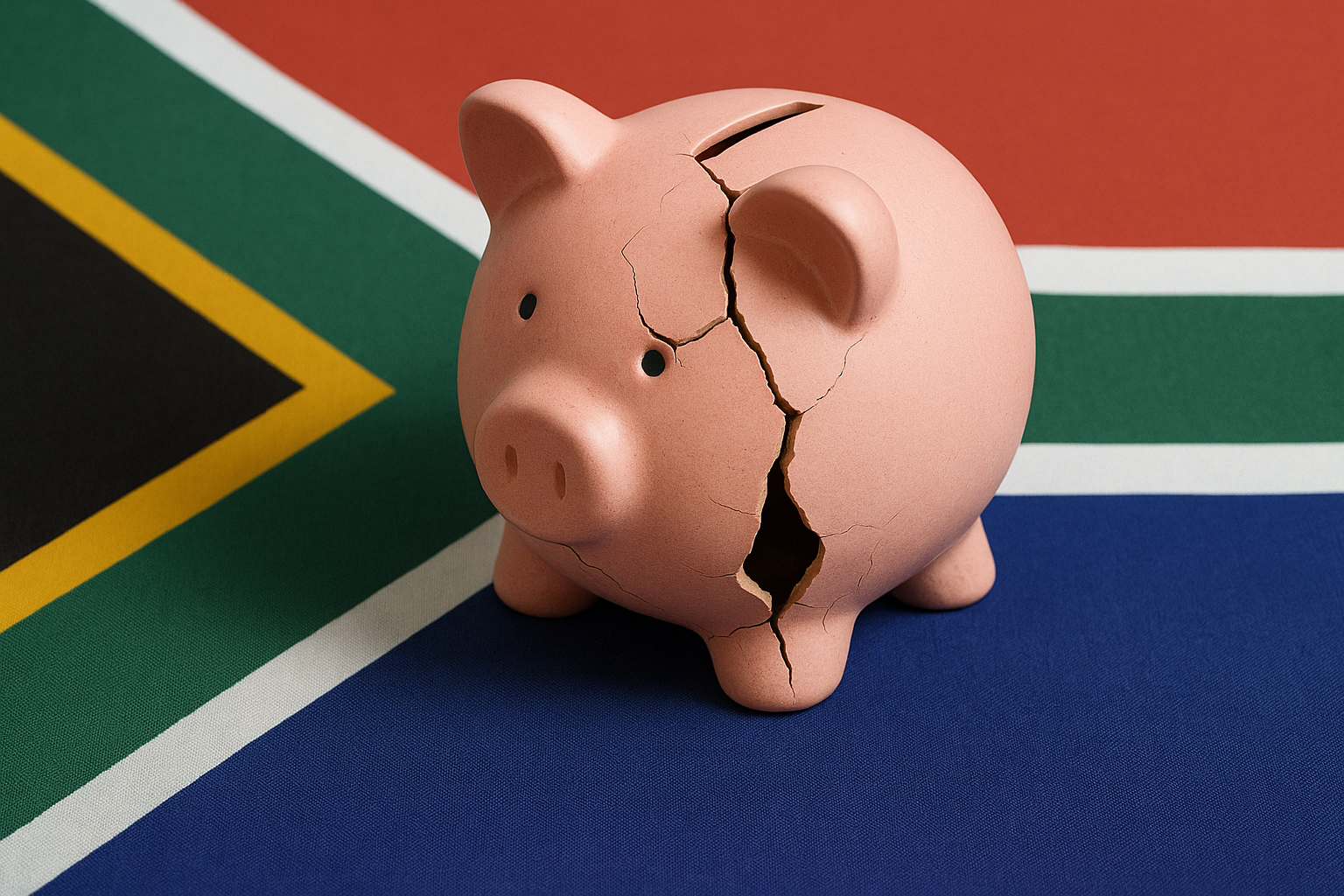
Inside the Isibaya Fund's R18bn sink-hole: chronicling the zero-return bets that evaporated public money & pension funds in SA.
The Isibaya Fund, managing R60 billion from government worker's pensions, made 23 bad investments worth R18 billion. These investments lost all their money, a 100% loss. This means people's pension money disappeared due to poor choices and possible corruption. No one has been punished, and the fund still faces big problems.
What is the Isibaya Fund and why is it significant?
The Isibaya Fund is a "developmental unlisted equities" sleeve within South Africa's Public Investment Corporation (PIC), managing R60 billion primarily from government employee pensions. It is significant due to its mandate to invest in unlisted firms, its historical -100% internal rate of return on 23 investments totaling R18.09 billion, and the controversy surrounding its management and losses.
Get Cape Town news in your inbox
Stay updated with the latest stories from the Mother City.
- A forensic walk-through of Africa’s largest pool of civil-service retirement money and the deals that vaporised without trace*
1. Meet the R3-trillion Gorilla
The Public Investment Corporation (PIC) still holds the title of Africa’s biggest asset steward. Roughly 90 % of the R3.05 trillion on the books belongs to 1.2 million teachers, nurses, cops and other state employees who are compelled by law to stash part of every pay-cheque in the Government Employees Pension Fund (GEPF). Only R240 billion sits in JSE-listed shares; the rest is spread across government bonds, cash, property and a R60-billion sleeve quietly tagged “developmental unlisted equities”. March 2006 birthed the Isibaya Fund - no benchmark, no public mandate, self-certified as “impact” money.
2. What Parliament Wanted to Know
On 19 August DA MP Andrew Bateman fired four written questions (NW3729–3732) at the Minister of Finance under NA Rule 145(1)(c). He requested:
- an itemised register of every private firm the PIC accessed through Isibaya;
- cheque date, entry price, present fair value, internal rate of return and readiness for exit;
- board minutes that captured the original thesis; and
- every intermediary who sourced, packaged or vetted the transaction.
The reply - signed 30 August by Deputy-DG Tshepiso Moahluli - shows 23 portfolio companies delivering an internal rate of return of precisely –100 %; recovery odds are “remote”.
3. The Gallery of the Wiped-Out
The 23 casualties, listed alphabetically with date and cheque size, are:
- Berlin Beef – R1.3 billion – Mar 2011
- Concor Holdings – R3.8 billion – Oct 2012
- Daybreak Farms – R2.05 billion – Jul 2013
- Educor Holdings – R1.7 billion – Sep 2014
- Independent Media – R904 million – Oct 2013
- LA Crushers – R630 million – Feb 2015
- Naturecell Refiners – R980 million – May 2016
- Urban Lifestyle Properties – R750 million – Aug 2017
- VBS Mutual Bank – R376 million – Feb 2015
- AgriProtrade – R520 million – Jun 2016
- Bio-Coal Tech – R210 million – Mar 2018
- Dezzo Logistics – R485 million – Apr 2014
- Elitsha Fishing – R310 million – Jul 2015
- Eziko Engineering – R290 million – Oct 2016
- Femmegine Health – R180 million – Jan 2017
- Gold-Leaf Tobacco – R590 million – Nov 2012
- Insimu Coal – R420 million – May 2013
- Kapa Biosciences – R260 million – Sep 2018
- Lehumo Risk – R195 million – Dec 2016
- Mvelaphanda Land Bank – R370 million – Feb 2014
- Qalisa Green Energy – R225 million – Jul 2017
- RoyalGate Logistics – R310 million – Aug 2015
- Zamani Mining – R295 million – Mar 2019
Total deployed: R18.09 billion. Cash clawed back so far: R41 million - mostly from auctioned forklifts and trademarks.
4. Where the Cheques Actually Originate
The balance sheet is not taxpayers’ petty-cash; it is “public-sector pension capital” held in trust. Contributors:
- GEPF – 78 %
- UIF – 7 %
- Compensation Commissioner Fund – 4 %
- Denel, Transnet, Eskom, Telkom, SAPS, SANDF plus municipalities – 11 %
The 2004 PIC Act instructs the corporation to invest prudently and chase “best risk-adjusted return under mandate”. Each client fund signs a triennial Investment Management Agreement. The 2019 IMA caps unlisted at 5 % of assets and only after “exhaustive due-diligence”. Isibaya officially sits inside that 5 % sleeve yet hit 7.3 % on 31 March 2023 - technically a breach that must be flagged to Parliament’s Standing Committee on Finance.
5. How a Pitch Becomes a Wire-Transfer
Money leaves the PIC in four formal stages:
Stage 1 – Origination
Stage 2 – Internal Investment Committee
Nine members - four executives, five extern - meet fortnightly. Minutes are “confidential commercial”. A simple majority plus the CIO’s signature shunts a deal forward.
Stage 3 – Isibaya Board Sub-committee
Four non-executive directors plus CEO, CIO, CFO vote again. Tickets above R1 billion need full PIC board ratification. All 23 wipe-outs cleared this hurdle.
Stage 4 – Client-Fund Consent
Tickets over R500 million need trustee waiver. Parliamentary replies show 18 granted; five sit unsigned.
6. How –100 % IRR Is Mathematically Possible
Internal rate of return is the discount rate that zeroes net present value of every cash-flow. –100 % means zero coupons, zero residual asset value - complete write-off. PIC applies a tweaked formula that ignores the management fees levied on the sleeve; the real hole is closer to R19.4 billion. Benchmark is CPI plus 3 % - now 9.3 % nominal. Composite Isibaya IRR since birth is 4.25 % - 490 basis points below its own yard-stick.
7. Three Post-mortems
7.1 Daybreak Farms - “the chicken play”
- R2.05 billion subscribed July 2013 - 8 % prefs, 92 % ordinary.
- Thesis: replace 280 000 t annual chicken imports; 8 500 rural jobs; hedge landed poultry prices.
- Ignored: five prior qualified audits; landed cost R21/kg vs Daybreak’s R28/kg.
- Avian flu 2017, abattoir abandoned, liquidation 2020. PIC claim impaired in full.
7.2 VBS Mutual Bank - “the black-owned mutual”
- R376 m tier-2 bond Feb 2015, 12 % PIK.
- Pitch: developmental banking aligned to National Development Plan.
- Six months later capital adequacy breached; R1.8 billion looted per Motau report. Bond subordinated, written off 2018. Eleven criminal cases pending.
7.3 Independent Media - “the privatised press”
- R904 million equity Oct 2013 alongside Sekunjalo consortium.
- PIC holds 25 % of titles.
- Ad-revenue CAGR assumed 6 %; market shrank 9 %.
- Dividend sweeps diverted; no cash ever paid. Goodwill nil 2019.
8. The Over-Seas Playbook
Temasek and CPP Investments cap single tickets at CAD 150 million and insist on co-investor pari passu notes, forcing third-party diligence. Norway’s NBIM is barred from unlisted unless a blind-pool GP tags along and a four-year exit clock ticks. None of those guard-rails sits in the PIC Act.
9. Fallout into the Listed Book
Write-offs cluster in the 5 % sleeve yet PIC repeatedly hocks its listed portfolio to plug liquidity. 2019–2021 it re-hypothecated R45 billion listed equities via total-return swaps, funding GEPF redemptions during sovereign downgrades. A leaked 2022 internal memo warns contingent exposure now equals 1.6 × PIC Tier-1 capital.
10. Draft Law That Never Moves
National Treasury published amendments that would:
- hard-cap unlisted tickets at R400 million;
- criminalise success-fees to non-registered advisers;
- publish annual unlisted register; and
- force dual-board consent above R250 million.
The bill stalled in committee March unions oppose the cap.
11. Auditor-general Score-Card
2022–23 audit qualified PIC books on:
- Irregular expenditure R12.9 billion - Isibaya over IMA limits.
- Fruitless & wasteful R4.7 billion - abattoir, print goodwill.
- Conflict-of-interest omissions - eight IIC members held linked shares.
12. Academic Verdict
Harvard’s Josh Lerner, who surveyed 1 100 state venture funds:
“Public pension money should never chase direct equity; limited-partner stakes in blind-pool vehicles impose governance discipline.”
13. Trustee Catch-22
GEPF trustees are public-sector unions. A closed-door vote 14 May sank litigation 15-9, fearing government would land pension liabilities on sovereign books.
14. Court Docket Snapshot
- 1 700 ex-Educor staff sue PIC/GEPF for fiduciary breach.
- Asset-Forfeiture Unit preserved R1.2 billion VBS property; trial April 2025.
- DA PAIA request for 2010 board packs refused; at Information Regulator.
15. Rating Agency Footnote
Moody’s and S&P debit RSA 0.5 notch for PIC contingent liabilities. Fitch Negative Watch since July 2023.
16. Where the R18 Billion Disappeared
Forensic accountants track four tranches:
- 42 % to capex never finished;
- 21 % to refinance vendor debt;
- 20 % to overruns and forex losses;
- 17 % still missing, Hawks investigating.
17. Next-in-Line Blow-ups
PIC 2023 report flags a further 38 unlisted names - R31 billion - already 40 % provisioned but not re-valued. Any could crater if governance slips again.
18. Faces on the File
- Dr Kennedy Monyae - ex-CIO, now BRICS advisor.
- Fidelis Madavo - acting CIO; signed Daybreak, Educor, VBS.
- Sibusiso Lushaba - Isibaya sub-committee chair; spouse linked to Independent Media.
- Advocate Dudu Myeni - IIC external member; non-exec at Naturecell, LA Crushers.
19. Quick-Snap Stats
- R18.09 billion gone
- R1.2 million average member contribution
- 15 075 years of contributions to plug hole
- R4.9 billion fees to advisers
- 0 criminal convictions
- R2.05 billion largest single cheque
- 4 officials suspended
- 1 CA on 12-member board
{"faq": [{"question": "
What is the Isibaya Fund and what is its purpose?
", "answer": "The Isibaya Fund is a specialized investment division within South Africa's Public Investment Corporation (PIC). It manages R60 billion, primarily sourced from government employees' pensions, and is dedicated to investing in 'developmental unlisted equities.' Its stated purpose is to make impact investments in unlisted firms, though it has faced significant controversy regarding its performance and management."}, {"question": "How much money has the Isibaya Fund lost and what does a -100% Internal Rate of Return (IRR) mean?
", "answer": "The Isibaya Fund has lost R18 billion across 23 unlisted investments, representing a 100% loss on these specific ventures. A -100% Internal Rate of Return (IRR) mathematically signifies a complete write-off, meaning there were zero returns or residual asset value from these investments. The forensic walk-through revealed that the actual hole, when factoring in management fees, is closer to R19.4 billion."}, {"question": "Which types of organizations contribute to the Public Investment Corporation (PIC) and the Isibaya Fund?
", "answer": "The Public Investment Corporation (PIC), which houses the Isibaya Fund, manages assets predominantly from public-sector pension capital. Key contributors include the Government Employees Pension Fund (GEPF) (78%), the Unemployment Insurance Fund (UIF) (7%), the Compensation Commissioner Fund (4%), and various state-owned entities and municipalities such as Denel, Transnet, Eskom, Telkom, SAPS, and SANDF (11%). These funds are held in trust, with the PIC mandated to invest prudently for the best risk-adjusted return."}, {"question": "What were some of the most significant failed investments by the Isibaya Fund?
", "answer": "Among the 23 failed investments, some notable examples include: \n Concor Holdings: R3.8 billion (October 2012)\n Daybreak Farms: R2.05 billion (July 2013) – a 'chicken play' that failed due to ignored warnings and avian flu.\n Educor Holdings: R1.7 billion (September 2014) – leading to a lawsuit from ex-staff for fiduciary breach.\n Berlin Beef: R1.3 billion (March 2011)\n VBS Mutual Bank:* R376 million (February 2015) – a 'black-owned mutual' that was looted, leading to criminal cases and a complete write-off of the bond.\nThese examples highlight the diverse sectors and substantial capital deployed into ventures that ultimately resulted in total losses."}, {"question": "What are the current consequences and ongoing investigations related to the Isibaya Fund's losses?
", "answer": "Despite the R18 billion loss, no one has been criminally convicted, although the Hawks are investigating R3.06 billion that is still missing. There are ongoing legal battles, including 1,700 ex-Educor staff suing the PIC/GEPF for fiduciary breach, and an Asset-Forfeiture Unit case preserving R1.2 billion in VBS property. The Auditor-General has qualified PIC's books for irregular expenditure (R12.9 billion), fruitless & wasteful expenditure (R4.7 billion), and conflict-of-interest omissions. Rating agencies like Moody’s, S&P, and Fitch have also noted the PIC's contingent liabilities as a risk to South Africa’s sovereign rating."}, {"question": "What measures have been proposed or are needed to prevent future losses by the Isibaya Fund?
", "answer": "Draft legislation, stalled in committee, aimed to introduce several safeguards: hard-capping unlisted tickets at R400 million, criminalizing success fees to unregistered advisers, publishing an annual unlisted register, and requiring dual-board consent for investments over R250 million. The current Investment Management Agreement (IMA) caps unlisted investments at 5% of assets and requires exhaustive due-diligence, but the Isibaya Fund breached this, hitting 7.3% on March 31, 2023. Experts, like Harvard's Josh Lerner, suggest that public pension money should avoid direct equity investments and instead use limited-partner stakes in blind-pool vehicles to enforce governance discipline, a practice observed by funds like Temasek and CPP Investments."}]}
Thabo Sebata is a Cape Town-based journalist who covers the intersection of politics and daily life in South Africa's legislative capital, bringing grassroots perspectives to parliamentary reporting from his upbringing in Gugulethu. When not tracking policy shifts or community responses, he finds inspiration hiking Table Mountain's trails and documenting the city's evolving food scene in Khayelitsha and Bo-Kaap. His work has appeared in leading South African publications, where his distinctive voice captures the complexities of a nation rebuilding itself.
View all articles →