
Pirates of Penzance comes to Artscape with a magical twist
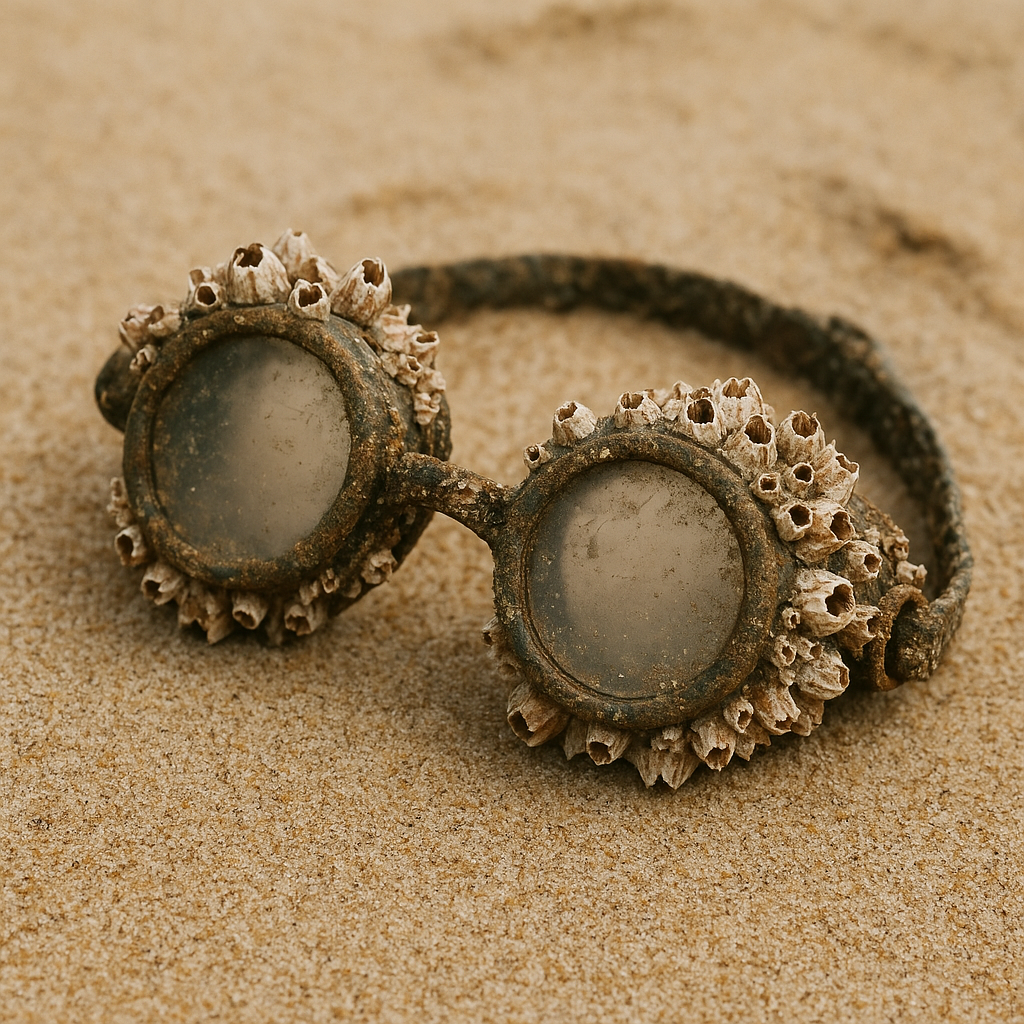
Cape Town's new "Pirates of Penzance" plunges beneath the Victorian surface with a fresh, immersive, and locally-inspired production.
Cape Town's "Pirates of Penzance" is a fresh, ocean-themed version of the classic opera. It uses a South African sound, cool costumes from recycled stuff, and lights that change with the music. The show tells a story about pirates but also shares a strong message about saving our planet. It feels like you're under the sea, making the old tale new and exciting.
What makes Cape Town's "Pirates of Penzance" unique?
Cape Town's "Pirates of Penzance" re-imagines the classic opera with an immersive, ocean-themed production. It features a South African soundscape, innovative costume and set designs incorporating salvaged materials and reactive lighting, and a strong ecological message, transforming the traditional tale into a fresh, localized experience.
Get Cape Town news in your inbox
Stay updated with the latest stories from the Mother City.
1. The Fourth Meets the Fourth
On the evening of 4 July, the lights fade inside Artscape Opera. Before Sullivan’s first bar is struck, the hall fills with the hush of breakers and the cry of gulls. A liquid turquoise glow washes across the safety curtain; hidden vaporizers hiss out a faint ozone mist. Conductor Brandon Phillips lifts the Cape Town Sinfonietta into the famous overture, yet already the night feels less 1879 and more high-tide now. The salted haze never quite leaves the auditorium for the next two hours, keeping everyone half-convinced the stalls themselves might float away.
Three preparatory measures and the orchestra swells into its trademark silver sparkle. Audience members glance at one another, instinctively tasting salt on their lips even before the curtain rises. A low roll of ship-bell percussion, taped rather than live, slips through the brass like an undertow. No one needs a program note to sense that tonight’s tale will be sung not on dry land, but somewhere between moonlit deck and ocean floor.
The last pre-curtain secret is auditory: four musicians from the renowned township collective Amampondo crouch beneath the apron, trading Sullivan’s snare drum for deep bass marimbas. Their heartbeat thumps up through the floorboards, coaxing the overture toward Africa’s own shoreline instead of Devon’s. The fusion feels inevitable, as though the composer had always meant the melody to ride a darker swell.
2. Frederic and the Faulty Lens
Renier van Rooyen steps forward as Frederic, but no crisp midshipman coat greets the eye. His sleeves belong to a hand-me-down fisherman, sun-bleached and freckled with salt. Heavy goggles, still crusted from seawater, dangle at his throat like a talisman of partial sight. When he snaps them over his eyes to peer into the moonlit cove, every face onstage is doused in wavering aquamarine. The effect is not special, yet somehow magical: the boy is testing the world through a lens of memory and mistake.
These salvaged goggles, we later learn, were torn from the wreck that first carried Frederic off to piracy. Director Darryl J Spijkers treats them as a mis-seeing device; each time the lad peers through them, the story itself ripples. During Act II he lifts them again on the cliff when Mabel appears, and the beams of footlights twist like shafts underwater. For a heartbeat the opera turns liquid - Promenade chords refracted, faces floating like coral fragments - before snapping back to comic timing.
Costume designer Ilona Frege dresses Frederic in weathered denim tones that echo storm clouds rather than naval braid. His boots show rope burns, not polish. When he sings “Oh, is there not one maiden breast?” the goggles rest like a second pair of eyes over his heart, framing the aria as much about self-discovery as romance. By the end of the night the audience has learned to mistrust any scene that does not shimmer, suspecting the lad still views life through a salvaged porthole.
3. Mabel, Coral-Coloured
Soprano Frances van Vuuren makes her first descent not by ladder but by sliding down a billow of aquamarine silk that doubles as falling water and kelp. The fabric slithers over rock-ledge platforms, catching concealed LEDs that flicker in sync with every sustained high note. Instead of the traditional lily-white gown, the costume glints in abalone greens and pewter greys; a slow pulse of phosphor circulates along the hem whenever she parks on a high B-flat. The running joke, gentle but unmistakable, is that the girl herself is part beacon, part hazard.
Her duet with Frederic, “Ah, leave me not to pine,” becomes an exercise in underwater shadow-play. As the final cadence blooms, the gown erupts in soft bioluminescence that silhouettes both singers against a backdrop of midnight cobalt. Below them, the pirate chorus crouches like barnacled shadows. The scene looks less like an 1880s stage picture and more like a scene caught by a diver’s torch near Cape Point.
Costume lighting is reactive rather than merely decorative. A hidden sensor reads orchestral volume and translates it into pulses along the fabric, so the dress literally sings with her. Audience members swear they felt a cool breeze when the lights flared; in truth, a hidden fan timed to the climax sighs softly across the first rows. The cumulative illusion is anchored by van Vuuren’s crystalline line, clear as seawater over sand.
4. The King and the Constabulary
Grant Towers - last season’s implacable Javert at the same venue - strides in as the Pirate King. Gone are the plumed tricorn and patent boots. In their place he wears a coat pieced from sailcloth scraps, the seams drawn in scarlet like reopened wounds. Where a cutlass should hang, an old harpoon head juts rust-red. Towers’s entrance is timed to a storm-beat hornpipe: fifty chorus pirates erupt through trapdoors, each brandishing glowing jars of plankton. Their footwork nods to Irish jig, Cape gumboot shuffle, and something older still, as if the floor itself remembers every sailor who ever trod it.
The orchestration widens again - bodhrán joins timpani, a row of beer bottles clinks counter-rhythm - so the pirate world feels simultaneously archaic and brand-new. Director Spijkers insists the soundscape is not embellishment but argument: every legend about buccaneers is a colonial echo, told first by those who learned to fear the shoreline. The chorus stamps out warning codes before they sing them.
Act II brings the obligatory sword fight, refashioned by fight director Jaco van Rensburg into something half-ballet, half-squall. Blades arc like gull wings; every metallic clash triggers a cymbal shimmer answered by a turquoise strobe. The duel appears deadly yet weightless, as though fought underwater. When the constabulary at last arrives, their red tunics clash against the plankton glow like sunset against stormcloud.
5. Major-General 2.0 – and the Mothers We Ignore
Bevan Timm’s Major-General Stanley rides a two-storey projection of his ancestral manor that dissolves into a moving grid as he launches into his famous list aria. Each historical allusion pops up as caption, sometimes accurate, sometimes pixel-perfect nonsense - Carthaginian war elephants on surfboards, Viking longboards, Zulu regiments with selfie-sticks. Mid-list the graphics glitch into 8-bit sprites, a nod to Cape Town’s indie-gaming scene and to Frederic’s twenty-one indentured years - exactly twenty-one seconds of deliberate visual stutter.
Yet the production’s quietest stroke of genius concerns Ruth, the nursemaid turned pirate. Mezzo Lieske Schotte dons indigo corset over skirt of fishing-net, her grey hair threaded with kelp. Rather than chase Frederic in comic lust, she mourns drowned histories. During her lullaby “When you had left our pirate fold” a gauze scrim rises to show archival film: women lighthouse keepers of the 1800s, Cape abalone divers, shipwreck survivors whose names never reached ledgers. The song shifts from wry complaint to communal elegy, reframing Frederic’s leap-year paradox as the tip of a much darker ledger of lives unrecorded.
Camera flashes are banned, yet the audience senses they have just seen something photographically real within the fantasy. Schotte stays motionless as the film fades, her final note hanging like mist until the final pirate chorus swells back in. No one laughs; instead, a collective inhale travels the rows, salt-water sharp.
6. Mechanics, Access, and After-images
Set designer Wilhelm Disbergen eschews standard flying rigs in favor of parachute-silk tentacles counter-weighted from the grid. In the pre-finale hurricane they billow like Portuguese man-of-war catching the gale. Repurposed aircraft turbines blow phosphorescent confetti so the stage appears submerged in sea-foam; characters still pause to debate contract law, but they do so half-swimming through a tide of light.
Tickets run R225–R350; “Pirate Tuesdays” reward do-it-yourself nautical costumes with twenty percent off. South African Sign Language interpreters - costumed as sea sprites - shadow the principals rather than standing aside, turning access into choreography. Sensory-friendly shows keep house lights at forty percent and volume lowered for patrons on the autism spectrum.
Lobby kiosks peddle biodegradable soap shaped like cutlasses; every bar funds beach clean-ups. Programmes are printed on seeded paper - plant it, photograph the wildflowers, tag the theatre. By final curtain the cast lift banners reading “Protect the Kelp Forests,” a swift ecological reminder that even comic opera can remember the planet it stands on. The audience spills into the night tasting salt, the streets suddenly unfamiliar, every headlight a lighthouse and every footstep a step closer to the tide.
{"faq": [{"question": "
What makes Cape Town's \"Pirates of Penzance\" a unique production?
", "answer": "Cape Town's \"Pirates of Penzance\" offers a unique re-imagining of the classic opera. It features an immersive, ocean-themed setting with a distinct South African soundscape, incorporating elements like deep bass marimbas from the Amampondo collective. The production also emphasizes innovative costume and set designs using salvaged materials, reactive lighting that responds to music, and a strong ecological message about saving the planet, moving beyond the traditional 1879 setting to a contemporary, localized experience."}, {"question": "How does the production incorporate its environmental message?
", "answer": "The environmental message is woven throughout the production. Costumes are made from recycled materials, and elements like Frederic's salvaged goggles and Mabel's bioluminescent gown highlight a connection to the ocean. The set design utilizes repurposed items and creates an underwater atmosphere. Explicitly, the show concludes with the cast lifting banners promoting \"Protect the Kelp Forests,\" and merchandise like biodegradable soap funds beach clean-ups. Programmes are even printed on seeded paper, encouraging environmental action."}, {"question": "What kind of sensory experience can audiences expect?
", "answer": "Audiences can expect a multi-sensory experience designed to immerse them in an underwater world. This includes the sound of breakers and gulls, an ozone mist, and a liquid turquoise glow. Reactive lighting, such as Mabel's costume lighting that flares with her singing, and stage effects like phosphorescent confetti mimicking sea-foam, contribute to this. The show even features a hidden fan to create a cool breeze during intense moments, further enhancing the illusion of being under the sea."}, {"question": "How are traditional characters and elements re-interpreted?
", "answer": "Traditional characters are given fresh interpretations. Frederic, for instance, wears a sun-bleached fisherman's outfit and salvaged goggles, framing his journey as one of self-discovery through a \"faulty lens.\" Mabel's entrance is via an aquamarine silk slide, and her costume glows, making her seem part beacon, part hazard. The Pirate King wears a coat of sailcloth scraps and wields a harpoon head instead of a cutlass. Even Ruth, the nursemaid, is reframed, not by comic lust, but by mourning \"drowned histories\" through archival film."}, {"question": "What are the accessibility options for attendees?
", "answer": "The production is committed to accessibility. South African Sign Language interpreters, costumed as sea sprites, shadow the principal performers, integrating access directly into the choreography. Sensory-friendly shows are also offered, maintaining house lights at 40% and lowering volume for patrons on the autism spectrum. \"Pirate Tuesdays\" provide a 20% discount for those who come in nautical costumes."}, {"question": "How does the production blend South African culture with the classic opera?
", "answer": "The production deeply integrates South African culture. This is evident in the \"South African soundscape,\" particularly through the use of deep bass marimbas from the renowned township collective Amampondo, which gives the overture an African rhythm. The Pirate King's footwork combines Irish jig with Cape gumboot shuffle, and Major-General Stanley's projection includes Zulu regiments with selfie-sticks, directly referencing local history and contemporary culture. The overall re-imagining localizes the narrative, making it resonate with a Cape Town audience."}]}
Michael Jameson is a Cape Town-born journalist whose reporting on food culture traces the city’s flavours from Bo-Kaap kitchens to township braai spots. When he isn’t tracing spice routes for his weekly column, you’ll find him surfing the chilly Atlantic off Muizenberg with the same ease he navigates parliamentary press briefings.
View all articles →