
Police broaden Cape Town corruption probe with municipal office raids
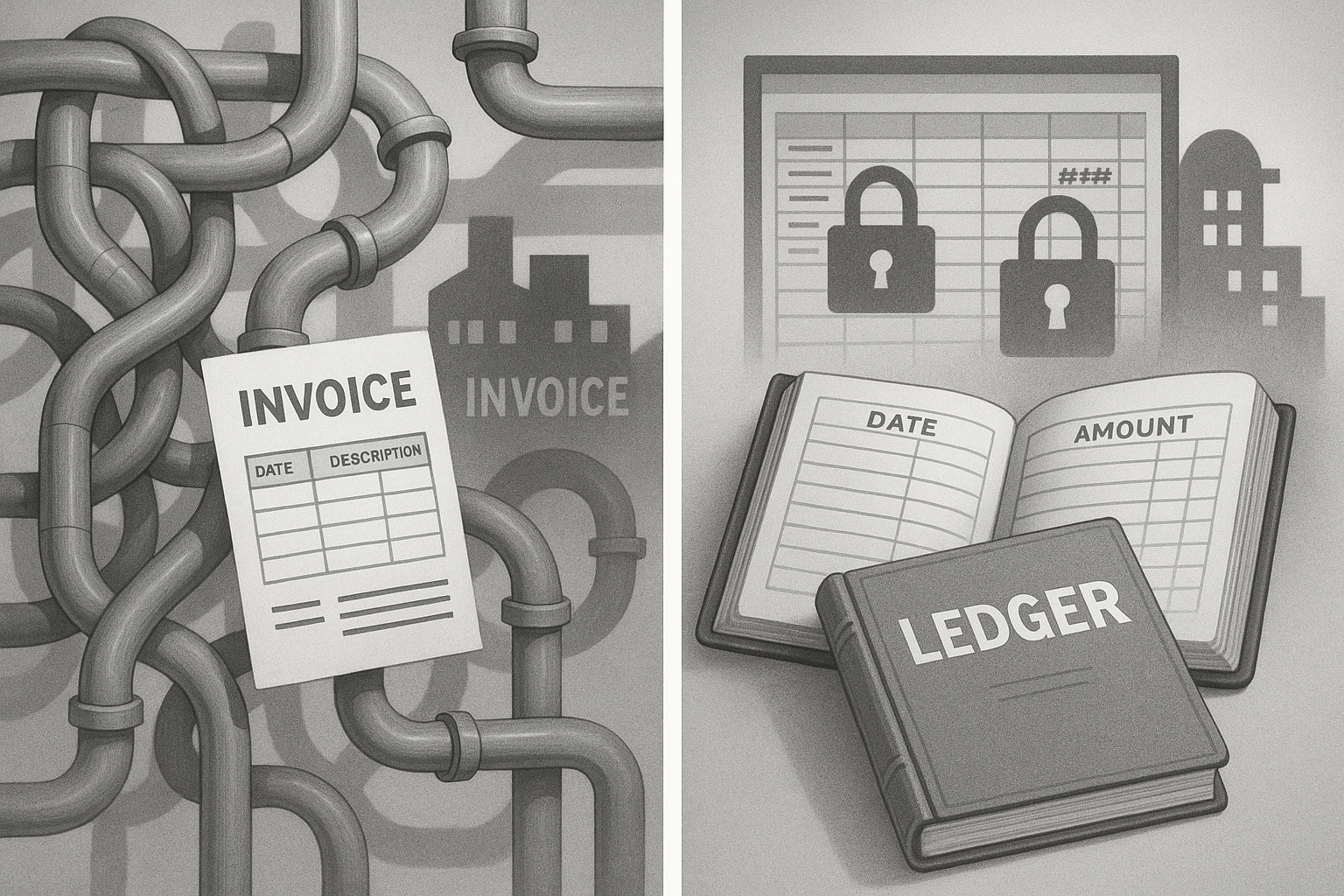
Cape Town's R1.4M bribe scandal exposes shadow invoices, shell companies, and deep-seated corruption in its contract-maintenance pipeline.
Cape Town's 'R1.4 Million in a Roller-Bag' scandal rocked the city with tales of shady deals and hidden cash. A company called Triple C Maintenance ripped off the city, using fake invoices and ghost workers for road repairs. It all blew up when a R1.4 million cash payoff was filmed, leading to arrests and exposing deep-seated corruption. This shocking event revealed how easily public money could be stolen through clever tricks and secret plans.
What is the Cape Town 'R1.4 Million in a Roller-Bag' scandal about?
The Cape Town 'R1.4 Million in a Roller-Bag' scandal involves a corruption scheme where a contractor, Triple C Maintenance, allegedly defrauded the City of Cape Town through inflated invoices, ghost workers, and duplicate work orders. It culminated in an arrest after a R1.4 million cash payoff was filmed, exposing systemic fraud and bribery.
Get Cape Town news in your inbox
Stay updated with the latest stories from the Mother City.
Ledger Games – The Story Behind the Perfect Spreadsheet
The City of Cape Town brags that its road and storm-water budget is an open book. Every pothole filled, every drain unclogged, every circle resealed is listed in microscopic detail on an award-winning open-data portal that the World Bank loves to cite. Yet a second, far scruffier book has haunted the finance towers after dark. This invisible twin lives on password-locked laptops and shows identical street names, but with bigger price tags, smaller real outputs and “supervisors” whose clock-in cards never existed. Investigators now think the firm Triple C Maintenance and Services - registered as a Grade-9CE contractor with a staff of twenty-two - turned those ghost figures into actual cash.
Triple C’s favourite trick was the “same road, different bill”. An arterial in Khayelitsha might appear on the public ledger as a modest resurfacing for R400 000, while the hidden sheet scribbled R680 000 for the same stretch. The gap between the two prices vanished via inflated labour claims and absent quality checks. Internal auditors flagged this odd pairing nine separate times, yet every alert was signed away under the City’s “disaster-risk management override”. Rainy Fridays became the cue for fresh work orders; councillors began teasing staff that the weather forecast should really read “chance of Triple C invoices”.
The Emergency Panel That Never Slept
Between July 2021 and February 2023, at least eighty-one emergency orders poured out of the R380 million “Emergency Reactive Road Repair” panel. The contract let the City skip new bidding as long as a manager declared the job urgent. Predictably, burst mains and sudden sinkholes clustered around public holidays - perfect timing to dodge oversight. Each flash order carried the same ritual: a WhatsApp photo of tarmac devastation, a hasty voice note and a signature delivered minutes later. By the time opposition councillors demanded a paper trail, the work order was already filed and the trench half-filled.
City compliance officers kept sounding alarms. Nine memos warned of repetitive site photos, recycled material reports and the same subcontractor names. Every memo was buried by directors citing “mobilisation urgency”. One leaked note even compared the pattern to “ordering pizza every time the lights flicker”. Still, the conveyor belt rolled on, and the City’s streets department gained a private nickname: “Triple C’s ATM”.
The Sting – From Hotel Crockery to Flash Drives in a Surfboard
The Bag and the Quote That Sealed It
On 12 March 2023, City Manager Lungelo Mbandazayo wheeled his own luggage into the Southern Sun Waterfront. Hidden cameras, patched in under a Section 252A warrant, streamed live to a Hawks command room dotted with coffee mugs and half-eaten sandwiches. At 21:14 the footage shows a brushed-metal roller-bag nudge across a breakfast table. Owner Shaun Roos leaned in: “Manager, this is just the starter. Contracts stay ours and the city keeps humming.” Inside the bag lay fourteen shrink-wrapped bricks of R100 notes - exactly R1.4 million. Detectives burst from the service lift, pressed Roos face-down on marble and cuffed him while diners stalled mid-cappuccino.
The video clip would later loop on every local news channel, yet its significance goes beyond the drama. Investigators say the bag was the first tangible proof that the-down payments - not just inflated invoices - were driving the scam. The phrase “starter” suggests more hand-offs were on the calendar. Within hours, the Hawks froze Triple C’s primary account and revoked its vendor login.
Dawn Knocks and Odd Treasure Chests
At 05:00 on the Thursday after the arrest, eight simultaneous raids kicked off. At Councillor Siseko Mbandezi’s Pinelands bungalow, officers bagged four new iPhones - one still in factory plastic - plus a single A4 page titled “Mdantsane Strategy 23”. In Bellville South, three sleeping quantity surveyors watched detectives crack a steel cabinet and walk away with nine laptops, two still connected to the City’s SAP ERP. The strangest haul came from a modest Goodwood flat registered to Ocean Crest Trading 117: 172 activated SIM cards and a surfboard with a hollowed-out fin hiding eight thumb drives.
Forensic teams are still decoding the flash drives, but leaked thumbnails show folders labelled “V1”, “V2” and “High Mast”. Experts believe the SIM cards served as burner relays: each sent a single SMS verifying SiteDrive uploads before being discarded. The surfboard stunt made global tech blogs - proof that criminals can be both creative and clichéd.
Shell Games – From Delaware to Langa
One Signature, Many Hats
Ocean Crest Trading, Sandown Surfacing, Khayelitsha Rapid Projects and Blue-Peak Civils share more than alphabetical neighbours. A forensic handwriting expert matched 46 procurement signatures to the same left-handed writer. Company registries reveal a merry-go-round of dummy directors: a 71-year-old Langa pensioner fronts four firms, swearing she has “never signed anything bigger than a stokvel ledger”. Bank transfers follow a lazy river: City pays Triple C; within hours Triple C wires Ocean Crest; Ocean Crest whisks funds to a trust in Stellenbosch whose only beneficiary is listed as “Project Khanya” - code name still undeciphered.
Mdantsane: Not the Township, the Blueprint
The blue-ink note seized from Mbandezi’s bedside table is now Exhibit A. Four neat columns list ward numbers, budget codes, projected “savings” and initials matching senior officials. Every line ends with a tick-box and the phrase “Done – CCTV blind spot confirmed”. Detectives think the sheet plotted duplicate jobs: crews resurfaced streets freshly sealed weeks earlier, while drones captured footage stripped of metadata. Township slang among depot drivers already uses “Mdantsane” for rerunning tasks and invoicing them as new. The irony: the note was seized from a councillor whose ward sits nowhere near the real Mdantsane in the Eastern Cape.
From Fake Apps to Ghost Workers – The Fallout
Software That Could Travel in Time
Triple C’s teams carried tablets loaded with a custom app called SiteDrive. Unknown to the City, the app hid a “delta mode” that nudged GPS coordinates 200 metres sideways and rewound timestamps by up to 72 hours. Photos of freshly filled potholes were taken only after invoices had already been generated, yet were dated to make it look like progress. Back-end traffic flowed to an Amazon Web Services bucket owned by a Delaware shelf company, making subpoenas a diplomatic headache.
Labourers at a Locked Gate
On the Monday after the raids, 18 truck drivers and 34 casual labourers arrived at Triple C’s Philippi depot to find a brand-new padlock. NUMSA shop stewards now haggle for severance packages, insisting labour protections should outrank fraud charges. A City risk memo warns that laid-off workers know where the storm-water drains and electrical ducts are, knowledge that could fetch a price on the informal market. Social workers have started trauma counselling and CV-writing classes in the dusty yard. Meanwhile, the Auditor-General drills core samples; early tests show asphalt 30 % thinner than tender specs. If the pattern holds city-wide, repayment claims under Section 38 of the Municipal Finance Management Act could drag on for years.
Bonds, Bailouts and the Road Ahead
Debt Markets Catch the Whiff
South Africa’s greylisting by the Financial Action Task Force means every foreign transfer above USD 10 000 now triggers deeper scrutiny. Cape Town’s 10-year green bond widened five basis points on Friday - the first hint that corruption risk is being priced in. Auditors once content with footnotes now answer summons from the Independent Regulatory Board. Analysts warn that even a whiff of collusion could push future bond issues into double-digit coupons.
Repairing More Than Asphalt
Mayor Geordin Hill-Lewis has appointed an “Infrastructure Tsar” tasked with a tamper-proof tracking system. Early prototypes anchor blockchain hashes every hour to record each tonne of asphalt laid. Critics retort that technology cannot neuter greed; supporters reply that at least fraud will grow costlier and easier to spot.
In the council chamber a special debate on “Procurement Integrity” is set for next Tuesday. The ANC-EFF bloc hints it will table a no-confidence motion, hoping public fury over potholes drowns out technical evidence. While lawyers spar over entrapment defences and the 90-day indictment clock runs, ordinary Capetonians still dodge manholes on the N7. City officials insist the roads will be fixed; sceptics argue the cracks go deeper than tarmac.
What is the Cape Town 'R1.4 Million in a Roller-Bag' scandal about?
The Cape Town 'R1.4 Million in a Roller-Bag' scandal involves a corruption scheme where a contractor, Triple C Maintenance, allegedly defrauded the City of Cape Town through inflated invoices, ghost workers, and duplicate work orders. It culminated in an arrest after a R1.4 million cash payoff was filmed, exposing systemic fraud and bribery.
How did Triple C Maintenance defraud the City of Cape Town?
Triple C Maintenance employed several methods, including using fake invoices and ghost workers for road repairs. They would also bill for the same road work at inflated prices on a 'hidden' ledger compared to the public one, and utilized an 'Emergency Reactive Road Repair' panel to bypass standard bidding processes for supposedly urgent jobs, often on public holidays to avoid oversight.
What was the significance of the 'R1.4 Million in a Roller-Bag'?
The R1.4 million in a roller-bag was a cash payoff filmed during a sting operation, leading to the immediate arrest of Shaun Roos. This incident was crucial as it provided tangible proof of direct cash down-payments, not just inflated invoices, driving the scam. The term "starter" used by Roos suggested this was just one of many planned illicit transactions.
What evidence was collected during the raids following the arrest?
Raids conducted after the arrest yielded significant evidence, including four new iPhones and a strategic planning document titled "Mdantsane Strategy 23" from a councillor's home. Detectives also seized nine laptops connected to the City's SAP ERP from quantity surveyors, and from another location, 172 activated SIM cards and a surfboard with a hollowed-out fin hiding eight thumb drives, believed to contain crucial data.
How did the City's internal systems fail to prevent this corruption?
Despite the City of Cape Town having an 'award-winning open-data portal' for its road and storm-water budget, a 'second, far scruffier book' containing inflated prices and ghost workers existed on password-locked laptops. Internal auditors flagged discrepancies nine separate times, but these alerts were overridden under the City’s "disaster-risk management override," indicating a systemic failure in internal controls and oversight.
What are the broader implications and consequences of this scandal?
The scandal has several far-reaching consequences: it exposed deep-seated corruption within the City of Cape Town, led to the freezing of Triple C's accounts and vendor revocation, and intensified scrutiny on South Africa due to its greylisting by the FATF. Economically, it has caused Cape Town's green bonds to widen, indicating increased corruption risk. The City is now implementing an "Infrastructure Tsar" and tamper-proof tracking systems, with potential legal battles over repayment claims and calls for no-confidence motions against the current leadership.

Lerato Mokena is a Cape Town-based journalist who covers the city’s vibrant arts and culture scene with a focus on emerging voices from Khayelitsha to the Bo-Kaap. Born and raised at the foot of Table Mountain, she brings an insider’s eye to how creativity shapes—and is shaped by—South Africa’s complex social landscape. When she’s not chasing stories, Lerato can be found surfing Muizenberg’s gentle waves or debating politics over rooibos in her grandmother’s Gugulethu kitchen.
View all articles →