
Political party donations soar as South Africa gears up for local elections
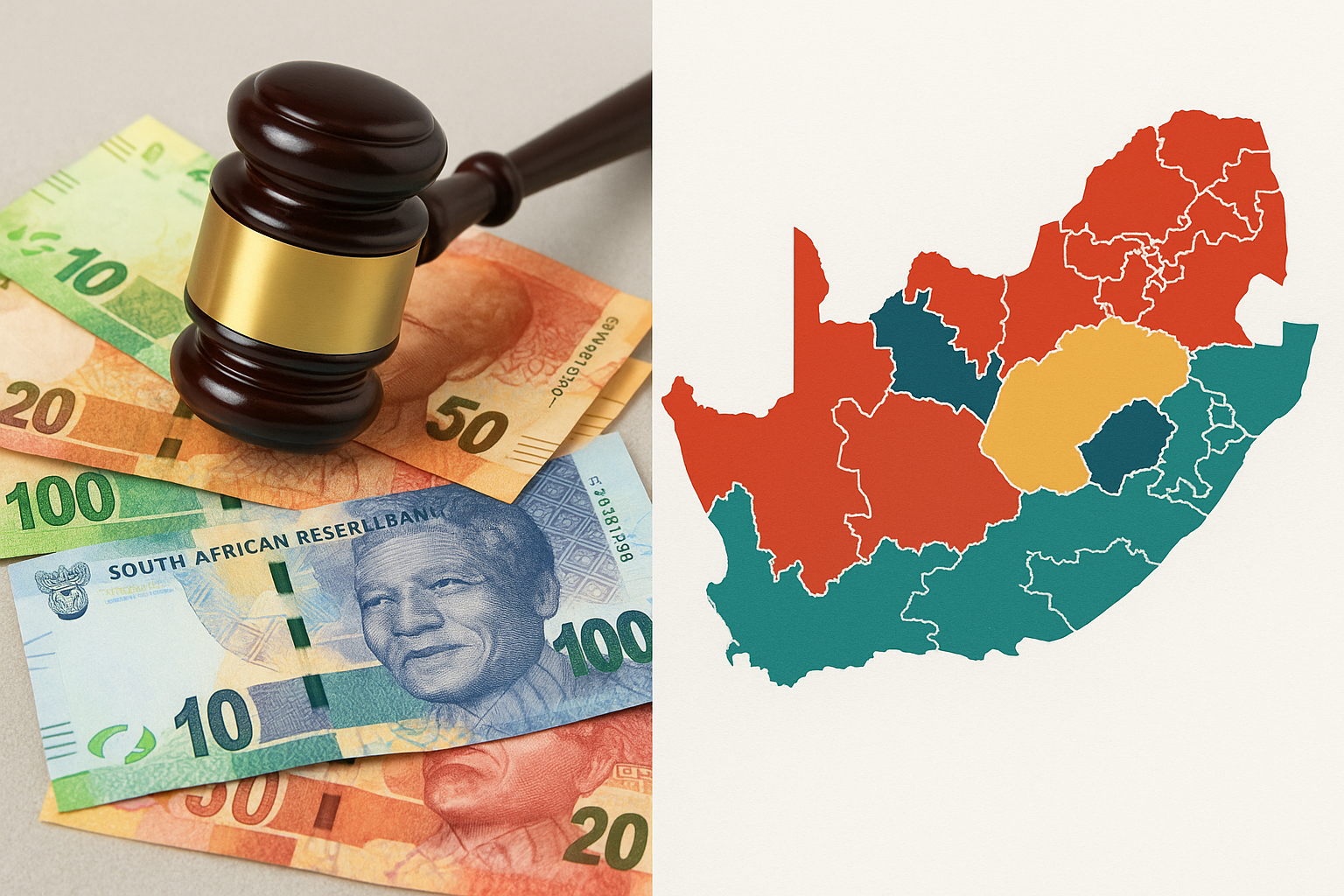
SA's 2026 local elections are heating up with R97M in Q1 donations. Discover which parties got the cash & the strategies shaping the polls.
South African political parties got a whopping R97.2 million in donations early in 2026, showing that money talks loud in elections. The Democratic Alliance, RISE Mzansi, and ActionSA raked in the most cash. This huge amount of money will help shape who wins the upcoming local government elections. It's clear that campaigns are fueled by big bucks, and this is just the start of a spending spree.
How much money was donated to South African political parties in the first quarter of 2026?
South African political parties received R97.2 million in donations during the first quarter of 2026, with the Democratic Alliance, RISE Mzansi, and ActionSA being the top recipients. This substantial influx of funds highlights the significant financial aspect of the upcoming local government elections, shaping campaign strategies.
Get Cape Town news in your inbox
Stay updated with the latest stories from the Mother City.
1. The Ninety-Seven-Million-Rand Shock Wave
Just before midnight on 31 March the Electoral Commission uploaded a quiet spreadsheet that has since detonated across boardrooms and backrooms alike. Two-hundred-thirty-seven lines of donations reveal a single, sobering truth: long before posters hit lamp posts the 2026 local-government contest will be decided by bank balances rather than by promises. R97.2 million entered party coffers in the opening quarter, the first tremor of a spending earthquake that will roll until 4 November.
Yet the figure is only the tip of the iceberg. Beneath it sits a sub-layer of legal loopholes, offshore cloud services and last-minute loan conversions that sketch the real balance of power. Cash dominated R94 million while R2.2 million slipped in as favours: opinion polls, graphic design, venue hire and, for the first time itemised, free penetration tests on two party voter-databases. Any pro-bono gift worth more than R200 000 is now exposed to forfeiture if the recipient cannot justify the valuation.
Only five parties voluntarily raised their hands this quarter:
- Democratic Alliance – R57.3 million
- RISE Mzansi – R30 million
- ActionSA – R9.9 million
- Alliance of Citizens for Change – R500 000
- Build One South Africa – R480 000
The African National Congress kept silent, forcing auditors to reconstruct its receipts through the Commission’s back-door "mirror disclosure" rule.
2. Big Money Mechanics: How the Millions Travel
The DA’s Three-Engine Fund-Raiser
The official opposition proved again that incumbency is a licence to print money. Three pipelines fed its R57 million haul:
- Family trusts along the Atlantic seaboard funnelled R27 million. Eighteen separate vehicles, registered as early as 1994, each stayed just below the annual R15 million single-source ceiling, a choreography only possible after weeks of legal choreography.
- Two Scandinavian think-tanks transferred R9 million earmarked for "governance-innovation workshops." Foreign cash is lawful for training, not advertising, and the Commission’s early view is that the line has not been crossed.
- Micro-donations broke the million-rand barrier for the first time: 11 000 supporters clicked R100–R500 buttons on a redesigned website with live leaderboards, netting R1.4 million and hinting at a future less dependent on large benefactors.
The war chest is already being spent. Gauteng community-radio bookings jumped 64 % compared with the corresponding period in 2021, and a tender for 140 campaign buses has been issued - lead times that underline how far in advance the race has begun.
RISE Mzansi’s Lightning Convertible
The quarter’s single largest transaction - R30 million - arrived courtesy of a company called We Are The People. The outfit converted an unsecured loan advanced in mid-2025, timing the switch days before a statutory amendment capped political-loan interest at repo plus two per cent. Auditors want to see WATP’s membership roll and board minutes; failure within thirty days could trigger forfeiture. Should the money stick, a party launched in 2023 will vault into the financial premier league overnight.
ActionSA’s Mashaba-Moshal Tandem
Herman Mashaba’s organisation booked R9.9 million, of which tech magnate Martin Moshal supplied R5 million. The balance came from the founder’s own monthly transfers. The optics strengthen ActionSA’s self-starter brand while simultaneously tying it to one of the DA’s former benefactors.
3. The Missing Millions: Shell Games and Ghost Cheques
The ANC’s absence from the voluntary table did not stop the mirror mechanism from spilling its beans. An insurance brokerage and a Mpumalanga mining-services firm each declared R385 000 cheques written in March; the ruling party matched neither within fifteen days. A separate R10 million donation from Sekhukhune Holdings, linked to Chancellor House, arrived three weeks late, compelling the Commission to launch administrative forfeiture. Tardiness carries a penalty beyond reputational damage: the R150 million Represented Political Parties Fund is distributed on the basis of audited financials, and repeated delays trigger an automatic ten-per-cent withholding that can shift millions.
Build One South Africa and the Alliance of Citizens for Change fall below the single-donor radar yet were forced to aggregate in-kind and founder-to-party transfers, illustrating how personal legal fortunes can reroute entire political streams.
4. What the Invisible Ninety Per Cent Buys
Civil-society watchdogs calculate that the declared R97 million represents roughly fifty-five per cent of realistic private inflows. Membership dues, parliamentary allowances and investment dividends stay outside the disclosure drag-net. The ANC’s Umkhonto we Sizwe Veterans’ Trust is believed to have earned R22 million in property dividends - none required to surface.
Meanwhile the Multi-Party Democracy Fund, a reputational safe-harbour for corporates unwilling to pick sides, absorbed R4.5 million from Vodacom and Standard Bank in the first quarter. Anglo American is reportedly finalising a R10 million pledge ahead of the July window. Companies queue for ESG cover while parties eye the R15 million per-cycle ceiling that may not be spent on advertising.
Smaller but potent loopholes persist: "technical assistance" from foreign foundations skirts the foreign-donation cap. Germany’s Konrad-Adenauer-Stiftung and Britain’s Westminster Foundation together injected R1.1 million in training workshops this quarter, escaping disclosure altogether. Parliament is mulling a forty-eight-hour real-time upload rule, a ban on shell-company conduits and curbs on donated cloud analytics. Whatever version lands on the statute book will determine how aggressively micro-targeted voter contact can be weaponised before November.
The next spreadsheet, due 31 July, will show whether cryptocurrency crowd-funding, WhatsApp-chatbot leases and helicopter charters tilt the balance further. Until then the battlefield belongs to anyone who can pay the rent.
{"faq": [{"question": "
How much money was donated to South African political parties in the first quarter of 2026?
", "answer": "South African political parties received a total of R97.2 million in donations during the first quarter of 2026. This significant amount highlights the financial intensity of the upcoming local government elections."}, {"question": "Which political parties received the most donations in early 2026?
", "answer": "The Democratic Alliance (DA) received the largest share with R57.3 million. RISE Mzansi followed with R30 million, and ActionSA secured R9.9 million. These parties were the top recipients among those who voluntarily disclosed their donations."}, {"question": "How did the Democratic Alliance raise its R57.3 million in donations?
", "answer": "The DA utilized three main channels: R27 million came from 18 family trusts along the Atlantic seaboard, structured to stay below the annual single-source ceiling. R9 million was transferred from two Scandinavian think-tanks for 'governance-innovation workshops,' and R1.4 million was raised through micro-donations from 11,000 supporters via their redesigned website."}, {"question": "What is notable about RISE Mzansi's R30 million donation?
", "answer": "RISE Mzansi received a single large transaction of R30 million from a company called We Are The People. This amount was a conversion of an unsecured loan advanced in mid-2025, timed just before a statutory amendment capping political-loan interest. Auditors are reviewing this transaction, and failure to provide required documentation could lead to forfeiture."}, {"question": "Why did the African National Congress (ANC) not appear on the voluntary donation list?
", "answer": "The ANC did not voluntarily disclose its donations for the quarter. Its receipts were instead reconstructed through the Electoral Commission’s 'mirror disclosure' rule. This process revealed some discrepancies, including undeclared cheques and a late R10 million donation from Sekhukhune Holdings, which may lead to administrative forfeiture."}, {"question": "What are some of the loopholes and hidden financial activities in political funding?
", "answer": "Civil-society watchdogs estimate that the declared R97 million represents only about 55% of the actual private inflows. Undisclosed funds include membership dues, parliamentary allowances, investment dividends (such as the ANC’s Umkhonto we Sizwe Veterans’ Trust earning R22 million from property), and 'technical assistance' from foreign foundations like Germany’s Konrad-Adenauer-Stiftung and Britain’s Westminster Foundation, which injected R1.1 million in training workshops without disclosure."}]}
Oliver Daniels is a Cape Town journalist who chronicles the intersection of food, migration and identity in South Africa's kitchens—from wood-fired Gugulethu braai spots to Constantia vineyards. Born and raised on the slopes of Devil’s Peak, he still starts each week with a dawn walk across Table Mountain to catch the first Atlantic light before filing copy.
View all articles →