
PowerBall Xtra turns three South Africans into overnight millionaires
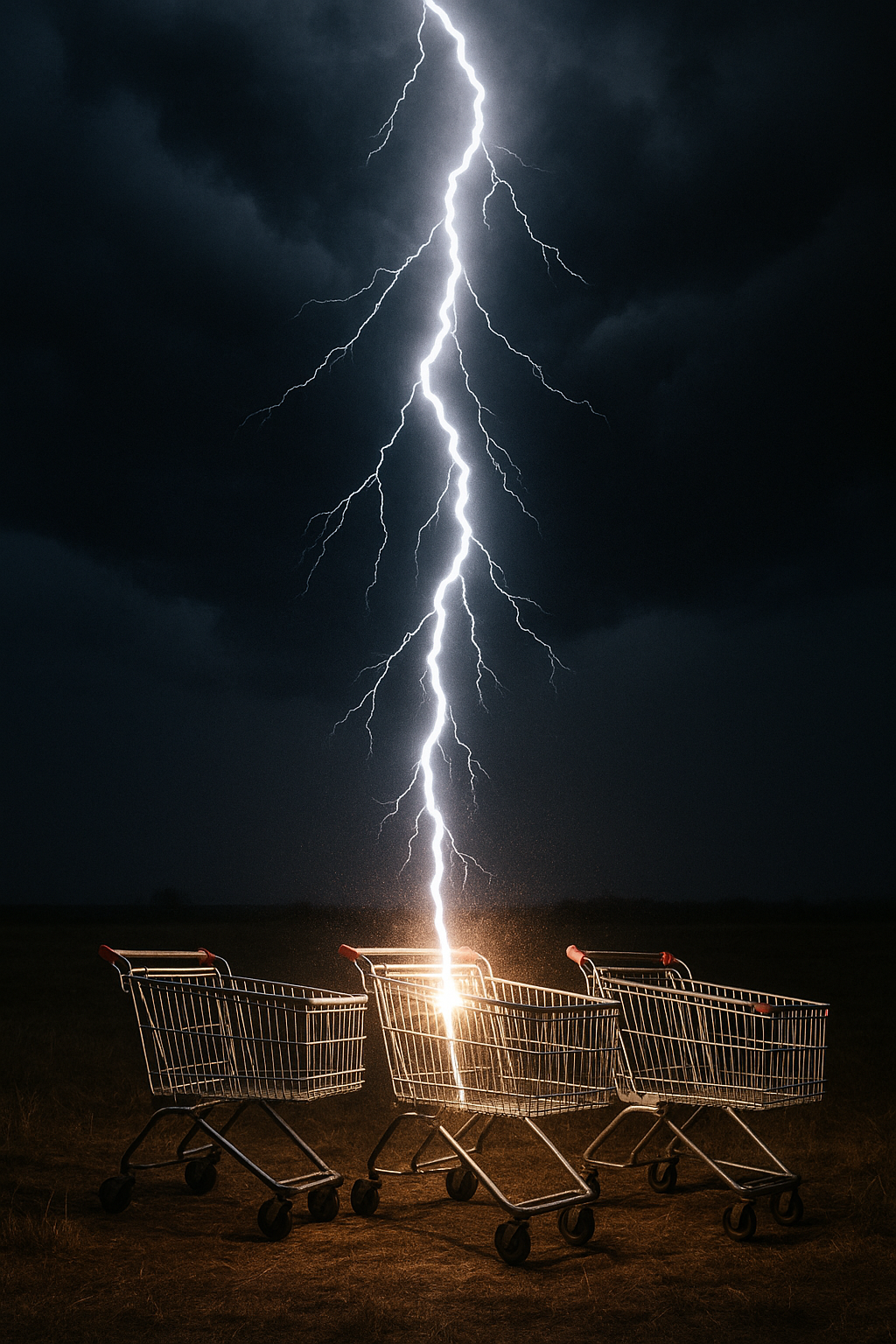
R139M PowerBall Xtra jackpot split three ways for the first time! Discover the cascade, the winners, and lottery's new era.
South Africa's R139 million lottery jackpot recently shattered expectations, splitting into three R45 million fortunes. This happened because of a special rule called the "cascade clause," which pays out the entire prize to the next highest winners if no one matches all numbers after three rollovers. It's the first time this clause has been triggered, turning ordinary places into lottery landmarks. This new rule makes sure big jackpots are always won, creating new millionaires and excitement, rather than rolling over forever.
What is the PowerBall Xtra cascade clause?
The PowerBall Xtra cascade clause is a provision that mandates if no ticket matches all five numbers plus the PowerBall after three rollovers, the entire jackpot is distributed to the highest winning tier. This mechanism ensures that large jackpots are always paid out and do not roll over indefinitely.
Get Cape Town news in your inbox
Stay updated with the latest stories from the Mother City.
The Night Fortune Fractured
South Africa's evening routine shattered on 30 June 2026, when a R139-million jackpot did something unprecedented. Rather than vanishing into statistical obscurity like most nine-figure prizes, it splintered into three identical fortunes of R45,733,457.30 each. These riches landed in three remarkably ordinary places: a hypermarket checkout in Alberton, a Standard Bank notification screen, and an FNB in-app banner.
For the first time since the National Lottery began in 2000, the guaranteed "cascade" clause buried in PowerBall Xtra's fine print activated. This provision mandates that if no ticket matches all five numbers plus the PowerBall after three rollovers, the entire pot drops to the highest winning tier. Three tickets - each holding five correct numbers but missing the red PowerBall 15 - suddenly commanded wealth sufficient to purchase Cape Dutch vineyards outright or a 50-meter superyacht with fuel money remaining.
The mathematics behind this mechanism are straightforward, yet the psychology proves far more complex. Under previous operator Ithuba, jackpots could roll indefinitely until a single winner emerged. Sizekhaya's new licence terms, quietly published in March, established a hard ceiling: three rollovers trigger forced distribution. Statisticians label this a "must-hit-by" trigger; marketers prefer "millionaire-maker." Regardless of terminology, the cascade transforms rollovers from mathematical suspense into guaranteed marketing events, ensuring headline prizes never stagnate beyond R150 million - a threshold regulators identify where casual players perceive games as unwinnable.
Where Luck Lives: The Stories Behind the Tickets
- The Alberton Hypermarket Mystery*
Checkers Hyper in New Market, Alberton operates around the clock, its aisles carrying roasted chicken aromas and floor wax scent even at 2:00 AM. One winning ticket emerged from till 13, printed at 7:42 PM on a R5 quick-pick. Store manager Nombulelo Jonas reports two previous Division-2 winners since 2022, "but nothing that made me tremble like this." Security footage captures a shopper in Springbok attire paying with a green Absa card, though their face remains partially obscured.
- Digital Fortunes*
The remaining two winners never touched physical paper. Standard Bank's app logged a purchase at 8:11 PM from an IP address in Noordhoek. Fifty-two minutes later, FNB recorded another at 8:53 PM from a cellphone tower covering Sandton's financial district. All three entries were single-line bets - the minimum possible stake - supporting research that jackpot mentality peaks among infrequent, low-budget players rather than organized syndicates.
- The Technology of Chance*
Draw 1733 unfolded in a purpose-built Cape Town studio in the Ndabeni precinct. Dual GRNG (Gaussian Random Number Generator) servers - one active, one standby - feed integers to a 3-D lottery machine: five white balls from fifty, one red from twenty. The entire process films in 8K resolution, watermarked with SHA-256 cryptographic hash, uploaded to Amazon's Cape Town region within ninety seconds. This hash prints on every retail ticket, enabling players to verify broadcast authenticity. Tuesday's hash - be3a1f4c9d22 - has already achieved meme status on crypto-Twitter, where blockchain enthusiasts celebrate it as evidence that centralized lotteries can demonstrate "provable fairness" without decentralized smart contracts.
Wealth Without Taxes, But Not Without Complexity
South Africa ranks among rare nations not taxing pure lottery winnings directly. The only fiscal leakage is 15% VAT embedded in ticket sales. Winners receive advertised amounts intact, yet investment triggers immediate tax consequences. Under common-law receipts accrual principles, interest, dividends, and capital gains face marginal taxation rates.
Financial planners caution that depositing R45 million into a 32-day call account at 8.25% generates R3.71 million annual interest - pushing winners into the 45% bracket on portions of this income. Most advisors recommend living annuity structures capped at R3.6 million annually, with surplus funds directed through discretionary unit-trust portfolios held within trusts.
University of Pretoria behavioural economist Dr Anlia du Toit identifies a critical "anonymity threshold" around R20 million. Her qualitative research reveals that South African recipients above this mark almost universally pursue disappearance: SIM card replacements, social media deletion, relocation to estates with 24-hour controlled access. Du Toit's 2024 longitudinal study found that eighteen months post-win, 67% of recipients exceeding R20 million had relocated provinces; 12% had emigrated entirely. The Checkers Hyper winner has already deactivated Facebook and TikTok profiles, according to anonymous friends speaking to News24.
Ripples Through Retail and Digital Frontiers
- The Selfie Zone Effect*
Australian Powerball and American Mega Millions history demonstrates that jackpot-selling stores experience 28–34% lottery-related footfall increases for approximately six weeks. Checkers Hyper has already roped off till 13 with gold stanchions and red velvet, creating an impromptu photograph destination. Leaked Pick n Pay internal data reveals PowerBall Xtra sales across Gauteng South surged 41% on Wednesday 1 July - a phenomenon economists term "lottery tourism." Local petrol stations report similar patterns; one Engen 24-hour facility in Brakpan exhausted R5 quick-pick supplies by 11:00 AM.
- Banking Apps: The New Lottery Counter*
Approximately 38% of National Lottery tickets now originate within banking applications, rising dramatically from 4% in 2019. The driver: zero data costs. Both FNB and Standard Bank exempt their "PlayLottery" modules from data charges, allowing customers on R29 weekly budgets to wager R5 lines. Sizekhaya's digital head Riedwaan Abrahams explains that in-app geofencing enables "contextual nudges" - prompting lottery purchases immediately after grocery payments while dopamine levels remain elevated. Critics deem this approach predatory; the National Lotteries Commission compares it to confectionery placement at checkout points.
- Borrowed Brilliance*
The cascade mechanism itself isn't indigenous innovation but rather a hybrid: Australia's "Must Be Won" draws combined with Polish Lotto's "cascade down" rules. South Africa's distinctive contribution is frequency calibration - Poland triggers after one rollover, Australia after six. Sizekhaya selected three because modelling indicated this typically elevates jackpots to R100–150 million, generating substantial media attention without reaching R300 million territory that provokes parliamentary ethics scrutiny. The UK's National Lottery observes closely; similar clauses might appear for Lotto Max in 2027 if South African results demonstrate sustained returns without harm indicators.
Shadows and Safeguards: The Hidden Costs of Sudden Riches
- The Scam Surge*
Within twenty-four hours of announcement, the Consumer Goods and Services Ombudsman recorded 600% increases in lottery-related phishing emails. Typical subject lines read: "FNB confirms you are a R45 million winner - update banking details." Cybersecurity firm Check Point reports South Africa now leads globally in bogus jackpot emails per capita. Sizekhaya emphasizes that legitimate winners receive no email or WhatsApp contact; prizes must be initiated by ticket-holders through licensed outlets or banking apps within 365 days.
- Probability in Perspective*
The odds of matching 5/5 plus PowerBall stand at 1 in 42,375,200. Matching 5/5 without the PowerBall - precisely what occurred - improve to 1 in 2,230,274. Tuesday's draw sold 3,842,110 lines, suggesting 1.7 expected Division-2 winners. Three actual winners represents merely 1.75 standard deviations above mean, well within normal statistical variation. The cascade didn't manipulate fate; it ensured ordinary variance produced extraordinary headlines.
-
Where Fortunes Rest*
-
The Forgotten Engine*
Draws 1730 through 1732 rolled precisely because nobody achieved perfect matches. These three events sold 9.4 million, 11.2 million, and 13.7 million lines respectively, injecting roughly R139 million into the central prize pool. Each rollover contributes 34% of sales to jackpots; remainder flows to distribution funds supporting charities and sport. Thus while three individuals awakened fabulously wealthy, another R52 million simultaneously reached school nutrition programmes, elder care facilities, and Olympic training centers - an irony marketing materials never acknowledge.
Looking Forward: Patterns, Pressures, and Possibilities
- The Number Trap*
Human pattern-seeking behavior predicts overwhelming ticket purchases containing 8, 14, 16, 25, 44, and PowerBall 15. Statistically this changes nothing - each combination maintains independence - yet retailers already report Quick-Pick buttons ignored in favor of manual Tuesday number replication. Should these digits repeat, prize pools would fragment so extensively that individual payouts might collapse below R100,000, an industry phenomenon termed "jackpot disappointment syndrome."
-
Future Adjustments*
-
Global Context*
America's Mega Millions reached $1.6 billion in 2018 through months of rolling jackpots. Italy's SuperEnalotto climbed to €371 million in 2022. Both ultimately produced single winners whose final millions added negligible lifetime utility according to economic theory. South African regulators cite these examples justifying cascades: three "merely rich" individuals preferable to one "absurdly rich" person.
- The Ticking Clock*
Winners must claim by 30 June 2027. Afterward, funds return to the National Lottery Distribution Trust Fund for charitable allocation. Unclaimed prizes prove surprisingly common - R98 million in lower-division winnings lapsed in 2023 alone. Sizekhaya has deployed push notifications to every device purchasing tickets in relevant draws, yet history demonstrates that winter coat pocket tickets frequently defeat technological solutions.
The cascade accomplished precisely what its designers intended: transformed abstract probability into three concrete life narratives, converted a hypermarket aisle into pilgrimage destination, and demonstrated that even in a nation familiar with inequality, instantaneous elevation retains electrifying imaginative power.
What is the PowerBall Xtra cascade clause and how does it work?
The PowerBall Xtra cascade clause is a special rule that ensures large lottery jackpots are always won. If no one matches all the winning numbers after three rollovers (meaning the jackpot has rolled over three times without a winner), the entire prize money is then distributed among the winners in the next highest winning tier. This mechanism prevents jackpots from rolling over indefinitely and guarantees that the money will be paid out, creating excitement and new millionaires.
When and where did the R139 million jackpot cascade happen in South Africa?
On June 30, 2026, South Africa's R139 million PowerBall Xtra jackpot was split into three R45 million fortunes due to the cascade clause. The winning tickets were purchased in three different locations: one from a Checkers Hyper in New Market, Alberton; another through the Standard Bank app from an IP address in Noordhoek; and the third via the FNB app from a cellphone tower covering Sandton's financial district. This was the first time the cascade clause had ever been triggered since the National Lottery began in 2000.
Are lottery winnings in South Africa taxed?
No, South Africa is one of the rare nations that does not directly tax pure lottery winnings. Winners receive the advertised amount intact. The only tax-related leakage is the 15% VAT embedded in the ticket sales. However, any income generated from investing these winnings, such as interest, dividends, or capital gains, will be subject to marginal taxation rates, potentially pushing winners into higher tax brackets.
How has the cascade event impacted retail and digital lottery sales?
The cascade event has significantly boosted lottery-related activities. Stores that sell winning tickets, like the Checkers Hyper in Alberton, experience a surge in footfall, with some even creating "selfie zones." Data indicated a 41% increase in PowerBall Xtra sales across Gauteng South the day after the cascade, a phenomenon known as "lottery tourism." Digitally, approximately 38% of National Lottery tickets are now purchased via banking apps, a dramatic increase from 4% in 2019, largely due to zero data costs for using these platforms.
What are the odds of winning in PowerBall Xtra, and how rare was this particular cascade outcome?
The odds of matching all five numbers plus the PowerBall are 1 in 42,375,200. For Tuesday's draw, the three winners matched five numbers but missed the PowerBall, where the odds are 1 in 2,230,274. While three winners for this tier might seem extraordinary, with 3,842,110 lines sold, statisticians expected around 1.7 Division-2 winners. Three actual winners is only 1.75 standard deviations above the mean, which is well within normal statistical variation. The cascade clause didn't manipulate fate; it simply ensured that this ordinary statistical variance led to extraordinary headlines and payouts.
What happens to unclaimed lottery prizes in South Africa?
Winners have 365 days from the draw date to claim their prizes. If a prize remains unclaimed after this period, the funds are returned to the National Lottery Distribution Trust Fund. This fund is then used for charitable allocation, supporting various causes such as school nutrition programs, elder care facilities, and Olympic training centers. Unclaimed prizes are surprisingly common; for example, R98 million in lower-division winnings went unclaimed in 2023 alone.

A Russian-Spanish journalist and Cape Town native, channels his lifelong passion for South Africa into captivating stories for his local blog. With a diverse background and 50 years of rich experiences, Serjio's unique voice resonates with readers seeking to explore Cape Town's vibrant culture. His love for the city shines through in every piece, making Serjio the go-to source for the latest in South African adventures.
View all articles →