
R4.8-billion meant for social grants goes unspent
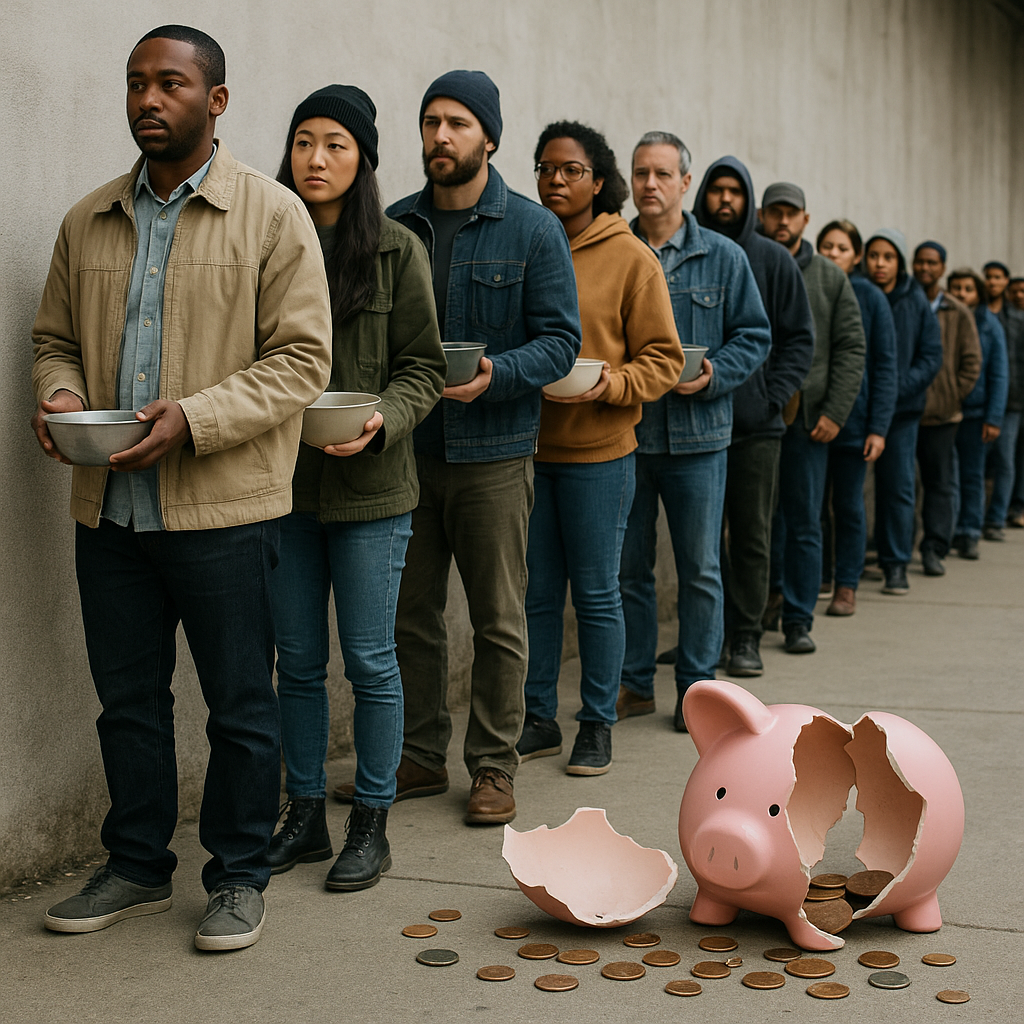
SA's Social Development Dept underspent R4.8B on grants due to verification issues, leading to exclusion of poorest citizens.
South Africa has a big problem: R4.8 billion meant for poor people's grants was never spent. This happened because of new rules like facial recognition on phones, which many poor people don't have. Plus, old people died faster than expected, and some disabled people's grants were stopped too quickly. A major computer crash also blocked payments. Now, many families are struggling, and lawmakers are trying to figure out how to fix this mess and get the money to those who desperately need it.
What caused South Africa's R4.8 billion unspent social grant crisis?
South Africa's R4.8 billion unspent social grant crisis was caused by several bottlenecks, including a new biometric re-verification system requiring smartphones and data, shrinking beneficiary cohorts due to natural taper and accelerated reviews, and a critical system crash at the Government Pensions Administration Agency's bank-gateway verification hub, all leading to legitimate beneficiaries being excluded.
Get Cape Town news in your inbox
Stay updated with the latest stories from the Mother City.
The Quiet Shockwave of 5 June 2026
On Wednesday morning, 5 June 2026, a routine National Treasury document slid across the desks of Parliament’s social-development portfolio committee. Tucked deep inside the rows of revenue and expenditure figures, one line made heads swivel: the Department of Social Development (DSD) had used only R281.1 billion of the R285.9 billion set aside for social grants that year. The idle R4.8 billion - more than the combined annual budgets of Namibia, Botswana and Eswatini - stopped the meeting cold.
Committee chair Bridget Masango opened with stark clarity: “Four-point-eight billion isn’t a rounding error; it equals half a million households pushed off the safety net.” What followed was a six-hour post-mortem into how Africa’s biggest cash-transfer scheme left almost five billion rand untouched, why R3.1 billion of that sits as a 2026/27 liability, and whether the poorest South Africans have been quietly excluded in the name of administrative neatness.
This article dissects the crisis, section by section, to show what went wrong, who is hurting, and which fixes are on the table.
Bottlenecks That Choked the System
Layer 1 – The Biometric Wall
From April 2025, every adult grant holder - including 3.8 million special-relief-of-distress (SRD) recipients - had to re-verify identity through facial-recognition software. The goal was to erase the “ghost beneficiary” scandal exposed in 2023, when 74 000 duplicate or fake IDs were unearthed.
Yet the solution demanded Android 8-or-newer phones and steady data, luxuries in the lowest income bracket where only 37 % own smartphones and a single gigabyte of prepaid data costs about R85. Cape Town’s Bellville office saw queues snake 600 metres, while in Lusikisiki beneficiaries began lining up at 02:30. By December, 312 000 approved SRD applicants could not finish biometric capture. Their R3.1 billion entitlement rolls into 2026/27 as a carry-through item.
Layer 2 – Shrinking Cohorts, Accelerated Reviews
Older-person grants left R793 million untouched. Officials call it “natural taper”: fewer citizens are turning 60, and deaths among current beneficiaries ran 4.1 % above actuarial forecasts. Child-support grants missed by R533 million after 167 000 caregivers moved children into higher-valued care-dependency grants once disabilities were formally diagnosed.
Disability grants themselves underspent by R318 million. Instead of slow processing, the department rushed medical reviews, causing 42 300 six-month temporary grants to lapse between January and March 2026. The closures saved R218 million on paper but cut families off overnight.
Layer 3 – The Bank-Gateway Crash
SASSA has pushed hard to curb cash-in-transit heists - 53 guards have died since 2020 - by shifting beneficiaries to electronic payouts. The entire migration depends on a single Treasury-approved verification hub run by the Government Pensions Administration Agency. In February 2026 the gateway froze for 19 peak-cycle days, bouncing R1.2 billion in approved transfers. By the time engineers restored service, Treasury had sealed the 2025/26 payment window.
Real-World Fallout and Political Fire
Constituency Complaints Flood In
DA MP Nazley Shariff tabled a logbook listing 1 217 grievances from Khayelitsha, Mitchells Plain and Philippi. Every story followed the same arc: facial scans flagged “identity mismatch,” SMS notices sent people to regional offices where appointment calendars were permanently full. One letter, from 63-year-old Maureen Jacobs, detailed R240 spent on taxis, only to be told her fingerprints were “worn out with age” and unreadable.
Patriotic Alliance MP Sheila Peters demanded SASSA CEO Themba Matlou swear that no legitimate beneficiary had been sacrificed on the altar of efficiency. Matlou promised a public reconciliation file within two weeks, adding: “Every extra verification step risks excluding someone lacking paperwork. The trade-off is painfully real.”
Portable Help and Zero-Rated Data
Fourteen districts are piloting a “digital doorstep” programme in which roaming teams with biometric tablets visit villages and shack settlements. In OR Tambo District early data show 11 900 grants reinstated after beneficiaries - cut off by SIM-swap scams or zero-rated bundles that blocked HTTPS - were located in person.
SASSA is negotiating with MTN and Vodacom to zero-rate the srd.sassa.gov.za domain. Whether Treasury will bankroll the data bill is still undecided. Meanwhile, a “silent de-duplication” algorithm checks Home Affairs’ population register nightly. Officials boast it blocked 98 000 fraudulent claims between July 2025 and March 2026. Civil-rights groups counter that the 0.6 % false-positive rate could translate into 18 000 wrongful rejections every quarter.
Chain Reactions for People and the Budget
The SRD Waiting Room
Of the 8.9 million people who applied for the R370 monthly SRD grant, only 5.5 million crossed the finish line. The remaining 3.4 million remain in limbo: 1.6 million failed the means test, 900 000 were flagged as having “alternative income,” and 900 000 await appeal outcomes. The R3.1 billion carried into 2026 covers exactly seven weeks of payments for the current cohort. Should appeals succeed en masse, an emergency appropriation bill will be required by October.
Civil-society network #PayTheGrants has gone to the Pretoria High Court, arguing that the R624 monthly income threshold is irrational when the upper-bound poverty line sits at R1 335. A retroactive threshold lift back to April 2025 could swell liabilities by an extra R6.2 billion.
Where the Idle Money Actually Goes
Unspent grant funds do not evaporate; they return to the National Revenue Fund and get recycled in the mid-year adjustments. Treasury insiders hint the R4.8 billion will seed the first tranche of the National Health Insurance central-procurement fund. Trade unions insist the cash should first clear SASSA’s verification backlog.
Ironically, the underspend shaved 0.3 % off the headline fiscal-deficit ratio. Moody’s March 2026 affirmation of South Africa’s Baa3 stable outlook thanked “expenditure restraint in the social sector,” coldly omitting the beneficiaries left adrift.
Faces in the Queue
- Pulane Mokoena, 38, Sebokeng: former domestic worker, hurt her back lifting a fridge. Medical report reached SASSA after the Treasury cut-off. She now earns R400 a month from odd laundry jobs.
- Nkopane Mohapi, 67, QwaQwa: bank merger changed his account details. System rejected the update three times. He walked 28 km twice before a field officer uploaded a stamped letter. April pension arrived on 13 June.
- Ziyanda Mvinjelwa, 24, Langa: final-year student whose bursary was cut after NSFAS tightening. She cleared the means test but was blocked by a facial-recognition glitch. Appeal “under review” for 97 days. She queues daily at Phillipi from 05:00.
Looking Forward – Fixes, Friction and Precedents
Legislative and Operational Reforms
- Amend the Social Assistance Act: move the SRD grant from disaster-class to permanent appropriation, ending the annual “sunset clause.”
- Set up an independent Appeals Tribunal, modelled on the Road Accident Fund’s dispute body, to bust the 900 000-case backlog.
- Zero-rate every SASSA USSD string and webpage by August 2026, weaving them into the eGovWallet platform now being piloted.
Historical Echoes and Global Parallels
South Africa has danced this grim waltz before. In 2005/06, caregiver ID delays created a R2.1 billion child-support-grant underspend. In 2012/13, a bungled medical-review panel evaporated R1.4 billion in disability claims overnight. Each cycle ended with late, inflation-unadjusted catch-up payments. Analysts fear 2025/26 is a rerun.
Brazil’s Bolsa Família briefly left USD 1.4 billion unspent in 2019 after jungle-region biometric re-registration failed when satellite bandwidth collapsed. Brasília issued six-month provisional magnetic cards while coverage improved - a route Pretoria could copy.
Vendors, Privacy and Profiteering
Idemia Southern Africa, the French firm running biometric capture, holds a five-year, R1.2 billion contract expiring October 2027. The deal pays per successful record, prompting MPs to ask the Auditor-General whether lowering failure rates might hurt Idemia’s revenue. The company denies misconduct.
Privacy advocates highlight a darker twist: tablets used in the Eastern Cape erased files older than 30 days when memory ran out, deleting thousands of legitimate biometric captures. The Women’s Legal Centre is preparing a class-action on behalf of 1 500 applicants.
Calendar of Non-Negotiables
- 30 June 2026: Adjustments Appropriation Bill must be published.
- 15 July 2026: Mpumalanga medical-assessor blitz begins - army medics may join the fray.
- 31 August 2026: Court-imposed deadline for SASSA’s final SRD appeals roadmap.
- 1 October 2026: Mini-budget decides whether the R3.1 billion backlog lives or dies.
When the committee adjourned at 19:00, municipal load-shedding rehearsal dimmed the Marks Building lights. Outside, under blooming jacarandas, beneficiaries hoisted placards into the dusk: “Verify our pain, not just our faces.”
[{"question": "What is the R4.8 billion unspent social grant crisis in South Africa?", "answer": "The R4.8 billion unspent social grant crisis refers to R4.8 billion that was allocated for social grants to poor South Africans but was never disbursed. This significant underspend was revealed on June 5, 2026, and is more than the combined annual budgets of Namibia, Botswana, and Eswatini. It has led to widespread hardship for many families who rely on these grants."}, {"question": "What were the primary reasons for this unspent R4.8 billion?", "answer": "Several factors contributed to the crisis:\n\n Biometric Re-verification System: A new system implemented in April 2025 required adult grant holders to re-verify their identity using facial recognition software on smartphones (Android 8 or newer). Many poor beneficiaries lack access to such technology, leading to 312,000 approved applicants being unable to complete verification.\n Shrinking Beneficiary Cohorts and Accelerated Reviews: Unexpectedly high death rates among older-person grant recipients and a rush in medical reviews for disability grants caused many temporary grants to lapse prematurely, reducing the number of beneficiaries.\n Bank-Gateway System Crash: A critical system crash at the Government Pensions Administration Agency's bank-gateway verification hub in February 2026 blocked R1.2 billion in approved transfers for 19 days, leading to payments being sealed for the 2025/26 fiscal year."}, {"question": "How did the biometric re-verification system specifically exclude beneficiaries?", "answer": "The biometric re-verification system, intended to combat 'ghost beneficiaries,' mandated facial recognition via smartphones. This proved to be a significant barrier for low-income individuals, as only an estimated 37% own smartphones, and data costs are prohibitive. Many beneficiaries, like Maureen Jacobs, spent considerable amounts on transport to regional offices only to be turned away due to issues like 'worn out' fingerprints or technology limitations."}, {"question": "What is the 'digital doorstep' program and how is it addressing the issue?", "answer": "The 'digital doorstep' program is a pilot initiative in fourteen districts where roaming teams with biometric tablets visit villages and shack settlements. This aims to bring the verification process directly to beneficiaries, especially those in remote areas or those affected by technical issues like SIM-swap scams or data restrictions. Early data from the OR Tambo District shows that 11,900 grants were reinstated through this program."}, {"question": "What happens to the unspent R4.8 billion?", "answer": "Unspent grant funds do not simply disappear; they are returned to the National Revenue Fund and are typically recycled in mid-year adjustments. There are indications that the R4.8 billion might be used to seed the first tranche of the National Health Insurance central-procurement fund. However, trade unions advocate for the funds to first address SASSA's verification backlog."}, {"question": "What are some proposed solutions and future actions to prevent similar crises?", "answer": "Several legislative and operational reforms are being considered:\n\n Amend the Social Assistance Act: To make the SRD grant a permanent appropriation, removing its annual 'sunset clause.'\n Independent Appeals Tribunal: Establishing a tribunal similar to the Road Accident Fund's body to address the backlog of 900,000 appeal cases.\n Zero-Rate SASSA Services: Negotiating with mobile providers (like MTN and Vodacom) to zero-rate the srd.sassa.gov.za domain and all SASSA USSD strings and webpages by August 2026, integrating them into the eGovWallet platform. \n Learning from global parallels:* Brazil's use of six-month provisional magnetic cards during similar biometric re-registration failures could be a model for South Africa."}]

Aiden Abrahams is a Cape Town-based journalist who chronicles the city’s shifting political landscape for the Weekend Argus and Daily Maverick. Whether tracking parliamentary debates or tracing the legacy of District Six through his family’s own displacement, he roots every story in the voices that braid the Peninsula’s many cultures. Off deadline you’ll find him pacing the Sea Point promenade, debating Kaapse klopse rhythms with anyone who’ll listen.
View all articles →