
Rare Southern Fulmar rescued near Hermanus
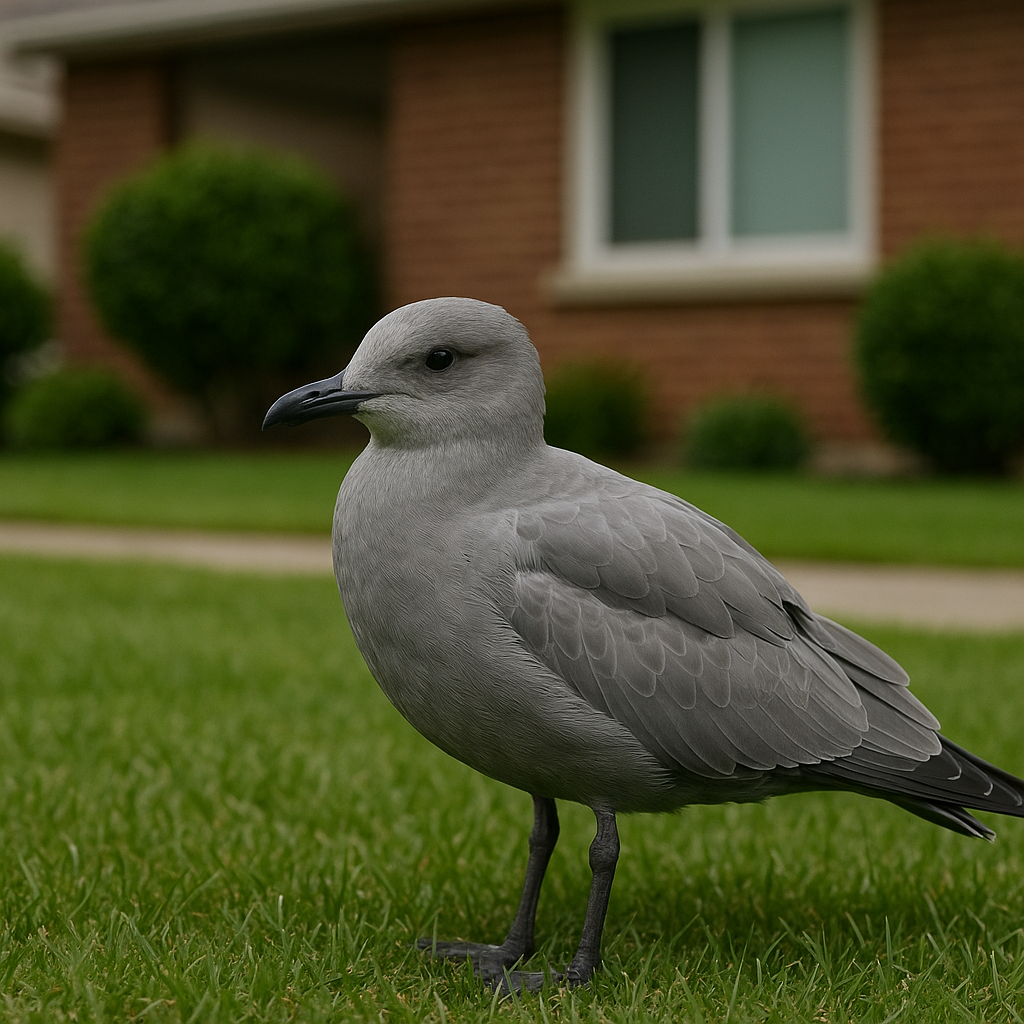
An Antarctic fulmar, swept off course by a storm, lands in a suburban South African garden. Follow its dramatic rescue and journey home.
Last Thursday, a Southern Fulmar, a seabird usually found in the icy Antarctic, was discovered in a suburban garden in South Africa. The bird was exhausted and covered in salt, having been carried far off course by a powerful storm. Rescuers quickly took the fulmar to a sanctuary, where it was cared for and nursed back to health. Soon, it will hitch a ride on a research ship back to its home in the Southern Ocean, a testament to the kindness of strangers and the surprising journeys of nature.
What is a Southern Fulmar?
A Southern Fulmar is a seabird typically found cruising the Southern Ocean, often near the sea-ice edge south of 55 °S. These birds are built for long distances, with a 110 cm wingspan, and can navigate vast ocean expanses using specialized salt glands to drink seawater and detect food sources like phytoplankton.
Get Cape Town news in your inbox
Stay updated with the latest stories from the Mother City.
A Seabird out of Place
When the sun dipped behind the fynbos-covered hills of Sandbaai last Thursday, Tierck Hoekstra expected nothing more exciting than locking his gate and brewing a cup of rooibos. Instead, the retired ranger came face-to-face with a creature that belongs to the planet’s wildest latitudes: a Southern Fulmar, motionless beneath the glossy leaves of a maytenus bush. The bird’s ash-grey cloak sparkled with salt crystals, proof it had ridden a cold Atlantic roller straight into Walker Bay.
Southern Fulmars normally cruise the Southern Ocean, hugging the sea-ice edge south of 55 °S. A sighting inside suburban Hermanus is comparable to spotting an emperor penguin on Table Mountain. Hoekstra’s four decades of fieldwork had taught him every quiver of Overberg weather, yet this visitor felt like a misplaced snowflake. He rang the African Penguin & Seabird Sanctuary hot-line before the last glow left the sky, knowing time was short: gulls, cats and cars claim exhausted vagrants within hours.
At the other end of the line stood Xolani Lawu, senior rehabilitator and veteran of Marion Island’s seabird colonies. “Keep dogs away, switch off garden lights, talk softly,” Lawu advised while grabbing rescue kit and keys to the green rescue Hilux. By the time he threaded the coastal road through milkwood thickets, dusk had deepened to cobalt. The fulmar crouched low, beak half open, ready to spray the sour oil that gives petrels their nickname “stinkbirds.” Lawu pulled fleece sleeves over his wrists, whispered isiXhosa endearments, and scooped the bird before the first shot of musk reached the air.
Front-Line Triage in a Converted Warehouse
Less than an hour later the bird occupied a warm theatre inside APSS, the former Gansbaai crayfish factory now humming with UV sterilisers and heart-rate monitors. Weight: 790 g, ten percent under textbook for an adult; temperature normal; feathers matted with terrestrial grit. Radiographs ruled out fractures; bloodwork showed no sign of malaria or plastic shards. Staff chalked up a shallow patagial tear - most likely a bruising kiss from a harbour wall during storm surf.
The patient settled inside a portable ICU set to 12 °C, the digital thermostat imitating a sub-Antarctic deck. Rehydration began with 30 ml electrolyte solution, followed by a seafood smoothie of whitebait and squid. Through the night Lawu alternated cat-naps with torch-beam checks, noting every tail-bob that precedes regurgitation. At dawn the bird politely produced a chalky krill pellet, proof it had dined in pelagic waters only two days earlier.
Cyclones, Jet Streams and a Free Ride to Africa
Southern Fulmars master the circumpolar westerlies, but each austral winter a wobble in the Southern Annular Mode can slacken that girdle of wind. This June, cutoff low D14 pinched off from the main vortex and drifted north-east, hurling nine-metre swells at Cape Agulhas. Fulmars caught inside such gyres can surf 500 km a day until they cross the warmer Benguela front, disoriented by the mingling smells of kelp and diesel.
Built for distance, not speed, the species carries a 110 cm wingspan yet light loading: broad, flexible primaries ride updrafts with minimal effort. Supra-orbital salt glands let the bird sip seawater; twin brine jets streak the face white like war-paint. X-rays revealed those glands enlarged, explaining why D14-F1 kept electrolyte balance after ten days without fresh rain. Tubenose pits detect dimethyl sulphide released by phytoplankton, an invisible breadcrumb trail that can lead a bird on 1,700 km foraging loops around the Antarctic Divergence.
South African beachcombers seldom notice fulmar strandings, though museums house eleven specimens since 1900. Citizen-science databases recorded a spike during the negative SAM winter of 2017; climate models predict more meridional meandering as greenhouse gases rise. Each carcass delivers nutrients to kelp gulls, rock lobsters, even tardigrades; each body also becomes a data-point for micro-plastic ingestion monitored under CCAMLR.
A Ticket Home on the Nation’s Polar Ship
Inside the APSS ward, day six ended with the bird nicknamed “Lazarus” weighing 905 g - back inside the wild adult bracket. Pathogen screens cleared Treaty rules that forbid ferrying microfauna to Antarctica. On 2 July the S.A. Agulhas II will exit Table Bay, and the fulmar will ride in a climate-controlled container lashed to the aft deck. Shipboard ornithologist Dr. Dimakatso Sebego will conduct daily husbandry, logging weight, posture, and squid intake.
Once south of 60 °S, Sebego will wait for nautical twilight, barometric plateau, −5 °C wind-chill - a moment that mirrors the katabatic breath of a high-latitude colony. She will open the crate gate; Lazarus will burst into the updraft curling off the steel super-structure, bank once above the bridge, and vanish among bergs the colour of sterilised linen. From Sandbaai lawn to Lazarev Sea, the journey will have spanned 13 days, two worlds, and one vast improbable loop of goodwill knit together by retirees, rehabilitators, fishermen and climate scientists.
Back in the Overberg, Tierck Hoekstra has already re-hung his garden gate, but he keeps checking beneath the maytenus hedge - just in case the Southern Ocean flings him another silver-winged courier.
[{"question": "What is a Southern Fulmar and where is it typically found?", "answer": "A Southern Fulmar is a seabird primarily found in the Southern Ocean, often near the sea-ice edge south of 55 \u00b0S. These birds are well-adapted for long distances, possessing a 110 cm wingspan, and can navigate vast ocean expanses. They have specialized salt glands that allow them to drink seawater and detect food sources like phytoplankton."}, {"question": "How was the Southern Fulmar discovered in South Africa?", "answer": "The Southern Fulmar was discovered by retired ranger Tierck Hoekstra in his suburban garden in Sandbaai, South Africa. It was found exhausted and covered in salt crystals, indicating it had been carried far off course by a powerful storm. Hoekstra promptly contacted the African Penguin & Seabird Sanctuary (APSS) for assistance."}, {"question": "What kind of care did the fulmar receive at the sanctuary?", "answer": "Upon arrival at the APSS, the fulmar, nicknamed 'Lazarus,' received immediate care. This included a physical examination, radiographs to rule out fractures, and bloodwork. It was rehydrated with an electrolyte solution and fed a seafood smoothie. The bird was housed in a portable ICU set to 12 \u00b0C, mimicking its natural sub-Antarctic environment, and continuously monitored."}, {"question": "How did the Southern Fulmar end up so far from its natural habitat?", "answer": "The fulmar was carried off course by a powerful storm, specifically a cutoff low designated D14. This weather event, influenced by a wobble in the Southern Annular Mode, hurled nine-metre swells and caused the bird to surf great distances, crossing the warmer Benguela front and becoming disoriented by the mingling smells of kelp and diesel."}, {"question": "How will the Southern Fulmar be returned to its home?", "answer": "The Southern Fulmar will hitch a ride on the S.A. Agulhas II, a South African polar research ship. It will travel in a climate-controlled container on the aft deck. Once the ship is south of 60 \u00b0S, shipboard ornithologist Dr. Dimakatso Sebego will release the bird back into its natural environment, specifically the Lazarev Sea."}, {"question": "Are Southern Fulmar strandings common in South Africa, and what do they signify?", "answer": "Southern Fulmar strandings are relatively rare in South Africa, with only eleven specimens recorded in museums since 1900. However, citizen-science databases noted a spike during the negative Southern Annular Mode winter of 2017. Climate models predict more such events as greenhouse gases rise, suggesting these strandings could become more frequent and serve as indicators of climate change and its impact on oceanic birds."}]

Lerato Mokena is a Cape Town-based journalist who covers the city’s vibrant arts and culture scene with a focus on emerging voices from Khayelitsha to the Bo-Kaap. Born and raised at the foot of Table Mountain, she brings an insider’s eye to how creativity shapes—and is shaped by—South Africa’s complex social landscape. When she’s not chasing stories, Lerato can be found surfing Muizenberg’s gentle waves or debating politics over rooibos in her grandmother’s Gugulethu kitchen.
View all articles →