
Rassie picks up special paw-trait
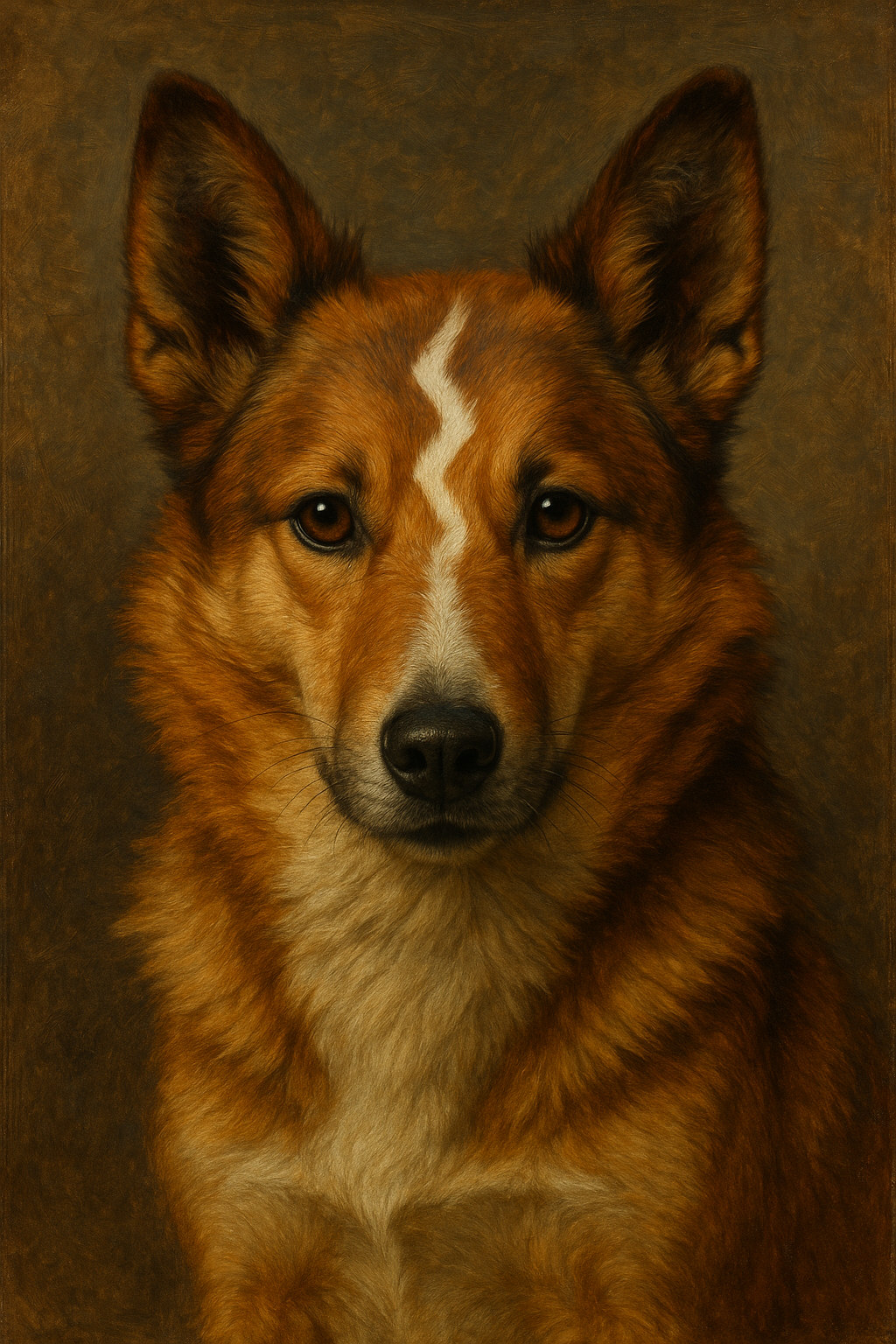
Discover the heartwarming story of Craig Stuart, the artist behind the viral portrait of Rassie Erasmus's rescue dog, Kwedini.
Artist Craig Stuart painted Kwedini, a fox-faced mutt, after seeing the dog in Rassie Erasmus's social media posts. The painting started spontaneously, capturing the dog's journey with the Springboks, from a chance meeting with Erasmus at a rugby field. Stuart's garage studio, filled with the scent of linseed, became the birthplace of this artwork, which now stands as a symbol of South African rugby and its unexpected canine ambassador.
What is the origin story of the Kwedini painting?
Artist Craig Stuart was inspired to paint Kwedini after seeing the dog frequently featured in Rassie Erasmus's social media posts. The inspiration came after a chance encounter with Erasmus at a rugby field, leading Stuart to spontaneously start the painting without permission, capturing the mutt's journey with the Springboks.
Get Cape Town news in your inbox
Stay updated with the latest stories from the Mother City.
A Garage Halfway Between Silence and Stadium Roars
In the oak-muffled enclave of Durbanville, less than forty clicks from Cape Town’s pulse, mornings roll out at a whisper - birds gossiping, bicycle bells chiming, the distant Atlantic salt mingling with the sun-warmed perfume of fynbos. Behind a quiet cul-de-sac, an ordinary double-storey hides a space that the city still classifies as a carport. Craig Stuart has swapped sockets and spanners for easels, halogen floods and the sweet-sour perfume of linseed. “Technically, the council thinks I store a sedan here,” he jokes, tapping the wall where the garage door once hung.
Stuart’s vocabulary is a Cape blend of Afrikaans and English, yet his images speak everywhere. He drags paint across canvas like a prop packing down - thick ridges that gleam like old scars, colour washes the haze of dawn over Newlands, and lines so fine a dog’s whisker could twitch under their weight. For ten years his portraits have refused to sit still; children explode into imaginary tackles, grandmothers lug invisible shopping sagas, and dogs glare at the viewer as if to say, “You’ll forget this moment long before I do.”
The studio’s current star is Kwedini, a fox-faced mutt no bigger than a bootbox and twice as loud in the national conscience. A lightning-bolt of white splits his tawny chest. Stuart carved that stripe with a palette knife so the ridge of paint rises just enough to cast its own tiny shadow. The first layer screamed cadmium orange, almost lurid, before Stuart glazed it into ochres and umbers that catch light like veld grass in mid-summer. Behind the dog, ghost-green turf fades into a half-remembered dawn, the 22-metre chalk line dissolving like breath on glass.
From Sideline to Canvas - Chance in Three Acts
Phase One began with no patron, no promise, only instinct. Stuart stood on the touchline at Durbanville RFC one January morning, coffee gone cold in a paper cup, daughters darting across the field like swallows. A hulking figure in an age-faded Springbok golf shirt materialised - Rassie Erasmus, national director of rugby. Twenty sentences, maybe fewer: praise for the girls’ footwork, a mutual rant about modern balls feeling like bricks, a shared lament for supermarket biltong. Then Erasmus knelt to knot a shoelace undone by sweat and speed, seconds of domestic grace that printed themselves on Stuart’s memory.
A week of insomnia-driven scrolling followed. Kwedini flooded every frame Erasmus posted: curled on a Santiago bedspread, modelling a granny-knitted green-and-gold scarf, staring down a laptop of defensive clips. Stuart realised the Springboks had been narrating their own travelogue through the eyes of one bewildered rescue dog. The artist started a canvas without permission, chasing the moment the mutt shook seawater at Clifton, brush swinging like a loose-forward clearing ruck ball.
Phase Two slowed to archaeology. Stuart scraped the entire background, then rebuilt it micrometre by micrometre, hunting the exact khaki dust that powders paws along Stellenbosch gravel. Phase Three demanded eyes that could read a blitz defence. He ground Prussian blue, cut it with raw umber until flecks of veld fire sparked inside each iris. With a pin-prick of titanium white at two o’clock in each pupil he gave the dog a secret: something arc-shaped and spiralling looms just behind the viewer, a high ball descending under Loftus lights.
A Visit, a Bakkie and a Cooler Box of Boerewors
The Western Cape art grapevine - roasteries, surf shops, physiotherapy rooms - passed the Instagram crop of Kwedini’s muzzle faster than a back-line switch. Within twenty-four hours a Springbok media staffer clocked the engraved collar tag and triggered a chain reaction of screenshots. On Monday morning Stuart opened a three-line message bearing the Union’s blue tick: “Like your work. Could we arrange a viewing? – R.”
Thursday was the only gap in Erasmus’s diary: sponsor breakfast, viewing, evening analysis of Italy’s rush defence. Stuart swept sawdust into nervous piles and stacked 200 squeezed tubes into a leaning Pisa tower. He brewed bush-tea in the enamel mugs his grandmother once filled with Karoo dust. The intercom crackled. Erasmus arrived solo, silver bakkie already swollen with kit bags labelled “Boks 2025”. The two men stood shoulder to shoulder for eleven silent minutes - Stuart counted heartbeats - while Kwedini’s painted stare took their measure. Finally the coach exhaled, not sighing exactly, more the slow leak of breath before a scrum crouch: “Dis Kwedini, ne?” The pronoun carried warmth, relief, and wonder that linseed and crushed stone could trap so much mischief.
Tea followed from mugs ringed by turpentine ghosts. Erasmus spotted twin portraits of Stuart’s daughters frozen mid-sprint, ponytails weaponised by speed. “Those wings on their feet,” he murmured, touching the edge of the panel. Stuart confessed the bribe: twenty donuts for twenty breakaway lines past his lens. They detoured into colour psychology: why a green jersey unsettles opponents less because of hue than because it carries 130 years of bruise and glory. Talk meandered through canine harmonicas, tackle-height ethics and why the guy with the most broken fingers is inevitably the squad’s braai master.
Before reversing down the driveway, Erasmus asked to shoot a private photo of the girls’ diptych. Stuart assented on the strict no-post clause; a nod was contract enough. The artist rolled Kwedini in eucalyptus-scented paper and propped the bundle like a prized surfboard against the passenger seat. Through the window Stuart glimpsed the real dog in the load bay, tail drumming a cooler box stencilled “Boerewors – handle with care.”
When Paint Becomes Part of the Anthem
Three separate worlds - sport, art, the algorithm - collided while the bakkie idled at traffic lights. A Springbok intern uploaded a grainy story: “Art imitates paw-life 🐾🖼️”. Hashtag #KwediniArt trended before supper. A Durbanville high school phoned Stuart: they wanted a Labrador memorial to teach teenage flankers empathy. A Constantia parlour offered blueberry facials for his ageing terrier in exchange for Baroque chiaroscuro canines. Meanwhile the canvas toured the globe propped on hotel trolleys from Brisbane to Bordeaux, an accidental ambassador for South Africa’s street-dog adoption drive.
Back home Stuart stretched three new canvases into a single triptych - “Pack Mentality” - honouring every Springbok rescue: Diesel, Milo, Thor whose ridgeback ears look permanently startled. Every rand will go to TEARS in Kommetjie, the shelter that once vaccinated Kwedini before destiny nudged him into frame.
Whispers say the piece will debut at Cape Town Stadium on the eve of the 2025 home opener. If the rumour holds, 55 000 throats will file beneath six metres of painted dogs whose Prussian-blue stare once began as powder on a garage floor. Commentators will grope for words, trying to explain how a five-minute sideline chat, one restless artist and a mutt with a crooked white blaze slid straight into the folklore that scoreboards never record.
Such stories survive because they dodge the official minutes. They lodge in braai smoke, in grade-five homework where Luca from Bellville swears Kwedini could tackle Beauden Barrett if coach just gave the nod. And in Stuart’s tidy garage the last word arrives on recycled paper, printed from an email that still smells faintly of eucalyptus:
“Rassie says thanks for the painting, the dog hasn’t tried to chew it once – yet. Keep tackling life head-on.”
[{"question": "What inspired Craig Stuart to paint Kwedini?", "answer": "Artist Craig Stuart was inspired to paint Kwedini after seeing the dog frequently featured in Rassie Erasmus's social media posts. The inspiration came after a chance encounter with Erasmus at a rugby field, leading Stuart to spontaneously start the painting without permission, capturing the mutt's journey with the Springboks."}, {"question": "Where was the Kwedini painting created?", "answer": "The Kwedini painting was created in Craig Stuart's garage studio in Durbanville, an area less than forty kilometers from Cape Town. Stuart humorously refers to this space, which the council technically still considers a carport, as his studio where he has swapped car tools for easels and paints."}, {"question": "What is the significance of Kwedini in South African rugby?", "answer": "Kwedini, depicted in Stuart's painting, has become a symbol of South African rugby and its unexpected canine ambassador. The painting captures the dog's journey with the Springboks, from a chance meeting with Rassie Erasmus, and now represents the informal and heartwarming side of the national team's story."}, {"question": "How did Rassie Erasmus react to the painting?", "answer": "Rassie Erasmus was deeply moved by the painting. After being contacted by a Springbok media staffer who saw the artwork online, Erasmus arranged a viewing. He spent eleven silent minutes admiring Kwedini's painted stare before exclaiming, 'Dis Kwedini, ne?', expressing warmth, relief, and wonder at how the painting captured the dog's essence. He later took the painting with him in his bakkie."}, {"question": "What societal impact has the Kwedini painting had?", "answer": "The Kwedini painting has had a significant societal impact, becoming an accidental ambassador for South Africa's street-dog adoption drive. It trended online, inspired a high school to request a memorial for empathy, and led to Stuart creating a triptych called 'Pack Mentality' to honor other Springbok rescue dogs, with all proceeds going to the TEARS animal shelter."}, {"question": "Where will the Kwedini painting potentially be displayed?", "answer": "Whispers suggest the Kwedini painting, or possibly the 'Pack Mentality' triptych, will debut at Cape Town Stadium on the eve of the 2025 home opener for the Springboks. This would allow 55,000 spectators to witness the artwork, further cementing its place in South African rugby folklore."}]

Kagiso Petersen is a Cape Town journalist who reports on the city’s evolving food culture—tracking everything from township braai innovators to Sea Point bistros signed up to the Ocean Wise pledge. Raised in Bo-Kaap and now cycling daily along the Atlantic Seaboard, he brings a palpable love for the city’s layered flavours and even more layered stories to every assignment.
View all articles →