
Records shattered at Cape Town Peace Run
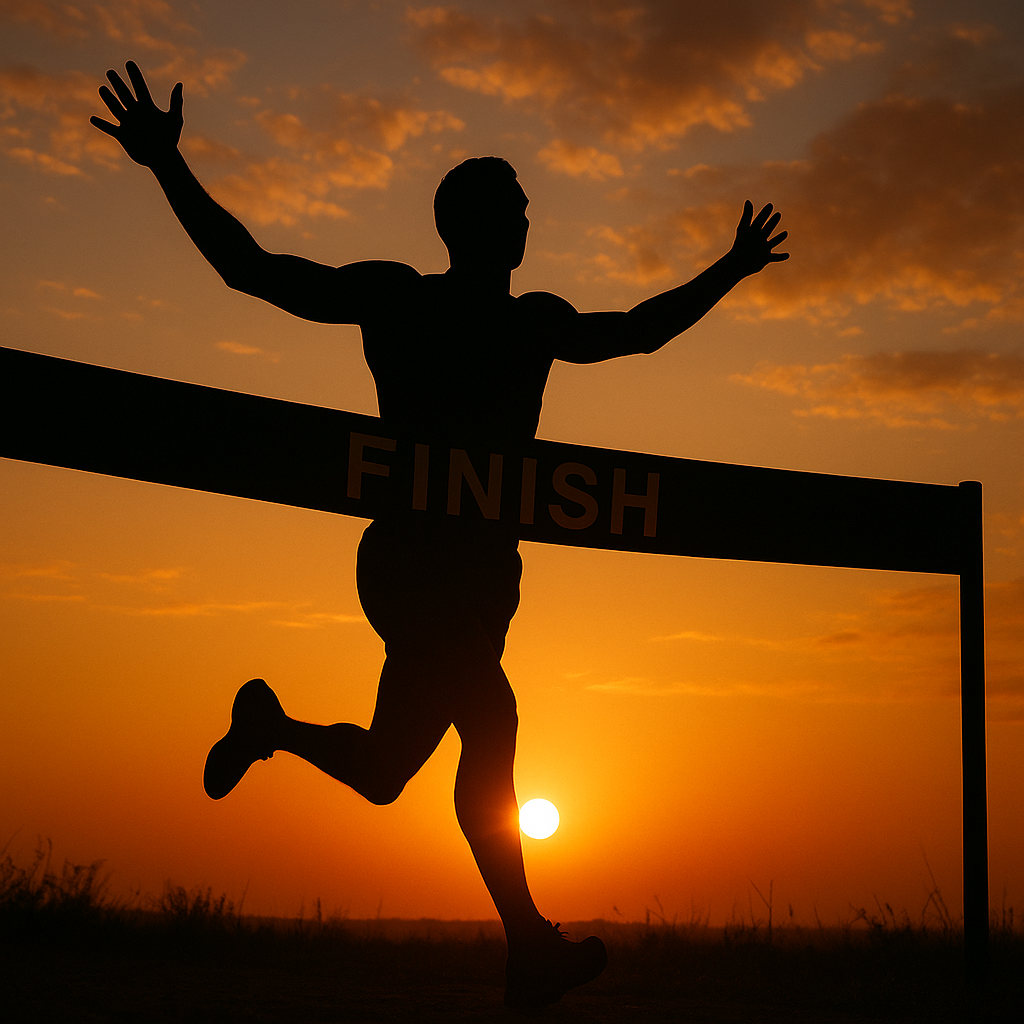
Cape Town's 10km race saw Maxime Chaumeton shatter records with a 27:41 finish, while Tayla Kavanagh conquered headwinds. Discover race highlights, tech, and the city's bid for World Marathon Major status.
The Cape Town 10 km race was epic! Maxime Chaumeton smashed an African record, running 10 km in just 27:41, the fastest in South Africa since 2009. Tayla Kavanagh, a true powerhouse, set a new national record for women with an amazing time of 31:25. Even with a tough wind, she flew past everyone. Thapelo Ramokhoase also had a fantastic run, making it to the top three all-time in South Africa with 28:33. This race was full of broken records and incredible athletic feats!
What were the key achievements and records broken at the Cape Town 10 km race?
Maxime Chaumeton set a new African record for the fastest 10 km south of the equator with 27:41, the first sub-28 in South Africa since 2009. Tayla Kavanagh achieved a national record for South African women with 31:25, and Thapelo Ramokhoase moved to joint third on the national all-time list with a personal best of 28:33.
Get Cape Town news in your inbox
Stay updated with the latest stories from the Mother City.
The Dawn Rush and the First Crack at History
At 05:30 on a cool Saturday the city centre already pulsed like a nightclub car park. Taxi doors slammed, coaches hugged clipboards, and a volunteer pyramid of energy-drink crates wobbled toward the start. Between the palm fronds a Frenchman in split shorts – Maxime Chaumeton – traced neat figure-eights round a tree, sizing it up as if planning where to park the trophy. By 07:00 Hertzog Boulevard looked like Lycra’s answer to pilgrimage: 4 200 bodies crammed beneath an inflatable gantry, race digits flapping, the drone above catching Table Mountain blush pink under sunrise.
The elite men’s corral resembled a United Nations jigsaw. Lesotho’s sideways tricolour, Kenya’s bold black-red-green, South Africa’s springbok, and the discreet French tricolour on Chaumeton’s vest. The starter’s pop compressed them into one organism that scorched across the 0 km mat in 2:42 – projecting an almost absurd 27-flat finish for a course that only gifts forty downhill metres in the first two kilometres. Chaumeton, however, felt like bending the laws. He ticked off 2:46, 2:47, 2:45 while every GPS chorus chirped agreement. Behind him Thapelo Ramokhoase and Cwenga Nose swapped spots like pendulums, their strides telling the story: Ramokhoase’s rapid fore-foot patter at 184 steps per minute versus Nose’s heavier 178 spm heel-strike.
Re-engineered in 2023 to parade the city’s green architecture, the route dives through District Six before rocketing onto the Nelson Mandela Boulevard flyover. There the only real climb waits: seven hundred metres at 3.2 % – just enough to chew already-screaming calves. Chaumeton floated rather than climbed, torso motionless, gaze locked on the Waterfront cranes. He hit 5 km in 13:48, still eyeing 27:30, and tossed in a 2:43 split that severed the elastic to the South African pair.
Solo Time-Trial Through a Postcard and the Moment of Truth
What followed was eight kilometres of one-man TT through the world’s most photogenic city. Volunteers in Bo-Kaap’s madras shirts drummed on plastic jugs; in Woodstock’s graffiti canyon a saxophonist blasted Miriam Makeba’s “Pata Pata” at 160 bpm – identical to Chaumeton’s stride. By 8 km (22:06) his buffer read twenty-eight seconds, but the clock, not the athletes, had become the rival. He locked to 2:47 each kilometre, arms low, face serene, feet kissing the blue wheelchair guide-line engineers had painted the previous night.
The last four hundred metres run between the Green Point stadium and the Atlantic – think Athens meets seaside promenade. Chaumeton lifted one finger at the photo bridge, a salute to the digital clock rather than the crowd: 27:40…27:41. He crossed, bent, then stared at the board as though negotiation might trim the digits. They stayed. Twelve seconds inside the old mark, the fastest 10 km south of the equator on African soil, the first sub-28 in South Africa since Kenenisa Bekele’s 2009 Pretoria exhibition.
Ramokhoase arrived seventeen seconds later, mouth frozen in that universal look of “I just found another gear.” 28:33 slashed thirty-seven seconds off his personal best and shoved him to joint-third on the national all-time list beside Matthews Temane’s fabled 1988 hand-timed 28:33. Nose clapped him on the shoulder four seconds under 29; both knew they had midwifed something bigger than their own times.
Tayla Kavanagh’s Sparring Match with Wind and the Chase Pack Drama
If the men’s race looked like a coronation, the women’s business played out as a street-fight with physics. A southeaster funnelled between office blocks, negating the downhill gift. Tayla Kavanagh – 24, Kloof, KwaZulu-Natal – tucked behind male pacers for two hundred metres, then decided the only way to beat the wind was to leave it behind. She passed 3 km in 9:30, translating to 31:40 into the teeth of the gale.
Behind her Kyla Jacobs of Western Province and Lesotho’s veteran Neheng Khatala ran welded together, stride for stride like Swiss metronomes. Jacobs, 19 and fresh from matric finals, had never cracked 34:00; by 5 km (15:52) she floated ten seconds ahead of that curve and began to eye her internal fuel gauge. Khatala, 33 and holder of three national records, kept whispering in Sesotho: “Ha e le hantle, ke mosali” – “run easy, woman.”
Kavanagh slipped into that rare tunnel where cadence drowns thought. She clipped Adderley Street’s medians like a hurdler, ripping a 3:05 kilometre into the cross-blast. The margin read twenty-one seconds at 6 km (18:48), but the gale swung ninety degrees, slapping her sideways along the harbour moles. She lowered her hips, tightened her arm swing, and hammered the last three kilometres at 3:05 average – world-class speed against a wall of moving air.
The Painted Wings, a New National Mark, and the Human Stories Behind the Clock
The final kilometre passes Cape Town Stadium, where organisers sprayed pastel wings on the tarmac for Instagram glory. Kavanagh never noticed. She double-arm-drove across the line at 31:25 – twelve seconds quicker than her own 2023 record and the fastest by a South African woman since Elana Meyer’s 31:16 in 1994. Jacobs, weaving but beaming, stopped the clock at 32:47, trimming forty-one seconds off her best and sliding to eighth on the SA U-20 list. Khatala’s 33:01 was her fastest since childbirth twelve months ago, a quiet victory toasted with baby wipes and a Whats-App call to her toddler waiting at the Lesotho consulate.
Beyond the glare of podiums, the mid-field wrote its own library. Nombuso Dlamini, a 38-year-old Khayelitsha nurse, clocked 47:12 in shoes donated by her club’s “sole-mate” programme; she plans to hang her medal in the diabetic ward as proof that finish lines belong to everyone. Retired sea-captain Johan “Hawser” Havenga, 71, notched his 41st consecutive Cape Town 10 km or marathon weekend since 1984, every race number filed in a custom chart cabinet in his study. And somewhere between the elites and the back of the pack, a runner in a full-body springbok fur suit managed 52:08, raising R18 000 for Kruger wildlife rangers.
Chips, Cranes, Coffee Cups and a Million-Economic-Engine
While the city cheered, a glass-walled control room beneath the stadium tracked every twitch of the elites. Thirty-two-gram shoe chips broadcast cadence, ground-contact and vertical oscillation every two hundred metres. Chaumeton’s file shows an almost robotic 0.86 s ground-contact and 6.4 cm vertical bounce – biomechanics porn. Kavanagh’s asymmetry index skewed 49.3 % left/right at 3 km, evidence of the cross-wind torque; by 8 km she’d rebalanced to 50.2 %, a mid-race correction now studied frame-by-frame.
TomTom’s traffic logs tallied a nineteen-per-cent spike in CBD pedestrian flow between six and nine o’clock, translating to roughly R3.8 million in cappuccino sales alone. Airbnb reported ninety-two-per-cent occupancy within five kilometres of the finish, hosts charging 2.4× the normal October weekend rate. CleanC’s pop-up waste islands captured 1.3 t of compostable cups – enough to fertilise twelve hundred square metres of Green Point parkland. Add the bid for Abbott World Marathon Major status and the numbers turn serious: an estimated R1.2 billion annual injection plus fifty-thousand foreign entries within five years if Cape Town cracks the big-league ceiling.
When the gantry lights dimmed and the last walker climbed aboard a sweep bus, a lone Ethiopian teenager jogged under the arch, having missed the start while queuing for a replacement bib. Officials let her run the deserted course, timed only by her Garmin: 43:27. Cleaners and cable-techs applauded as though she’d stolen the whole show. Somewhere between Chaumeton’s 27:41 and that solitary pair of footsteps, Cape Town proved once more that its true record lives not on paper but in every heartbeat that meets its tar.
What were the key achievements and records broken at the Cape Town 10 km race?
Maxime Chaumeton set a new African record for the fastest 10 km south of the equator with 27:41, the first sub-28 in South Africa since 2009. Tayla Kavanagh achieved a national record for South African women with 31:25, and Thapelo Ramokhoase moved to joint third on the national all-time list with a personal best of 28:33.
Who is Maxime Chaumeton and what record did he break?
Maxime Chaumeton is a French runner who, at the Cape Town 10 km, set a new African record for the fastest 10 km south of the equator. He completed the race in an astonishing 27 minutes and 41 seconds, marking the first time a sub-28 minute 10 km has been run in South Africa since 2009. This performance showcased remarkable consistency and speed, especially considering the challenging course conditions.
How did Tayla Kavanagh perform despite the challenging weather conditions?
Tayla Kavanagh delivered a phenomenal performance, setting a new national record for South African women with a time of 31:25. She achieved this despite a tough southeasterly wind, demonstrating incredible resilience and speed. She strategically tucked behind male pacers initially but then pushed ahead, maintaining world-class speed even when the wind direction changed, ultimately breaking her own 2023 record and achieving the fastest time by a South African woman since Elana Meyer in 1994.
What was the significance of Thapelo Ramokhoase's run?
Thapelo Ramokhoase had an outstanding run, achieving a personal best of 28:33. This impressive time propelled him to joint third on the national all-time list in South Africa, alongside Matthews Temane's fabled 1988 record. His performance, alongside Chaumeton's, contributed to a truly historic day for South African running.
What unique aspects did the Cape Town 10 km race route offer?
The Cape Town 10 km route, re-engineered in 2023, is designed to showcase the city's green architecture. It features a descent through District Six, a challenging climb of seven hundred metres at a 3.2% gradient on the Nelson Mandela Boulevard flyover, and sections through iconic areas like Bo-Kaap and Woodstock. The final kilometer runs between the Green Point stadium and the Atlantic, offering scenic views and a memorable finish.
Beyond the elite athletes, what other human stories and impacts did the race highlight?
The race showcased numerous inspiring stories beyond the elite performances. Nombuso Dlamini, a 38-year-old nurse, completed the race in 47:12, embodying the spirit of participation. Retired sea-captain Johan "Hawser" Havenga, 71, continued his remarkable streak of 41 consecutive Cape Town races. A runner in a springbok fur suit raised R18,000 for wildlife rangers, highlighting the charitable aspect. Economically, the event generated a significant boost for the city, with increased pedestrian flow, cappuccino sales, and high Airbnb occupancy, demonstrating its broader impact as a major urban event.

Amanda Wilson is a Cape Town-born journalist who covers the city’s evolving food scene for national and international outlets, tracing stories from Bo-Kaap spice shops to Khayelitsha micro-breweries. Raised on her grandmother’s Karoo lamb potjie and weekend hikes up Lion’s Head, she brings equal parts palate and pride to every assignment. Colleagues know her for the quiet warmth that turns interviews into friendships and fact-checks into shared laughter.
View all articles →