
Rosemary Ndlovu: How the hitman confessed
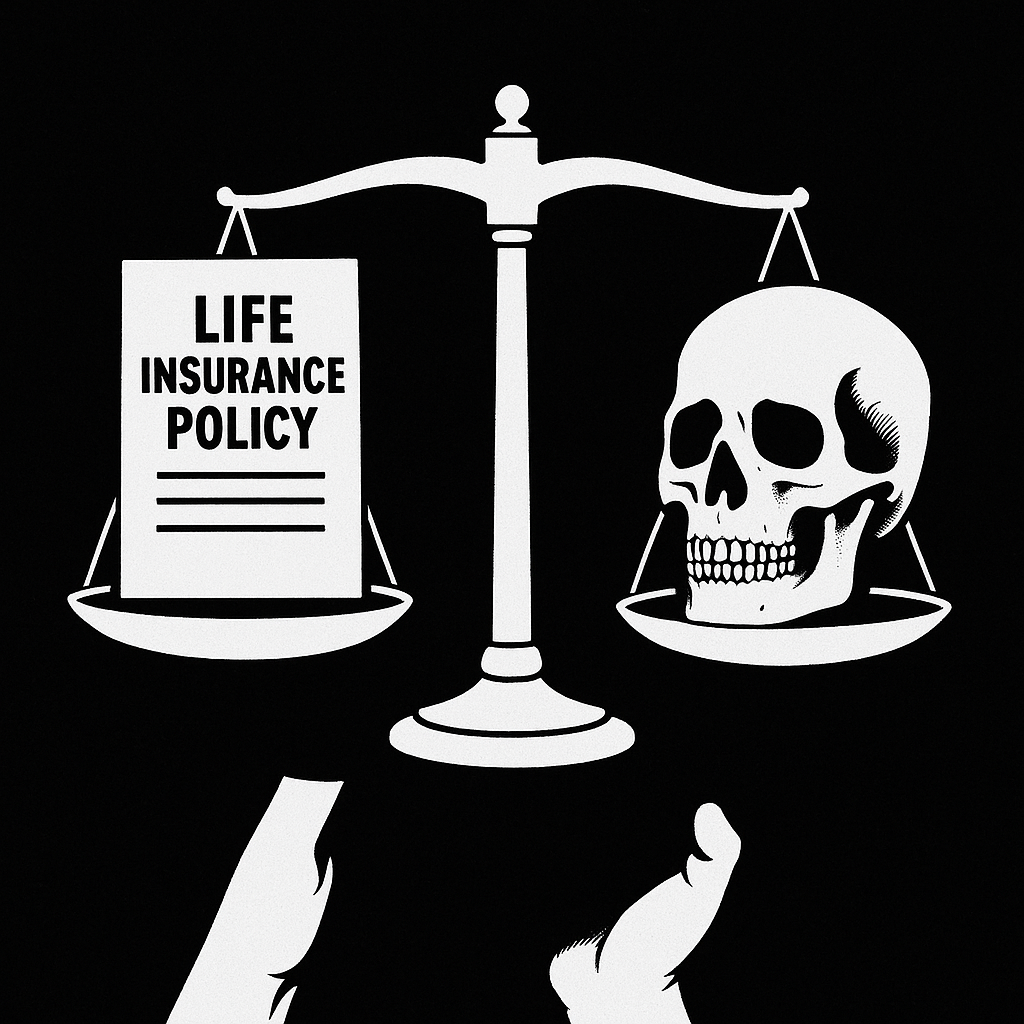
Inside Nomia Rosemary Ndlovu's 2018 murder-for-insurance plot & South Africa's exploding market in blood money.
This chilling story exposes Nomia Rosemary Ndlovu, an ex-cop who turned life insurance into a "franchise of death." She systematically murdered relatives and partners to collect payouts, using cold spreadsheets to plan her horrific schemes. Her greed was unrepentant, even coaching other inmates from prison on how to commit similar frauds. This ongoing crime highlights a terrifying trend where human lives are valued less than insurance dividends, urging urgent legislative action to stop this bloody industry.
What is the "franchise of death"?
The "franchise of death" refers to a scheme orchestrated by ex-cop Nomia Rosemary Ndlovu, where she systematically took out life insurance policies on relatives and partners, then arranged their murders to collect the payouts. This method turned life insurance into a means of accumulating wealth through assassinations.
Get Cape Town news in your inbox
Stay updated with the latest stories from the Mother City.
I. The Day the Plot Unravelled
10 July 2018 started like any other Tuesday at Kempton Park police station until Nomsa Mudau stepped to the counter. Without hesitation she produced a sworn statement confessing that she’d finally surrendered to temptation: her husband had to die for the policies to pay out. She had already asked a man once sworn to protect the law to cross that thin blue line. Nine days later the would-be trigger-man, Jabulani Mtshali, arrived with his own bombshell - he was ready to trade the bullet for a witness microphone.
By 19 July, Nomia Rosemary Ndlovu - the same officer who once lectured township residents on crime prevention - sat in a holding cell wearing civilian tracksuit pants. Investigators flicked through her phone and saw the first pieces of what the state would later brand “a franchise of death”: pictures of Old Mutual certificates, GPS pins for empty plots near Olifantsfontein, and an unsent SMS draft intended for Justice Mudau: “Left my card in the car, please bring it to the gate.”
The arrest affidavit, read aloud during the bail fight, gave the public its maiden glance at a scheme more chilling than most fiction writers dare invent - an assembly-line approach to assassination where funerals were simply the dividend-collection point.
II. Anatomy of a Hit that Never Happened
-
1. Hand-picking the gunman*
Ndlovu met Mtshali two years earlier at a routine roadblock. Instead of booking him for the unlicensed CZ pistol on the back seat, she allegedly squeezed him for cash and filed his phone number under “useful contacts”. That decision matured into a business proposal in 2018: could he make a husband disappear for a fee? -
2. Pricing human life*
A spreadsheet labelled “Project 14” stored on her laptop broke down the economics with cold precision: R75 000 for “finalisation”, R3 500 for “tools and fuel”, plus a cheeky R2 000 earmarked “family thank-you”. The total cost of murder, including a small gratitude bribe, was still less than a compact sedan. -
3. Cash-flow timetable*
An Absa ATM in Birchleigh disgorged R15 000 on 19 July, the first tranche promised to Mtshali. The balance hinged on three claims Nomsa Mudau would lodge once her spouse was certified dead: R750 000 with Old Mutual, R320 000 through Sanlam and R110 000 courtesy of Assupol funeral cover. The scheme even budgeted for an undertaker. -
4. Abort, testify, survive*
The planned shooting on the N12 never materialised. Mtshali drove instead to Tembisa Hospital, found Justice Mudau alive and well, and together they walked into the Hawks’ offices. Grainy footage from a filling-store camera - later tagged Exhibit H - shows Ndlovu counting R100-notes while explaining the importance of alibis. She is heard laughing; the microphone did not know she was already doomed.
III. Courtroom Chessboard
State Advocate Riana Williams built her indictment on four load-bearing pillars: the conspiracy itself, WhatsApp voice notes amounting to incitement, a financial motive laid bare in insurance schedules, and Ndlovu’s prior pattern of eliminating loved ones. The last pillar opened the door to her 2021 murder convictions, yet Williams kept the 2018 trial surgically clean to dodge prejudicial overflow.
The judgment, delivered to a packed gallery, underlined a watershed moment: South African courts are ready to treat insurance-driven murder plots as organised crime rather than domestic tiffs gone wrong.
IV. When Death Becomes an Industry
The numbers scream a horror story. ASISA logged 6 419 life-policy frauds in 2025 worth R4.7 billion; 14 percent involved suspicious deaths - double the ratio a decade earlier. Johan Steyn of the Insurance Crime Bureau says coaching classes in Soweto and Mdantsane now teach recruits how to over-insure healthy under-35 relatives through micro-insurers, stagger inception dates and stage “accidents” that mimic everyday tragedies: kitchen fires, drownings in the Jukskei, bogus hijackings on the Golden Highway.
Detection, meanwhile, stumbles at multiple gatekeepers. The Financial Intelligence Centre sees bank reports only; burial societies, stokvels and mobile-money wallets remain dark pools. SAPS detectives rotate dockets every eighteen months, snapping continuity of evidence and allowing ghosts like Ndlovu to drift between cases undetected.
Technology is fighting back. Project Daedalus, an industry-wide blockchain ledger that timestamps every new policy, triggered a 27 percent drop in rapid multiple policies after its 2024 launch. Crooks simply migrate to unregistered burial clubs or Caribbean-based digital insurers, proving that innovation without enforcement is only half the armour.
V. Inside the Women’s Jail - Lessons in Unrepentant Greed
Even behind the walls of Johannesburg Women’s Correctional Centre, Ndlovu kept her hustle alive. Warders found a Samsung Galaxy S10 buried in a two-litre yoghurt tub during a 2023 raid. Voice notes captured her coaching another inmate on opening a child policy with Metropolitan: “They only ask for birth certificates when you claim,” she whispers. The SIM card was traced to a dead client from her 2012 book of business - proof that old data never dies; it mutates into prison currency.
The Department of Correctional Services laid fresh charges, but the incident highlighted systemic rot. Contraband phones, forged documents and archived client files merge into a toxic brew that allows convicts to continue transacting in death futures while serving time for earlier murders.
Experts warn that any legislative fix must therefore include the carceral space: signal jammers, visitor biometric checks and random digital sweeps are as vital as policy registries outside.
VI. The Survivors’ Stories & the Road Ahead
Justice Mudau, 43-year-old panel-beater from Edenvale, now lives under a new name in a location the state will not disclose. Nomsa had insured him for R1.2 million, triple his taxable income, without his knowledge. Looking back, he remembers small oddities: her sudden interest in his driver’s licence expiry date, weekend detours to lonely picnic spots along the R21, family funeral brochures left open at the “spousal rider” section.
Mtshali, the hit-man-turned-witness, survived two poison attempts in 2019; warders at Leeuwkop allegedly offered him porridge laced with rat bait if he would “reconsider” his testimony. Both men illustrate a grim truth - blowing the whistle on insurance murder can be almost as lethal as the murder itself.
Parliament is scrambling to catch up. The Covert Life-Policy Bill of 2025 proposes biometric capture at policy inception, a single National Beneficiary Registry and a strict 5× annual-income ceiling unless a certified financial planner signs off on a higher need. Civil-rights groups warn of data-privacy creep; insurers counter that the morgue tally is worse. A September 2026 deadline looms for final wording before the Bill hits the National Assembly.
Sentencing for Ndlovu and her co-conspirator Nomsa Mudau is scheduled for 15 July 2026. The state wants life imprisonment plus forfeiture of R198 000 stashed across Capitec and Standard Bank. Deloitte auditors, seconded to the Hawks, are still poring over 79 suspicious claims; eighteen deaths remain uninvestigated and two bodies have already been exhumed in Daveyton for second autopsies.
Until legislation, technology and enforcement find the same rhythm, South Africa will remain the unhappy global leader in a grotesque marketplace where life insurance is sometimes just an IOU written in blood.
[{"question": "
What is the 'franchise of death' and who was behind it?
", "answer": "The 'franchise of death' is a term used to describe a systematic scheme orchestrated by ex-cop Nomia Rosemary Ndlovu. She took out multiple life insurance policies on her relatives and partners and then arranged for their murders to collect the insurance payouts. This turned life insurance into a means of generating wealth through assassinations."}, {"question": "How was Nomia Rosemary Ndlovu's scheme uncovered?
", "answer": "The plot began to unravel on July 10, 2018, when Nomsa Mudau confessed to police that she had been coerced into a plan to have her husband killed for insurance money. Nine days later, the would-be hitman, Jabulani Mtshali, also came forward and became a witness. This led to Ndlovu's arrest, and investigators found evidence on her phone, including insurance certificates and GPS coordinates, confirming the 'franchise of death'."}, {"question": "What evidence did investigators find that detailed Ndlovu's plans?
", "answer": "Investigators found chilling evidence, including a spreadsheet labeled 'Project 14' on Ndlovu's laptop. This spreadsheet meticulously detailed the economics of murder, itemizing costs for 'finalisation,' 'tools and fuel,' and even a 'family thank-you.' Her phone also contained pictures of Old Mutual certificates, GPS pins for remote locations, and an unsent SMS related to her scheme."}, {"question": "How prevalent is insurance-driven murder in South Africa, and what are the challenges in detection?
", "answer": "Insurance-driven murder is a growing concern in South Africa. ASISA reported 6,419 life-policy frauds in 2025, with 14% involving suspicious deaths, a doubling from a decade prior. Detection is difficult due to fragmented gatekeepers; the Financial Intelligence Centre only sees bank reports, while burial societies and mobile-money wallets remain untracked. Additionally, SAPS detectives' frequent rotation of dockets hinders continuous investigations."}, {"question": "Did Nomia Rosemary Ndlovu continue her criminal activities from prison?
", "answer": "Yes, even while incarcerated at Johannesburg Women’s Correctional Centre, Ndlovu continued her illicit activities. During a 2023 raid, a contraband Samsung Galaxy S10 was found, with voice notes of her coaching another inmate on how to open a child policy with Metropolitan. The SIM card was traced to a deceased client from her old book of business, demonstrating her persistent involvement in criminal enterprises."}, {"question": "What legislative actions are being proposed to combat insurance-driven murder?
", "answer": "The proposed Covert Life-Policy Bill of 2025 aims to address this issue by introducing biometric capture at policy inception, establishing a single National Beneficiary Registry, and imposing a strict 5x annual-income ceiling for policies unless approved by a certified financial planner. These measures seek to prevent the fraudulent acquisition of multiple policies and ensure that policy values are proportional to legitimate needs."}]
Zola Naidoo is a Cape Town journalist who chronicles the city’s shifting politics and the lived realities behind the headlines. A weekend trail-runner on Table Mountain’s lower contour paths, she still swops stories in her grandmother’s District Six kitchen every Sunday, grounding her reporting in the cadences of the Cape.
View all articles →