
SA international tourist arrivals rise 12.8% in 2026 as Brazil market booms
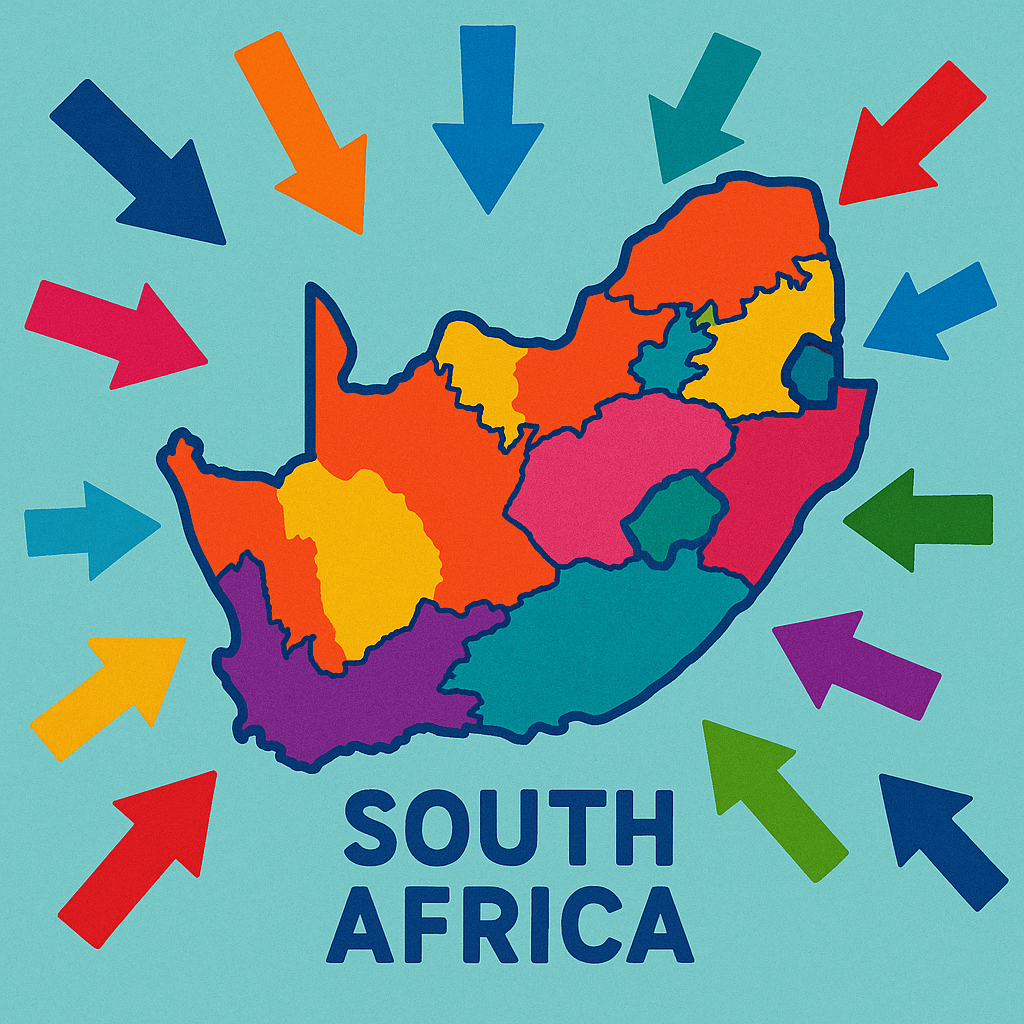
South Africa sees 4.2M arrivals in 5 months, boosting its global appeal. Discover the economic boom, new attractions & visitor trends.
South Africa is buzzing with tourists, welcoming over 4.2 million visitors in just five months! This huge jump is thanks to easier travel rules, new exciting places to visit beyond the usual spots, and a great exchange rate that makes everything more affordable. It's like a secret gem suddenly discovered, making South Africa the world's fastest-growing vacation spot, filling hotels and exciting everyone from local businesses to the government with unexpected cash. This travel explosion means more jobs, more money for communities, and a brighter future for the whole country.
What factors are contributing to South Africa's tourism boom?
South Africa's tourism boom is fueled by a "braided cable" of strategies: infrastructure improvements, eased visa processes for numerous countries, and the development of micro-destinations beyond traditional hotspots. This, combined with a favorable exchange rate and enhanced safety measures, has made it an attractive and affordable destination for international travelers.
Get Cape Town news in your inbox
Stay updated with the latest stories from the Mother City.
The Figures That Stole the Show
In the first 151 days of 2026 the republic’s 72 border doors recorded 4 220 586 international arrivals, a 12.8 % leap over the same stretch of 2025. Crunch the numbers and you get 28 137 extra travellers every 24 hours - enough to pack 177 fully-laden Boeing 737-800s. May alone pushed through 861 750 guests, up 7.2 % on the previous year and comfortably ahead of the 4.1 % global average reported by UN Tourism. Stellenbosch University’s Bureau for Economic Research calculates that a 1 % bump in overseas visitors pumps about R1.3 billion straight into tills; multiply that by 12.8 and you land north of R16.6 billion - before the winter-sun high season has even cracked its first dawn.
The velocity is even more striking because it arrives on the back of a currency that refuses to strengthen and an economy that loves surprises. Yet planes keep landing, ships keep berthing, and guest-house books keep filling. Government number-crunchers quietly admit they under-forecast by almost half a million seats when they drew up the February budget; Treasury is now scrambling to find a spare R4 billion for unexpected tourism windfall tax receipts. Provincial marketing bosses, used to begging for scraps, have been told to double their ad budgets before the July recess. The upshot: South Africa has become the world’s quickest-growing leisure destination nobody saw coming.
Behind the blizzard of digits lies a simple truth - travellers vote with their passports and right now they are voting early and often. Hotel occupancy in Cape Town is running at 87 %, its highest May level since measurements began in 1997. Car-hire fleets are at 94 % utilisation, forcing desperate tourists into panel-van conversions usually reserved for rock bands. Even backpacker dorms in Coffee Bay that once pleaded for guests now post “fully booked” signs by 11 a.m. The ripple is so pronounced that economists expect tourism’s GDP share to jump from 3.4 % to 4.9 % within this calendar year, the fastest sectoral climb since the 2010 World Cup.
The Blueprint Behind the Blast
Patricia de Lille, the straight-talking Tourism Minister, credits a “braided cable” of three strands: fix the bones, open the gates, spread the jam. Fixing the bones means concrete and cranes. Since 2023 a R7.8 billion public-private rebuild has widened runways, deepened docks and doubled cruise-berth capacity at Cape Town’s V&A Waterfront to 7 500 walk-offs. Kruger’s Skukuza strip has been lengthened so an A330 can glide in from Doha and deposit travellers fewer than 17 hours from their living-room sofas. The first wide-body test landed in April; elephant cows barely bothered to look up.
Opening the gates is paperwork turned into pixie-dust. Forty-six countries now get a visa-free pass, trusted-traveller e-gates blink every 18 seconds, and a fresh reciprocity pact with Beijing issues five-year multi-entry stamps within 48 hours for anyone who can press “print” on a bank statement. Home Affairs, once the butt of stand-up jokes, now brags of a 93 % same-day decision rate for every remaining visa class. The cherry on top: a remote-worker permit that lets foreigners earn abroad tax-free for a year, renewable once, provided they promise not to poach local jobs or load-shed the grid more than Eskom already does.
Spreading the jam means luring crowds beyond the postcard trinity of Table Mountain, Kruger and the Winelands. Enter eleven “micro-destinations” built for dispersal. Travellers can pick red-bourbon coffee cherries in Kaapsehoop at dawn, snowkite across Lesotho’s Afri-Ski plateau by lunch, then slip into Algoa Bay’s new 128 000 ha marine reserve for a night dive among orange-wall soft corals that glow like lava lamps. Each niche pumps spending into towns that never before cracked a tourism budget, and keeps seasonal peaks from throttling the same old honey-pot towns.
Private cash has followed the scent. A Dubai consortium just broke ground on a R1.2 billion cable-car that will link the Drakensberg’s Royal Natal amphitheatre to a cloud-base lodge 2 900 m up. In the Karoo, venture capitalists have converted sheep farms into “fossil safaris” where guests brush 255-million-year-old Permian leaves from dolerite slabs. Every project must meet a 30 % community-equity rule, so dividends flow to village trusts rather than offshore shell companies. Locals who once greeted tour buses with suspicion now queue to register Airbnbs on communal land; title-deed waiting lists stretch around tribal offices.
The American Stampede – and Why They linger
Stars-and-Stripes passports again led May’s roll-call, delivering 41 846 arrivals, but the jaw-dropper is duration: an average stay of 14.2 nights, up from 9.4 just four years ago. Operators say the magic glue is astronomy meets adrenaline. On 28 November 2026 a total solar eclipse will blot out the sun above the Eastern Cape for 4 min 23 s - the longest stretch until 2090. Safari lodges inside the path have already flipped 82 % of beds at R18 000 a head per night; waiting lists balloon past 9 000 names and brokers scalp slots on Facebook groups like Taylor Swift tickets.
Airlines have sprinted to the party. Delta is resurrecting its seasonal Atlanta–Cape Town non-stop, this time with an A350-1000 kitted out in 32 Delta-One suites that unfold into 2.2 m lie-flat beds. United is adding a fourth weekly Newark–Cape Town frequency, while JetBlue defectors now route through Boston on code-shares so smooth you can transit with a single boarding pass. Cargo bellies are stuffed the other way: 30 t of blueberries and Ceres roses reach São Paulo’s flower auction in under 12 hours, a logistical pirouette that slashes spoilage by 18 % and sweetens yields for growers who once relied on sluggish Europe-bound reefer ships.
Americans are not merely ticking the Big Five and dashing off. They sign up for semester-length history courses at Stellenbosch, enroll kids in cricket clinics, or lease sea-view condos in Ballito for three-month “try-before-you-emigrate” spells. Realtors report a 60 % surge in inquiries from California’s tech counties since Netflix debuted its “Cape of Good Hope” rom-com in March. One Denver start-up has even relocated its entire 23-person staff to a Hermanus co-working villa, citing fibre speeds and “penguins instead of potholes” on the commute.
Britain’s Part-Time Migration
The Union Jack delivered 22 160 May visitors, yet the deeper trend is serial repeaters who treat the Western Cape like Tuscany with zebras. UK nationals who own property along the Cape seaboard have jumped 38 % since 2023, emboldened by a juicy 23:1 exchange rate and a little-known tweak that lets foreigners claim a 45 % rebate on rooftop solar-battery combos. Estate agents talk of “swallows” who arrive in April, stay until August, and happily pay local school fees because British boarding fees still cost double for the same interval.
gastro-mileage has exploded along Bree Street’s gin corridor and the Franschhoek wine-tram loop, where sommeliers greet returning Brits by first name and keep their favourite orange-wine on ice. New direct routes amplify the drift: British Airways’ refurbished A380s now leave Heathrow at 9 p.m., land in Cape Town at 8 a.m., and let passengers skip Johannesburg entirely. Virgin Atlantic is weighing a seasonal Manchester–Cape Town loop, encouraged by forward loads that breach 87 % even before launch publicity begins.
Halifax-based insurers have responded by slashing premium surcharges for long-stay clients in South Africa, arguing that “prolonged exposure equals familiarity with safety protocols.” Some retirees now split pension annuities into two accounts - one for the UK summer, one for the Cape winter - effectively living tax-optimised lives pegged to the southern hemisphere sun. The phenomenon has birthed a cottage industry of pet-relocation firms, grand-child shuttle services and UK-trained GPs who hold weekly Skype surgeries for expat swallows.
Brazil’s 40 % Leap – and a New Atlantic Bridge
Brazilian numbers vaulted 40.6 % in May, from 4 737 to 6 660, fuelled by LATAM’s incoming Boeing 787 that will depart São Paulo-GRU three times a week and touch down in Cape Town after only 8 h 45 min - two hours faster than today’s best one-stop. Outbound belly space carries blueberries and roses north; inbound brings sun-seekers who can connect same-morning to Skukuza, Livingstone or Windhoek thanks to a fresh Airlink interline. LATAM’s code-share with SAA opens 22 domestic ports, quietly turning Cape Town into South America’s southernmost hub.
The route launch party will be broadcast live on Brazilian TV, a move tourism bosses hope will push annual arrivals past 100 000 within two years. Already, São Paulo sushi bars advertise “Cape Abalone Week” and samba schools rehearse themes titled “African Savannah.” Back home, immigration lawyers report a spike in enquiries about the remote-worker visa, with Brazilians attracted by zero local tax on the first R2.5 million of offshore income. Language schools in Maceió now offer isiZulu evening classes, betting that linguistic bragging rights will be the next flex among digital creatives.
Digital Nomads – the Rand Refill
March 2026 saw the quiet birth of a remote-worker visa good for 12 months, renewable once, with no local-income tax on foreign earnings below R2.5 million. Within eight weeks Home Affairs stamped yes on 7 400 applications - 61 % from the EU, 19 % from the US. The average laptop-toting visitor drops R46 000 a month on rent, coffee, co-working desks and weekend safaris, conjuring a R340 million micro-economy that did not exist a year ago. Cape Town now sits third on NomadList’s global ranking, ahead of Lisbon and Mexico City.
Fibre speeds in once-sleepy Melkbosstrand hit 500 Mbps, sunset kite-surf gatherings have replaced pub crawls as networking events, and boutique hotels offer “Zoom caves” - sound-proof pods with ocean views where you can pitch to San Francisco boards at 7 a.m. before catching a noon barrel. Co-living mansions in the bohemian suburb of Observatory run on solar and borehole water, marketing themselves as “off-grid yet online.” Landlords, initially wary of long-haired tenants, now fight to attract them because nomads pay dollar-linked rents six months up-front and rarely break anything except espresso machine handles.
Safety, Currency and Climate Edge
Despite screaming headlines, violent incidents against tourists fell 17 % year-on-year after 1 200 extra Tourism Monitors fanned out across 42 hotspots, armed with a WhatsApp panic button that promises armed response inside 90 seconds. Plain-clothes “mystee” officers at OR Tambo cut wallet-drop scams by 34 %; Cape Town’s CBD camera net helped police make 1 100 arrests in Q1 2026, stats now cited by insurers to lower premiums. The perception gap still exists, but numbers show the gap is narrowing faster than a cheetah closing on a springbok.
Exchange-rate tailwinds keep wallets fat: at R18.90 to the dollar and R23.40 to the pound, a Big Five safari plus five-star lodge runs R6 500 pp/night - half the price of a mid-range tented camp in Kenya and 70 % less than Serengeti equivalents. A craft lager in Franschhoek costs the same as a Parisian latte, earning Cape Town and Durban TripAdvisor’s #1 and #3 “Top Value” global slots for 2026. The affordability sweet-spot arrives just as Europe wilts under 40 °C heatwaves and Americans flee wildfire smoke, positioning South Africa as the climatic refuge du jour.
Climate resilience itself has become marketing gold. After 2023’s load-shedding nightmare, 62 % of graded hotels now sport rooftop solar, 19 % own battery banks. The Belmont in Rosebank runs 97 % off-grid and sells “zero-interruption guarantee” as a premium perk. Game lodges push “carbon-negative safaris” where guests track rhino at dawn, replant spekboom at dusk and offset twice their long-haul footprint. &Beyond’s version is sold out 11 months ahead, proof that conscience and comfort can share the same four-poster bed.
The Next 90 Days – Arrival Tsunami Ahead
Between July and October South Africa expects another 2.3 million visitors. British Airways will resurrect its London–Livingstone non-stop after a 14-year absence. MSC’s 4 500-passenger MSC Safina will home-port in Durban, disgorging weekly waves of cruisers into Zululand. And, for the first time, Airbnb’s most-wish-listed African stay is neither a Marrakech riad nor a Seychelles villa but a cliff-hanging glass cabin in the Cederberg, booked solid until April 2027 at R14 000 a night. The message is clear: the boom is not a blip - it is the new baseline.
[{"question": "
What factors are driving South Africa's current tourism boom?
\nSouth Africa's tourism explosion is being driven by a combination of factors, including eased travel regulations, particularly visa-free access for numerous countries and efficient e-gates, robust infrastructure improvements like expanded airports and cruise berths, and the development of new, exciting micro-destinations beyond traditional hotspots. Furthermore, a highly favorable exchange rate makes the country an affordable and attractive destination for international travelers, coupled with enhanced safety measures and a growing digital nomad visa program.
\n", "answer": null}, {"question": "How significant is the increase in visitor numbers?
\nIn the first five months of the year (specifically, 151 days in 2026), South Africa welcomed over 4.2 million international arrivals, marking a 12.8% increase compared to the same period in 2025. This translates to an average of 28,137 additional travelers daily. May 2026 alone saw 861,750 guests, a 7.2% rise over the previous year, significantly outpacing the global average of 4.1% reported by UN Tourism. Economists estimate this 12.8% increase in overseas visitors injects over R16.6 billion into the economy.
\n", "answer": null}, {"question": "What is the 'braided cable' strategy mentioned by the Tourism Minister?
\nTourism Minister Patricia de Lille describes a 'braided cable' strategy with three main strands: \"fix the bones, open the gates, spread the jam.\" \"Fixing the bones\" refers to significant infrastructure investments, such as widening runways, deepening docks, and doubling cruise-berth capacity. \"Opening the gates\" involves simplifying visa processes, offering visa-free travel to 46 countries, and implementing efficient e-gates. \"Spreading the jam\" focuses on developing and promoting eleven new 'micro-destinations' to encourage visitors to explore beyond popular sites like Table Mountain and Kruger, distributing tourism benefits more widely across the country.
\n", "answer": null}, {"question": "Which nationalities are leading the influx of tourists and what are their unique trends?
\nAmericans continue to lead in visitor numbers, with 41,846 arrivals in May, and notably, their average stay has increased significantly to 14.2 nights, driven by unique attractions like the upcoming 2026 total solar eclipse. British visitors, with 22,160 in May, are increasingly becoming 'serial repeaters' or even 'part-time migrants,' often owning property and staying for extended periods due to the favorable exchange rate and quality of life. Brazilian tourism saw a significant 40.6% leap in May, boosted by new direct flight routes and a growing interest in South Africa as a southern hemisphere hub.
\n", "answer": null}, {"question": "How is South Africa attracting digital nomads?
\nSouth Africa introduced a remote-worker visa in March 2026, allowing foreigners to live and work in the country for 12 months, renewable once, with no local tax on foreign earnings up to R2.5 million. This initiative has been highly successful, attracting 7,400 applications within eight weeks, with a majority from the EU and US. These digital nomads contribute significantly to the local economy, spending an average of R46,000 per month. Cape Town, in particular, has become a top global destination for remote workers, boasting excellent fiber speeds and a supportive co-working environment.
\n", "answer": null}, {"question": "What role do safety, currency, and climate play in this tourism boom?
\nDespite past perceptions, safety has improved significantly, with violent incidents against tourists falling by 17% due to increased Tourism Monitors and police efforts. The highly favorable exchange rate (e.g., R18.90 to the dollar) makes South Africa an exceptionally affordable destination compared to other safari or luxury travel options. Additionally, South Africa is gaining a 'climate edge' as it offers a refuge from heatwaves and wildfires experienced in other parts of the world. The country's increasing climate resilience, with many hotels using solar power, also appeals to environmentally conscious travelers.
\n", "answer": null}]
Hannah Kriel is a Cape Town-born journalist who chronicles the city’s evolving food scene—from Bo-Kaap spice routes to Constantia vineyards—for local and international outlets. When she’s not interviewing chefs or tracking the harvest on her grandparents’ Stellenbosch farm, you’ll find her surfing the Atlantic breaks she first rode as a schoolgirl.
View all articles →