
SA’s sectoral performance
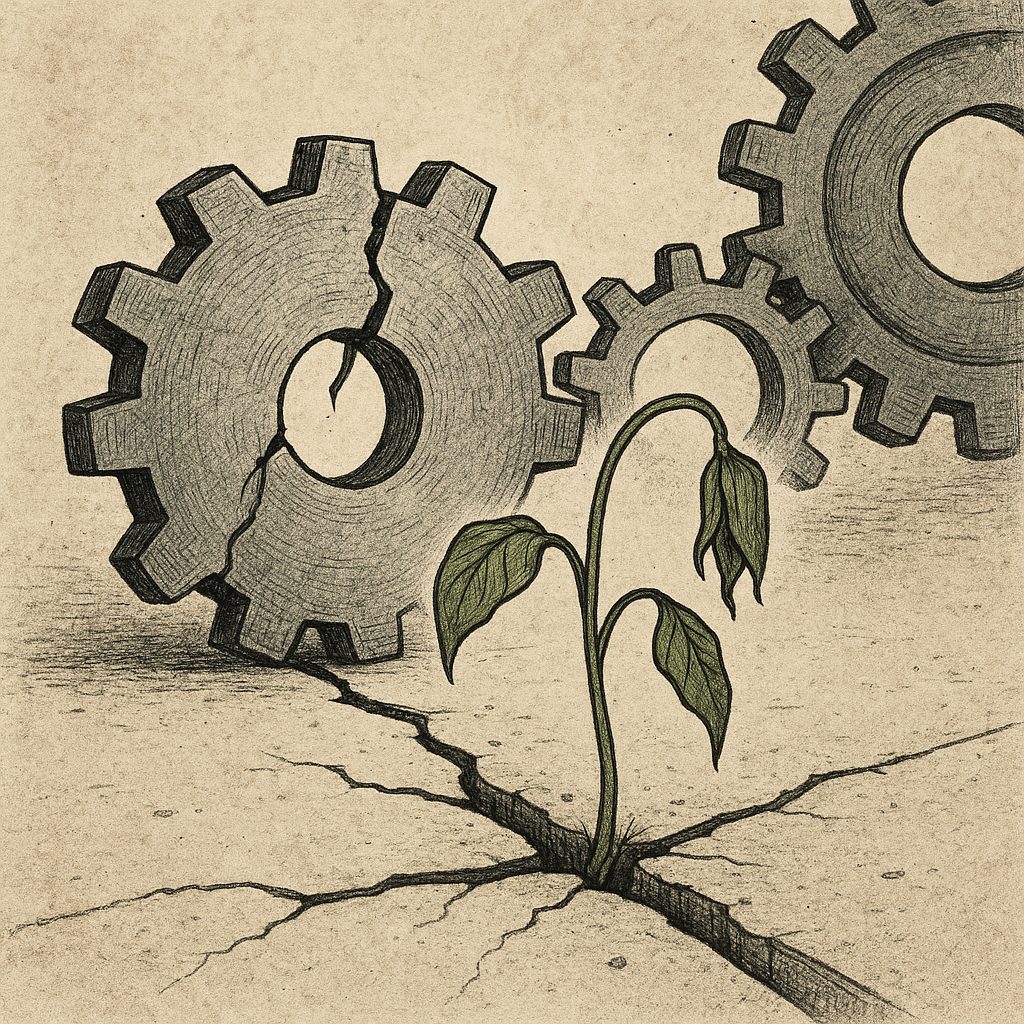
SA's manufacturing sector shrinks in Q1-2026, threatening economic growth due to global shocks & local issues. Jobs lost, but policy responses & firm pivots offer hope.
South Africa's factories faced big problems in early 2026. Old trains, expensive power, and slow ports made it hard to make and move goods. Other countries also made things tough, like cheap steel from China and possible taxes from the US. Because of all this, factories made less, and many people lost their jobs, showing how weak the country's recovery really is.
What caused South Africa's manufacturing sector to decline in Q1-2026?
South Africa's manufacturing decline in Q1-2026 stemmed from a complex interplay of local and global factors. Key domestic issues included Transnet's unreliable rail services, Eskom's high electricity tariffs, inefficient ports, and rising labor costs. Globally, challenges like potential US tariffs, China's steel glut, and Europe's carbon border tax further exacerbated the sector's woes, leading to a 0.8% contraction.
Get Cape Town news in your inbox
Stay updated with the latest stories from the Mother City.
1. Calm Surface, Fractured Foundations
South Africa’s latest GDP print shows a modest +0.5 % rise between January and March 2026, the sixth positive quarter in a row. On paper, the country has clawed its way out of the 2024 slump. Drill one layer deeper, however, and the picture cracks: manufacturing alone shaved R29 billion off nominal output and dragged quarterly growth down by an estimated 0.1 percentage point. Treasury analysts calculate that if the sector had merely stood still, the quarterly figure would have printed closer to 0.7 %.
Nine of the ten industry blocks advanced. Finance and real-estate grew 1.3 %, lifted by buoyant mortgage issuance and wider lending margins. Transport and communications added 1 % after Durban’s Pier 2 handled record container lifts and cable-theft repairs freed rail paths. Even Eskom’s division squeezed managed +0.2 % as Stage-8 blackouts faded in March with Koeberg Unit 1 back online. Manufacturing was the single outlier, shrinking 0.8 % in real terms and confirming its role as the weakest link in the chain.
This slump is no data anomaly. It arises from a dense web of local bottlenecks and global headwinds that are reverberating through every plant floor, harbour berth and wage negotiation.
2. Sector-by-Sector Autopsy: Who Shrunk and Why
Steel under Siege
Basic iron and steel shrank 3.4 %. Domestic mills ran at only 64 % of capability, the worst first-quarter reading since 2009. A 21-day shutdown at ArcelorMittal’s Newcastle furnace, caused by a contractor strike that delayed refractory relining, cut output at the worst possible time. Simultaneously, Chinese billet landed duty-free under the 2025 China-SACU agreement at a 14 % discount to local hot-rolled coil, forcing minimills to either idle lines or bleed cash on every tonne.
Petrochemicals & Polymers
Petroleum, chemicals and plastics fell 2.6 %. PetroSA’s Mossel Bay gas-to-liquids complex has sat cold since January after its nitrogen-rejection unit failed; below $90 Brent the plant is simply uneconomic. SAPREF, the country’s largest refinery, ran at 68 % of design capacity during scheduled maintenance tied to the looming IMO 2027 low-sulphur regulation. With naphtha feedstock rising faster than US ethane-linked PE, Sasol throttled downstream polyethylene lines and polymer margins vanished.
Automotive Hits a Speed Bump
Vehicle and component output slipped 1.9 %. Volkswagen and BMW destocked in Europe, cutting export call-offs by 11 % year-on-year. Ford Silverton slowed the new Ranger PHEV ramp by 20 % as tool-up glitches surfaced. Three lost nautical days at Ngqura, caused by extreme swell in late March, stranded 7,900 CKD kits bound for India and Brazil; penalty clauses for missed arrival windows ricocheted straight into cash-flow statements.
Food & Beverage Hammered by Sugar Drought
Food and beverages contracted 1.6 %. Mpumalanga’s irrigated cane delivered sucrose 18 % below the five-year mean after a brutal drought. To compound the headache, safeguard duties on imported sugar expired in January; Eswatini and Guatemala promptly undercut the SADC price by R360 per tonne. Coca-Cola Beverages Africa is shifting lines from fizzy drinks to still waters and energy drinks, but the changeover downtime lopped another 5 % off quarterly volumes.
Textile Cutbacks Continue
Textiles, clothing and footwear dropped 2.8 %. Local chains are still working off mountains of unsold spring-summer stock from Black Friday 2025, so orders fell sharply. Synthetic-fabric import-parity prices in rand terms are now below 2019 levels, courtesy of a weaker yuan and normalised freight rates. Newcastle and Durban cut overtime and bargaining-council data show 14,000 apparel workers lost shifts or their jobs outright in the quarter.
3. Global Ripples That Turn Into Local Tidal Waves
Washington’s AGOA Warning Shot
At the end of March the US Trade Representative floated a 12.5 % tariff on all South African goods that fall outside AGOA preferences. The stated trigger is “insufficient progress on forced-labour remediation” in wine, citrus and ferro-alloy supply chains. Congress still has to vote, but forward curves are already pricing in a 60 % chance of implementation by October. Beyond the tariff itself, a Section 301 action could trigger supply-chain audits and detention orders. The Automotive Export Council estimates the tariff would erase R9,800 of profit on every entry-level Polo Vivo exported to the US - roughly the vehicle’s entire EBIT margin.
China’s Property Glut Floods World Markets
Beijing’s real-estate slowdown is pushing an extra 23 million tonnes of rolled coil abroad every year. South Africa’s anti-dumping duty - only 8.4 % since 2024 - was designed for fair-trade prices above $750/tonne CFR. When global prices collapsed to $650 in February, traders simply rerouted Chinese steel through Vietnam to dodge duty collection. Local re-rollers now compete against landed coil that breaks even below their variable cost.
Europe’s Carbon Border Tax Shadow
Although the EU’s Carbon Border Adjustment Mechanism Phase III does not bite until 2028, importers are already clawing back risk premiums. A tonne of South African virgin steel carries 2.1 tCO₂e; at the EU’s €20/tonne shadow price that equals €42 in future levies. German OEMs have quietly flagged dual-sourcing intentions from lower-carbon Brazilian and Indian mills, forcing SA exporters to pre-emptively cut contract prices or lose share.
4. Domestic Bottlenecks: Self-Inflicted Wounds
Transnet’s Broken Timetable
Rail on-time delivery for manganese and iron-ore fell to 64 % in March, down from 78 % a year earlier. Copper theft on the Sishen-Saldanha corridor alone erased R6.2 billion of potential bulk-export revenue. Firms that depend on these lines for inbound ore now carry higher safety stocks, tying up scarce working capital.
Tariffs That Bite the Hand That Uses Electricity
Eskom’s new 18.65 % tariff hike adds roughly 26 c/kWh to large-user bills. ArcelorMittal’s modelling shows its electricity tab will climb R1.8 billion annually - around 8 % of direct conversion costs. Producers who cannot push through price increases sign load-curtailment deals that, in practice, amount to voluntary downtime in exchange for lower demand charges.
Ports Still Stuck in Paper
Container dwell time at Durban remains above 140 hours, three times the global median. The Single Window scheme has yet to synchronise customs, port health and border police, so exporters default to costly air-freight contingencies that wipe 25 % off gross margin - especially punishing for apparel firms already squeezed by weak demand.
Labour Costs Outrun Inflation
Metals and engineering wages rose 6.3 % in March while producer-price inflation for fabricated metals eked out only 2 %. The gap pushes labour-intensive fabricators toward capital substitution; at least two East-Rand workshops are testing robotic welding cells imported from Italy at the same time they retrench boilermakers.
5. Policy Levers Already in Motion
Operation Vulindlela 2.0
Treasury has earmarked an extra R10.8 billion over the medium-term budget to accelerate private-sector rail and port concessions. A formal Request for Proposal for Durban’s Pier 2 long-term concession is scheduled for July, with PSA International and DP World already pre-qualified.
Green Steel Seed Fund
The Industrial Development Corporation has ring-fenced R5 billion for hydrogen-ready direct-reduction iron (DRI) projects. A joint study by Fortescue Future Industries and the IDC at Saldanha Bay envisages a 6-million-tonne H-DRI plant starting construction in 2028, provided 4 GW of new renewable power and firm port access can be secured.
AGOA Diplomatic Sprint
Trade Minister Parks Tau will lead a delegation to Washington in June carrying a draft labour-compliance protocol covering 1,450 farms and 50 mines. The protocol relies on blockchain-verified QR codes that track wage slips and safety-audit results in real time, aiming to pre-empt forced-labour findings.
Licensing Threshold Scrapped
February 2026 saw the complete abolition of the embedded-generation licensing cap. Eskom now registers solar-and-battery hybrid projects up to 200 MW within 90 days, down from 295 days pre-reform. Paper-maker Sappi has already signed 180 MW wheeling agreements with private power producers.
6. Micro Portraits of Survival and Reinvention
From Wine Waste to Dashboards
Stellenbosch Vineyards, a top US wine exporter, is turning grape pomace into plant-based “leatherette” for automotive upholstery. If AGOA tariffs bite, the firm can divert 24 % of this new material to BMW’s Spartanburg plant under a US tariff code for industrial inputs.
Worker Co-op Reboots Old Lathes
Twenty former ArcelorMittal toolmakers in Ekurhuleni pooled severance pay to create a cooperative that retrofits ageing lathes with open-source CNC controllers. Seed money came from the Solidarity Fund and they already hold a conditional purchase order from a Tanzanian sisal processor - an early example of South-South manufacturing services replacing lost domestic demand.
Cashew Waste Becomes Resin
Durban SME SealChem manufactures epoxy for marine coatings. Facing naphtha shortages, it teamed with UKZN chemists to synthesise bio-epoxy from cashew-nut shell liquid. Early batches cut input costs 12 % and drop Scope-3 emissions by 34 %, giving local yards a greener, cheaper choice.
7. Currency, Inflation and What Lies Ahead
The rand lost 4.2 % against the dollar in the quarter, providing some relief to exporters’ order books. Yet passthrough inflation via pricier fuel and imported intermediates added 0.4 percentage points to headline CPI. Forward-rate agreements now imply a 50-basis-point repo hike by September. Unless the Monetary Policy Committee opts for growth over price stability, already credit-starved manufacturers will face tighter lending conditions.
Scenario analysis for the remainder of 2026 shows three plausible paths:
- Base Case (60 % probability) – Rail performance lifts to 75 % by year-end under new concession owners. Manufacturing output stagnates for three quarters then edges up 1 % in Q4, helped by rand weakness and automotive restocking.
- Bear Case (25 % probability) – US tariffs arrive; Beijing diverts another steel wave; Eskom seeks a further 15 % price hike. Manufacturing contracts an extra 2 % over the year and GDP growth slips below 0.8 %.
- Bull Case (15 % probability) – AGOA access is secured, green-steel funding reaches financial close and Eskom’s outages fall below 15 %. Manufacturing rebounds 2.5 %, adding 60,000 net new jobs by December.
8. Beyond the Spreadsheet: Human Fallout and Social Repercussions
Official numbers record 53,000 manufacturing jobs lost in the first quarter - the biggest quarterly fall since mid-2020. The geography is brutal:
- eThekwini shed 19,600 posts, centred on apparel plants and sugar mills.
- Nelson Mandela Bay bled 11,400 as automotive suppliers trimmed shifts.
- Johannesburg’s East Rand lost 8,100 metalworking positions.
Youth unemployment in the sector (ages 15–24) climbed to 48.6 %. Apprenticeship contracts have been cancelled mid-stream, putting a “lost cohort” of artisans at risk. In Newcastle, pre-dawn queues outside the UIF offices snake around city blocks. In Gqeberha, idle toolmakers turn backyard garages into micro-forges for yacht spares. In Limpopo citrus packhouses, QR codes now track every picker’s daily wage so US inspectors cannot claim forced labour.
These vignettes underscore why a single sector’s decline reverberates far beyond its balance sheets, fraying the very fabric of South Africa’s social contract.
[{"question": "
What factors contributed to the decline of South Africa's manufacturing sector in Q1-2026?
\nSouth Africa's manufacturing sector experienced a significant decline in Q1-2026 due to a confluence of domestic bottlenecks and global headwinds. Domestically, issues included unreliable rail services from Transnet, high electricity tariffs from Eskom, inefficient ports causing container delays, and rising labor costs. Globally, challenges like potential US tariffs on South African goods, the influx of cheap Chinese steel, and Europe's looming carbon border tax exacerbated the sector's woes, leading to a 0.8% contraction in real terms.
\n", "answer": ""},{"question": "Which specific manufacturing industries were most affected and why?
\nSeveral key industries within the manufacturing sector were severely impacted. Basic iron and steel shrank by 3.4% due to a contractor strike at ArcelorMittal and cheap Chinese billet flooding the market. Petroleum, chemicals, and plastics fell 2.6% because of a failure at PetroSA's Mossel Bay plant and maintenance at SAPREF. Automotive output slipped 1.9% due to reduced export call-offs from Europe and production glitches with new models. Food and beverages contracted 1.6% due to a drought-induced sugar shortage and the expiry of import safeguard duties. Lastly, textiles, clothing, and footwear dropped 2.8% due to unsold stock, cheaper imports, and job losses.
\n", "answer": ""},{"question": "How did global economic and trade dynamics impact South Africa's manufacturing?
\nGlobal dynamics played a crucial role in the sector's downturn. The US Trade Representative floated a potential 12.5% tariff on South African goods outside AGOA preferences, threatening exports, particularly in the automotive sector. China's property market slowdown led to an oversupply of steel, which was rerouted through Vietnam to bypass South African anti-dumping duties, undercutting local producers. Additionally, Europe's impending Carbon Border Adjustment Mechanism (CBAM) prompted German OEMs to consider lower-carbon suppliers, forcing South African exporters to reduce prices to maintain market share.
\n", "answer": ""},{"question": "What were the main domestic challenges and infrastructure failures affecting manufacturing?
\nDomestic challenges were significant. Transnet's rail on-time delivery for key commodities dropped to 64%, with copper theft causing substantial revenue losses and forcing firms to hold higher safety stocks. Eskom's 18.65% tariff hike increased electricity costs for large users, impacting profitability. South African ports, particularly Durban, suffered from container dwell times three times the global median due to a lack of synchronized systems. Furthermore, labor costs in metals and engineering rose faster than producer-price inflation, pushing manufacturers towards capital substitution and job losses.
\n", "answer": ""},{"question": "What policy measures are being implemented to address these challenges?
\nThe South African government is implementing several policy measures to mitigate the crisis. Operation Vulindlela 2.0 has earmarked R10.8 billion for private-sector rail and port concessions, with a formal Request for Proposal for Durban's Pier 2 expected soon. The Industrial Development Corporation (IDC) has allocated R5 billion for 'green steel' projects, including a potential hydrogen-ready direct-reduction iron plant. To counter potential US tariffs, Trade Minister Parks Tau is leading a diplomatic effort to Washington with a blockchain-verified labor-compliance protocol. The embedded-generation licensing cap has also been abolished, simplifying the process for businesses to generate their own power.
\n", "answer": ""},{"question": "What are the human and social consequences of the manufacturing decline?
\nThe decline in the manufacturing sector has severe human and social repercussions. Official numbers show 53,000 manufacturing jobs were lost in Q1-2026, marking the largest quarterly fall since mid-2020. This job loss was concentrated in eThekwini, Nelson Mandela Bay, and Johannesburg's East Rand. Youth unemployment in the sector climbed to 48.6%, leading to cancelled apprenticeship contracts and a 'lost cohort' of artisans. The impact extends beyond balance sheets, causing significant social distress, evident in long queues at unemployment offices and individuals seeking alternative means of income through informal endeavors.
\n"}]
Michael Jameson is a Cape Town-born journalist whose reporting on food culture traces the city’s flavours from Bo-Kaap kitchens to township braai spots. When he isn’t tracing spice routes for his weekly column, you’ll find him surfing the chilly Atlantic off Muizenberg with the same ease he navigates parliamentary press briefings.
View all articles →