
Shein and Temu hit by SARS tax changes
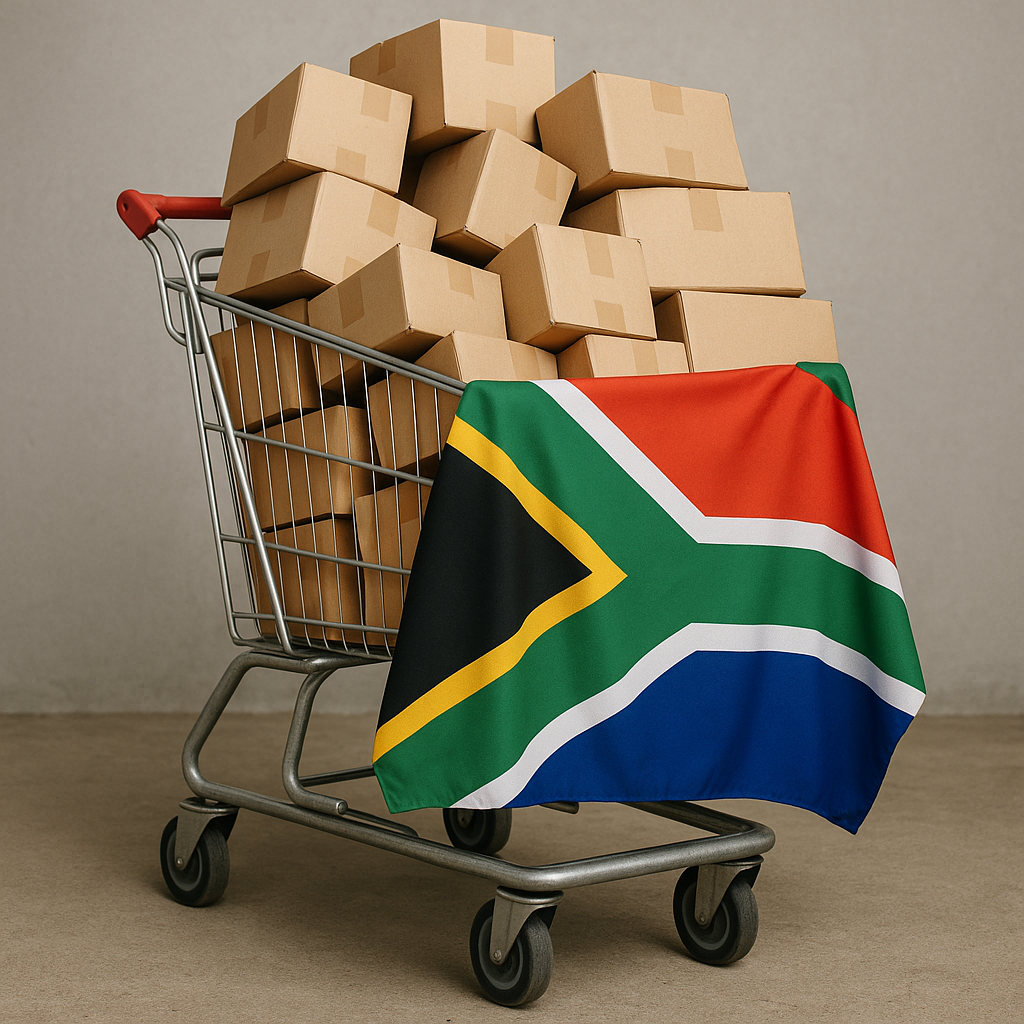
SARS's 2024-2025 tariff overhaul reshaped South Africa's e-commerce, impacting pricing, logistics, and consumer behavior.
South Africa's SARS has changed the game for online shopping! They've removed old loopholes, so now every imported item gets taxed. This means things you buy online from other countries will cost more, with new VAT and duties. Shoppers are now looking for reliability over cheap prices, and local businesses are finding new ways to sell. Even big global stores are adapting to these new rules, making e-commerce in South Africa a whole new ballgame.
What changes did SARS implement in 2024-2025 regarding South Africa's online marketplace tariffs?
SARS eliminated the R500 de-minimis shield, removed the small-parcel loophole, and now requires every shipment to undergo full documentation. This introduces a 15% VAT plus ad-valorem duties ranging from 20% to 45%, significantly increasing the landed cost of imported goods, effectively ending the 'add-to-cart, forget-about-cost' era.
Get Cape Town news in your inbox
Stay updated with the latest stories from the Mother City.
1. From Cowboy Rush to Checkpoint Nation
Between 2018 and 2023 South Africa’s cross-border parcel stream felt like a gold-rush river. Millions of bubble-wrapped envelopes - each worth less than a fast-food meal - poured in from Guangzhou, Istanbul and Shenzhen. A R79 tee or R199 sneaker could glide through customs untouched, courtesy of the R500 de-minimis shield. Shein’s 2022 parcel tally alone eclipsed the state post office’s annual load.
On 1 November 2024 the music stopped. SARS pushed the de-minimis line to zero rand, erased the small-parcel loophole and insisted every shipment - whether R50 or R5 000 - run the full documentary gauntlet. VAT of 15 % plus ad-valorem duties ranging from 20 % to 45 % landed on the invoice the moment a carton touched South African soil. The pricing models that importers had fine-tuned for five years cracked like dry clay.
Psychologically the shift landed harder than the tax itself. Shoppers who had embraced “add-to-cart, forget-about-cost” suddenly confronted real money at checkout. Retailers saw carts abandoned at rates last witnessed when 3G first launched. The frontier era was over; the guarded-gate era had begun.
2. Anatomy of the Four-Tier Wall
February 2025 replaced the murky “miscellaneous” basket with a crystal-clear staircase of four tariff bands. Essential medicines, books and solar panels sit on Tier 1: no duty and at most 15 %, but often zero. Tier 2 - think pots, pans, bed linen - faces 20 % VAT plus up to 25 % duty. Tier 3 targets the fast-fashion giants: toys, synthetic dresses, entry-level earbuds get 25–35 % on top of VAT. Tier 4 adds an environmental levy to lithium-bearing toys and synthetic fabrics, pushing the total bite to 45 %.
Shein’s best-selling R250 polyester dress illustrates the sting. Before the overhaul the landed cost - price plus handling - was roughly R315. Under Tier 3 and a rand at R19.70 to the dollar the same dress hit R420. A nearby Takealot factory-seconds rack offered a similar look for R350, and it shipped the same day. The price illusion that had empowered offshore giants evaporated overnight.
The new bracket also killed the old “gift” and “sample” sleight-of-hand. Previously, low-value accessories hid behind vague tariff codes. Now every SKU must march under a precise Harmonised System banner. Hiding a power bank inside a “fashion accessory” pouch no longer fools a scanner - or the official behind it.
3. Logistics: Racing Against the Clock
With price parity gone, speed became the new battlefield. Shein erected a 12 000 m² “Sorter One” hub at OR Tambo’s Cargo Central, feeding The Courier Guy’s overnight trunk fleet. Temu chose a different lane: pallets clear customs in Johannesburg under Imperial Logistics, then fan out via 3 000 Pargo lockers. The catch is cost - each pre-cleared kilogram adds R18 in handling versus the old R6 post-office sticker.
Speed, however, is only half the promise. Storage fees now punish every hour of delay. MustangPay calculates an extra R19.50 per parcel for every day a shipment sits in customs. That surcharge shows up in checkout totals long before the customer sees the courier van.
4. The Consumer Mind-Map: Reliability Trumps Pennies
MustangPay surveyed 4 200 shoppers across nine provinces between February and April 2025. Three distinct segments emerged. Tier A (LSM 10) will pay R2 000 for noise-cancelling headphones if they arrive before a Dubai flight. Tier B (LSM 7–9) accepts a R50 premium but demands the exact colour displayed on screen. Tier C (LSM 4–6) refuses to gamble with a lost parcel; Cash-on-Delivery or locker pickup is non-negotiable.
The most striking stat: Tier C shoppers now rank reliability 12 % higher than price. Pargo’s locker network grew 55 % year-on-year, while 3 000 Flash merchants became ad-hoc refund points for Temu returns. The township consumer, once dismissed as bargain-obsessed, has become the most risk-averse of all.
Micro-insurers sensed an opening. Naked Insurance’s “Parcel Protect” charges R6 per R100 insured and settles claims via WhatsApp photo proof. An 8 % claims ratio beats household-contents benchmarks of 13 %, making the add-on a silent closer at checkout.
5. SME Springboards and Township Renaissance
Policy pain birthed unexpected niches. Sibongile Duma, 28, buys end-of-line Lesotho denim at R110 a pair, trims and rebrands in her eMalahleni garage, then sells at R299 on Facebook Marketplace with 48-hour courier delivery. MustangPay counts 3 100 such “re-labelers” who sprouted between Q1 2024 and Q1 2025.
Katlehong hosts the Township Digital Mall - a 40-foot MTN-yellow container that doubles as a QR-catalogue showroom for 70 local suppliers. Orders are batched twice daily and scootered within 10 km. The hybrid model earns 10 % commission and absorbs new import duties simply by sourcing 80 % of its catalogue locally. Expansion to Khayelitsha and Mdantsane is booked for October 2025.
TVET colleges reacted to the warehousing boom. A six-week “E-Commerce Fulfilment” certificate in Ekurhuleni teaches drone inventory counts and SAP EWM basics. Manpower Group records 11 800 new warehouse jobs in Gauteng and KZN since the tariff rewrite, pushing picker-packer salaries up 22 % to R8 950 a month - nearly matching entry-level retail.
6. Platforms Rewire Their DNA
Rather than retreat, global giants are “Southern-Africanising.” Shein’s Cape Town design studio - confirmed in April 2025 - employs 22 local graduates crafting SA sizes 30–48 and prints inspired by shweshwe and Ndebele geometry. Temu’s parent PDD Holdings applied for a 32 MW solar-powered fulfilment hub near Coega, betting on Section 12L’s 125 % accelerated depreciation to soften Tier 3 tariffs.
Domestic calendars now rule promotion cycles. The “1st-of-Month Payday Rush” from the 25th to the 3rd beats Black Friday volume by 34 %. Shein’s Ramadan capsule - 40 000 abayas gone in 36 hours - proved that cultural relevance plus last-mile certainty beats a duty-dodged discount.
Crypto arbitrage flashed then flopped. Telegram channels touted “duty-free” luxury via Bitcoin and Dubai reshippers, peaking at 480 parcels a day in December 2024. VALR’s partnership with SARS allowed Interpol to seize a 200 kg Louis Vuitton haul at King Shaka in March 2025, reminding shoppers that analog borders still bite in the digital age.
Draft legislation leaked in May 2025 signals tighter screws: a real-time e-invoice gateway will require every import SKU to match a rand receipt within 60 days or incur a 5 % surcharge. Hearings are set for August; boardrooms from Sandton to Shenzhen are already war-gaming the sequel.
The curtain has not fallen - it has simply lifted on a new act. South Africa’s e-commerce cart was once a lightweight wheelbarrow racing downhill. SARS’s tariff reboot welded on brakes, suspension and GPS. The ride is slower, but the road is safer, and every stakeholder - global giant, township hustler or feature-phone shopper - must now navigate the same fresh tarmac.
[{"question": "
What major changes did SARS introduce to South Africa's online marketplace tariffs in 2024-2025?
\nSARS implemented significant changes, including the elimination of the R500 de-minimis shield, the removal of the small-parcel loophole, and the requirement for full documentation for every shipment. This means all imported items are now subject to a 15% VAT plus ad-valorem duties ranging from 20% to 45%, drastically increasing the landed cost of goods purchased from international online retailers.
"},{"question": "How do the new four-tier tariff bands affect different types of imported goods?
\nThe new system categorizes goods into four clear tariff bands. Tier 1 (e.g., essential medicines, books, solar panels) faces no duty and minimal VAT. Tier 2 (e.g., household items like pots, bed linen) incurs 20% VAT plus up to 25% duty. Tier 3 (e.g., fast fashion, toys, entry-level electronics) sees 25-35% duty on top of VAT. Tier 4 includes an environmental levy, pushing the total bite to 45% for items like lithium-bearing toys and synthetic fabrics. This structure replaces previous ambiguous classifications and closes loopholes like declaring items as 'gifts' or 'samples'.
"},{"question": "How have logistics and delivery adapted to the new tariff regulations?
\nWith price parity diminished, speed and efficiency in logistics have become critical. Companies like Shein and Temu have invested in local infrastructure, such as Shein's 'Sorter One' hub at OR Tambo and Temu's use of Pargo lockers for last-mile delivery, to expedite customs clearance and delivery. However, these improvements come with increased handling costs, and new storage fees now penalize delays in customs, directly impacting checkout totals.
"},{"question": "What is the primary concern for South African online shoppers under the new system?
\nA survey by MustangPay revealed a significant shift in consumer priorities, with reliability now ranking higher than price, especially among lower to middle-income groups (Tier C). Shoppers are less willing to gamble with lost parcels and prioritize guaranteed delivery, leading to increased demand for services like Cash-on-Delivery, locker pickups, and parcel insurance options. This indicates a move away from purely price-driven purchasing decisions towards a demand for trustworthy and consistent service.
"},{"question": "How have these changes impacted local businesses and job creation in South Africa?
\nThe tariff rewrite has fostered a 'SME Springboard' and 'Township Renaissance'. Local entrepreneurs are finding niches by re-labeling imported goods or sourcing locally, creating new business models like the Township Digital Mall. Furthermore, the warehousing boom driven by increased local logistics has led to significant job creation in provinces like Gauteng and KZN, with picker-packer salaries increasing, demonstrating a positive economic ripple effect.
"},{"question": "How are global e-commerce platforms like Shein and Temu adapting to the new South African market?
\nGlobal platforms are 'Southern-Africanising' their operations. Shein is establishing a design studio in Cape Town to cater to local sizes and aesthetics, while Temu's parent company is investing in a large solar-powered fulfilment hub. They are also aligning promotion cycles with domestic calendars, like the '1st-of-Month Payday Rush' and culturally relevant campaigns, to better engage with local consumers. This strategic pivot aims to maintain market presence by integrating more deeply with the South African economic and cultural landscape.
"]
Thabo Sebata is a Cape Town-based journalist who covers the intersection of politics and daily life in South Africa's legislative capital, bringing grassroots perspectives to parliamentary reporting from his upbringing in Gugulethu. When not tracking policy shifts or community responses, he finds inspiration hiking Table Mountain's trails and documenting the city's evolving food scene in Khayelitsha and Bo-Kaap. His work has appeared in leading South African publications, where his distinctive voice captures the complexities of a nation rebuilding itself.
View all articles →