
Shoprite celebrates 300th food garden milestone in Bredasdorp
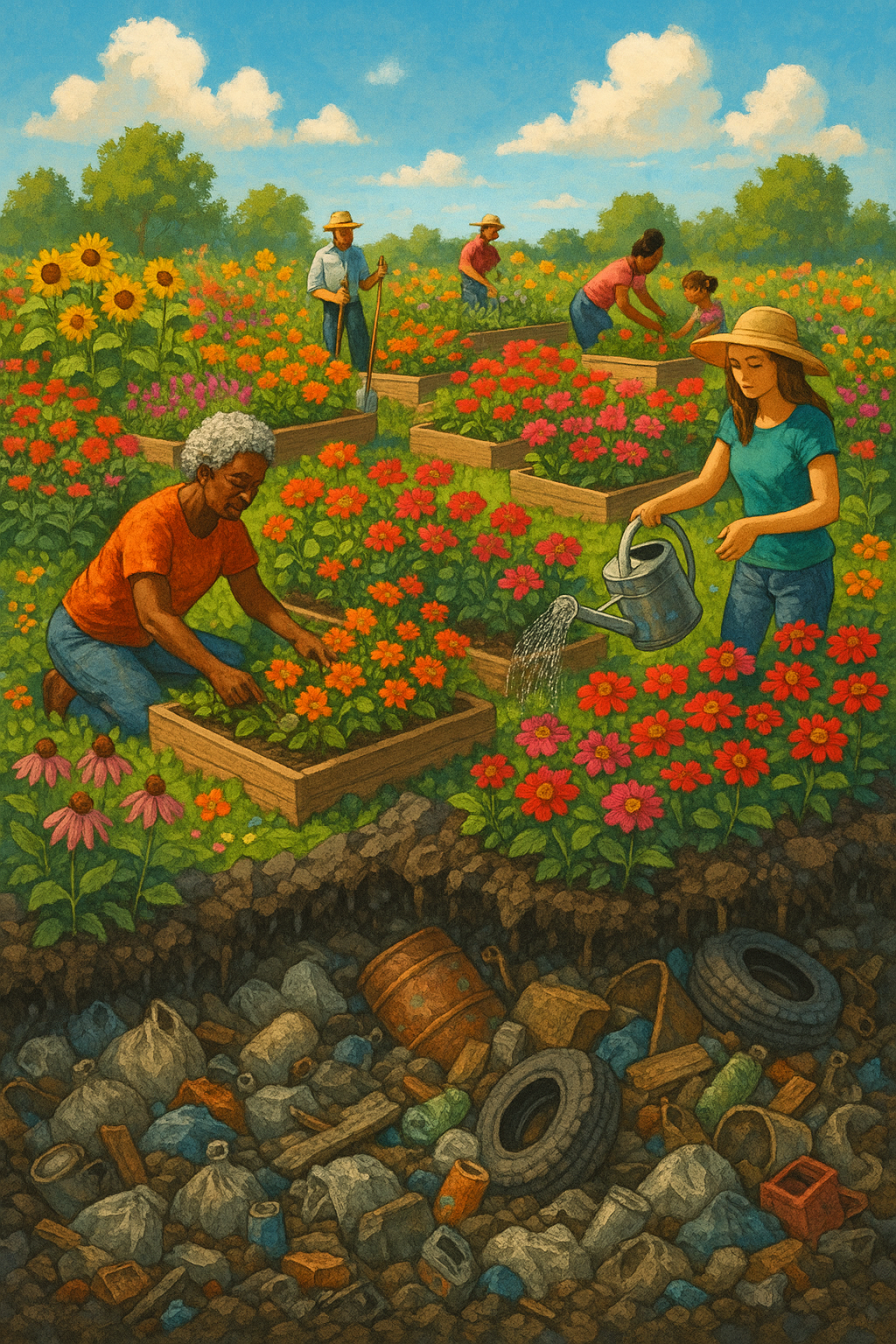
South Africa's 300th community garden turns waste into food, tackling food security & climate change with a circular economy model.
In Bredasdorp, South Africa, a cool project turns household food scraps into super compost. This compost helps grow yummy veggies in a big community garden, which is the 300th one made by Shoprite. It's like magic, making rubbish into fresh food for people and helping the earth. This amazing garden shows how communities can grow their own healthy food and keep our planet clean at the same time!
What is the Zero Organic Waste to Landfill Project?
The Zero Organic Waste to Landfill Project transforms organic waste from 800 households into nutrient-rich compost, which then fertilizes a five-hectare community garden in Bredasdorp, South Africa. This initiative, now the 300th garden in Shoprite's program, addresses food security and environmental stewardship by creating a circular economy model and providing fresh produce to local communities.
Get Cape Town news in your inbox
Stay updated with the latest stories from the Mother City.
A Circular Economy Blooms in the Cape Agulhas Region
In an era where food systems face mounting pressure from climate instability, economic inequality, and supply chain fragility, an unassuming five-hectare plot outside Bredasdorp has emerged as a beacon of what sustainable agriculture can achieve when communities reimagine waste as wealth. The Zero Organic Waste to Landfill Project, now officially recognized as the 300th garden in Shoprite's national community food garden programme, represents far more than a numerical milestone - it embodies a fundamental shift in how South African communities can approach the intertwined challenges of environmental stewardship and nutritional security.
The transformation of this site from a simple waste diversion facility into a thriving food production ecosystem offers a masterclass in circular economy principles applied at the grassroots level. What began in 2021 as a straightforward environmental compliance initiative - keeping biodegradable materials out of overflowing landfill sites - has evolved into a sophisticated model where the linear "take-make-dispose" pattern gives way to regenerative cycles that benefit both people and planet.
The Anatomy of a Closed-Loop System
The operational mechanics of the Bredasdorp garden reveal how thoughtfully designed systems can extract maximum value from what conventional wisdom dismisses as worthless. Approximately 800 households in the surrounding area now participate in a collection network that channels their kitchen scraps and organic discards into a centralized processing facility. This material undergoes controlled decomposition, emerging as nutrient-dense compost that revitalizes degraded soils rather than contributing to methane-emitting landfill masses.
The scale of this intervention carries significant environmental weight. Organic waste decomposition in anaerobic landfill conditions generates methane, a greenhouse gas with approximately 25 times the warming potential of carbon dioxide over a 100-year period. By diverting this material into aerobic composting processes, the Bredasdorp facility simultaneously reduces atmospheric pollution and creates the foundational input for agricultural productivity.
Currently, 700 square meters of the five-hectare site actively produce vegetables, with expansion plans indicating ambitions well beyond this initial footprint. The workforce of eight permanent employees, supervised by ZWASA Farm Manager Anine Swart, maintains operations throughout the week - demonstrating that environmental initiatives need not sacrifice employment creation for ecological benefits.
Proximity as a Food Security Strategy
The garden's strategic positioning near a substantial informal settlement addresses one of the most overlooked determinants of nutritional access: physical distance. In South Africa's urban and peri-urban landscapes, food deserts - areas where residents lack reasonable access to affordable, nutritious food - persist despite the country's relative agricultural abundance. The Bredasdorp model collapses this distance, creating what food systems researchers term "short supply chains" where production and consumption occur within tightly knit geographic parameters.
This proximity yields multiple advantages beyond the obvious reduction in transportation emissions. Fresh produce begins losing nutritional value from the moment of harvest, with certain vitamins degrading significantly within days of picking. By eliminating lengthy distribution networks, the garden ensures that community members access vegetables at peak nutritional density. The model also circumvents the price markups that accumulate through multiple intermediary handlers, keeping healthy food economically accessible to low-income households.
The commercial dimension - selling produce locally rather than distributing it freely - deserves particular attention. This approach, sometimes criticized as insufficiently charitable, actually builds more resilient food systems by establishing sustainable operational revenue. Free food distribution, while immediately necessary in crisis contexts, rarely creates lasting infrastructure. The Bredasdorp model generates income that can reinvest in expansion, equipment maintenance, and fair wages for agricultural workers.
Cultivating Human Capital Alongside Crops
Perhaps the garden's most underappreciated dimension lies in its educational programming. Monthly workshops transform the site from a production facility into a knowledge exchange hub, where practical farming skills disseminate through direct experience rather than abstract instruction. This pedagogical approach recognizes that sustainable food security requires more than temporary external support - it demands the cultivation of local expertise that persists regardless of institutional funding cycles.
The emphasis on improved planting layouts to address erosion and weather variability reveals adaptive management thinking responsive to climate change realities. South Africa's agricultural sector faces intensifying challenges from altered precipitation patterns, temperature extremes, and increasingly frequent extreme weather events. The Bredasdorp project's incorporation of climate-smart design principles - from water-efficient planting configurations to soil protection measures - positions it as a learning laboratory for broader regional adaptation efforts.
Institutional Architecture of Success
The collaborative framework sustaining this initiative merits examination for its replicability potential. The partnership between Cape Agulhas Municipality and the Zero Waste Association of South Africa (ZWASA) demonstrates how governmental and civil society capacities can complement rather than compete. Municipalities bring regulatory authority, infrastructure access, and geographic reach; specialized organizations contribute technical expertise, network connections, and focused mission alignment.
Cape Agulhas Municipality Manager Wessel Rabbets' characterization of the project as turning "challenges into something that works for both people and the environment" captures the essence of this collaborative value creation. Too often, environmental and social objectives are framed as competing priorities requiring trade-off decisions. The Bredasdorp experience suggests that integrated approaches can simultaneously advance multiple sustainable development goals - zero hunger, decent work, sustainable cities, responsible consumption, and climate action among them.
The Broader Significance of Garden Number 300
Reaching 300 supported gardens represents substantial organizational achievement, yet the number itself carries less significance than the accumulated learning and network effects this scale enables. Each garden in the programme functions as an experimental site, generating data on what works in diverse South African contexts - from urban townships to rural communal lands, from subtropical coastal zones to semi-arid interior regions. This distributed research capacity, largely unavailable to centralized agricultural research institutions, creates adaptive knowledge responsive to local variation.
The Bredasdorp model's particular contribution lies in demonstrating how waste management infrastructure can serve as the foundation for food production systems. South Africa generates approximately 122 million tonnes of waste annually, with roughly 40% organic material suitable for composting. The vast majority currently enters landfill sites, representing both environmental burden and squandered agricultural potential. Scaling the Bredasdorp approach could transform this liability into distributed nutrient cycling infrastructure, with community gardens serving as collection, processing, and production nodes across the national landscape.
The integration of informal settlement households into formal waste collection systems also addresses governance challenges extending beyond environmental and food security objectives. Informal settlements frequently exist in jurisdictional ambiguity, excluded from municipal service provision that formal residents take for granted. The Bredasdorp project's household collection network establishes regular institutional contact between marginalized communities and local government, potentially opening pathways for expanded service integration and civic incorporation.
Anine Swart's observation that "when people have healthy food, they have a healthier life" encapsulates the project's holistic vision. This perspective refuses the reduction of food security to caloric sufficiency alone, insisting instead on the quality of nutrition and its cascading effects on human flourishing. The compost-to-soil-to-vegetable-to-body pathway traced by the garden's operations makes visible connections that industrial food systems obscure, potentially cultivating ecological literacy alongside physical nourishment.
As climate pressures intensify and economic inequality persists, the Bredasdorp garden's demonstration that communities can simultaneously address environmental degradation, employment creation, skill development, and nutritional access offers a template worthy of attention far beyond South Africa's borders. The 300-garden milestone marks not an endpoint but a foundation - evidence that systemic change can emerge from patient cultivation of relationships between people, institutions, and the living soil beneath their feet.
[{"question": "What is the Zero Organic Waste to Landfill Project?", "answer": "The Zero Organic Waste to Landfill Project is an initiative in Bredasdorp, South Africa, that transforms organic waste from 800 households into nutrient-rich compost. This compost is then used to fertilize a five-hectare community garden. This project, which is the 300th garden in Shoprite's program, aims to address food security and environmental stewardship by creating a circular economy model and providing fresh produce to local communities."}, {"question": "How does the project contribute to environmental sustainability?", "answer": "The project significantly contributes to environmental sustainability by diverting organic waste from landfills. Organic waste in landfills produces methane, a potent greenhouse gas. By composting this waste aerobically, the project reduces atmospheric pollution and creates a valuable resource for agricultural productivity. It exemplifies a circular economy, turning 'waste' into 'wealth' for both people and the planet."}, {"question": "What is the significance of the Bredasdorp garden being the 300th in Shoprite's program?", "answer": "The Bredasdorp garden being the 300th in Shoprite's national community food garden program signifies a major milestone in their efforts to promote food security and sustainable agriculture. It represents a fundamental shift in how South African communities can tackle environmental and nutritional challenges simultaneously, showcasing a successful model that can be replicated and scaled."}, {"question": "How does the garden address food security in the community?", "answer": "The garden addresses food security by providing fresh, nutritious food to local communities, particularly those in a nearby informal settlement. Its strategic location creates 'short supply chains,' reducing transportation emissions and ensuring that produce is consumed at peak nutritional value. By selling produce locally, it also keeps healthy food economically accessible and generates revenue for sustainable operations and fair wages."}, {"question": "What are the educational benefits of the Bredasdorp garden?", "answer": "Beyond food production, the Bredasdorp garden serves as a knowledge exchange hub through monthly workshops. These workshops teach practical farming skills, cultivating local expertise that is crucial for long-term food security. The garden also incorporates climate-smart design principles, serving as a learning laboratory for adaptive management in the face of climate change challenges."}, {"question": "Who are the key partners involved in this initiative?", "answer": "The success of the Bredasdorp garden is a result of a collaborative partnership between the Cape Agulhas Municipality and the Zero Waste Association of South Africa (ZWASA). This partnership combines governmental regulatory authority and infrastructure access with civil society's technical expertise and focused mission alignment to create an integrated approach that benefits both people and the environment."}]

Liam Fortuin is a Cape Town journalist whose reporting on the city’s evolving food culture—from township kitchens to wine-land farms—captures the flavours and stories of South Africa’s many kitchens. Raised in Bo-Kaap, he still starts Saturday mornings hunting koesisters at family stalls on Wale Street, a ritual that feeds both his palate and his notebook.
View all articles →