
Sixteen years later, Bafana Bafana return to football’s biggest stage in Mexico City
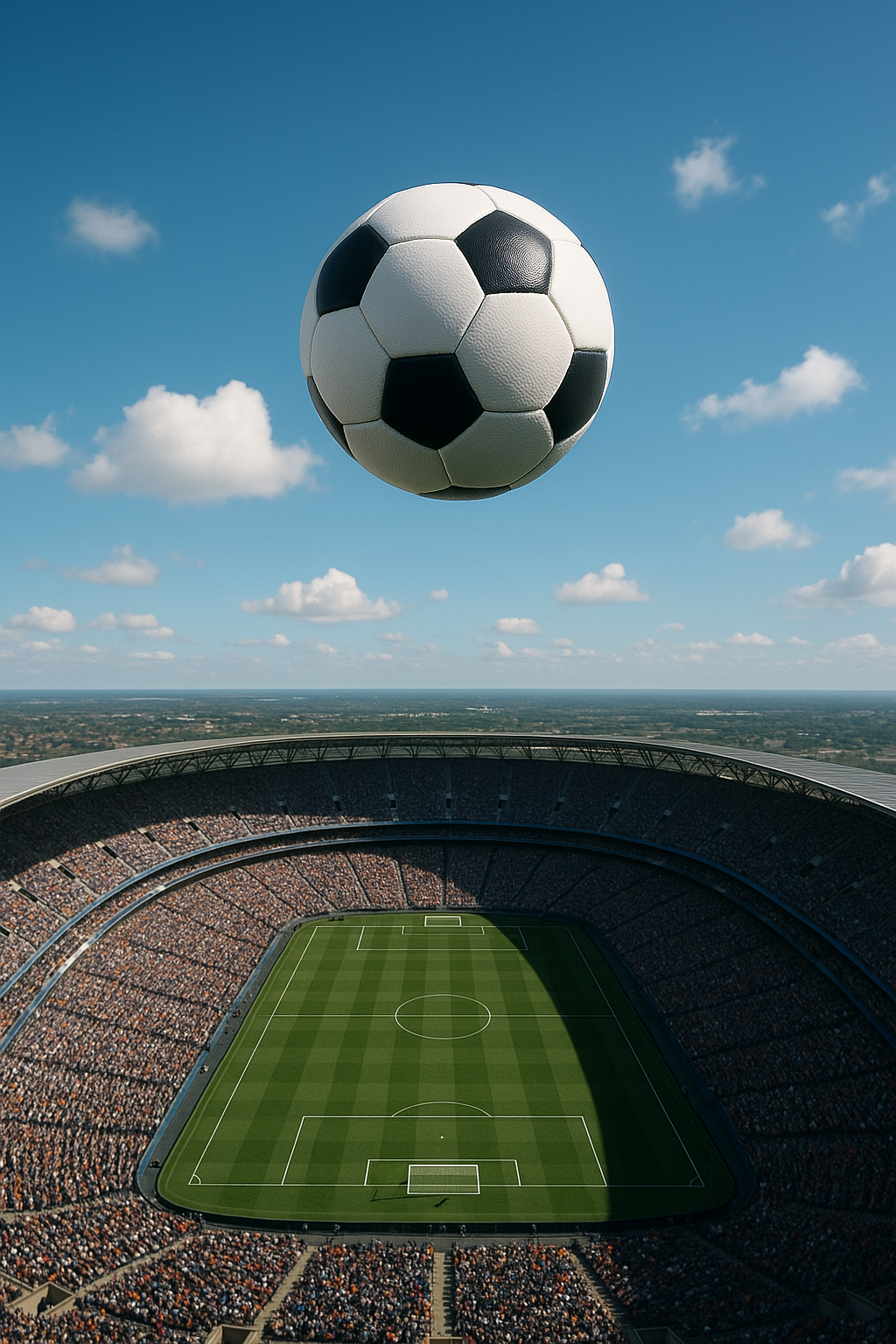
Bafana Bafana vs. Mexico: A 2026 World Cup opener with 2010 echoes, altitude challenges, and tactical battles in Mexico City.
Bafana Bafana faces a tough match against Mexico in Mexico City, high above sea level. This thin air makes it hard for players, slowing them down. Mexico also has the home advantage and has trained specially for these conditions. Despite a visa issue that messed up their training, Bafana Bafana's team has a plan to deal with the altitude and Mexico's tactics, hoping to win key battles and surprise everyone.
What challenges do Bafana Bafana face when playing Mexico in Mexico City?
Bafana Bafana face significant challenges playing Mexico in Mexico City, primarily due to the 2,240-meter altitude, which can cause an 8.4% drop in explosive actions. They also contend with Mexico's home-field advantage and tactical adaptations to the thin air, such as faster ball travel and recalibrated pressing. Additionally, a recent visa hiccup disrupted their training schedule.
Get Cape Town news in your inbox
Stay updated with the latest stories from the Mother City.
1. Echo of 2010, Rewritten Inside a Volcano
Television archives never delete Siphiwe Tshabalala’s 55th-minute rocket; they simply duplicate it. The 2010 Johannesburg opener still vibrates through every FIFA hype reel, yet Thursday night flips the venue: 2 240 metres above the Pacific instead of the Highveld. Same script - hosts want redemption, visitors want credibility - only the soundtrack changes: vuvuzelas replaced by a 100-piece mariachi band, Soccer City swapped for a crater-shaped bowl that once staged Pelé and Negrete.
South Africa’s analysts did not travel 14 000 kilometres for sightseeing. They boarded the charter with VR headsets looping every Mexican micro-reaction to the 1-1 draw of 2010: the split back-line that gifted Tshabalala the lane, Rafael Márquez’s late ghost-run into the corridor, the oxygen dip that saw the tempo collapse after 70 minutes. Foster, Appollis and Zwane have already metabolised those clips into muscle memory before the warm-up drummer hits the first snare.
2. Thin Air, Thick Tactics
Mexico City’s 2 240-metre altitude is a silent 12th man. A 2023 FIFA white-paper predicts an 8.4 % drop in explosive actions once the clock crosses 1 500 metres. To counter the deficit, Bafana’s fitness guru - Diego Hérnandez-Velázquez, ironically Mexican-born - built a “hypoxic dome” inside the Castle of Good Hope: 40-minute sessions at 14 % oxygen, followed by pressurised naps at 17 %. On Tuesday, Zwane finished an 11-second rondo three seconds quicker than the Durban benchmark while breathing through an altitude mask.
El Tri answered with three-week camp at Guadalajara’s Centro de Alto Rendimiento. The ball travels 1.2 m/s faster at altitude, so centre-back Montes practised near-post darts timed to a metronome. Edson Álvarez’s GPS unit logged 11.3 km against Colombia - 800 m above his Premier League norm - proof that Lozano’s pressing radius has been recalibrated for thin air.
3. Chessboard Without a Rook
Broos’ first-phase sketch looks like a 4-3-3 but folds into 4-1-4-1 when Mothiba drops between the centre-backs. The trigger is simple: once Álvarez receives on the half-turn facing his own keeper, Zwane and Modibi sprint vertically, funnelling play into the half-moon where Mbokazi reads the second hop. Foster starts on the shoulder of the last defender, then drifts wide, vacating the inside lane for Appollis’ late-blind surge.
Opposite numbers, Mexico morph between 4-3-3 and 2-3-5. When Williams rolls a pass to the right-back, Lozano pounces, forcing a rushed diagonal into Mbokazi. Jimenez shadows the lane, cutting the recycle pass. In settled possession, right-back Sánchez tucks inverted, fashioning a temporary back-three; Gimenez and Jimenez annex both half-spaces while 17-year-old Mora crashes the third-man lane from the left interior. Set-pieces? El Tri bagged eight headed goals in the last Liga MX cycle; Montes times his near-post dart to clash with Williams’ six-foot-one frame exactly as Álvarez arrives late.
4. Algorithm, Visa Hiccup & the 48.9 % Slice
Opta’s Monte-Carlo engine spun 20 000 times. Out-of-the-box code gives Bafana a 48.9 % probability of surviving Group A, but altitude shaves 0.03 xG off visitors every minute. Convert a half-chance inside 25 minutes and the model inflates to 54.7 %. Concede in the first 15 and the figure dives to 37.2 %. Analyst Mathijs Keulen distilled the cheat-sheet into one laminated sentence: win first aerial, force turnover inside 30 metres, hit diagonal to Appollis in under eight seconds.
Sunday’s charter sat on the apron for 3 h 42 min while officials debated six passports missing diplomatic stubs. The lost hours erased a planned scrimmage against Club América U-23, forcing an 11-v-11 inside a pressurised dome at 6 000 ft. Starters averaged 10.9 km - 400 m below target - but Williams shrugged: “We postponed a session, not the plan.”
5. Duels That Decide More Than Pride
- Foster vs. Montes – If the striker’s first spin rolls Montes onto his weaker right hip, Bafana’s xG climbs 0.08 per sequence.
- Zwane vs. Álvarez – Catch the Mexican pivot on the half-roll and face goal inside two touches and the entire high press springs a leak.
- Mbokazi vs. Gimenez – Win three of the footraces against the striker’s blindside drift and South Africa’s midfield spine survives beyond the hour mark.
6. Azteca’s Opening Act, Third Edition
Estadio Azteca already knows the weight of an opener. In 1970 Pelé announced the jogo bonito; in 1986 Negrete scissored a volley that still loops on Mexican highlight reels. Thursday’s ceremony bridges both eras: a 180-metre textile collage stitched by Oaxacan artisans unites silhouettes of Pelé, Negrete and Marquez. Bafana’s players will walk through a tunnel sketched with charcoal stills of Tshabalala’s 2010 strike - Broos’ request: “We don’t hide from history; we walk through it.”
Inside the bowl, 87 000 coloured cards will unveil a papel-picado mosaic mirroring the match-ball seam. The stadium hymn, Cielito arranged at 108 bpm, coincides with the cadence where Mexico’s midfield structure wobbled in the simulation. Outside, Shakira and Burna Boy will headline the fan-fest, but the only decibel that matters is the mariachi chorus greeting the first forward pass. Ninety minutes in the thin air, every breath carries two nations chasing a comma in a footballing sentence still being written.
[{"question": "What are the main challenges Bafana Bafana face playing Mexico in Mexico City?", "answer": "Bafana Bafana faces significant challenges due to Mexico City's high altitude (2,240 meters above sea level), which can lead to an 8.4% drop in explosive actions for players unaccustomed to it. They also contend with Mexico's home-field advantage, tactical adaptations to the thin air (like faster ball travel), and a recent visa issue that disrupted their training schedule."}, {"question": "How is Bafana Bafana preparing to counter the high-altitude conditions?", "answer": "To counter the altitude, Bafana Bafana's fitness guru, Diego Hérnandez-Velázquez, designed a 'hypoxic dome' program within the Castle of Good Hope. Players undergo 40-minute sessions at 14% oxygen, followed by pressurized naps at 17%. They've also been seen training with altitude masks to acclimate."}, {"question": "What historical significance does this match have for both teams?", "answer": "This match echoes the 2010 FIFA World Cup opener where South Africa played Mexico, resulting in a 1-1 draw. For Mexico, it's a chance for redemption on home soil. For Bafana Bafana, it's an opportunity to gain credibility. The match is also held at Estadio Azteca, a historic venue that hosted opening acts for Pelé in 1970 and Negrete in 1986."}, {"question": "What tactical approaches are Bafana Bafana and Mexico expected to employ?", "answer": "Bafana Bafana's tactical sketch looks like a 4-3-3, folding into a 4-1-4-1 when Mothiba drops. Their strategy involves forcing turnovers and quick diagonal passes to players like Appollis. Mexico, on the other hand, is expected to alternate between a 4-3-3 and a 2-3-5 formation, utilizing their speed and familiarity with the altitude for pressing and exploiting half-spaces, with a strong focus on set-pieces."}, {"question": "How did a visa issue impact Bafana Bafana's preparations?", "answer": "A visa hiccup caused a 3-hour and 42-minute delay for Bafana Bafana's charter, leading to the cancellation of a planned scrimmage against Club América U-23. This forced them to conduct an 11-v-11 session inside a pressurized dome at 6,000 ft, where starters ran 400 meters below their target. Despite this, the team remains confident in their overall plan."}, {"question": "Which individual player duels are expected to be key in deciding the match outcome?", "answer": "Key individual duels include Foster vs. Montes, where Foster's ability to turn Montes could increase Bafana's expected goals. Zwane vs. Álvarez is crucial, as catching Álvarez off guard could disrupt Mexico's high press. Finally, Mbokazi vs. Gimenez will be vital for South Africa's midfield stability, with winning footraces determining their midfield's endurance."}]

Oliver Daniels is a Cape Town journalist who chronicles the intersection of food, migration and identity in South Africa's kitchens—from wood-fired Gugulethu braai spots to Constantia vineyards. Born and raised on the slopes of Devil’s Peak, he still starts each week with a dawn walk across Table Mountain to catch the first Atlantic light before filing copy.
View all articles →