
Solly Malatsi outlines South Africa’s affordable internet and connectivity plans
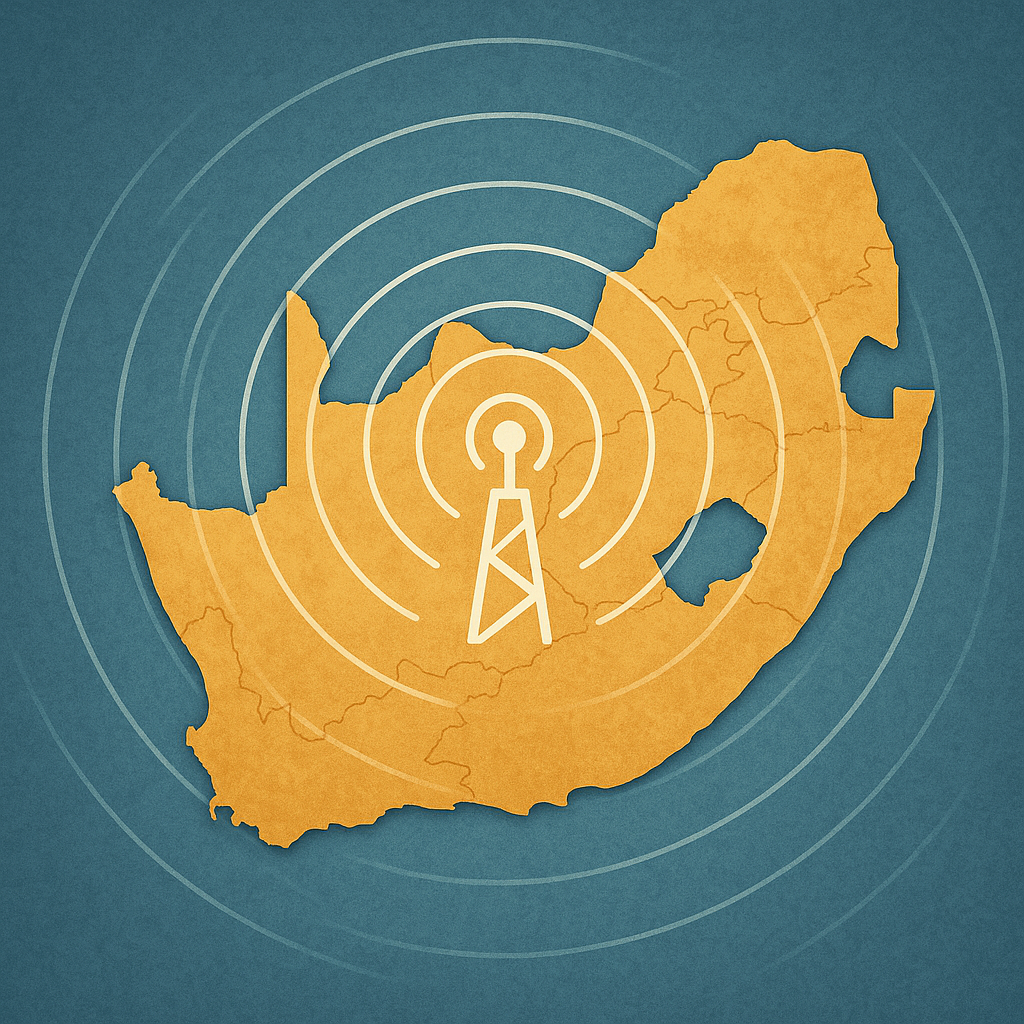
SA unveils blueprint for universal, affordable, and inclusive internet. New framework tackles cost, reliability, and digital literacy gaps.
South Africa is gearing up for a massive internet overhaul! Forget fancy stats; many folks can't afford data or even know how to send an an email. The government's new plan aims to fix this by making internet cheaper, more reliable, and teaching everyone how to use it. They're shaking up old rules, bringing in new tech like satellite internet, and pouring money into connecting schools and communities. It's not just about coverage anymore; it's about getting everyone truly online and ready for the digital world.
What are the main challenges preventing inclusive internet access in South Africa?
South Africa faces three key challenges to inclusive internet access:
1. Price vs. Pay Cheque: High data costs are unaffordable for many, especially in rural areas where incomes are low.
2. Uneven Infrastructure Deployment: Base stations prioritize profitable areas, leaving many regions with poor or unreliable coverage.
3. Digital Literacy Gap: Many South Africans lack the basic skills to effectively use internet-enabled devices, leading to functional exclusion.
Get Cape Town news in your inbox
Stay updated with the latest stories from the Mother City.
The Glaring Gap Between Headline Coverage and Everyday Reality
South Africa loves to brag about connectivity milestones - eight in ten adults carry a smartphone, 5G pops up on city rooftops, and fibre adverts promise uncapped movies for less than a satellite-TV subscription. Yet when Solly Malatsi stepped up to present his first Budget Vote as Communications Minister, he tore up the glossy script. “Statistics tell us the divide is closing,” he said, “but walk ten kilometres past any highway off-ramp and you will find families who can’t spare R299 a month for data; learners who finish homework at 22:00 outside a spaza because that is when the owner’s Wi-Fi is free.”
Field researchers back the story with hard numbers: a household 15 kilometres outside Polokwane sits inside a 3G coverage footprint rated at 40 Mbps, yet the parents earn R5 982 a month and can’t justify a bundle that costs 1.7 percent of household income for just one person. Share that bundle among four relatives and the ratio breaches the UN Broadband Commission affordability ceiling three times over. The Development Bank of Southern Africa claims only 2.2 percent of homes sit beyond any signal, but Malatsi insists the figure hides “functional exclusion” – no spare handset, no data literacy, no trust that online forms actually pay out social grants.
The upshot is a country of quiet work-arounds. Learners queue after dark for free Wi-Fi; an Eastern-Cape avocado farmer hitches a lift to town to borrow a library PC before he can upload pictures of diseased trees. These anecdotes are no longer side stories; they are the evidence base for a brand-new policy architecture meant to turn “coverage” into genuine participation.
Three Fault Lines That Keep the Divide Alive
-
Fault Line One – Price versus Pay Cheque*
Rural municipalities record a median household income of R5 982. The cheapest 10 GB prepaid bundle retails for R99. One user already sacrifices 1.7 percent of monthly income; share the bundle and the share jumps above 6 percent. The UN advises an affordability ceiling of 2 percent of GNI per capita. Mobile prices clear that hurdle in wealthy suburbs, but fall spectacularly short in villages and former homeland blocks. -
Fault Line Two – Where Towers Actually Go*
Base stations chase revenue, clustering along national roads, mining corridors and affluent suburbs. Mountains, valleys and apartheid-era boundaries still act as digital cordons. Roughly a third of the national surface area is technically “covered” yet suffers sub-1 Mbps throughput for large parts of the day because macro sites are spaced for profit rather than presence. -
Fault Line Three – Literacy Lagging Behind Handset Sales*
Roughly half of South Africans cannot create an email address, upload a file or recognise a phishing link. Rural districts report teachers who still type “the Google” into the address bar; learners mirror the habit. Device ownership without skills simply shifts exclusion from the network layer to the human layer.
Four Pillars That Will (in Theory) Fix the Triangle of Cost, Reliability and Skills
-
Pillar A – Universal Service Obligation 2.0*
The old USO built pay-phones and school labs. The new version is performance-based: every operator must prove that low-income customers on its network can buy 1 GB for R15 or less, and that the link stays above 5 Mbps for at least 90 percent of the day. Miss the target and the firm pays a penalty ring-fenced for rural tower densification. -
Pillar B – Open-Access Wireless Networks*
Passive assets - spectrum, towers, ducts - will be structurally separated from retail brands. A slimmed-down WOAN 2.0 will sell wholesale capacity at cost-oriented rates. A newly created Infrastructure Co-ordination Unit inside USAASA can override municipal red tape on rights-of-way, cutting approval time from 18 months to 90 days. -
Pillar C – Equity Equivalent Investment Programmes (EEIPs)*
Foreign players can meet black-empowerment rules by pouring the rand value of a 30 percent equity stake into designated inclusion projects - satellite gateways, backhaul fibre, digital-skills labs - run jointly with SMMEs. The project menu and an independent valuation panel drop in October 2024. Low-earth-orbit constellations qualify if they host local gateways, hire South African engineers and price services under a yet-to-be-announced social tariff ceiling. -
Pillar D – Regulatory Spring-Clean*
Eighteen licence categories collapse into three: Network Facilities, Network Services, Application Services. Spectrum trading and leasing become legal; ICASA wins powers to whack dominant carriers with symmetric access obligations - meaning both fixed and mobile incumbents must open ducts, poles and towers at rates set by the regulator.
Satellite Wildcards, School Pilots and the Money Question
- Low-Earth Orbit: Policy Opening or Pandora’s Box?*
Rather than wait a decade for a domestic constellation, Malatsi wants “international operators serving our people now.” Three models circulate: - Local gateway shareholding - A B-BBEE partner owns 30 percent of a South African SPV that operates earth stations and resells capacity.
- Skills-and-manufacturing offset - A LEO vendor builds an antenna assembly plant in the Eastern Cape or KwaZulu-Natal, pumping in R2 billion over five years to offset equity shortfalls.
- State LEO wholesaler - A new state-owned holding company leases transponders from Starlink, OneWeb and Amazon Kuiper, then wholesales to rural ISPs at prices subsidised by the Universal Service Fund.
Any deal must pass Treasury’s fiscal-risk test and the State Security Agency’s cyber-sovereignty protocols to calm fears of foreign control over lawful-intercept software.
- Anchor Schools: 1 500 Petri Dishes*
The department tags 1 500 quintile-1-to-3 schools as zero-rating and edge-compute sites. - Connectivity Layer - Each campus gets fibre or 50 Mbps fixed-wireless; if neither arrives within 18 months, LEO satellite steps in.
- Device Layer - 300 000 rugged tablets pre-loaded with CAPS content, augmented-reality science labs and a zero-rated teacher-help app.
- Skills Layer - Final-year student teachers spend community-service semesters on site, earning NSFAS-funded stipends while training 20 parents, spaza owners or farm workers in basic digital know-how.
CSIR will mine anonymised network data to correlate throughput with learning outcomes plus community spill-overs such as e-health or agri-extension queries.
- Funding Mix – Where the Rands Come From*
Internal working papers sketch a blended-finance stack: R8 billion from spectrum auctions, R2.1 billion a year via a 0.15 percent telecoms-revenue levy, R5 billion in DBSA concessional loans, R4 billion in green bonds for solar-powered towers and R10 billion equivalent in EEIP infrastructure. The grand total sits just above R29 billion through 2030 - roughly 0.6 percent of the current national budget per year.
Implementation Timeline and the New Yardstick of Success
- Key Milestones*
- Q4 2024: ECA Amendment Bill tabled; EEIP regulations gazetted.
- Q1 2025: 800 MHz & 2.6 GHz spectrum auction finalised; anchor-school pilot fires up.
- Q2 2025: First WOAN 2.0 licences released; Infrastructure Unit operational.
- Q3 2025: Metro Mesh pilots roll in five metros.
- 2026: Rural tower battery retrofits complete; first LEO gateways commissioned.
- 2027: Baseline Digital Inclusion Index published; first grant cycle awarded.
- 2028: All rural clinics connected to 10 Mbps fibre or satellite backhaul.
-
2030: 95 percent of households within 5 km of a 5 Mbps connection priced at R15 per GB.
-
Measuring What Matters – The Digital Inclusion Index*
Old KPIs - population coverage, ARPU, LTE counts - won’t cut it. The new index blends five weighted metrics: - Affordability - median price of 1 GB versus median income.
- Reliability - share of the day throughput stays above 5 Mbps.
- Literacy - adults who can execute three out of five core digital tasks.
- Utilisation - ratio of data actually consumed to data needed for essential services.
- Enterprise - SMMEs earning at least one-fifth of revenue online.
Municipalities will chase a R500 million annual slice of the Digital Inclusion Grant by posting the sharpest year-on-year jump across all five indicators. A public dashboard, updated quarterly, will let citizens, hacks and investors track whether promises turn into palpable change on the ground.
What is South Africa's new internet plan aiming to achieve?
South Africa's new internet plan, dubbed "Covered into Connected," aims to make internet cheaper, more reliable, and accessible to everyone. It moves beyond just having network coverage to ensuring genuine participation in the digital world by addressing issues like affordability, infrastructure gaps, and digital literacy.
What are the main challenges preventing inclusive internet access in South Africa?
South Africa faces three key challenges to inclusive internet access:
1. Price vs. Pay Cheque: High data costs are unaffordable for many, especially in rural areas where incomes are low.
2. Uneven Infrastructure Deployment: Base stations prioritize profitable areas, leaving many regions with poor or unreliable coverage.
3. Digital Literacy Gap: Many South Africans lack the basic skills to effectively use internet-enabled devices, leading to functional exclusion.
How will the government make internet more affordable?
The government plans to implement several strategies to improve affordability:
* Universal Service Obligation 2.0: Requires operators to prove low-income customers can buy 1 GB for R15 or less, with penalties for non-compliance used for rural tower densification.
* Open-Access Wireless Networks: A new Wireless Open-Access Network (WOAN 2.0) will sell wholesale capacity at cost-oriented rates, fostering competition and potentially lowering retail prices.
* Social Tariffs: For satellite internet, a social tariff ceiling will be announced to ensure services are affordable.
What new technologies are being considered to expand internet access?
The plan emphasizes the use of new technologies, particularly satellite internet. Low-Earth Orbit (LEO) constellations like Starlink, OneWeb, and Amazon Kuiper are being explored. Models include local gateway shareholding, skills-and-manufacturing offsets (e.g., building antenna plants), or a state-owned wholesaler leasing transponders to subsidize rural ISPs.
How will digital literacy be improved across the country?
Improving digital literacy is a key pillar of the plan. The "Anchor Schools" initiative will play a crucial role: final-year student teachers will spend community-service semesters at 1,500 designated schools, training parents, spaza owners, and farm workers in basic digital skills. These schools will also receive devices pre-loaded with educational content and zero-rated teacher-help apps.
How is the success of this new internet plan going to be measured?
The success will be measured by a new "Digital Inclusion Index" that blends five weighted metrics, moving beyond traditional KPIs:
* Affordability: Median price of 1 GB versus median income.
* Reliability: Share of the day throughput stays above 5 Mbps.
* Literacy: Adults who can execute three out of five core digital tasks.
* Utilisation: Ratio of data actually consumed to data needed for essential services.
* Enterprise: SMMEs earning at least one-fifth of revenue online.
Municipalities will compete for grants based on their year-on-year improvement in these indicators, with a public dashboard tracking progress.

Michael Jameson is a Cape Town-born journalist whose reporting on food culture traces the city’s flavours from Bo-Kaap kitchens to township braai spots. When he isn’t tracing spice routes for his weekly column, you’ll find him surfing the chilly Atlantic off Muizenberg with the same ease he navigates parliamentary press briefings.
View all articles →