
South Africa spends R600 million preparing for 30 June shutdown threats
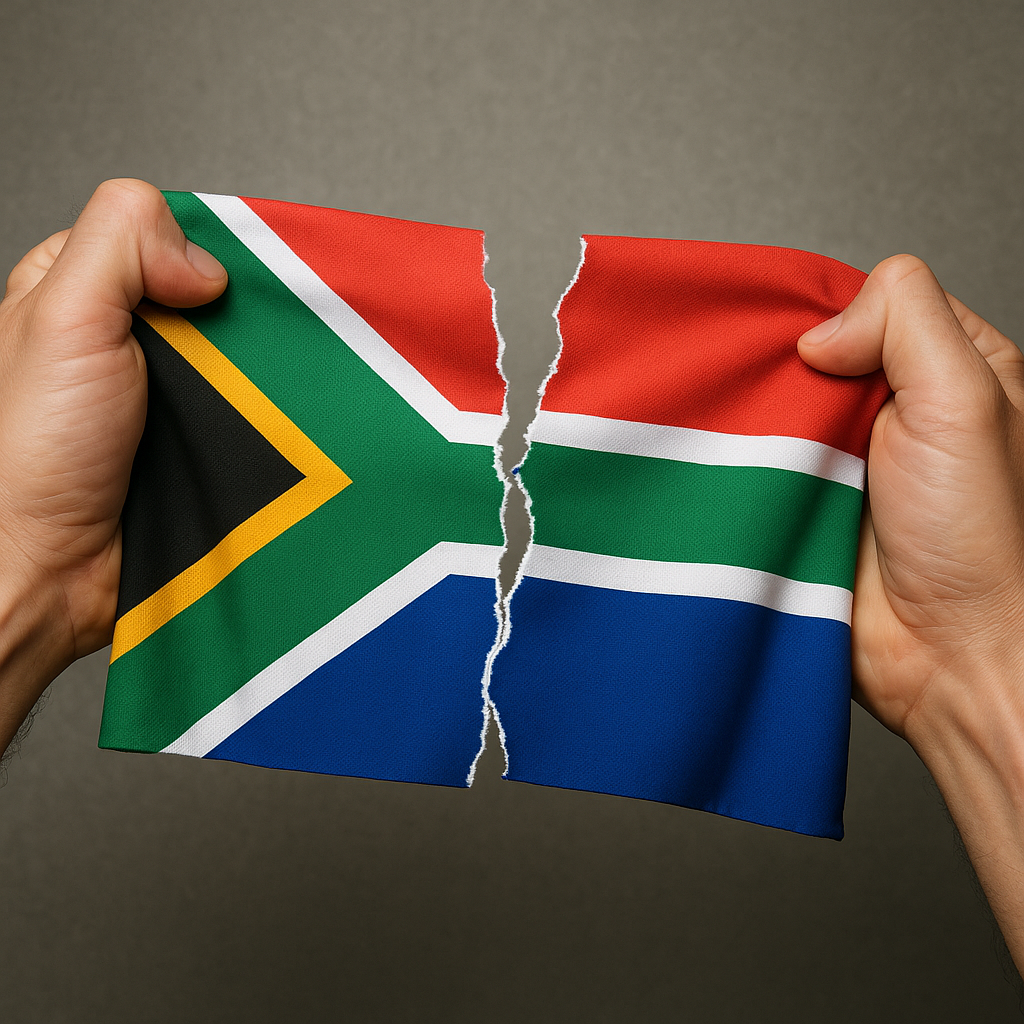
South Africa prepares for potential civil unrest targeting foreign nationals by June 30th, deploying a massive security operation.
South Africa is gearing up for a tense June 30th, fearing widespread unrest and xenophobic attacks. The government has launched "Operation Vala Ukuhamba," a massive R600-million security plan to keep things calm. This includes sending in soldiers and police to protect trucks, shops, and warehouses. Many foreign nationals are already leaving, worried about the threats. This huge effort shows how serious the situation is, as the country tries to avoid another wave of violence.
What is Operation Vala Ukuhamba?
Operation Vala Ukuhamba is a swift, R600-million security surge by the South African government, involving 112 task groups and the SANDF. Its goal is to prevent xenophobic violence, specifically ensuring trucks keep moving, warehouses remain intact, and foreign-owned shops are protected amidst threats of unrest on June 30.
Get Cape Town news in your inbox
Stay updated with the latest stories from the Mother City.
Operation Vala Ukuhamba: When the State Declares a Red-Zone Weekend
June 30 is no longer just a date on a calendar; it has become a national deadline freighted with dread. Acting Police Minister Firoz Cachalia fired an unmistakable warning on Monday: “Criminality, intimidation and any gesture that threatens public calm will meet the full weight of the law.” That line now echoes along every corridor of power as Pretoria swaps long-term crime-prevention budgets for a lightning-fast security surge.
The price tag is staggering. Treasury records show that more than R600 million has been stripped from the Community Policing Programme, the Visible Policing Grant and the Detective Service Upgrading Fund. Those very programmes - trusted by residents and designed to keep xenophobic sparks from catching fire - have been raided to fund what insiders call “Operation Vala Ukuhamba.” One hundred and twelve task groups, fusing regular officers, Crime Intelligence, the Hawks, metro cops, private rapid-response units and even traffic wardens, have one goal: ensure trucks keep rolling, warehouses stay intact and foreign-owned shops remain unburnt.
The South African National Defence Force stands 12 hours from wheels-up. Mechanised infantry already languish on standby at Bloemfontein, Durban and Polokwane, close enough to rumble into Johannesburg or Cape Town in six hours should provincial commanders raise the alarm. It is a posture last seen during the 2010 FIFA World Cup, and one that dwarfs ordinary police deployments.
Mapping Digital Threats and Plugging Physical Gaps
A colour-coded risk atlas, compiled by the State Security Agency’s Open-Source Intelligence Centre and rushed to premiers on Monday night, paints the map red. Seventy-three wards are labelled “flash zones.” The hotspots stretch from Mamelodi Section 5 hostels in Tshwane to Alexandra’s Pan Africa Shopping Centre, across to Khayelitsha’s Town Two and into eThekwini’s KwaMashu A-Section. Every marker lines up neatly with WhatsApp voice notes, Facebook livestreams and Telegram channels that threaten to “kick amakwerekwere out.”
Linguistic monitors clocked the sudden surge in isiZulu and seSotho phrases like “ukulwa ngezinyawo” (fighting with feet - street marches) and “ho fetola dikoloi” (turning over cars) starting 8 June. Analysts interpret the spike as digital mobilisation, not idle venting.
Money burns even faster than words. Treasury spreadsheets reveal: R271 million for 48-hour overtime surges; R104 million for aviation fuel so that ten police helicopters and two Casa 212 reconnaissance planes can stay airborne 15 hours a day; R97 million for diesel generators and portable cell-on-wheels towers that prevent the grid from going dark if rioters sabotage infrastructure as they did in July 2021. Emergency procurement adds R62 million for rubber projectiles, tear-gas cartridges, bean-bag munitions and flash-bang grenades after last year’s chaos exhausted stockpiles.
Lives, Livelihoods and Long-Distance Departures
The exodus has begun. More than 9,800 Malawians have put their names on repatriation lists at two temporary shelters: Durban’s disused cricket grounds and Wingfield military base in Cape Town. Last Friday, eight buses rolled north, each laden with 98 passengers and 2.2 tons of baggage - rice sacks, sewing machines and memories bundled in gaudy plastic. Malawi’s consulate scrapped passport fees, chartered extra Malaqbuses and persuaded Shoprite to hand out meal vouchers good at Musina and Beitbridge border posts.
Zimbabweans are boarding, too. Convoys of 15-seater minibus taxis now leave Johannesburg’s Berea Terminus every two hours. Driver Cosmas Moyo raised his fare to R450, explaining that “police at roadblocks want bribes, scared we’re hauling looted goods.” In Katlehong’s Mandela Section, nine Malawians were hospitalised and 54 children left homeless after vigilantes torched shacks on 18 May. The South African Human Rights Commission reopened six dockets last week; its preliminary report concedes that grievances about “fake goods and power theft” cloak deeper anger over 32 % unemployment and crumbling municipal services.
March and March - the movement behind the 30 June ultimatum - claims non-violence yet peppers its Telegram channel with daily “intelligence briefings” listing traders allegedly stocking counterfeit items, panel-beaters who hire “illegals,” and landlords renting backyard rooms to foreigners. Donations have poured in: roughly R3.8 million in cash plus clothing and food boxes earmarked for South Africans who insist migrants stole their jobs.
Behind-the-Scenes Contingencies and a Question of Balance
Government departments have spent the past fortnight redrawing playbooks drafted after July 2021. PRASA quietly rolled 31 Metrorail train sets from vulnerable Gauteng and Western Cape yards to safe sidings at Touws River and Kroonstad. Eskom ring-fenced 62 substations and assigned armed guards after tweets vowed to “switch the country off again.”
The National Prosecuting Authority dusted off its fast-track court protocol: 12 specially appointed magistrates will hold night sittings in Durban, Pietermaritzburg and Johannesburg, aiming to process arrests within 48 hours. Health bosses pre-cleared 4,500 beds in KwaZulu-Natal and Gauteng, cancelled elective surgeries from 28 June to 5 July, and issued red cards to 2,000 community-service doctors for trauma duty. SASSA front-loaded grants for 1.6 million beneficiaries so pensioners can skip queues that might dissolve into stampedes.
Diplomatic and corporate gears are meshing as well. African Union Commissioner Bankole Adeoye arrived in Pretoria for hush-hush talks with Minister Naledi Pandor; the continental body worries that scenes of xenophobic violence could sour South Africa’s hard-won goodwill across Africa. Tech giants are discreet: Telkom handed 500 satellite phones to provincial disaster managers, while MTN enabled a police override on 900 base stations - normally reserved for state funerals. Amazon Web Services quietly relocated bank data backups from Isando to Bahrain.
Yet every rand spent on short-term clampdowns is a rand borrowed from longer-term fixes. Thirty-eight police-station refurbishments are on hold; 178 mobile victim-friendly rooms may never roll out; 60 youth-diversion programmes sit shelved. Minister of Home Affairs Motsoaledi conceded in Parliament that an asylum backlog of 183,000 files - some nine years old - fuels public cynicism. A leaked draft White Paper proposing a Denmark-style “pre-screen and return” system may land smack in the middle of the march, further inflaming organisers who insist the state is “too feeble to act.”
Schools in Katlehong, uMlazi and Khayelitsha have moved weekend sport to avoid flare-ups; churches cancelled overnight vigils; Uber drivers report a 40 % spike in night-time booking cancellations. Even the National Sea Rescue Institute has placed rescue craft on standby - terrified that xenophobic rhetoric could spill into ports where foreign trawler crews dock at Saldanha Bay and Durban’s Bayhead.
Whether 30 June passes with nothing louder than a Twitter spat or descends into 2021-style blood and flames, South Africa has already pivoted its machinery of state. Courtrooms, hospital wards, railway sidings, server farms and township corners now form a jittery circuit dedicated to averting another national humiliation. The R600 million diverted from community policing to crowd control is merely the visible tip of a country still bargaining between the need to keep order and the desire to knit a more inclusive social fabric.
What is Operation Vala Ukuhamba?
Operation Vala Ukuhamba is a massive R600-million security operation launched by the South African government to prevent widespread unrest and xenophobic attacks, particularly targeting June 30th. It involves 112 task groups, the South African National Defence Force (SANDF), and other security forces to protect trucks, warehouses, and foreign-owned shops, ensuring public calm.
What is the financial cost and impact of Operation Vala Ukuhamba?
The operation carries a staggering R600-million price tag. This funding has been reallocated from existing community policing programs, including the Community Policing Programme, Visible Policing Grant, and the Detective Service Upgrading Fund. The costs cover 48-hour overtime surges, aviation fuel for surveillance, diesel generators for infrastructure protection, and emergency procurement of crowd control munitions like rubber projectiles and tear-gas.
What measures are being taken to prevent violence and secure key areas?
The government is deploying soldiers and police, with mechanised infantry on standby. A color-coded risk atlas identifies 73 "flash zones" across various provinces, with security forces focused on these areas. Digital threats are being monitored, and critical infrastructure like PRASA train sets and Eskom substations are being secured with armed guards.
How is the situation affecting foreign nationals in South Africa?
Many foreign nationals are already leaving the country due to fears of unrest and xenophobic attacks. Over 9,800 Malawians have registered for repatriation, and Zimbabwean minibus taxis are seeing a significant increase in departures. There have already been incidents of violence, like the torching of shacks in Katlehong, leading to hospitalizations and homelessness.
What are the broader societal and economic implications of this operation?
While aiming to prevent immediate violence, the operation's funding comes at the expense of long-term crime prevention programs, with 38 police station refurbishments, 178 mobile victim-friendly rooms, and 60 youth-diversion programs currently on hold. The situation highlights deep-seated issues like high unemployment (32%) and a significant backlog in asylum applications (183,000 files), which fuel public cynicism and anger.
What contingency plans are in place beyond immediate security?
Beyond security deployments, various government departments have enacted contingency plans. The National Prosecuting Authority has prepared fast-track court protocols with 12 magistrates for rapid processing of arrests. Health officials have cleared 4,500 hospital beds and cancelled elective surgeries. SASSA has front-loaded grant payments to prevent large queues, and diplomatic efforts are underway with the African Union to address international concerns. Even tech giants are assisting, with Telkom providing satellite phones and Amazon Web Services relocating data backups.

Emma Botha is a Cape Town-based journalist who chronicles the city’s shifting social-justice landscape for the Mail & Guardian, tracing stories from Parliament floor to Khayelitsha kitchen tables. Born and raised on the slopes of Devil’s Peak, she still hikes Lion’s Head before deadline days to remind herself why the mountain and the Mother City will always be her compass.
View all articles →