
South African rugby mourns rising star after tragic death in France
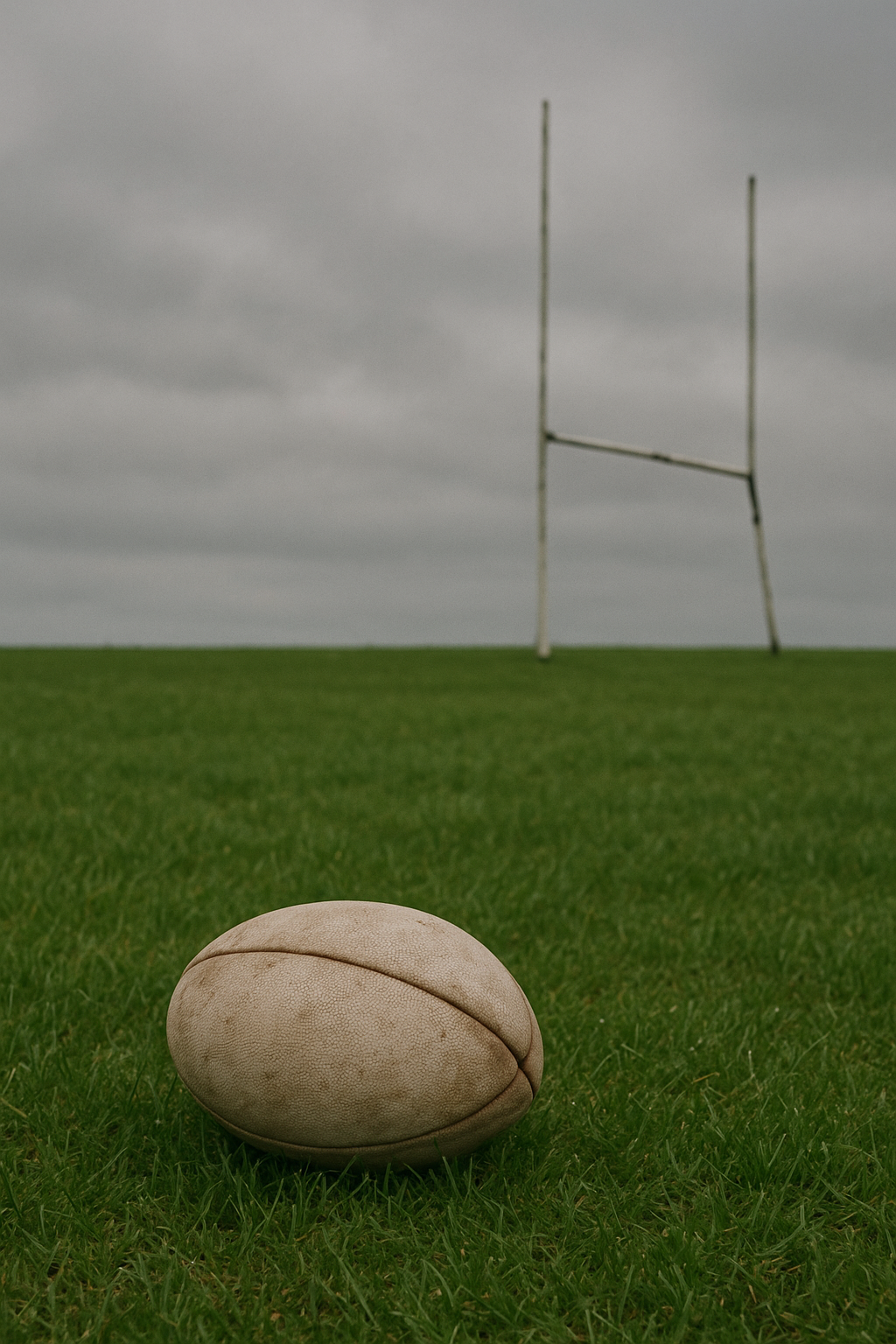
Tragic loss of rugby star Luqobo 'Bibo' Makwedini, 20, who died during training in France, sparking cardiac health discussions.
Luqobo Makwedini, a bright 20-year-old rugby player from South Africa, tragically died during training in France. He collapsed from a sudden heart problem, shocking everyone who knew him. This sad event made people wonder if young athletes are checked enough for heart issues, especially in tough sports like rugby. Luqobo was a rising star, loved by his team and coaches, and his death is a huge loss to the rugby world.
What happened to Luqobo Makwedini?
Luqobo Makwedini, a 20-year-old South African rugby prop, tragically collapsed and died from catastrophic cardiac failure during a routine training session with AS Béziers Hérault on July 10, 2026. His death has reignited discussions about cardiovascular screening for young athletes, especially given rugby's intense physical demands.
Get Cape Town news in your inbox
Stay updated with the latest stories from the Mother City.
A Bright Future Ends on the Training Ground
French rugby circles reeled in shock when news broke that 20-year-old South African prop Luqobo Makwedini had collapsed and died during a routine training session. The incident occurred on Friday morning, July 10, 2026, at the Stade de la Gayonne in Béziers, where the young forward had been preparing for his inaugural season with AS Béziers Hérault. Emergency responders arrived within minutes of the collapse, rushing the athlete to a local medical facility, but medical staff could not reverse the catastrophic cardiac failure that claimed his life before noon.
The tragedy has intensified ongoing discussions about how thoroughly sporting bodies scrutinize the cardiovascular health of emerging athletes. Medical literature documents that sudden cardiac arrest strikes between one and two young athletes per 100,000 annually, though rugby's particular physiological demands - repeated explosive contact, sustained anaerobic exertion, and the unique pressures of scrummaging - may elevate risk beyond these baseline figures. Critics argue that current screening protocols, which rely heavily on family history questionnaires and standard physical examinations, frequently miss subtle electrical or structural abnormalities that only reveal themselves under maximum cardiac stress.
From Cape Town Schoolboy to International Prospect
The Wynberg rugby program demands exceptional commitment, combining academic rigor with athletic development in an environment where only the most dedicated survive. Makwedini thrived in this crucible, demonstrating the technical refinement and tactical intelligence that separate prospective professionals from talented amateurs. His coaches recognized early that he possessed the rare combination of raw power and coordinated mobility that modern tighthead props require, while his temperament suggested resilience against the inevitable setbacks of a demanding position.
Selection for South Africa's U18 national squad confirmed Makwedini's ascent to the upper tier of his age group nationwide. This achievement placed him under direct observation by talent scouts from all six South African franchises and numerous international suitors, transforming his rugby from passionate hobby to viable career pathway. The U18 program serves as the primary funnel through which the Springboks identify future representatives, and Makwedini's inclusion signaled recognition that he might one day wear the green and gold at the highest level. His performances in this environment - dominant scrummaging combined with unexpected agility around the field - generated the interest that ultimately drew French club officials to Cape Town.
The Béziers Chapter and Broken Expectations
AS Béziers Hérault carries weighty historical significance in French rugby, having claimed multiple national championships during the 1970s when they dominated European competition. Though the club now competes in Pro D2, the second tier, its reputation for developing forward talent remains formidable, making it an attractive destination for ambitious young props seeking to master the technical intricacies of French scrummaging. The club's decision to recruit Makwedini reflected both their assessment of his ceiling and the increasingly global marketplace where French clubs systematically mine South Africa's abundant rugby resources.
The academy structure at Béziers offered Makwedini comprehensive professional development: specialized coaching in set-piece technique, systematic physical conditioning, nutritional programming, and gradual competitive exposure through integration with the senior squad. For a young tighthead, this environment provides particular advantages, as French rugby preserves sophisticated scrummaging cultures that have become diluted in some other playing nations. The club anticipated that Makwedini would spend his initial season adapting to the increased speed and intensity of professional rugby before establishing himself in the matchday squad during his second year.
Bob Skinstad, the club president whose own playing career included 42 Springbok appearances and a 1999 World Cup winner's medal, had invested personal attention in Makwedini's integration. His subsequent statement emphasized qualities that transcended athletic metrics: "Everyone at the club felt the impact of his dedication, warmth, and character," Skinstad shared, noting how quickly the young South African had established genuine relationships within his new environment. This testimony suggests Makwedini was developing the interpersonal foundations of professional longevity - the ability to contribute to team culture, to earn trust across cultural and linguistic boundaries, and to balance personal ambition with collective purpose.
The position Makwedini occupied carries extraordinary value in contemporary rugby markets. Elite tighthead props command salaries comparable to backline stars, reflecting the technical scarcity of genuine expertise at the position. At twenty, Makwedini combined the physical framework - broad shoulders, strong core, powerful lower body - with developing technical mastery and the mobility increasingly demanded by modern tactical systems. His projected career trajectory suggested a decade or more of professional employment, potentially at the highest levels of European competition, with the financial security and lifestyle opportunities that accompany such success.
Understanding Athletic Cardiac Risk
Makwedini's death belongs to a pattern of sudden fatalities that has troubled sports medicine for generations, though each instance retains its particular horror and specific circumstances. Medical researchers distinguish carefully between myocardial infarction, typically involving coronary artery blockage, and cardiac arrest, which represents abrupt cessation of effective heart function. Young athletes who collapse during exertion most commonly experience the latter, triggered by electrical disturbances or structural abnormalities invisible to standard medical examination.
Several specific conditions create vulnerability to exercise-triggered cardiac arrest. Hypertrophic cardiomyopathy involves abnormal thickening of the heart muscle that can obstruct blood flow or generate lethal arrhythmias. Arrhythmogenic right ventricular cardiomyopathy replaces healthy heart tissue with fibrous scar tissue that disrupts normal electrical conduction. Various channelopathies affect the ionic mechanisms regulating cardiac rhythm. These conditions may produce no symptoms during ordinary activity, revealing themselves only when the heart faces extraordinary demands.
Rugby's physiological profile presents distinctive cardiac challenges. The sport requires sustained aerobic capacity punctuated by repeated anaerobic explosions, creating fluctuating oxygen demands that stress regulatory systems. The scrummaging phase, Makwedini's specialty, generates exceptional cardiovascular loading: players experience dramatic blood pressure elevation, sustained isometric contraction of large muscle groups, and transient respiratory suppression that together create unique cardiac demands. These stresses differ substantially from those of running or cycling, complicating risk assessment based on standard exercise testing.
French professional rugby has confronted similar tragedies previously, prompting progressive strengthening of medical protocols by the Ligue Nationale de Rugby. Current requirements mandate comprehensive pre-season cardiovascular evaluation, though the specific components remain debated. Some medical authorities advocate routine echocardiography and electrocardiographic screening for all professional players, while others note the substantial false-positive rates and costs of such comprehensive approaches. Genetic testing for family histories suggestive of heritable conditions has emerged as a targeted supplementary strategy, though implementation remains uneven.
Community Grief and Enduring Memory
The ripple effects of Makwedini's death have spread through interconnected rugby communities spanning continents. Wynberg Boys' High School faces the painful task of supporting current students who looked to their former classmate as inspiration, while processing their own shock at seeing youthful potential so abruptly terminated. The school's rugby tradition, which has launched numerous professional careers, now carries the additional weight of this loss, a reminder that the pathways of glory sometimes intersect with tragedy.
South African rugby officials confront uncomfortable questions about support structures for young players pursuing European opportunities. The accelerated migration of talent to France, England, and Ireland has transformed career possibilities for individual players while scattering them across unfamiliar environments with varying support networks. A twenty-year-old arriving in a new country, learning a new language, and adapting to professional demands faces substantial psychological and social challenges even without athletic pressures. The rugby infrastructure that identifies and develops talent may not always extend equal attention to the transitional vulnerabilities of early professional life.
At Béziers, teammates and staff must integrate traumatic experience with ongoing competitive obligations. Those present during the training session carry particular burdens, having witnessed what others can only imagine. The club's request for privacy reflects recognition that media coverage, however sympathetic, can impede necessary grieving processes. Long-term, the organization must determine appropriate memorialization - whether retiring a jersey number, establishing a scholarship, or other gestures that honor Makwedini's presence without freezing his memory in tragic final moments.
Social media tributes under #RIPBibo and similar formulations represent contemporary mourning practices with ambiguous effects. These expressions enable widespread solidarity and shared grief, connecting dispersed communities in common acknowledgment of loss. Simultaneously, they risk compressing complex individual lives into consumable digital content, the viral schoolboy chant now existing in eerie proximity to death announcements. Makwedini's own comfort with public performance, demonstrated in that original video, perhaps suggests he would have appreciated the recognition, though surely not its occasion.
Beyond Athletic Achievement: Remembering a Life
The emerging portrait of Makwedini emphasizes personal qualities that resist statistical measurement. Descriptions of kindness, commitment, and genuine engagement with others suggest a young man developing the character foundations that sustain meaningful existence regardless of occupational outcomes. His viral moment revealed not merely comfort with attention but authentic pleasure in connection, an ability to invite others into shared experience that translates across cultural and contextual boundaries.
The nickname "Bibo" itself carries layers of meaning now partially inaccessible to public understanding. For family members, it evokes childhood origins and intimate relationships increasingly distant from media narratives. For teammates at various stages of his journey, it represents bonds of shared endeavor and daily proximity. For those who encountered him only through screens, it offers apparent familiarity that actually underscores the gap between observed performance and known person.
The particular cruelty of death at twenty lies in the absence of accumulated experience that typically generates retrospective meaning. Makwedini's story lacks resolution in conventional narrative terms: no completed career arc, no transition to subsequent life chapters, no reconciliation of early promise with mature achievement. What remains are the values demonstrated and relationships formed during developmental years, the foundation of character upon which unlived decades might have been constructed.
The Stade de la Gayonne will persist as a functional sports facility, hosting training sessions and matches that continue the rhythms of professional rugby. For those associated with Béziers, however, the ground now carries additional significance as site of irreplaceable loss. Such locations accumulate memorial weight through repetition of association, their ordinary functions permanently shadowed by extraordinary events.
South African rugby's history includes other young talents who died before fulfilling their apparent destinies, creating a sorrowful tradition that Makwedini now joins. This collective memory testifies to the depth of commitment the sport demands and the vulnerability inherent in any pursuit requiring total physical investment. The culture's emphasis on resilience and stoicism must accommodate grief that these qualities alone cannot resolve.
Medical investigators may eventually identify specific physiological factors contributing to Makwedini's collapse, providing explanations that satisfy procedural requirements without addressing fundamental injustice. Whether underlying conditions are identified or the event remains officially unexplained, the outcome resists alteration. What remains possible is attention to the human systems surrounding young athletes - familial support, institutional care, peer relationships - that can provide genuine protection even when medical screening fails.
[{"question": "
Who was Luqobo Makwedini?
", "answer": "Luqobo Makwedini, affectionately known as 'Bibo', was a promising 20-year-old South African rugby player, specifically a prop. He was a rising star who had played for South Africa's U18 national squad and was on the cusp of his professional career in France with AS Béziers Hérault."}, {"question": "What led to Luqobo Makwedini's death?
", "answer": "Luqobo Makwedini tragically died from catastrophic cardiac failure during a routine training session with his French club, AS Béziers Hérault, on July 10, 2026. He collapsed on the field, and despite immediate medical attention, could not be resuscitated."}, {"question": "Where and when did this tragedy occur?
", "answer": "The incident occurred on Friday morning, July 10, 2026, at the Stade de la Gayonne in Béziers, France. Luqobo had recently joined AS Béziers Hérault to begin his professional rugby career."}, {"question": "What discussions have arisen following Luqobo's death?
", "answer": "His sudden death has reignited critical discussions about the adequacy of cardiovascular screening protocols for young athletes, especially in high-impact sports like rugby. Concerns have been raised about whether current screening methods are sufficient to detect underlying heart conditions that may only manifest under extreme physical exertion."}, {"question": "What was Luqobo's background in rugby?
", "answer": "Luqobo developed his skills through the rigorous Wynberg rugby program in Cape Town, South Africa. His talent was recognized early, leading to his selection for the South Africa U18 national squad, which is a key pathway for future Springboks. His strong performances attracted international interest, culminating in his move to France."}, {"question": "How has the rugby community reacted to his passing?
", "answer": "The rugby community, spanning South Africa and France, has expressed profound grief and shock. His former school, Wynberg Boys' High, and his club, AS Béziers Hérault, along with players and officials like Bob Skinstad, have mourned the loss of a talented player and a person known for his dedication, warmth, and character. His death has prompted reflection on support systems for young athletes in foreign environments and the emotional toll on those who witnessed the tragedy."}]
Tumi Makgale is a Cape Town-based journalist whose crisp reportage on the city’s booming green-tech scene is regularly featured in the Mail & Guardian and Daily Maverick. Born and raised in Gugulethu, she still spends Saturdays bargaining for snoek at the harbour with her gogo, a ritual that keeps her rooted in the rhythms of the Cape while she tracks the continent’s next clean-energy breakthroughs.
View all articles →