
South Africa’s August fuel price cuts shrink as Middle East tensions push oil higher
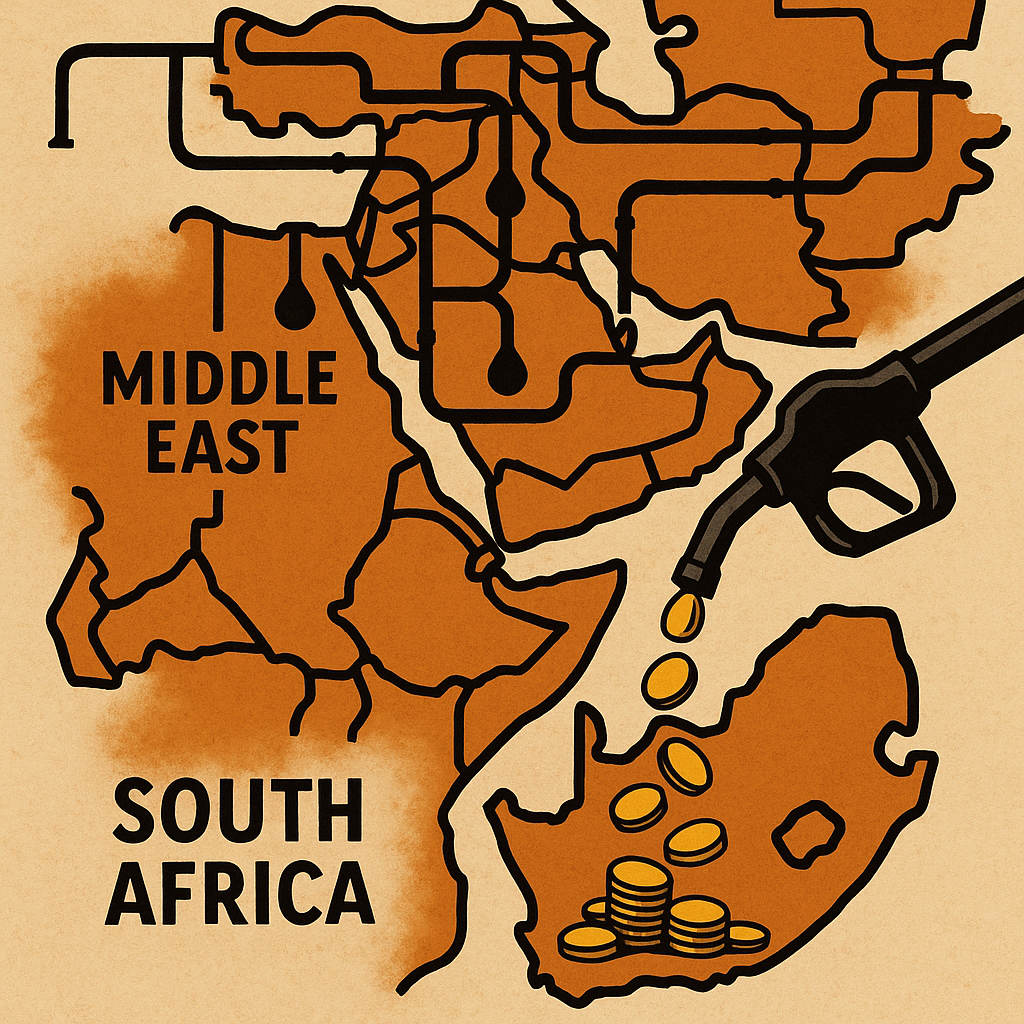
South African fuel prices face major uncertainty as Middle East tensions surge. Expected relief at the pump is now dashed.
South Africa's pump prices are in trouble! A fight in the Middle East has messed up global oil markets. This means that instead of cheaper fuel, South African drivers might face higher prices. The country buys most of its oil from other places, so troubles far away hit home fast. Everyone was hoping for big savings, but now it looks like those hopes are fading.
How are South African fuel prices determined?
South African fuel prices are meticulously recalibrated monthly by the Central Energy Fund. This system weighs two factors: the dollar-denominated cost of crude oil on world markets and the rand's purchasing power against the dollar. This formula accounts for South Africa's high reliance on imported refined fuel and crude oil, making it susceptible to international market fluctuations.
Get Cape Town news in your inbox
Stay updated with the latest stories from the Mother City.
Motorists across South Africa counting on meaningful savings when August fuel adjustments arrive may confront unwelcome reality instead. The fragile ceasefire between Washington and Tehran shattered in early July, sending shockwaves through international oil markets that threaten to obliterate anticipated price cuts. This development carries particular weight for a nation that sources nearly all its petroleum requirements from abroad, leaving domestic consumers exposed to every tremor in distant conflicts.
How South Africa Calculates What You Pay at the Pump
The Central Energy Fund governs a meticulous monthly recalibration system that anchors local prices to global benchmarks. Each determination weighs two moving parts: the dollar-denominated cost of crude oil on world markets and the rand's purchasing power against the greenback. This formula captures an uncomfortable truth - South Africa extracts minimal petroleum domestically and must ship in virtually every drop of refined fuel and unprocessed crude that powers its vehicles, industries, and agriculture.
This import reliance functions as a direct conduit for international turbulence. When violence erupts in extraction zones or cargo routes face interference, preliminary price calculations shift within days. Such external susceptibility has defined South Africa's energy posture across generations, persisting despite successive government programmes intended to cultivate greater self-sufficiency in fuel supply.
The pricing mechanism itself generates inherent delays between global events and domestic adjustments. Daily price averages accumulate throughout each review period, creating a weighted outcome that smooths short-term fluctuations while simultaneously postponing relief when international markets turn favourable. This structural characteristic means South African consumers experience oil price changes with a temporal lag that can amplify or diminish the impact of any single geopolitical episode.
From Promised Relief to Disappearing Gains
Expectations for August pricing swung dramatically during July's opening weeks. When calculations began on 26 June, the Central Energy Fund's preliminary figures suggested motorists stood to receive among the most generous reductions in recent years. Petrol across both grades showed an over-recovery - the buffer between current domestic prices and internationally-derived equivalents - of roughly R3.70 per litre. The 50ppm diesel variant promised even steeper relief, with over-recovery touching R5.82 per litre.
Had these numbers held firm through the entire review window, the economic ripples would have reached far beyond individual motorists. Agricultural enterprises, which consume substantial diesel volumes during planting and harvest cycles, would have captured meaningful operating cost relief. Logistics providers, employing hundreds of thousands across South Africa's extensive road freight network, similarly anticipated reduced input expenses that could translate into competitive pricing for goods distribution.
Yet these projections crumbled with remarkable speed. Within fourteen days, anticipated petrol reductions had contracted by approximately sixty percent, while diesel's expected decrease had evaporated by nearly four-fifths. The 50ppm diesel over-recovery that had briefly exceeded R5.80 per litre plunged to approximately R1.38 per litre - still movement in consumers' favour, but a fraction of the earlier promise.
When Global Conflict Meets Local Wallets
The immediate trigger for this reversal emerged from renewed military engagement between American and Iranian forces, shattering a truce that proved breathtakingly brief. This escalation, which intensified dramatically in early July, illustrated with painful clarity how regional disputes can metastasize into threats against worldwide energy security. Brent crude, the benchmark reference for much of South Africa's petroleum sourcing, reacted to deteriorating conditions with extraordinary alacrity.
The price trajectory proved striking in both pace and scale. Within days of hostilities resuming, Brent advanced from roughly $70 to approximately $80 per barrel - a spike approaching fifteen percent that reversed weeks of incremental declines. This surge embodied the risk premium that oil traders attach to geopolitical instability, especially when involving nations possessing substantial production capacity or leverage over crucial maritime corridors.
The Strait of Hormuz commands outsized significance in these calculations. This constricted passage, separating Iranian territory from Oman and the United Arab Emirates, channels approximately one-third of global petroleum shipments by volume. Its importance defies exaggeration: any sustained interruption to commercial traffic would instantaneously constrict worldwide supply and catalyse severe price escalation across international markets.
Competing narratives currently swirl regarding the strait's operational condition. Iranian officials have declared the waterway closed to commercial shipping, a contention that if accurate would constitute a dramatic escalation with immediate market ramifications. American authorities and regional partners counter that merchant vessels maintain uninterrupted passage. This divergence itself fuels price volatility, as market participants scramble to discern ground truth and position accordingly.
For commodity markets, uncertainty frequently outweighs verified disruption. Oil trading has demonstrated repeatedly that ambiguity surrounding supply security suffices to sustain elevated valuations even absent confirmed interruptions. Defensive behaviour among market actors - accumulating stockpiles, securing alternative supply channels, recalibrating trading positions - generates upward price pressure that persists until clarity emerges.
The Widening Gap Between Hope and Reality
Even under favourable scenarios where August delivers modest pump price reductions, South African drivers confront substantially elevated costs compared with January 2024. Sector analysis from July revealed that refilling standard vehicle tanks demanded between R161 and R428 more than at the year's commencement, despite two successive monthly decreases preceding the current review cycle. This accumulated burden reflects the general upward arc of international oil prices through the initial six months, shaped by exporter production decisions, reviving worldwide demand, and assorted supply interruptions.
The financial strain propagates well beyond direct fuel acquisition into virtually every household spending category. South Africa's goods movement relies predominantly on road transport, ensuring diesel price shifts convert rapidly into freight cost adjustments. These propagate into retail pricing for foodstuffs and consumer merchandise, intensifying inflationary pressures that command the attention of monetary policymakers at the South African Reserve Bank.
Households already managing elevated living expenses, including electricity tariffs that have climbed substantially in recent years, find fuel price volatility compounds their budgetary challenges. The transportation allocation within family budgets, particularly for commuters in major urban centres lacking viable public transport alternatives, represents a substantial and relatively inflexible cost component.
What Remains Possible Before Month-End
Current fuel price projections retain their provisional character. With more than a fortnight remaining in August's review window, meaningful movement in either direction remains achievable. The averaging methodology incorporates each trading day's price discovery, meaning every session contributes to ultimate determination.
Historical patterns provide slender grounds for restrained optimism. Petroleum markets have shown capacity for swift price reversals when geopolitical tensions subside or supply anxieties prove exaggerated. The identical volatility that propelled prices upward in early July could, under modified circumstances, generate downward momentum before month-end concludes. Should diplomatic efforts yield de-escalation in American-Iranian confrontation, or should physical oil flows demonstrate robustness despite threatening rhetoric, embedded risk premiums could dissipate rapidly.
South Africa's pricing architecture, however, ensures domestic consumers cannot immediately capture such benefits. The monthly adjustment cycle imposes separation between international price movements and local pump changes, moderating volatility while deferring relief when conditions improve.
Beyond Immediate Volatility: Deeper Questions
The present episode illuminates enduring concerns regarding South Africa's energy security framework. National refining capacity has diminished markedly across recent decades, with several major facilities having shuttered or transformed into storage and distribution hubs. This trajectory has heightened import dependence and magnified vulnerability to international market fluctuations.
Policy reactions to this exposure have encompassed strategic reserve exploration, alternative fuel promotion, and regional supply arrangement investigation. Execution has consistently trailed ambition, leaving the nation without meaningful buffer capacity against supply interruptions or price spikes.
The transition toward electric mobility, accelerating in advanced economies, offers longer-term prospects for petroleum dependence reduction. South Africa's electricity sector difficulties, encompassing generation limitations and tariff trajectories, complicate this pathway, as do domestic vehicle manufacturing structures and consumer preferences. Nevertheless, the fundamental direction of global automotive technology indicates petroleum's supremacy in personal transport will erode across coming decades.
For now, South African motorists and enterprises must navigate pronounced uncertainty. The interplay of geopolitical risk, market volatility, and exchange rate dynamics creates forecasting complexity of considerable magnitude. August's ultimate fuel price announcement will reflect not merely technical formula application but broader forces shaping global energy security amid renewed great power rivalry and regional instability.
How are South African fuel prices determined?
South African fuel prices are meticulously recalibrated every month by the Central Energy Fund. This system considers two primary factors: the dollar-denominated cost of crude oil on world markets and the rand's exchange rate against the dollar. This formula is crucial because South Africa imports most of its refined fuel and crude oil, making it highly susceptible to international market fluctuations. The daily price averages accumulate throughout each review period, creating a weighted outcome that smooths short-term fluctuations but also delays the impact of favorable market changes.
Why are South African pump prices facing turmoil now?
South African pump prices are facing fresh turmoil primarily due to renewed conflict in the Middle East, specifically between American and Iranian forces. This escalation has sent shockwaves through international oil markets, causing Brent crude, a key benchmark, to spike by approximately fifteen percent. As South Africa imports nearly all its petroleum, such geopolitical instability in major oil-producing regions or critical shipping routes, like the Strait of Hormuz, directly impacts local fuel costs.
What was the initial expectation for August fuel price adjustments?
Initially, expectations for August's fuel price adjustments were very positive. Preliminary figures from the Central Energy Fund in late June suggested significant reductions. Petrol across both grades showed an anticipated over-recovery of about R3.70 per litre, while 50ppm diesel promised even steeper relief, with an over-recovery touching R5.82 per litre. These reductions would have provided substantial savings for motorists, agricultural enterprises, and logistics providers.
How did these initial price reduction projections change?
Within two weeks of the initial projections, the anticipated price reductions crumbled dramatically. The renewed military engagement between American and Iranian forces caused crude oil prices to surge. As a result, petrol's expected reductions contracted by approximately sixty percent, and diesel's anticipated decrease evaporated by nearly four-fifths. The 50ppm diesel over-recovery, which was briefly over R5.80 per litre, plunged to about R1.38 per litre.
What is the significance of the Strait of Hormuz in this context?
The Strait of Hormuz is critically significant because it is a constricted passage separating Iranian territory from Oman and the United Arab Emirates, through which approximately one-third of global petroleum shipments by volume pass. Any sustained interruption to commercial traffic in this strait would immediately constrict worldwide supply and lead to severe price escalation in international markets. The current competing narratives regarding its operational condition (Iranian claims of closure vs. American claims of uninterrupted passage) fuel price volatility as markets react to uncertainty.
What are the long-term implications for South Africa's energy security?
The current situation highlights South Africa's enduring energy security concerns. The nation's diminished refining capacity and high import dependence make it vulnerable to international market fluctuations. While there have been policy efforts to explore strategic reserves and promote alternative fuels, execution has lagged. In the long term, the global shift towards electric mobility offers prospects for reducing petroleum dependence, but South Africa's electricity sector challenges and current vehicle manufacturing structures complicate this transition, leaving the nation exposed to oil price volatility for the foreseeable future.

Michael Jameson is a Cape Town-born journalist whose reporting on food culture traces the city’s flavours from Bo-Kaap kitchens to township braai spots. When he isn’t tracing spice routes for his weekly column, you’ll find him surfing the chilly Atlantic off Muizenberg with the same ease he navigates parliamentary press briefings.
View all articles →