
South Africa’s fiery fynbos story blooms at Chelsea Flower Show
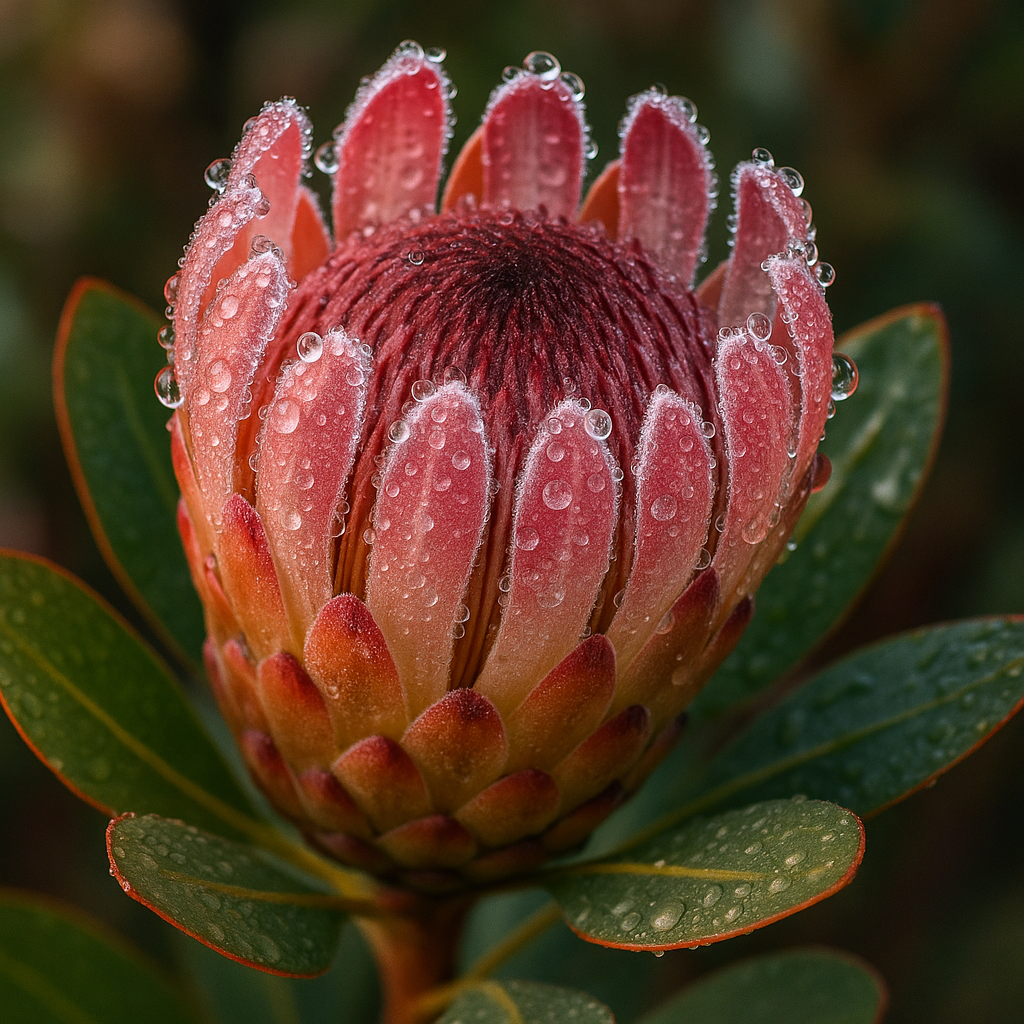
Experience a Chelsea Flower Show garden inspired by South African wildfires. See proteas, understand fire's role in fynbos, & explore themes of destruction & rebirth.
Leon Kluge's "Fire Garden" for the Chelsea Flower Show wasn't just a display, it was an epic journey! Imagine Proteas from South Africa, fresh from a storm, speeding across the world in special crates. Every tiny detail, from smoke-scented water to recycled wood, told a powerful story of nature's comeback after wildfires. This garden wasn't just pretty; it was a living, breathing miracle, showing how beauty can rise from ashes.
What is Kluge's Fire Garden?
Kluge's Fire Garden is a Chelsea Flower Show exhibit designed by Leon Kluge, representing a narrative of burn and rebirth inspired by South African wildfires. It showcases resilient fynbos flora, incorporates fire-scorched elements, and uses innovative logistics and sensory details to tell a story of ecological recovery and hope.
Get Cape Town news in your inbox
Stay updated with the latest stories from the Mother City.
Storm-Sealed Freight: The Race Begins
The instant Leon Kluge’s final carton of proteas leaves Cape Town’s rain-lashed tarmac, every kilometre to Surrey becomes a high-stakes relay. Thermostats hold the cargo at a razor-thin 0.5 °C band; trilingual labels in English, Afrikaans and isiXhosa warn of bruising; a phytosanitary permit carries three inked names - one signed at dawn by an inspector who has been awake for thirty hours straight. Bubble-wrap is banished: each bloom nestles instead in rolls of up-cycled sugar-cane fibre so the ethics of the story match its aesthetics. To Kluge, freight is simply another pigment - charcoal for the narrative of burn and rebirth he is about to paint in London.
Inside the crates, ‘King White’ proteas still wear the altitude bruises of a 12 000 m crossing. Rooibos tea, chilled to 4 °C, waits in spray bottles - its tannins will double as an organic fungicide once the bracts unfold. A separate box exhales the faint smell of campfire: glass vials of smoke-water distilled from last year’s Overberg blazes, ready to coax geophytes into believing they have arrived after a cleansing inferno. Even the cargo handler slips a lone Strelitzia seed between the layers “for luck,” an unscripted prayer that beauty will outrun disaster.
The clock is merciless. Customs clearance at Heathrow, a 140 km dash in refrigerated trucks, then the Chelsea marquee’s strict 48-hour build window - any missed beat and an entire ecological parable collapses into compost. Kluge’s logistics ledger reads like a war diary: 1 200 litres of Cape rainwater frozen into airline-safe blocks, 600 kg of acidic, peat-free soil mixed with pine biochar, lead ingots sawn from retired hospital X-ray shields to ballast a steel vortex. Every item carries a double meaning - practical now, poetic later.
London Build: Four Days to Opening
Tuesday Morning – Skeletons Roll In
Just after breakfast, three articulated lorries grunt backwards into the Pavilion. They discharge laser-scanned ribs of actual fire-scorched trunks, rescued from the 2023 Overberg burn. Writtle College students in Karoo-dust tabards stack the ash-coloured blocks into terraces that mimic the fold-lines of the Hottentots-Holland range. Each block once breathed as a blue-gum invader; now, milled and reborn, it performs penance by holding up a story about indigenous resurrection.
By noon, the burnt-wood ridges already smell like wet charcoal and eucalyptus memory. Engineers check load limits: the marquee can gust to 40 km/h when 15 000 visitors exhale in chorus. Kluge paces, measuring sight-lines with a length of silver string, ensuring the ridges will later cradle smoke-coloured irrigation pipes disguised as sandstone seams. Nothing is accidental; even the bolt holes in the staging echo termite galleries, nature’s own joinery.
A volunteer named Thandiwe pauses to rub aloe-wood beads between her fingers - her family’s Paarl vineyards vanished in 2021 flames. Today she overseeds restio tissue-culture protocols; tomorrow she will clip each culm to exactly 90 cm so the “telegraph poles” stand in perfect burnt formation. Grief and hope share the same screwdriver.
Wednesday Afternoon – The Vortex Rises
At 14:30 a 4.2 m spiral of reclaimed mild-steel and carbonised acacia lifts off the ground. Inside its hollow spine, lead weights from scrapped radiology aprons keep the tower grounded while the top appears to twist into flight. Cameras click; the metallic rasp sounds eerily like veld crackling under a noon fire. Wind-load sensors blink green - safe for now - while beneath the tower, umber-coloured drip-lines slither toward 120 litres of slowly thawing Cape rainwater. Every drip will exhale petrichor when sunlight strikes the glass roof, turning climate into character.
Kluge climbs a small ladder to hang strands of turmeric-and-coffee-dyed Spanish moss. From afar they look like charred bridal lace caught in an updraft. Up close, the smell is autumn spice and veld smoke, a sensory bridge between continents. Students below joke that the tower is a “reverse tornado,” sucking devastation downward and spewing hope upward. The metaphor sticks; even the engineers start calling it “the undoing.”
By dusk, the irrigation computer boots: 7 kHz pulses - matching the resonant frequency of fynbos seed capsules - will tremble through hidden speakers inside hollow protea stems. The garden will not just be seen; it will be heard by anyone who listens with the right bones.
Thursday Dawn – Blooms Step into the Spotlight
First out of the crates are the bruised ‘King White’ proteas, bracts the colour of storm clouds. Students mist them with the chilled Rooibos brew; pewter bruises fade to bridal cream within minutes. A box marked “RESTIOS – FRAGILE” disgorges Elegia capensis culms clipped like disciplined soldiers, their carbon tips dusted with bronze mica destined to catch spotlight flare. The pavilion suddenly smells of tannin, cane sugar and distant lightning.
Kluge kneels to place geophytes: Lachenalia rubida, Babiana ringens, the aubergine Geissorhiza radians. Each corm travelled in vermiculite laced with molecular smoke - 3-methyl-2H-furo[2,3-c]pyran-2-one, the same butenolide identified by Stellenbosch scientists as the key post-fire germination cue. Between them, Cape sundews glisten like garnet prayer beads, promising to glitter under close-focus LEDs. Carnivory becomes parable: death catching, life continuing.
By noon the first heat pads warm discreetly beneath selected cones; serotinous resin softens at 60 °C, ready to crackle open on cue. A perfumer has bottled the identical compound into wearable scent blotters - visitors can carry the smell of fire-germinated hope on their wrists. Logistics has fully shape-shifted into theatre.
Friday First Light – Quiet Invocation
Kluge arrives alone before security opens the gates. He scatters aloe-wood beads carved by his 80-year-old father from a 200-year-old Commiphora harveyi felled by wind - slow-motion combustion. Between beads he nestles cryopreserved Polystachya pubescens seedlings, defrosted time-travellers collected on Table Mountain in 1895. Their glass tubes are lined with charcoal from the very fires that inspired the stand: past and future sharing one breath.
A waist-high tray of fine, pale sand waits near the path. No app, no QR - just fingertips invited to draw. Every sixty minutes a hidden air blade sweeps the surface blank, echoing the way blaze erases yet readies ground. It is the only interactive element that refuses data capture; memory must live in muscle, not cloud.
In the very centre, beneath the vortex, a single lacquered cone of Leucadendron laureolum hides an 850 nm LED - wavelength beetles use to steer through darkness. Human eyes see nothing, but switch a phone to night-mode and a ghost-flower appears, hovering like a promise no flame can consume.
Living Layers: Plants, People, Pulse
Botanical Cast – From Canopy to Root
Above head-height, ‘King White’ and copper ‘Venus’ proteas proclaim national identity; heat-treated Leucadendron ‘Safari Sunset’ flares scarlet like new embers. A heritage clone of Serruria ‘Blushing Bride’, air-layered from a mother plant rescued after 2015’s Betty’s Bay inferno, stands as bridesmaid to the bouquet of resurrection.
Mid-air, Restio quadratus is woven into mesh that reads as drifting smoke; silver-felted Phylica pubescens catches stray beams like the last sparkle on a spent coal. Ground dwellers - Moraea, Babiana, Lachenalia - emerge from biochar soil at pH 4.8, exactly the sour, nutrient-poor cushion fynbos adores. North-American Sarracenia leucophylla sneaks in only because its veined white hoods mimic Cape quartz sands, proving kinship can leap continents if the metaphor is strong enough.
Epiphytes drape the spiral: Spanish moss dyed sepia, Tillandsia searching for sky without soil, much like memory clinging to scorched bark long after the blaze has moved on.
Human Thread – Names Behind the Narrative
Thandiwe Molefe, propagation lead, still smells smoke when she closes her eyes. Her family’s vineyards are gone, yet under her care 30 000 restio plantlets now root in sterile jars outside Stellenbosch - lab-coated defiance. Luke September, metalworker, once welded roadside guardrails; today the same steel - melted and rebent - forms hand-rails that guide Chelsea crowds along the Ember Path. He says sparks feel different when they birth something instead of destroying it.
Koos Kluge, octogenarian carpenter, turns fallen aloe into prayer beads, each sphere a small planet of history. Leon threads them through the display like Morse code: listen, remember, regrow. Even Jerome October, the cargo handler, has a cameo; his smuggled Strelitzia seed is already swelling in a corner of the stand, scheduled to blaze orange on show-day five - an undocumented sunrise for whoever needs it most.
Sound, Light, Microclimate – Engineering Emotion
Hidden speakers pulse seed-capsule frequencies; sugarbird dives and southeaster roars move with the crowd. LEDs climb a 45-minute arc from pre-dawn amber to hallucinatory noon, then dive through bruised-violet dusk. Spectral spikes at 660 nm nudge anthocyanin in leaves, so colour itself is co-authored by photon and pigment.
Thermoelectric plates chill silver-leafed Helichrysum by 3 °C, forging a pocket of kloof air in London summer. A radiant panel coaxes Watsonia marginata to bloom twelve hours ahead of its Capetonian clock, proving time is negotiable if you know how to ask. The entire garden hums at the intersection of data and desire.
After the Fire – Looping Legacy
Sustainability – Every Gram Accounted For
Capillary mats recycle 65 % of the water; 78 % of the structure is reclaimed, the rest modular enough to reappear at Kirstenbosch’s winter show. Each ticket funds removal of 0.3 m² of invasive vegetation back home; post-show biomass becomes compost at RHS Wisley, then returns to the Cape only as cleaned seed, obeying every biosecurity clause. Carbon footprints are chased down and offset through Flower Valley’s alien-clearing crews - beauty paying its ecological debts.
Invisible Bloom and Onward Flow
Night brings ultraviolet grow lamps; geophytes open and shut like faint hearts while security radios crackle outside. The garden refuses to sleep, rehearsing tomorrow’s resurrection so that when gates reopen, visitors meet a tableau subtly altered - proof that restoration is not a single act but a habit.
What is Kluge's Fire Garden?
Kluge's Fire Garden is a Chelsea Flower Show exhibit designed by Leon Kluge, representing a narrative of burn and rebirth inspired by South African wildfires. It showcases resilient fynbos flora, incorporates fire-scorched elements, and uses innovative logistics and sensory details to tell a story of ecological recovery and hope.
What unique challenges did Kluge face in transporting the plants?
Transporting the plants was an "epic journey" involving precise temperature control (0.5 °C), special packaging using up-cycled sugar-cane fibre instead of bubble wrap, and strict phytosanitary permits. Plants like 'King White' proteas had to endure a 12,000 km journey, arriving with "altitude bruises" that were later treated with chilled rooibos tea as an organic fungicide. The logistics also included 1,200 litres of frozen Cape rainwater and strict customs clearance at Heathrow.
How did Kluge incorporate the theme of 'fire' and 'rebirth' into the garden's construction?
The garden used actual fire-scorched tree trunks from the 2023 Overberg burn, milled and recycled into terraces. Smoke-scented water, distilled from previous fires, was used to coax geophytes into germination. The central

Sizwe Dlamini is a Cape Town-based journalist who chronicles the city’s evolving food scene, from boeka picnics in the Bo-Kaap to seafood braais in Khayelitsha. Raised on the slopes of Table Mountain, he still starts every morning with a walk to the kramat in Constantia before heading out to discover whose grandmother is dishing up the best smoorsnoek that day.
View all articles →