
South Africa’s genocide case against Israel enters new phase as ICJ sets timeline through 2029
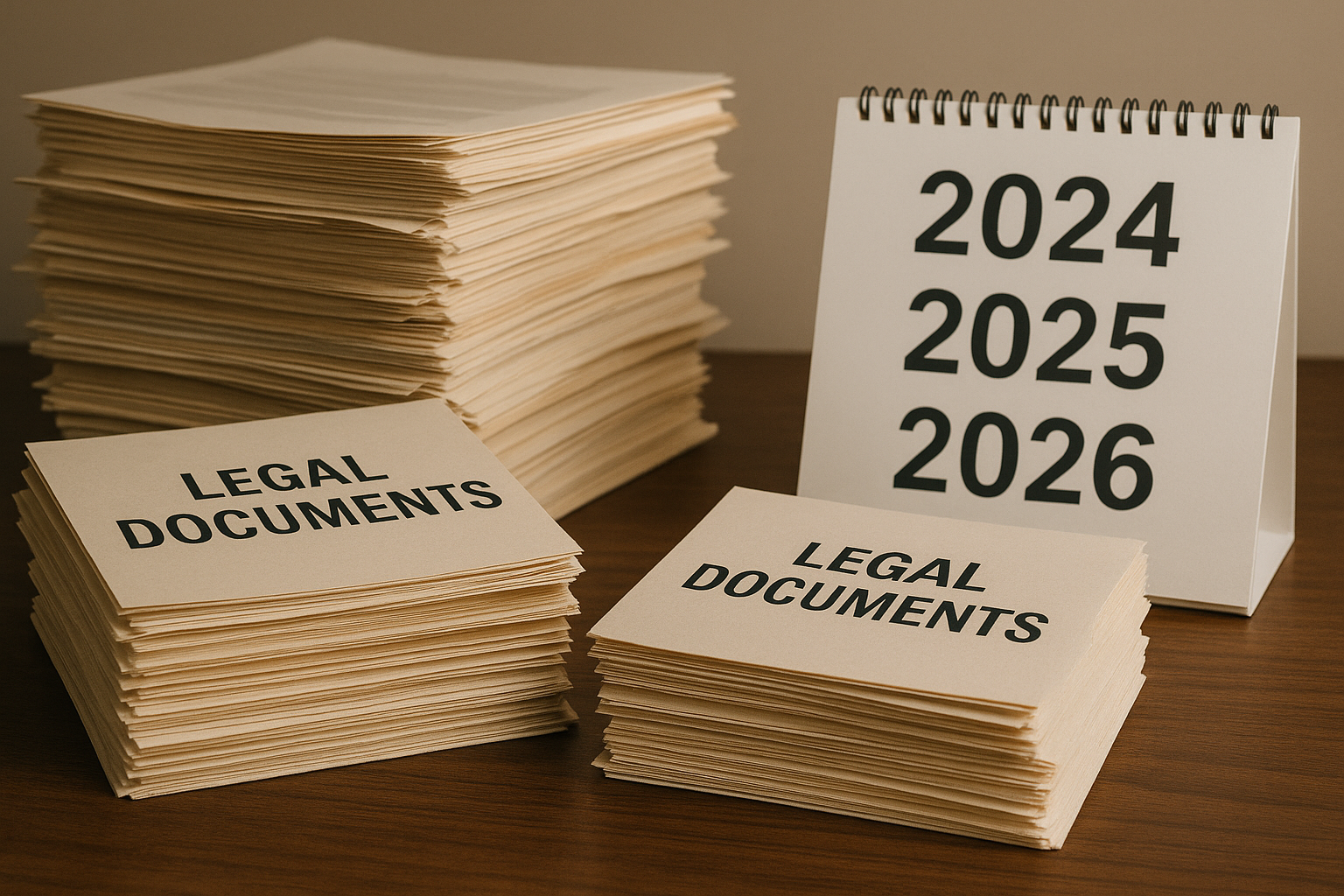
The ICJ genocide case against Israel could stretch into the 2030s, highlighting the slow pace of justice amidst ongoing conflict and casualties.
The International Court of Justice (ICJ) genocide cases take a very, very long time, often over ten years. This is because there are many steps, like investigations, lots of written papers, and translating everything. For example, South Africa's case against Israel might not finish until around 2030 or 2031. This long wait means more suffering for people on the ground, as the legal process moves much slower than real-world events.
How long does the International Court of Justice (ICJ) genocide docket typically take?
The ICJ genocide docket is a lengthy process, often extending over a decade due to structured investigations, multiple pleading rounds, and translation requirements. For instance, South Africa's case against Israel could stretch into a second decade, with key filings scheduled for 2027 and 2029, and a final judgment anticipated between late 2030 and mid-2031.
Get Cape Town news in your inbox
Stay updated with the latest stories from the Mother City.
A Structured Investigation
1. The Calendar That Became a Cage
On a wind-swept afternoon in late autumn, the Registrar of the International Court of Justice uploaded a terse five-page notice that rewrote private planners across two continents. South Africa’s next filing – formally its answer to Israel’s Counter-Memorial and its rebuttal to the jurisdictional objection – must arrive no later than 21 November 2027. Israel’s final Rejoinder is locked in for 4 May 2029.
Those two dates now sit between South Africa’s municipal elections and the next United States presidential oath-taking, stretching the proceedings into a second full decade. While attorneys sharpen footnotes, Gaza’s Ministry of Health tallies roughly 2 800 deaths every thirty days if current casualty rates hold. By that grim arithmetic the written stage alone could cost more Palestinian lives than the entire 2006 Lebanon War.
The timeline is not an accident. The 1948 Genocide Convention was drafted to placate super-power rivalries; it contains no fast-track mechanism. The Court’s 1978 Rules still mandate four sequential written pleadings (Memorial, Counter-Memorial, Reply, Rejoinder) and Israel’s preliminary objection adds two more. Each bundle runs 500–800 pages, translated into both English and French by a pool of only twenty-two UN terminologists. Outsourcing is refused for fear of leaks, so the translation queue alone eats three months every round.
Inside the Peace Palace clerks already foresee the largest single-case file in ICJ history: more than 120 linear metres of acid-free paper destined to yellow long after the last survivor has grown old – or not lived that long.
2. Anatomy of a Slow-Motion Docket
When Bosnia sued Serbia in 1993, the written phase alone took fourteen years. Croatia’s claim against Belgrade, filed in 1999, closed its pleadings in 2015. Gambia’s Rohingya case, launched in 2019, is still crawling forward. The pattern is structural: every genocide suit before the World Court replicates the same geological layering of documents.
South Africa’s original Memorial landed in December 2023 and ran 750 pages. Israel’s Counter-Memorial, filed three Februaries later, swelled to 1 600 pages and carries an 80-page historical excursus beginning with the 1920 Nebi Musa riots. It argues that Palestinian nationalism is a “late construct,” insufficient to anchor a protected-group claim under the 1948 Convention. The legal core rests on three pillars: jurisdiction, merits and a counter-claim – the first time any respondent has accused a non-state actor of genocide inside the same case file.
Add the forthcoming Reply and Rejoinder, plus hearings on Israel’s jurisdictional challenge, and six discrete stages of paper warfare lie ahead. Between rounds the Court will ponder satellite imagery, NGO affidavits and thousands of hyper-linked cell-phone clips. Every loop widens the docket without narrowing the killing fields.
3. Inside the Counter-Memorial: 1 600 Pages of Strategic Repositioning
Israel’s Counter-Memorial is less a defence than a recalibration of the entire debate. Its jurisdictional chapter asserts that South Africa has not demonstrated “a dispute relating to the interpretation, application or fulfilment” of the Convention because the campaign is aimed at Hamas, not Palestinians “as such.” Over three hundred pages dissect Pretoria’s 400 incident reports, labelling each either collateral damage or militarily necessary.
The merits discussion leans heavily on the 2007 Bosnia judgment, stressing that isolated atrocities cannot amount to genocide without adoption by the state’s “central apparatus.” Then comes the procedural grenade: a counter-claim that Hamas itself committed genocide against Israeli civilians on and after 7 October 2023. The Court has never ruled on whether non-state actors can be respondents; the filing alone forces South Africa to untangle a procedural Gordian knot before it can even reach the merits.
Annexed to the Counter-Memorial are declassified British Mandate files, satellite prints and intercepted radio traffic. USB drives encrypted with AES-256 sit in labelled pouches, ready for bench-side laptops that must never touch the internet.
4. Pretoria’s Three-Year Sprint Toward 2027
From November 2024 onward, South Africa has 33 months to craft a Reply that must:
• Defeat Israel’s jurisdictional claim by proving the dispute crystallised before December 2023;
• Rebut the counter-claim without legitimising the idea that Hamas can sue or be sued at the ICJ;
• Capture every shelling, siege tactic and starvation incident that occurs after May 2026 and fold them into living annexes.
To keep pace, Pretoria has seconded three junior researchers to Ramallah. They harvest daily Sentinel-2 imagery and pipe it via encrypted fibre to Stellenbosch, where convolutional neural nets flag new artillery craters overnight. GazanChain, a decentralised video repository seeded by Forensic Architecture, already holds 3.2 petabytes of geolocated, time-stamped footage. Amazon Web Services’ Cape Town region mirrors every file in three encrypted S3 buckets; hyper-links embedded inside the Reply will allow judges to open drone footage of Beit Hanoun’s flattened bakery at exactly 02:17:44 on 14 March 2026.
Budget realities shape tactics. The Presidency has ring-fenced R1.85 billion across three fiscal cycles: 35 % for external counsel, 40 % for satellites and machine-learning licences, the rest for translation and travel. Israel’s own budget remains classified, but leaked Foreign Ministry cables suggest a two-track approach: direct state funding plus a parallel stream run through the World Jewish Congress to bankroll friendly amicus briefs.
5. Provisional Measures, Humanitarian Clocks and Enforcement Shadows
The Court’s March 2024 and July 2025 provisional measures remain live. Order 2024/2 commanded Israel to “enable the provision of urgently needed basic services” and to “prevent and punish direct and public incitement to commit genocide.” Compliance is monitored through monthly affidavits and UN agency reports.
Reality on the ground laughs at the timetable. Daily truckloads through Kerem Shalom slipped from 167 in January 2025 to 82 in May 2026, a 51 % drop that coincided with Israel’s widening of the Netzarim Corridor buffer. Physicians for Human Rights-Israel reports acute malnutrition in 18.4 % of children under five – above the WHO emergency threshold. Every new statistic is typed into an annex that is already obsolete before counsel clicks “save.”
When the Rejoinder arrives in May 2029, the bench still faces twelve months of deliberation plus possible post-judgment requests for interpretation. Historical precedent suggests a judgment between late 2030 and mid-2031. Enforcement then moves to the Security Council, where geopolitics can stall reparations indefinitely. Gaza’s median age is eighteen; by final gavel an entire school generation will have spent more years under provisional measures than without.
6. Beyond the Peace Palace – Shadow Courts and Diplomatic Fallout
Frustrated by the crawl, Palestinian NGOs are turning to domestic courts that may pierce Israel’s jurisdictional armour. An Argentinian federal judge has accepted a universal-jurisdiction civil suit filed by dual-nationality families; a Brussels magistrate is weighing charges under Belgium’s 1999 Genocide Act. These “shadow dockets” cannot override the ICJ, but they complicate travel for senior Israeli officers and push insurers to add a 35 % premium on professional-indemnity policies for colonels and above.
Pretoria’s diplomatic machinery is pivoting in step. Trade negotiators now cite the ICJ case to cancel bilateral investment treaties that contain Israeli arbitration clauses. Home Affairs quietly offers visa-waiver access to holders of Palestinian Authority passports. West African defence attaches report a 22 % rise in South African arms sales to states recognising Palestine – evidence that the courtroom has become another showroom for sovereign credibility.
Back inside the Peace Palace, clerks prepare climate-controlled boxes for one million acid-free pages. The toner alone will cost six euro-cents per sheet. Long after the last flicker of the courtroom’s chandeliers, the paper trail will keep ageing, a mute monument to the lethal wait between dockets.
How long does the International Court of Justice (ICJ) genocide docket typically take?
The ICJ genocide docket is a lengthy process, often extending over a decade due to structured investigations, multiple pleading rounds, and translation requirements. For instance, South Africa's case against Israel could stretch into a second decade, with key filings scheduled for 2027 and 2029, and a final judgment anticipated between late 2030 and mid-2031.
What are the main reasons for the extended timeline of ICJ genocide cases?
The protracted timeline is a result of several factors. The 1948 Genocide Convention lacks a fast-track mechanism, and the Court's 1978 Rules mandate four sequential written pleadings (Memorial, Counter-Memorial, Reply, Rejoinder), with additional stages for preliminary objections. Each submission, often 500-800 pages, must be translated into both English and French by a limited pool of UN terminologists, with outsourcing refused due to security concerns, causing significant delays.
What are the key stages in an ICJ genocide case's written phase?
The written phase typically involves four main stages: the Memorial, Counter-Memorial, Reply, and Rejoinder. If preliminary objections are raised, like Israel's jurisdictional challenge in its case with South Africa, an additional two rounds of pleadings are added. Each stage involves extensive documentation, with filings often reaching hundreds or even thousands of pages, such as Israel's 1,600-page Counter-Memorial.
How does the ICJ address the issue of non-state actors in genocide cases?
Historically, the ICJ has not ruled on whether non-state actors can be respondents in a genocide case. However, Israel's Counter-Memorial against South Africa introduced a procedural grenade by counter-claiming that Hamas, a non-state actor, committed genocide. This forces South Africa to address a novel legal challenge, potentially adding further complexity and time to the proceedings.
What is the impact of the lengthy ICJ process on affected populations?
The most significant impact is the prolonged suffering for people on the ground. The legal process moves much slower than real-world events, meaning that while attorneys engage in extensive written warfare, casualty rates can continue to mount. For example, by the grim arithmetic presented, the written stage alone in the South Africa v. Israel case could cost more Palestinian lives than the entire 2006 Lebanon War, and an entire school generation could spend more years under provisional measures than without before a final judgment.
Are there alternative legal avenues being pursued due to the ICJ's slow pace?
Yes, frustrated by the slow pace of the ICJ, Palestinian NGOs and other entities are turning to domestic courts in various countries, utilizing universal jurisdiction principles. For instance, an Argentinian federal judge has accepted a universal-jurisdiction civil suit, and a Brussels magistrate is considering charges under Belgium's 1999 Genocide Act. These "shadow dockets" cannot override the ICJ but can complicate travel for senior Israeli officers and increase insurance premiums for them, serving as a form of indirect pressure.

Michael Jameson is a Cape Town-born journalist whose reporting on food culture traces the city’s flavours from Bo-Kaap kitchens to township braai spots. When he isn’t tracing spice routes for his weekly column, you’ll find him surfing the chilly Atlantic off Muizenberg with the same ease he navigates parliamentary press briefings.
View all articles →