
Stellenbosch moves to suspend GoNow e-scooters after safety concerns
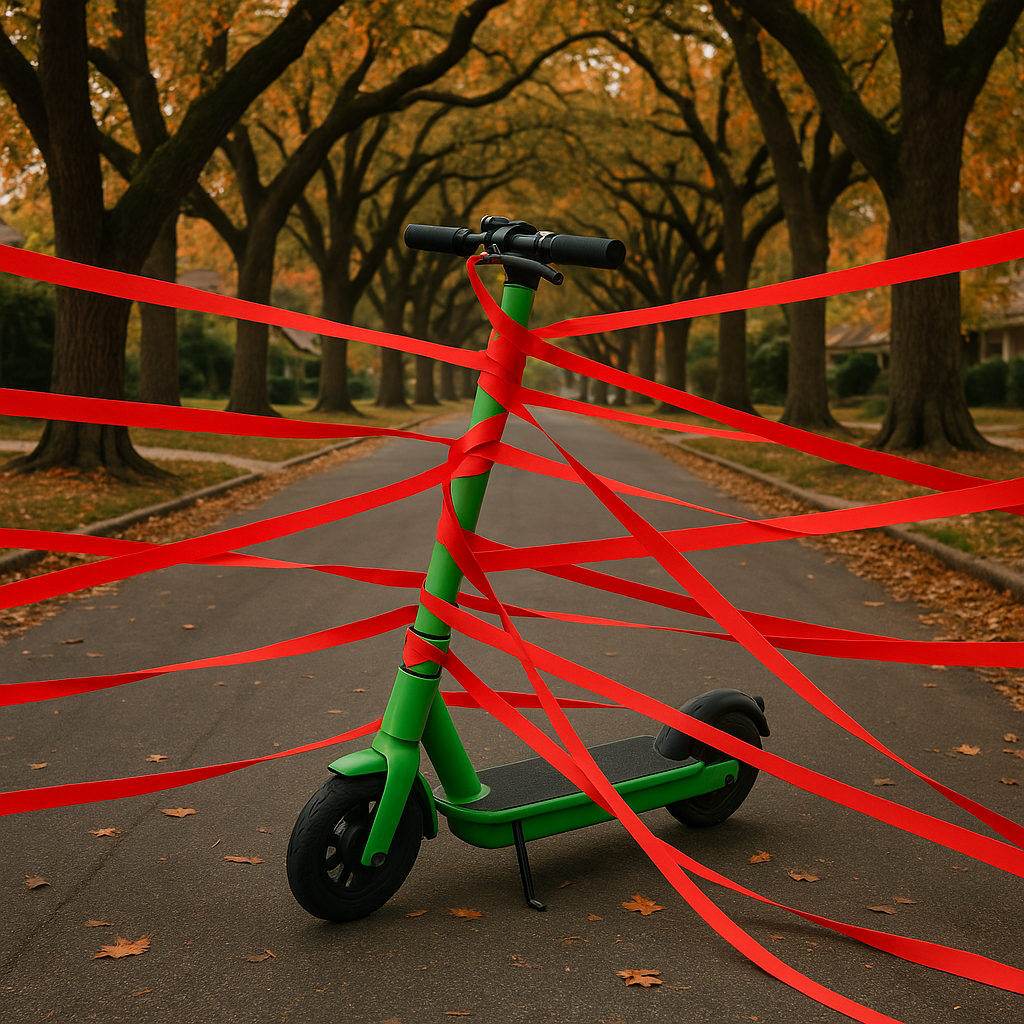
Stellenbosch's e-scooter shutdown sparks debate on outdated laws vs. modern micromobility, impacting commuters & climate goals.
Stellenbosch banned e-scooters because two kids crashed them and a old law from 1996 says fast two-wheelers are like motorcycles. This means they need special papers and grown-up riders. The city said the scooter company broke this rule, so all 600+ scooters stopped working suddenly. Now, students walk more, and tourists can't do fun scooter tours, showing how much the town relied on them.
Why were scooters banned in Stellenbosch?
E-scooters in Stellenbosch were banned due to two crashes involving underage riders and a 1996 national traffic amendment. This amendment classifies two-wheeled vehicles exceeding 20 km/h as "motorcycles," requiring licenses, insurance, and helmeted adult riders. The municipality deemed GoNow's fleet in violation, leading to an immediate suspension.
Get Cape Town news in your inbox
Stay updated with the latest stories from the Mother City.
The Weekend the Wheels Stopped
For three consecutive seasons, the hush between Stellenbosch’s historic lecture halls and tasting rooms was punctuated by a low, almost insect-like buzz. Sleek lime-green devices glided beneath the canopy of old oaks, ferrying students to 8 a.m. classes and tourists to the next wine flight. No one imagined that, in less than forty-eight hours, every one of those 600+ scooters would fall silent, their apps showing nothing but a curt lock-out message.
The shutdown arrived by e-mail: an “immediate suspension notice” delivered to GoNow on a Friday afternoon. Two recent crashes - both involving under-age riders - gave Stellenbosch Municipality the pretext it needed. One statute tucked inside a 1996 national traffic amendment places any two-wheeled vehicle that tops 20 km/h into the “motorcycle” category; motorcycles must be licensed, insured and ridden only by licensed, helmeted adults. The moment GoNow’s fleet was deemed to fit that definition, its sidewalk jaunts and slow-lane shortcuts became, in the municipality’s eyes, a city-wide infraction.
By the following Monday the green icons on smartphones had vanished. Students accustomed to six-minute hops from residence to campus now queued for 20 minutes at packed bus stops. Vineyard day-trippers shelved half-price “scooter safari” vouchers. The sudden void exposed how deeply a two-year habit had embedded itself in the rhythms of a small town - and how fragile that habit was once regulations flexed their muscle.
Statute Books Written Before Cell Phones
South Africa’s national traffic rulebook does not contain the words “shared e-scooter,” “dock-less” or even “micro-mobility.” The closest match is an orphaned 2001 entry for “motorised skateboards,” a clause provinces never learned how to enforce. In that vacuum, officers improvise: in Johannesburg they hand riders motorcycle tickets worth R1 500 to R2 000; in eThekwini they confiscate hardware; in Tshwane scooters are simply barred from busy arteries. Stellenbosch chose the nuclear option - switching off the entire network.
Advates argue that the devices weigh less than a suitcase and emit roughly 34 g of CO₂ per passenger-kilometre, five-times less than a modern city car. Critics counter that legality hinges on ministerial definitions, not green credentials. Until Transport Minister Sindisiwe Chikunga publishes a new vehicle class, every interaction between rider and cop remains a coin-toss. A national discussion paper on micro-mobility has languished at seven pages since October 2022; Parliament has yet to set a hearing date.
Western Cape officials are now piloting a twelve-month “regulatory sandbox” in which firms can apply for immunity from legacy rules if they share usage data and file crash-prevention plans. GoNow applied the day the window opened; the review was still “pending technical clearance” when local leaders pulled the plug.
Rider Safety, Scare Stories and Hard Numbers
Two Crashes, Two Headlines, Hundreds of Impounded Scooters
The spark that lit the shutdown came from two incidents eight days apart. A fourteen-year-old boy swerved around a dog on Victoria Street and clipped a delivery van at 22 km/h, breaking a wrist. A twelve-year-old girl lost the brakes on a downhill helix behind the Conservatoire, tumbled onto a footpath and suffered mild concussion. Both minors had bypassed GoNow’s age check by borrowing a sibling’s licence photo - an exploit the company claims to have patched in March with live selfie-to-document matching.
Yet Stellenbosch’s traffic department recorded only those two serious e-scooter incidents for 2023, against 37 bicycle crashes and 143 involving cars. Provincial hospital data assign scooters a 0.6 % share of all road-user trauma cases admitted. “Statistically, standing on the shoulder of the R44 after dark is riskier,” insists Jaco van der Merwe, the company’s Africa CEO. Pedestrian advocates reply that fear, not fractures, is the issue; they point to a Dorp Street petition claiming 30 % lower evening foot traffic after scooter numbers surged. The merchants behind the petition offer no sales slips to back the figure.
Inside the Logistics Barn
Van der Merwe runs operations from a converted barn on the town’s tech fringe. A wall-sized screen plots every scooter’s live location atop heat-map demand. Engineers tweak software that, within a fifty-metre radius of any primary school, caps speed at 15 km/h or auto-terminates a ride when the battery drops below ten per cent. The CEO, once a minibus refurbishment contractor, bristles at the “tech-bro cowboy” label: “We begged for an MoU in 2021; the draft never materialised.”
E-mail trails show officials asked for R100 million public-liability cover and monthly, anonymised trip logs - conditions GoNow says it met. Missing was any clarification on shared-space streets where posted limits sit at 30 km/h. “We were told we were neither road nor pavement users,” Van der Merwe recalls.
University Politics and Student Budgets
Stellenbosch University trumpets a 2030 goal to slash campus-linked transport emissions by 30 %. The university and GoNow, however, let their direct memorandum lapse in December 2023 - talks stalled over insurance indemnities. When GoNow painted green scooter bays outside the Neelsie Student Centre, Estates repainted them charcoal within two days, a symbolic skirmish that now plays on local talk radio every morning.
Student polls reveal 71 % undergraduate support for scooter return. Typical comment: “I’ll take a six-minute glide over a twenty-minute night walk through the oak shadows.” Post-grad parents complain of scooters “darting past prams.” The Student Disability Forum adds that poorly parked units trip cane users. Financially, a Uniclip bus pass costs R490 a month, a GoNow student bundle cost R199, and reverting to ride-hailing averages R1 100 - enough to unsettle bursary recipients on NSFAS loans.
Beyond Town Borders - Who’s Watching, Who’s Waiting
Tourism, Wine and the Carbon Ledger
Local tour companies sold 2,800 “vineyard-hopper” packages last harvest - guests scoot 4 km to estates, sip three flights, then ride sober shuttles back. Post-suspension cancellations jumped 18 %. Petrol stations, by contrast, logged a 5 % bump in fuel sales, their first year-on-year growth since 2021.
The municipality has declared a climate emergency and aims for net-zero by 2040. Transport emits 42 % of the town’s direct carbon; scooters had featured in the draft Integrated Development Plan as a “low-cost mitigation wedge.” At the measured substitution rate (0.62 car-kilometre avoided per scooter-kilometre), February’s rides cut an estimated 18 t of CO₂ - roughly the annual uptake of 1,100 saplings. A year-long blackout would force officials to clear an extra 1.3 hectares of invasive trees to stay on emissions target.
Courtrooms, By-laws and the Copy-Paste Effect
GoNow has briefed counsel to seek an urgent High Court interdict, arguing the municipality blurred “public road” with “public space” and overlooked semi-private heritage lanes where traffic rules apply only partially. Meanwhile, local drafters are finalising a by-law that would criminalise the rental of any personal mobility device above 15 kg unless the operator secures a special-events permit - language broad enough to rope in e-skateboards and one-wheels. Public comment ends 15 May.
Cape Town, poised to unveil its own micro-mobility framework, has frozen its pilot pending the outcome. Nelson Mandela Bay has floated a hard cap of 1,000 scooters city-wide. eThekwini has invited Stellenbosch officials to brief the next South African Local Government Association mobility summit in June.
For the early-morning army who once tapped open the nearest green icon, the legal stand-off is not academic policy tennis but an extra twenty-minute trudge each way. In the skirmish between code pushed from a logistics barn and clauses written in blue books printed before Wi-Fi existed, the finish line keeps galloping forward, taunting both wheels and words to catch up.
[{"question": "
Why were e-scooters banned in Stellenbosch?
", "answer": "E-scooters in Stellenbosch were banned primarily due to two recent crashes involving underage riders. This prompted the Stellenbosch Municipality to enforce a 1996 national traffic amendment that classifies any two-wheeled vehicle exceeding 20 km/h as a \"motorcycle.\" This classification requires riders to possess a license, insurance, and wear a helmet, all of which were not met by the GoNow e-scooter service, leading to its immediate suspension."},{"question": "
What specific law led to the e-scooter ban?
", "answer": "The ban was triggered by a 1996 national traffic amendment in South Africa. This amendment dictates that any two-wheeled vehicle capable of exceeding 20 km/h is legally considered a \"motorcycle.\" This reclassification meant e-scooters, which previously operated in a regulatory grey area, suddenly fell under strict regulations requiring licensed, helmeted adult riders and insurance."},{"question": "
How did the e-scooter ban impact students and tourists?
", "answer": "The ban significantly impacted daily life in Stellenbosch. Students, who often relied on e-scooters for quick commutes between residences and campus, now face longer walks or extended waits for packed buses. Tourists, particularly those who enjoyed \"scooter safari\" tours of vineyards, also experienced disruptions, leading to a noticeable increase in cancellations for such packages. The sudden void highlighted how integrated the e-scooters had become into the town's rhythm."},{"question": "
Were there many accidents involving e-scooters in Stellenbosch?
", "answer": "Despite the two incidents involving underage riders that sparked the ban (a 14-year-old breaking a wrist and a 12-year-old suffering a mild concussion), Stellenbosch's traffic department recorded only these two serious e-scooter incidents for 2023. In comparison, there were 37 bicycle crashes and 143 car crashes in the same period. Provincial hospital data indicated that e-scooters accounted for only 0.6% of all road-user trauma cases admitted, suggesting a relatively low accident rate compared to other modes of transport."},{"question": "
What is GoNow's response to the ban and what are their next steps?
", "answer": "GoNow, the e-scooter operator, refutes the municipality's interpretation of the law. They claim to have implemented age verification patches, such as live selfie-to-document matching, to prevent underage riding. They had also applied for regulatory immunity under a Western Cape \"regulatory sandbox\" pilot program, which was still pending when the ban occurred. GoNow has briefed legal counsel to seek an urgent High Court interdict, arguing that the municipality misapplied definitions of \"public road\" and \"public space.\""},{"question": "
How does the e-scooter ban affect Stellenbosch's environmental goals?
", "answer": "Stellenbosch has declared a climate emergency and aims for net-zero emissions by 2040, with transport contributing 42% of the town's direct carbon emissions. E-scooters were considered a \"low-cost mitigation wedge\" in their draft Integrated Development Plan, as they emit significantly less CO₂ per passenger-kilometre compared to cars. The measured substitution rate suggested that February's e-scooter rides alone cut an estimated 18 tons of CO₂. A year-long ban could force the municipality to take other actions, such as clearing an additional 1.3 hectares of invasive trees, to stay on its emissions targets."}]
Sarah Kendricks is a Cape Town journalist who covers the city’s vibrant food scene, from township kitchens reinventing heritage dishes to sustainable fine-dining at the foot of Table Mountain. Raised between Bo-Kaap spice stalls and her grandmother’s kitchen in Khayelitsha, she brings a lived intimacy to every story, tracing how a plate of food carries the politics, migrations and memories of the Cape.
View all articles →