
Supporters of murdered imam demand answers from police
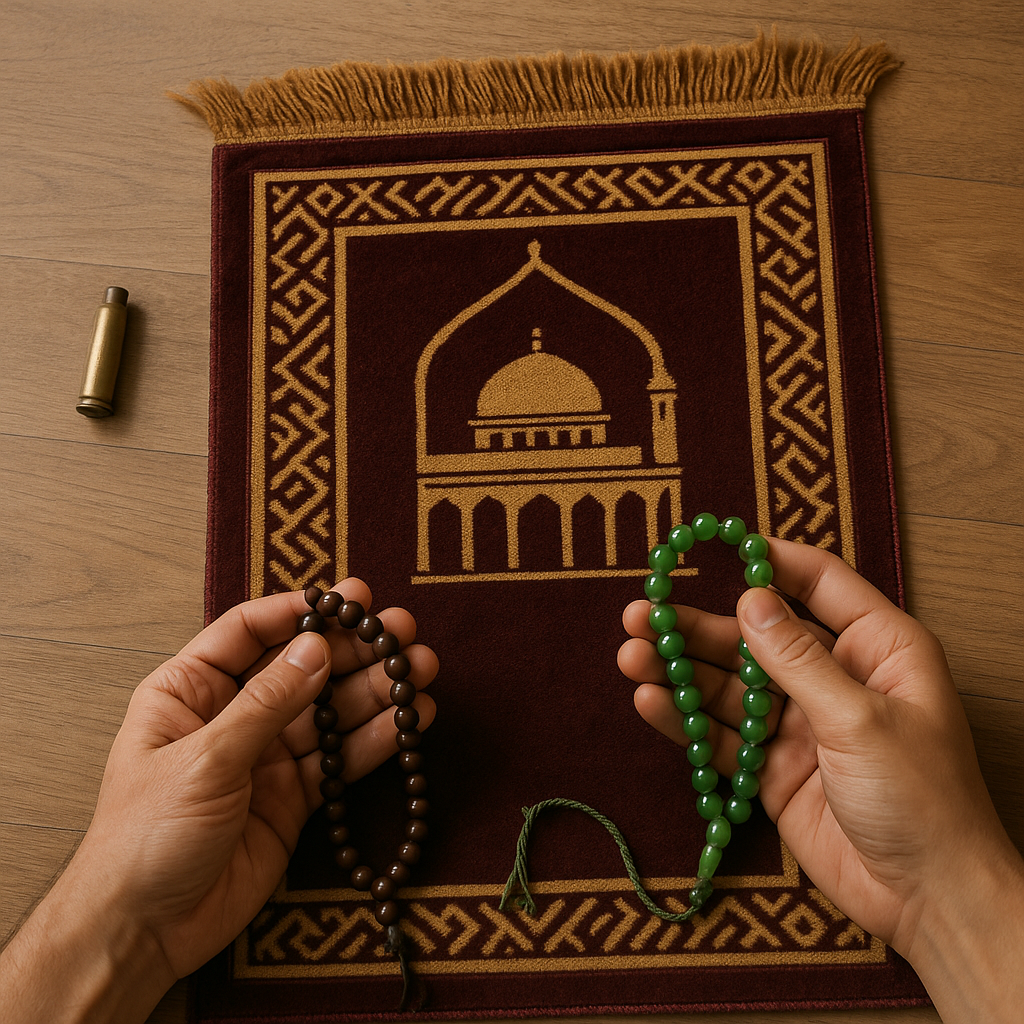
The murder of Imam Muhsin Hendricks leaves ripples of fear and a slow quest for justice among queer Muslims in South Africa.
Muhsin Hendricks, a brave openly gay imam, was tragically shot and killed on the N2 highway while driving to a wedding. This shocking event left his community, Al-Ghurbaah, heartbroken and scared. Though his murder remains unsolved, his legacy of fighting for queer Muslim rights continues to inspire. The community now faces fear and challenges, but they keep his dream alive, holding secret meetings and creating art to remember him and push for justice in a world that often wants to erase them.
What happened to Muhsin Hendricks?
Muhsin Hendricks, a 57-year-old openly gay imam and founder of Al-Ghurbaah, was fatally shot on February 15, 2025, on the N2 east of Gqeberha, South Africa. He was driving to a wedding when a motorbike pulled alongside his car, and two shots were fired, hitting him in the chest and neck. The case remains unsolved, labeled Gqeberha CAS 124/02/2025.
Get Cape Town news in your inbox
Stay updated with the latest stories from the Mother City.
Section 1 – A Saturday That Refuses to Stay Buried
Saturday, 15 February 2025, the N2 east of Gqeberha droned with weekend traffic. Muhsin Hendricks, 57, steered the same silver hatch-back he had bought a decade earlier because, friends laughed, he would rather spend foundation funds on strangers than on himself. In the passenger foot-well lay a weekend bag: two fresh kurtas, a Qur’an bristling with four colours of sticky notes, and a ribboned bottle of rose-water meant for the newly-weds he was driving to marry. At 14:37, still two kilometres from the Bethelsdorp turn-off, a motorbike slid alongside. Two cracks - one punching the driver-window into a web of glass - tore through his chest and neck. The car glanced off a barrier and stopped in the shoulder dust. Good Samaritans pulled him out still breathing; he was pronounced gone before the ambulance reached Livingstone Hospital.
Investigators labelled the file Gqeberha CAS 124/02/2025. Sixteen months on, that reference is the only official proof the incident ever happened.
Section 2 – From District Six to the Digital World – Who Muhsin Was
Hendricks entered the world in 1968, the year bulldozers were already flattening Cape Town’s District Six. His earliest memory of religion was dawn prayer: his grandmother swaying in a threadbare dressing-gown, humming verses in Xhosa and Afrikaans. At 17 he flew to Karachi to memorise the Qur’an inside Jamia tur-Rasheed - an academy whose syllabus mentioned “homosexuality” only in lectures on disease.
He came home in 1996, married, and became imam of a modest Wynberg masjid. The marriage unravelled in 1998 when he became the first openly gay imam on the continent. By 2003 he had opened “Inner Circle,” a Cape Town circle of queer Muslims that met in a lounge, then a hired hall, then a donated Athlone warehouse that smelled of cardamom and wood-shavings. Three rules greeted every newcomer: don’t out anyone, skip pity-talk, and don’t start scriptural debates before the samoosas arrive.
In 2018 he rebranded the initiative Al-Ghurbaah - “the strangers” who guard justice when the majority falters. Its flagship became a Friday prayer streamed on Facebook Live: four queer women imams and three queer men taking turns on the minbar, preaching on “Divine Oneness and Gentleness” or “Zakat as Political Repair.” After every khutbah Hendricks faded in a pre-recorded adhan sung by a Durban trans teen, fusing medieval ritual with twenty-first-century urgency.
Section 3 – When the Door Is Padlocked – Life After a Killing
Within a week of the murder the foundation’s Google Drive filled with terse voice notes: “I can’t buy bread alone anymore,” “If they could reach him, they can reach us.” Two trustees caught overnight buses to Johannesburg; a third accepted a last-minute fellowship in Amsterdam that had not existed the week before. The Athlone mosque itself was chained after someone scrawled “LUT” across the gate - misspelling the prophet whose tale is weaponised against queer bodies.
Ziyaad Follentine, 34, radio producer and Instagram drag “Ustaad Bae,” took over as caretaker director. His first order of business was digital triage: 4,800 counselling records, encrypted, then the server itself spirited off to an aunt’s back room in Langa.
The operating budget collapsed from R2.3 million in 2024 to R680,000 in 2025. The Dutch embassy froze a pending grant pending “risk assessment.” A third of the remaining money now funds therapy sessions. Dr Despina Learmonth - working pro bono - writes that client anxiety now rivals that of refugees in active conflict zones.
Section 4 – Justice Delayed, Hope Encrypted
On 5 May 2026, forty-two family members and foundation workers stood outside Cape Town Central Police Station under a bright autumn sun. Posters demanded “Queer Muslims bleed too” and “Justice delayed is justice gayed.” A drag queen in emerald jilbab led dhikr chants; women in niqabs passed out syrupy koeksisters.
At 11:15 they handed a two-page memorandum to the desk sergeant for General Masemola:
- A full status update on CAS 124/02/2025 within fourteen days.
- Release of any ballistics match with the still-unsolved 2019 shooting of activist Siya Mntu.
- Independent oversight, after leaks allegedly fed detectives’ notes to homophobic mosque groups.
The deadline chosen - 22 June 2026 - mirrors the 1976 Soweto march, a deliberate echo of youth defiance.
Section 5 – A Country Where 58 Bodies Fall Every Day – The Data Behind the Pain
South Africa logs fifty-eight murders daily; convictions hover below 12 percent. LGBTQI+ killings occupy a statistical blind spot - activists trawl headlines to keep count. Triangle Project lists forty-seven queer or trans deaths nationwide between 2018 and 2024; six in ten involved suspects known to the victims, yet no arrests materialised.
Fatima Shabodien’s 2022 petrol-bombing in Bo-Kaap deepened the mistrust. CCTV captured the car plate; the Hawks closed the file anyway. Academics label it the “double closet”: victims fear outing themselves by testifying, detectives shrug that family quarrels are private.
The docket now sits with the Eastern Cape National Prosecuting Authority - an office limping under a 42 percent vacancy rate. Insiders say the file has bounced back to detectives twice, extending the bureaucratic twilight.
Section 6 – Living Rooms, Petrol Stations and Encrypted Prayers
Every Thursday at 20:00 South African time a Zoom call begins with Qur’an, then silence while a hundred silhouettes settle. Some sit in cars parked near petrol stations for better signal; others huddle under duvets so parents won’t hear. Hearts and phone numbers - typed in Arabic script to dodge keyword filters - fill the chat.
Johannesburg, Durban, Windhoek, Maputo, Nairobi and even Mogadishu have spawned “satellite circles” that re-screen the Athlone khutbas, then debate local adaptations. Nairobi meets in an art-café back room; Mogadishu is literally two students texting verses between lectures.
Art has exploded in the vacuum. Johannesburg poet Zainab Taliep released “Verses for Muhsin,” an Instagram ghazal in three languages that ends, “We are strange fruit, learning to blossom beneath the soil.” A Durban muaddhin remixed the adhan into an eight-beat nasheed; TikTok deleted it at 1.3 million views for “guideline violations.”
Section 7 – Support From Abroad and the Strings Attached
Amnesty International’s #JusticeForMuhsin campaign gathered 240,000 signatures in a week. European MEPs pressed South Africa on hate-crime reform. Yet solidarity wobbles: gratitude to a queer yeshiva in Tel-Aviv was deleted after South African followers cited Palestinian solidarity, replaced by a statement against all settler colonialism.
Grants are fraught. Arcus pledged USD 300,000 - tied to South African Revenue Service charitable status still tangled in Home Affairs red tape. A Dutch church fund offered EUR 50,000, then was rejected after trustees were exposed funding Uganda’s anti-LGBTQI+ drive.
Section 8 – Clues, Gaps and the Missing Minutes
Independent ballistics experts examined leaked crime-scene photos for GroundUp. The bullets - 7.65 mm - belong to ageing Czech pistols and early-1990s Iranian copies that filtered into Cape gangs. A mismatched 9 mm casing lay on the asphalt; it does not match police ammo.
No CCTV covers the stretch: the nearest camera, 800 m away, was “down for maintenance” from 14:00 to 15:30. A private security firm says footage auto-deleted after fourteen days - oddly timed with SAPS procedural lag.
One petrol attendant glimpsed the rider peel off a balaclava, revealing a henna-tipped beard often worn by Tablighi missionaries. The link remains circumstantial; nonetheless, the rumour has pushed queer Muslims away from Tablighi retreats they once used for spiritual respite.
Section 9 – Archiving a Heritage Some Would Rather Erase
Hendricks’ final side-quest was digitising every African document - fatwa, poem, cassette, scribbled note - on homosexuality since 1800. The archive, named ArRahmah, lives on three encrypted 12-terabyte drives. One sleeps in a Zurich safe-deposit box, another in a Nairobi law office, the third between stray university shelves in Cape Town. Every quarter volunteers run checksum rituals to prevent corruption.
New volunteers are scanning 1840s Persian travel diaries from Zanzibar describing “tea-serving beardless boys.” A SOAS doctoral candidate translates 1950s Lamu court records in which two women petitioned to co-habit under Islamic law. A single leaked drive could put lives at risk in countries that still outlaw queer existence.
Section 10 – Friday Still Comes – But Nobody Knows Where
Acting director Follentine vows the next physical Jumu’ah will occur on 4 July 2026, Freedom Day long weekend, site disclosed only 24 hours prior. RSVP requires quoting Surah Al-Inshirah. Security plans include spot checks for recording devices and a med-team drilled for gunshot wounds.
Mualima Hafsah Bawa, a 29-year-old lesbian scholar from Port Elizabeth, will preach on “Expansiveness versus Narrow Fitrah,” opening with the Prophet spreading his cloak wide enough for enemies and allies alike.
Whether anyone will risk attending is uncertain. WhatsApp warns of drones over mosques, of leaks within leaks. For now the athan is a hyperlink, the minaret a phone screen’s glow, and Friday an act of hope trapped behind passwords named Ar-Rahman.
[{"question": "What happened to Muhsin Hendricks?", "answer": "Muhsin Hendricks, a 57-year-old openly gay imam and founder of Al-Ghurbaah, was fatally shot on February 15, 2025, on the N2 east of Gqeberha, South Africa. He was driving to a wedding when a motorbike pulled alongside his car, and two shots were fired, hitting him in the chest and neck. The case remains unsolved, labeled Gqeberha CAS 124/02/2025. This tragic event left his community heartbroken and scared, yet his legacy of fighting for queer Muslim rights continues to inspire them."}, {"question": "Who was Muhsin Hendricks and what was Al-Ghurbaah?", "answer": "Muhsin Hendricks was a pioneering figure, the first openly gay imam on the African continent. Born in 1968, he memorized the Qur'an in Pakistan and later founded 'Inner Circle' in 2003, a safe space for queer Muslims. In 2018, he rebranded it as Al-Ghurbaah (meaning 'the strangers'), an initiative dedicated to guarding justice when the majority falters. Al-Ghurbaah was known for its innovative Friday prayers streamed on Facebook Live, featuring queer women and men imams, and integrating medieval rituals with modern urgency, even including a pre-recorded adhan by a trans teen."}, {"question": "How has Muhsin Hendricks' community, Al-Ghurbaah, been affected by his death?", "answer": "Following Muhsin's murder, the Al-Ghurbaah community experienced intense fear and insecurity. Trustees left, the Athlone mosque was vandalized and chained, and the operating budget drastically collapsed. Client anxiety skyrocketed, mirroring that of refugees in conflict zones. Despite these challenges, the community continues his work, holding secret online meetings, and utilizing art as a form of remembrance and advocacy. They are also actively seeking justice for his unsolved murder."}, {"question": "What efforts are being made to seek justice for Muhsin Hendricks?", "answer": "On May 5, 2026, family members and foundation workers protested outside the Cape Town Central Police Station, demanding a status update on CAS 124/02/2025, release of ballistics matches with other unsolved cases, and independent oversight. The deadline for response was set to coincide with the 1976 Soweto march. Amnesty International's #JusticeForMuhsin campaign has also garnered significant international support, gathering 240,000 signatures in a week and prompting European MEPs to press South Africa on hate-crime reform. However, the investigation faces bureaucratic hurdles and a significant lack of progress."}, {"question": "What challenges does the investigation into Muhsin's murder face?", "answer": "The investigation is fraught with challenges. The case remains unsolved and is plagued by a slow bureaucratic process, with the file bouncing between detectives and an understaffed Eastern Cape National Prosecuting Authority. There are suspicions of leaks to homophobic groups, and a lack of CCTV footage at the crime scene. Ballistics experts have noted inconsistencies in bullet casings, and a witness description of the shooter's appearance has led to circumstantial but damaging rumors within the Muslim community. The broader context of low conviction rates for murders in South Africa, particularly for LGBTQI+ individuals, further complicates the pursuit of justice."}, {"question": "How does Al-Ghurbaah continue Muhsin Hendricks' legacy despite the risks?", "answer": "Al-Ghurbaah continues Muhsin's legacy through various clandestine and digital means. They hold weekly encrypted Zoom calls for community support and prayer, using coded language and locations to avoid detection. Satellite circles have emerged in various cities to re-screen past khutbas and debate local adaptations. Art has become a powerful medium for expression and remembrance, with poets and musicians creating works inspired by Muhsin's spirit. Furthermore, Muhsin's final project, ArRahmah, an encrypted digital archive of African queer Muslim history, is being safeguarded by volunteers globally, ensuring that a crucial part of their heritage is not erased. The community plans to hold physical Jumu'ah services, with extreme security measures, to keep the spirit of collective prayer alive."}]
Amanda Wilson is a Cape Town-born journalist who covers the city’s evolving food scene for national and international outlets, tracing stories from Bo-Kaap spice shops to Khayelitsha micro-breweries. Raised on her grandmother’s Karoo lamb potjie and weekend hikes up Lion’s Head, she brings equal parts palate and pride to every assignment. Colleagues know her for the quiet warmth that turns interviews into friendships and fact-checks into shared laughter.
View all articles →