
Taxi driver and gaatjie fired after Belhar passenger robbed of iPhone
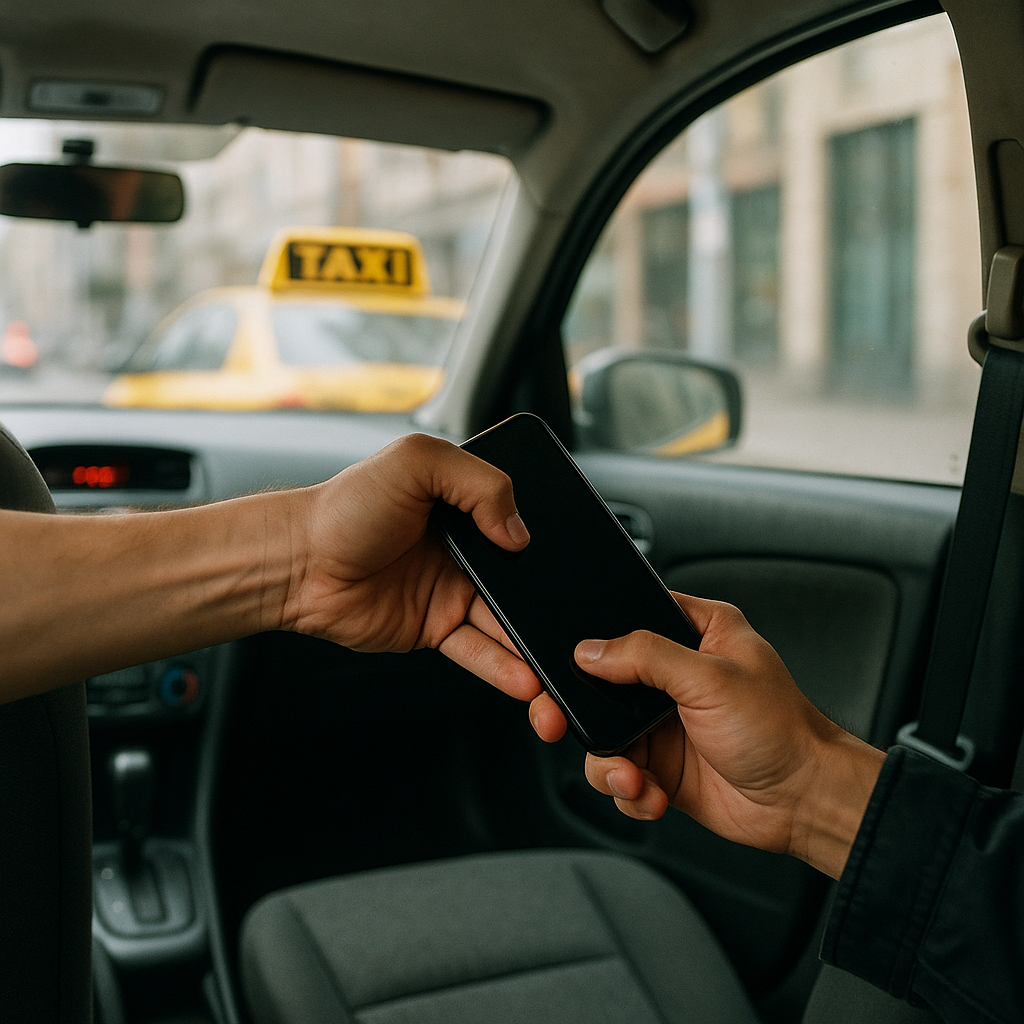
Unpack a Cape Flats taxi robbery: from 5-second ambush to the unwritten rules, parallel justice, & the iPhone's journey.
In the Cape Flats, a "gaatjie" is a young assistant on a taxi, helping with passengers and fares. This story tells how a goes wrong when a gaatjie snatches a woman's phone. Taxi bosses quickly find the culprits, who confess they did it to pay off a debt. The victim doesn't go to the police, fearing trouble, so the taxi association punishes the men instead. This event shows how tricky life is in the taxi world, where young gaatjies face tough choices and people create their own ways to stay safe.
What is a "gaatjie" in the context of Cape Flats taxis?
A "gaatjie" is a uniquely South African position within the taxi industry, acting as a conductor, crowd-controller, and human traffic light. Typically young, they recruit passengers, manage fares, and assist commuters, earning daily cash and forming a fragile brotherhood within a sector with high youth unemployment.
Get Cape Town news in your inbox
Stay updated with the latest stories from the Mother City.
The Five-Second Hit
At 17:20 sharp, Delft rank coughs out a ragged line of sixteen-seaters bound for Epping Industrial. Regulars perform the nightly ritual: mobiles slide into socks, zippers close, the passenger beside the sliding door plants a sneaker half-against the jamb - muscle memory learned in primary school. Tuesday the 18th proved that choreography useless. A thirty-something woman, still wrapped in the lime reflective bib of the chicken abattoir, hopped down at the faded white box that passes for the Belhar 6-stop. Witnesses swear the gaatjie cleared the threshold before the Toyota stopped bouncing. Two fingers under the toughened case, a sharp tug, and he bolted across four lanes of crawling traffic. From first contact to vanishing behind the RDPs nicknamed “Gaza” barely five seconds elapsed - about the span a MyCiTi needs to creep fifty metres. By the time her brain screamed “I’ve been robbed,” the teenager was gone.
Dash-cams on three vehicles were rolling. A bike-courier’s GoPro delivered the clearest cut: 4K, steady, the assailant’s face unobstructed beneath his branded CODETA cap. Two hours later the clip saturated WhatsApp groups from N2 Gateway to Bishop Lavis, garnished with red circles and slo-mo replays of the handset cartwheeling. Social forensics outpaced any radio room: registration, driver initials, even the fleet boss’s cell number ricocheted through suburbia in bullet-point form.
The Association Strikes Back
Taxi bodies here behave like micro-governments - collecting levies, fining crews, issuing exile. At 06:00 Wednesday, CODETA’s disciplinary unit squeezed into a shipping-container office wedged between a spray-paint shop and a spaza in Bellville South. By 08:30 they had traced the Quantum to a 2008 model driven by “Bra B” on the Delft–Epping long haul. The proprietor, once a driver himself and now holder of eight permits, arrived with crew sheets: Siyabulela Booi (42) behind the wheel, Mzuvukile “Vuku” Gqomfa (19) at the door. Committee members dialed both numbers; both sang in the gravel outside - handsets flung there the previous night. Marshals, car-washers and petrol jockeys received a blunt order: “Find them before the cops do.”
Midday delivered results: the pair crouched inside a Wendy house in Mfuleni’s Extension 6. In a sworn statement rushed to CODETA - speedily leaked to the Daily Voice - they confessed the snatch was no spur-of-the-moment act. Booi owed the owner R4 800 in “short drops,” cash that should have been handed over after Monday’s run. The owner, already behind on his August vehicle instalment, had threatened to forfeit the driver’s R15 000 “deposit” - the lump sum operators pay for the right to a lucrative route. Gqomfa, who earns R150 a day plus passenger tips, was promised that if he “raised the shortfall before Friday” the debt would freeze. A second-hand iPhone 14 Pro Max moves for R8–11 k on Bellville’s grey strip - enough to square the arrears and leave change. The statement reads like a spreadsheet: retail value minus iCloud unlock fee minus owner’s share equals R5 200 net - problem fixed, except the internet now knew their faces.
Why She Never Opened a Case
The commuter’s refusal to sign a police statement provoked as much chatter as the theft. Criminologists label it “vicarious deterrence”: when the state feels remote, people opt for private justice. In her workplace group, colleagues warned that opening a docket meant lost wages, court postponements, maybe intimidation. A deleted voice note allegedly claimed gaatjies “know which hostels night-shift sisters use.” SAPS Belhar logged an inquiry for statistics, but without an affidavit the file gathers dust. Meanwhile CODETA meted out its own tariff: instant dismissal, forfeiture of the driver’s deposit, and a R5 000 “administrative levy” to the union’s welfare chest. The two men were photographed holding placards bearing their ID numbers; the portraits will be blasted to all nine Cape Town taxi zones under a standing rule banning them from any rank job for five years.
The Teen at the Door
Gaatjie is a uniquely South African post - part conductor, part crowd-controller, part human traffic light. Recruitment starts at fourteen or fifteen, too young for the labour market yet too old for the corner. Dawn begins at 04:30, dew wiped off the windscreen, coins sorted into bank bags, destinations bellowed until voices crack. Legislation lists them as “operators” under the National Land Transport Act, yet their names appear on no permit paper. Every rand is discretionary: R2 for yanking the door, R5 for lifting an gogo’s groceries, sporadic spotter fees when rank marshals shuffle queues. In precincts where youth unemployment tops 58 %, the role guarantees same-day cash and a fragile brotherhood. It also exposes them to commuter fury, highway gun battles and, increasingly, planned crime.
Within half an hour of a grab, lifted phones begin a well-charted itinerary: SIMs ditched, handsets hustled to Bellville backyards or Somali-run stalls in town. Technicians with Chinese cloning boxes try to nuke Apple’s Activation Lock; success sits near 40 % and shrinking. Units that refuse to open are parted out - original OLED (R2 800), logic board (R1 500), battery (R450), camera module (R600). Clean unlocks get new IMEI stickers and ship to Angola or the DRC where Apple status symbols still fetch luxury pricing. The poultry worker’s iPhone enjoyed rare fortune: CODETA’s man-hunt squad recovered it intact, wrapped in a foil takeaway bag - an amateur Faraday cage - inside Gqomfa’s backpack.
Micro-Defences in a Metal Box
Security advice after the episode recycled the familiar chorus: stash valuables, avoid the front seat, trust your gut. Yet route observation shows a rhythm officials rarely admit: robberies spike in the first and final kilometre, where speed is low and retreat routes plenty. Veteran commuters therefore rehearse tiny rituals: wait until inside a fenced yard before unlocking screens, choose the middle-left bench to stack two bodies between self and door, pocket a decoy handset for surrender, run live-location groups that ping every stop so detours trigger automatic alarms. None of these hacks appear in police pamphlets, yet they propagate faster than any crime-prevention tweet.
Taxi unions fill a governance void. Nationwide, 120 000 minibuses move 15 million trips a day; associations set fares, adjudicate spats, even mediate domestic quarrels. Their 2014 disciplinary code - updated after the 2021 Cape taxi wars - lists 27 offences, from “rank fighting” to “tarnishing industry image.” Penalties climb to R25 000, permit suspension or “rank exclusion,” a commercial death sentence. Detractors say such rules bypass due process; supporters insist without them anarchy would reign. Either way, when state credibility erodes, parallel regimes step in - occasionally dispensing quicker justice, sometimes reinforcing their own untouchability.
Tech Fixes Stuck in Neutral
For ten years Cape Town has trialled rank-side CCTV, licence-plate cameras and a “smart rank” commuter app meant to rate crews. Budget squabbles and licensing red tape leave only 7 % of the planned lenses online; the app survives as a PowerPoint. Ride-hailing apps remain pricey for workers earning R150 a shift. A UWC pilot suggests fitting taxis with low-cost dash-cams streaming to a server, funded by a thirty-cent ride levy. Passenger surveys show 84 % approval; owner buy-in sits at 31 %, terrified footage might haunt them in crash claims. The proposal idles in sub-council limbo.
Workers caught in taxi crime describe transport-specific PTSD: dreams of crunching gravel, phantom pocket pats, dread of friends who drive similar Quantums. Epping managers report absenteeism surges for two weeks after a high-profile heist; night-shift women demand escorts to the gate, draining overtime budgets. These costs never reach the crime stats, yet they layer like silt, another hidden levy on poverty and mobility.
If you stroll Durban Road, Bellville, after dark you’ll pass neon kiosks promising “UNLOCK IN 10 MIN” and “CASH FOR BRICKED PHONES.” Whisper for “n stywe iPhone” and a runner ushers you into an alley where camping tables display colour-coded handsets. Serials are masked with tape; prices are scribbled in koki, negotiable only after you show your own phone to prove you aren’t recording. Traders followed the Belhar drama in real time; within hours of the footage exploding they refused any iPhone lacking a till-slip SMS. Adaptation is instant: Apple hardens iOS, thieves pivot to Samsung; Samsung rolls out Knox Vault, focus shifts to Xiaomi. Demand persists from commuters who lost a device yet cannot foot retail prices.
The Route as Economic X-Ray
The Delft–Epping axis is a textbook “transit desert”: huge volumes, thin profit, zero price wiggle room. Roughly 22 000 riders travel the corridor daily; distance averages 18 km; fare is locked at R12 because any jump sparks protest. Margins are brutal - fuel swallows 48 %, finance 22 %, permits 7 %, leaving 23 % for repairs, wages and owner profit. A R4 800 hole equals four full days’ revenue gone. Until subsidies or service diversity appear, economists argue, micro-crime operates as a grotesque shock absorber - the only budget line with room to squeeze.
This morning the same Quantum is back on the tar, steam-cleaned, crewed by a fresh driver and a gaatjie who looks scarcely seventeen. Riders glance sideways; he avoids eyes, stacking coins with the concentration of someone aware the whole sector is one viral clip from collapse. A handwritten placard clings to the window: “CELLPHONES OUT OF SIGHT – CODETA ORDER.” Commuters obey, yet they also slide forward R2 pieces, a quiet insurance that the youth at the entrance will favour their safety over another man’s IOU. The taxi pulls off, speakers pumping Amapiano, fifteen bodies sealed in a rattling tube racing down familiar tar, each passenger doing live risk calculus, each pretending the simple act of going home is still simple.
[{"question": "What is a 'gaatjie' in the context of Cape Flats taxis?", "answer": "A 'gaatjie' is a young assistant on a taxi in the Cape Flats. They act as a conductor, crowd-controller, and human traffic light, helping with passengers and fares. They are typically young, often starting around 14 or 15, and earn daily cash, forming a fragile brotherhood within a sector with high youth unemployment. They recruit passengers, manage fares, and assist commuters, earning around R150 a day plus tips."}, {"question": "What happened in the taxi heist described in the text?", "answer": "A gaatjie snatched a woman's iPhone 14 Pro Max as she was disembarking the taxi. The incident, dubbed 'The Five-Second Hit,' was captured on dash-cams and a bike-courier's GoPro, leading to the rapid identification of the culprits through social media and local taxi networks. The gaatjie and the driver confessed they committed the robbery to pay off the driver's debt of R4,800 to the taxi owner, which was due to 'short drops.'"}, {"question": "Why did the victim not report the incident to the police?", "answer": "The victim chose not to open a police case due to 'vicarious deterrence.' Colleagues warned her that opening a docket would mean lost wages, court postponements, and potential intimidation. There were fears that gaatjies 'know which hostels night-shift sisters use.' Instead, she opted for the private justice system provided by the taxi association."}, {"question": "How did the taxi association (CODETA) respond to the incident?", "answer": "CODETA, acting like a micro-government, quickly traced the Quantum taxi and identified the driver and gaatjie. They held a disciplinary hearing, where the men confessed. CODETA then imposed immediate dismissal, forfeiture of the driver's R15,000 deposit, and a R5,000 'administrative levy' to their welfare chest. The men were also banned from any rank job in Cape Town for five years, with their photos and ID numbers circulated."}, {"question": "What are some 'micro-defences' commuters use to protect themselves in taxis?", "answer": "Commuters employ various personal security rituals not found in official advice. These include stashing valuables, waiting until inside a fenced yard before unlocking phone screens, choosing the middle-left bench to create distance from the door, pocketing a decoy phone for surrender, and using live-location groups that ping every stop to trigger alarms if detours occur. These practices are shared quickly among regular commuters."}, {"question": "What is the economic reality of the Delft–Epping taxi route and how does it relate to crime?", "answer": "The Delft–Epping route is a 'transit desert' characterized by high volumes (22,000 riders daily) but thin profit margins. Fares are fixed at R12, and any increase sparks protest. Operational costs are high, with fuel taking 48% and finance 22%, leaving only 23% for repairs, wages, and owner profit. This brutal margin means a debt of R4,800 equals four full days' revenue. Economists suggest that in such conditions, micro-crime can act as a 'grotesque shock absorber,' being the only budget line with room to squeeze, highlighting the desperate choices faced by those in the industry."}]

Isabella Schmidt is a Cape Town journalist who chronicles the city’s evolving food culture, from Bo-Kaap spice merchants to Khayelitsha microbreweries. Raised hiking the trails that link Table Mountain to the Cape Flats, she brings the flavours and voices of her hometown to global readers with equal parts rigour and heart.
View all articles →