
The Mother City’s ghosts: Five sites, two spooky walks
Uncover Cape Town's haunted history! Explore 7 ghostly sites, from the Castle of Good Hope to eerie gardens & lighthouses.
Cape Town is a city with a haunting past, where history's scars run deep. From the ancient walls of the Castle of Good Hope, where bells ring themselves and phantom hounds roam, to the eerie silence of the Company's Garden, resting place for thousands of forgotten souls, the city whispers tales of old. Discover spectral footsteps at Rust en Vreugd, or the restless spirit of a U-boat victim at the Simon's Town Museum. Even the Green Point Lighthouse echoes with the wooden thud of a one-legged keeper. Whether by guided walk or ghost bus, Cape Town invites you to listen closely to its centuries-old unfinished stories.
What are the most haunted places in Cape Town?
Cape Town, known for its rich history, boasts several haunted locations. Key sites include the Castle of Good Hope, Rust en Vreugd, Company's Garden, Simon's Town Museum, and Green Point Lighthouse. For a guided experience, consider the Simon's Town Ghost Walk or the Mystery Ghost Bus tour.
Get Cape Town news in your inbox
Stay updated with the latest stories from the Mother City.
I. Why the Mother City Whispers After Dark
Cape Town never had the luxury of a quiet past. What began in 1652 as a humble refreshment station soon became a chessboard for empires, a marketplace for human lives and a hospital for waves of plague. Fire, cannon-shot, forced removals and mass graves kept rewriting the street plan, so the metropolis grew like scar tissue - layer upon layer of sorrow pressed between bricks and seabed. Locals joke that you can’t dig a flower-bed without hitting someone’s untold ending; the truth is less funny and more magnetic. After sunset the grid loosens, and whatever you call “present” starts to wobble.
The following field-notes are not a tidy trail but a pick-and-mix of places where architecture, weather and memory short-circuit. Five stand-alone sites and two curated experiences have been singled out - again and again - by night-shift guards, bartenders and flower-sellers when asked where the air still feels “warm even when the fog tastes like tin.” Every entry carries practical detail you will not find on the laminated rack-card: opening quirks, free cheat-sheets, the exact biscuit that might vanish. Read, choose, and go while the south-easter is still polite.
II. Stone & Garrison: The Castle, the Townhouse and the Garden That Won’t Forget
The Castle of Good Hope – a bell that rings itself, a dog that never begs
South Africa’s oldest colonial building went up between 1666 and 1679, its five bastions packed with 4-metre walls thick enough to swallow cannon-fire - and, it turns out, sound. Security staff share an unwritten rule: if the Kat Tower bell clangs at 02:00, stay off the spiral until the noise stops. The rope disintegrated in 1878, yet Paranormal World Africa’s 2019 locked-down recording caught twelve clean strikes.
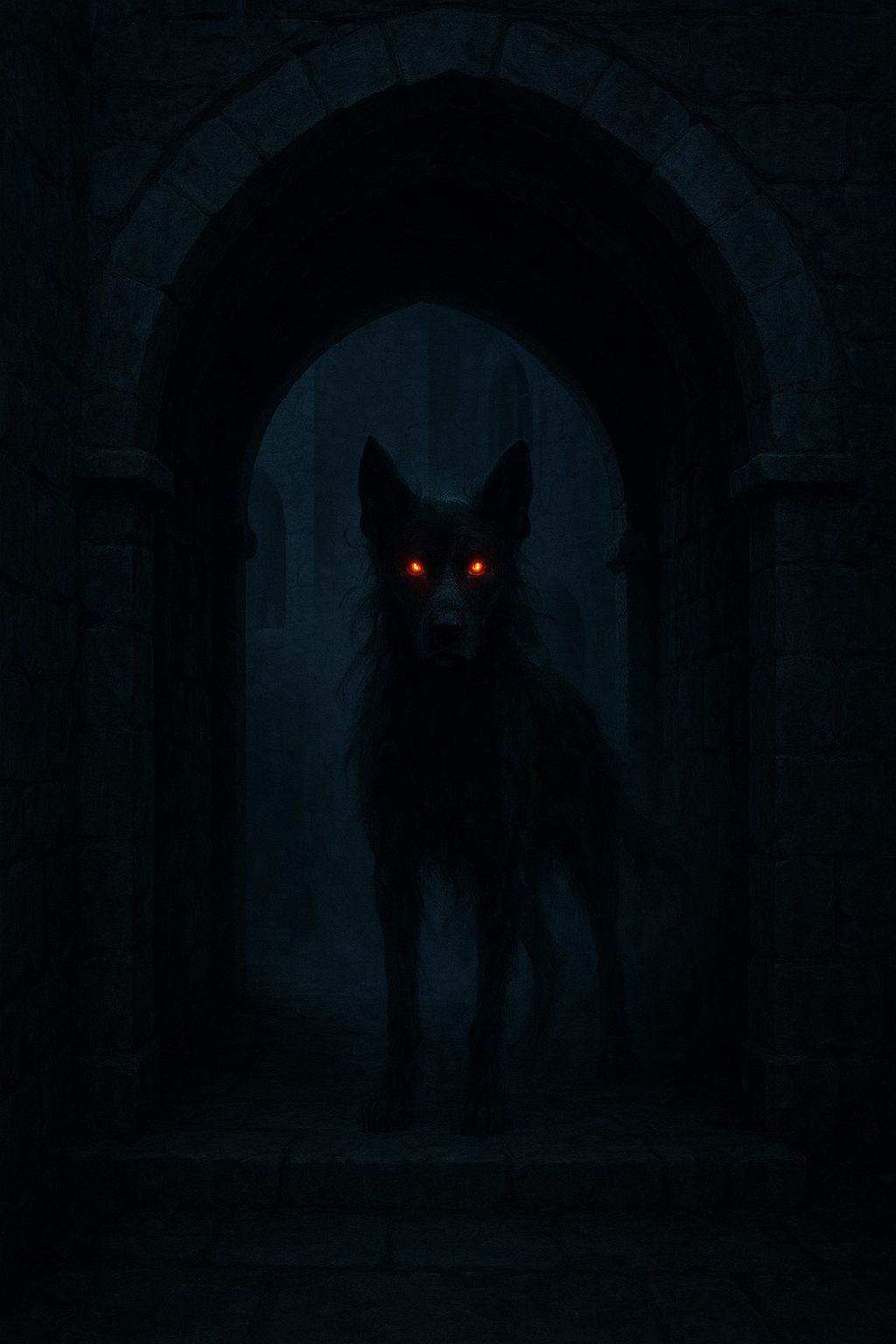
The fort’s four-legged celebrity is a black hound the size of a Great Dane but with the short haunches of an indigenous hunting dog. March and August are its favourite months - the same months that saw the 1713 smallpox avalanche and the 1766 mass execution of seven deserters. Tour guide Lindiwe Mnguni keeps a glass jar of dog biscuits on her desk; four have evaporated since 2008. Day-trippers should time their visit for the 11:00 cannon shot, then drift to the Dolphin Pool courtyard where Lady Anne Barnard’s silhouette occasionally skates across lime-wash. Ask the cashier for the “spook folder” - an A4 sheet, Afrikaans only, that lists 43 convicts buried beneath the parade ground in the 1700s. Reading the roll-call aloud is considered the height of bad manners.
Rust en Vreugd – bribes, gallows and a staircase that remembers dinner time
Built for a corrupt Dutch fiscal who accepted payment in cloves, porcelain and people, this 18th-century townhouse later served as a British court with the gallows conveniently parked across the road. Today it is an art museum, yet the real draw is acoustic: at 16:45 on most weekdays you can hear the prosecutor’s footsteps leave the yellow-wood stairs exactly when his workday ended two centuries ago.
Curator Willem van der Merwe archives anomalies in a separate visitor book. A 2011 sketch by a German backpacker shows an upstairs window; she returned the next morning to pencil in a second figure - a woman in Regency dress looking down. CCTV caught no intruder, but humidity in the corridor leapt 9 % at 03:12. Arrive at 15:30 and guards will usually let you wait in the vestibule until the invisible barrister clocks out; do not follow the sound upstairs - the planks are now armoured with steel after two enthusiasts crashed through rotten timber while chasing echoes.
Company’s Garden – almond petals and 1,400 nameless graves
Simon van der Stel’s original almond hedge still snows white blossoms every September, but under the modern rose beds lie the remains of 1,400 enslaved workers who died between 1658 and 1791. In 2014 a British tourist running a LIDAR phone app tracked a human heat-print strolling beside him for 37 m before it folded into nothing near the old slave bell.
The safe window for solo wanderers is 18:30–19:00, when sprinkler systems click on and office feet retreat. Stand on the octagonal cobbles facing the Anglican Cathedral; if you hear clay pipe tapping stone, turn 180° slowly - three witnesses have watched a 17th-century smoker knock ash from his heel before dissolving up Government Avenue. Entry is free; bring exact coins for the gate-side flower-seller. She keeps a stash of rue, the herb slaves once chewed to mask the smell of death, and will slip a sprig to anyone polite enough to ask.
III. Water & Light: Sentinels on the Peninsula
Simon’s Town Museum – a U-boat victim who refuses to hang straight
The 1777 drostdy still smells of powdered shell and thatch on humid days, but gallery 3 steals the show: a 1914 portrait of Petty Officer William John Julyan, first South African killed by a U-boat off Dassen Island. Night staff hear the canvas “click” as its stretcher contracts; on 31 October 2022 motion cameras caught the frame tilting 6° left between 02:13 and 02:15, seismographs silent.
Boots squelching down the corridor accompany low barometric pressure - common Simon’s Town winter weather. Curator Sibusiso Mzazi will lean a small mirror opposite the painting so you can shoot the reflection without breaking the no-flash rule. Since the mirror went up in 2018 the portrait has stayed plumb; legend says the glass traps any spirit trying to exit the frame.
Green Point Lighthouse – one-legged keeper still counting 93 steps
South Africa’s first lighthouse fired up on 12 April 1824; the candystripe tower gained an extra 7 m in 1865. Keeper George Edwin Honiball lost his left leg to a Great White in 1913 yet clocked 93 stairs nightly on a timber prosthesis. He died in the lamp room on 2 August 1930, gaze fixed on the mail ship Windsor Castle breaching the horizon.
Cleaners now refuse to enter when the south-easter tops 60 km/h - they claim the iron staircase echoes with the knock-wood-knock of a phantom limb climbing but never descending. Walk the sea-wall spiral at night and watch the red sector: four flashes instead of the regulation three supposedly signal Honiball’s warning to steer clear of the reef that took his leg. A long-exposure shot often captures an extra pulse of light invisible to the eye, like a Morse farewell tapped from salt and rust.
IV. Wheels & Words: Two Curated Ways to Let the City Speak Through You
Simon’s Town Ghost Walk – muscle memory over manuscript
No scripts allowed. Apprentice guides spend six months under a retired naval quartermaster learning Morse, knot lore and the 1899 rum-ration anthem before they’re permitted to open their mouths. The walk leaves the station at 18:30 (winter) or 19:00 (summer), covering 2.3 km of cobbled rise and fall. Pause at the mole where Black Maria, an escaped enslaved woman, walked into the sea rather than return to her owner; duck behind the Post Office to see a sailor’s 1901 cement signature that reappears every time the pavement is relaid.
Tickets are R250 via WhatsApp; reply comes as a single anchor emoji. Mid-tour you’ll be handed a cold 6-pound ball salvaged from the 1799 wreck of the Star - gripping the iron is said to prevent nausea if Maria’s ghost decides to tag along. The night ends at a quayside pub where the first round is included; order a “snoek and tears” cider brewed with kelp harvested from the rocks where Honiball’s leg washed up. Retell the story poorly and the barman will slide you a second pint “for courage.”
City Centre & Mystery Ghost Bus – electromagnetism on tap
If your feet have surrendered, climb the double-decker Mystery Ghost Bus at the V&A Waterfront every Friday at 19:00. Seats are assigned by stature - medium-build passengers occupy the middle rows where EMF readings explode. The five-hour loop glides through District Six, the Somerset Hospital morgue tunnel and the disused quarry at Table Mountain’s foot where lime-drenched slave bones still lie.
Onboard gear ranges from Soviet ghost-boxes that reverse-scan AM radio to a black mirror yanked from a 1947 shipwreck. The included thermos of “moer koffie” is sweetened with klipdagga, a mild Khoi narcotic once smoked to sharpen night vision. Record on airplane mode; past passengers have uploaded Dutch whispers such as “de klok draait” (“the clock turns”). You disembark at midnight; if your bones feel colder than the Atlantic, staff stamp your wrist with a phosphorescent anchor - the same symbol Honiball carried on his lighthouse key. Locals swear the glow fades only after you pass the tale to fresh ears, ensuring Cape Town’s dead perpetuate themselves one voice at a time.
V. Parting Whisper
Ghosts, like wind, prefer open windows. The sites above will not grab you by the ankle; they will simply keep breathing while you decide how much listening you can handle. Walk, ride, sip, record - but whatever you do, retell. Every story you repeat loosens the mortar of forgetting, and in a city built on layered graves, that is the closest thing to courtesy we can still offer the past.
[{"question": "What are the most haunted locations in Cape Town?", "answer": "Cape Town is rich with haunted history. Notable locations include the Castle of Good Hope, known for a bell that rings itself and a phantom hound; Rust en Vreugd, where spectral footsteps are heard; the Company's Garden, a resting place for thousands of forgotten souls; the Simon's Town Museum, home to a restless U-boat victim; and the Green Point Lighthouse, where a one-legged keeper's spirit is said to climb."},
{"question": "Why is Cape Town considered a haunted city?", "answer": "Cape Town's haunting reputation stems from its tumultuous past. Established in 1652, it experienced centuries of conflict, disease, forced removals, and mass graves. This history has led many to believe that the city is built upon layers of sorrow, making it a place where the veil between the living and the dead is often thin. Locals often joke that you can't dig without unearthing untold stories."},
{"question": "What supernatural phenomena have been reported at the Castle of Good Hope?", "answer": "At the Castle of Good Hope, staff report that the Kat Tower bell, whose rope disintegrated in 1878, still clangs at 02:00. A black hound the size of a Great Dane is also seen, particularly in March and August, coinciding with historical events of smallpox and executions. Lady Anne Barnard's silhouette is also occasionally spotted in the Dolphin Pool courtyard."},
{"question": "Can visitors experience a guided ghost tour in Cape Town?", "answer": "Yes, visitors can choose between two main guided experiences. The Simon's Town Ghost Walk offers a 2.3 km historical journey led by guides trained in local lore, including stories of an escaped enslaved woman and a sailor's recurring signature. For a less strenuous option, the Mystery Ghost Bus departs from the V&A Waterfront, offering a five-hour loop through various haunted sites with paranormal equipment and local remedies for courage."},
{"question": "What makes the Company's Garden a significant haunted site?", "answer": "Beneath the modern rose beds of the Company's Garden lie the remains of 1,400 enslaved workers who died between 1658 and 1791. Visitors have reported sensing a human heat-print and hearing the sound of a clay pipe tapping stone, with some witnessing a 17th-century smoker dissolve into thin air. The garden's history as a place of immense suffering contributes to its eerie atmosphere."},
{"question": "Are there any specific times to visit these haunted locations for a better experience?", "answer": "For the Castle of Good Hope, consider visiting during the 11:00 cannon shot and then exploring, asking for the 'spook folder'. At Rust en Vreugd, arrive around 15:30 to potentially hear the prosecutor's footsteps. The Company's Garden is best explored between 18:30 and 19:00 when sprinklers activate and crowds thin. For the Simon's Town Museum, low barometric pressure days might increase activity. The Simon's Town Ghost Walk starts at 18:30 (winter) or 19:00 (summer), and the Mystery Ghost Bus departs at 19:00 on Fridays."}]

Hannah Kriel is a Cape Town-born journalist who chronicles the city’s evolving food scene—from Bo-Kaap spice routes to Constantia vineyards—for local and international outlets. When she’s not interviewing chefs or tracking the harvest on her grandparents’ Stellenbosch farm, you’ll find her surfing the Atlantic breaks she first rode as a schoolgirl.
View all articles →