
Tickets for the Proteas vs England Test at Newlands sold out
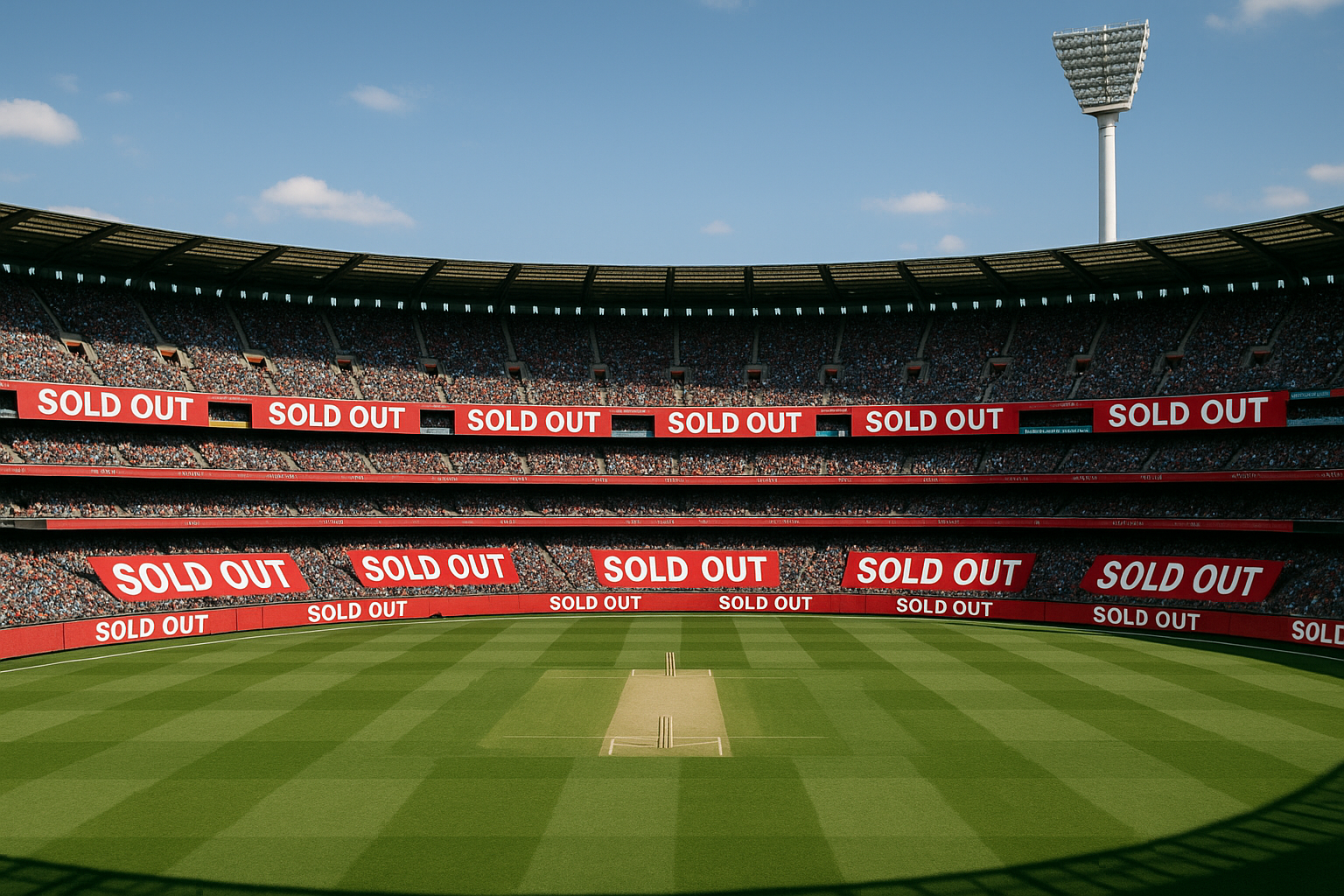
Demand, distribution, and discontent: South Africa's New Year's Test tickets sparked a storm, selling out in minutes before public launch.
The 2027 Newlands Test match tickets caused a huge outcry. They sold out in just nine minutes, before most fans even had a chance to buy them. This happened because companies, tour groups, and secret "platinum" links bought up most of the tickets first. Regular fans were left with few options, facing website problems and seeing tickets resold for crazy high prices. Many felt cheated and betrayed, as a beloved summer tradition was taken away from them.
Why was there outrage over the 2027 Newlands Test match tickets?
Outrage erupted because the highly anticipated 2027 Newlands Test match tickets sold out in minutes, largely due to corporate hospitality, tour operators, and unadvertised "platinum" links. This left only a small fraction for the general public, who faced technical glitches and found tickets resold at exorbitant prices, sparking widespread accusations of unfairness and betrayal.
Get Cape Town news in your inbox
Stay updated with the latest stories from the Mother City.
1. A Canvas of Oak Trees, Brass Bands and Disappearing Seats
Just after 10 a.m. on 3 January 2027, the morning sun will creep past Devil’s Peak and spill across the emerald carpet at Newlands. Marco Jansen will pound the wicket from the Wynberg End while England’s openers squint into a strip that starts spicy and finishes dusty. A brass band will blast “Dala what you must” between overs, Table Mountain will blush mauve at dusk, and more than 22 000 holiday-makers will fuse into the low-frequency hum that broadcasters bottle for highlight reels.
For twenty years that postcard moment has doubled as the most sought-after festive ticket below the equator. Families plan December reunions around it, students camp in digital queues, and grandparents recite 1950s scorecards under the oaks. The 2027 edition, pitting the newly crowned World Test champions against an England side fresh from a 3-Ashes-series roll, was supposed to be the most vibrant chapter yet.
Instead, the only thing that arrived on schedule was outrage. Before a single over was bowled, every grandstand seat had evaporated - gone in the time it takes to play a T20 power-play - leaving local supporters staring at crimson “unavailable” banners and foreign scalpers counting profits in pounds, rupees and crypto.
2. The Countdown That Collapsed Before It Started
Cricket South Africa’s communications team promised “a transparent, fan-first release” at 09:30 sharp on 7 December. A 21-page policy paper even itemised the choreography: five minutes of server warm-up, randomised queues, and a built-in delay before “sold-out” tags could appear. None of it materialised.
By 09:17 - thirteen minutes before the advertised whistle - red blocks blanketed the seat map. Refresh buttons produced only spinning wheels, followed by a polite thank-you banner for “unprecedented enthusiasm.” At 09:34 the federation’s social feed copied the same line, confirming the show was over before the curtain rose.
Inside TicketPro’s engine room, three invisible siphons had already done their work: corporate hospitality swallowed 6 100 places (28 % of the bowl), overseas tour operators locked in 4 500 more, and a phantom “platinum” link - never advertised to civilians - released another 4 600. Bots scraped the residue, leaving roughly 1 400 seats to enter the public queue at 09:30. They vanished in milliseconds, like a single layer of dew under a Sahara sunrise.
3. Pipe Dreams, Proxy Servers and a R5 000 Seat Versus Minimum Wage
Within four minutes, Viagogo hosted its first listing: a R595 Old Stand ticket for day three flipped at £156 plus fees - roughly R3 800. By 10:15 the median ask for a shaded day-one seat had topped R5 900, more than South Africa’s monthly minimum wage of R4 840. Screenshots of that comparison ricocheted across WhatsApp, igniting a visceral cry of betrayal.
A 26-year-old Athlone postgraduate, Nabeelah, had saved six months to celebrate her father’s 60th birthday on day four. “When the clock hit 09:30 the page froze,” she said in a voice note. “My dad told me we’ll listen on the radio like when I was eight. I cried in the kitchen.” A 21-year-old student’s TikTok clip showed the queue counter leap from 18 000 to 140 000 in ten seconds; 1.8 million views and a petition titled “CSA Give SA Fans a Fair Deal” followed before sunset.
Across the Atlantic, a Gatwick-based syndicate tunnelled through South African proxy servers and defeated Captcha farms, bagging 2 100 seats in seven minutes. The latency gap - 120 milliseconds between Constantia fibre and a London VPS - let algorithms finish five purchases while humans still watched spinning wheels. The result: a thriving bazaar built on hometown heartbreak.
4. Empty Promises, Global Fixes, and the Grass-Bank Last Stand
Cricket South Africa’s commercial director, Handré van der Merwe, blamed “offshore demand from expats” for the fiasco, yet leaked memos show CSA had budgeted for a geo-fence that TicketPro quietly disabled over GDPR fears. Viagogo hid behind the usual “third-party sellers” disclaimer, while CSA’s own wristbands carry an unenforceable “do not resell above face value” clause.
Other boards have experimented with solutions: the FA’s Euro 2028 ballot, Cricket Australia’s ID-tether launched after the 2021 Melbourne Ashes mess, and a dynamic-pricing mesh used at the 2026 Boxing Day Test that released 1 500 concession tickets every hour while raising top-tier prices gradually. CSA executives toured Melbourne, admired the model, then shelved it for “IT complexity.”
Roughly 9 000 grass-bank berths at R180 each remained unsold by 17:30, but January gales and 38 °C swings make them a lottery. Still, for many Capetonians that sloped embankment is democracy’s last stand - where padkos, R45 beers and family blankets trump corporate canapés. Whether it will be enough to keep the mountain’s signature kaleidoscope of umbrellas and chants alive for broadcast is the question haunting SuperSport’s $68 million investment - and the 2 000 protesters planning to march on 27 December under the banner #LocalQueue.
Unless CSA fast-tracks Fan-ID tethering, local quotas or Dutch-auction drops, the 2027 New Year’s Test risks being remembered not for a classic duel between bat and ball, but for 900 seconds that stole a summer ritual from the very citizens who painted it iconic.
What caused the outrage over the 2027 Newlands Test match tickets?
Outrage erupted because the highly anticipated 2027 Newlands Test match tickets sold out in just nine minutes, largely due to corporate hospitality, tour operators, and unadvertised "platinum" links. This left only a small fraction for the general public, who faced technical glitches and found tickets resold at exorbitant prices, sparking widespread accusations of unfairness and betrayal.
Why is the Newlands Test match considered such a significant summer tradition in South Africa?
The Newlands Test match is a cherished summer tradition, often described as the most sought-after festive ticket below the equator. Families plan reunions around it, students queue digitally, and grandparents share memories under the iconic oak trees. It's known for its vibrant atmosphere, with brass bands, Table Mountain as a backdrop, and 22,000 holiday-makers creating a unique 'low-frequency hum' that is integral to the experience.
How did the ticket sales process deviate from Cricket South Africa's promised 'transparent, fan-first release'?
Cricket South Africa (CSA) had promised a transparent, fan-first release at 09:30 on 7 December, with a 21-page policy detailing server warm-ups, randomised queues, and delayed 'sold-out' tags. However, tickets were shown as 'unavailable' even before the advertised release time, with the system confirming a sell-out by 09:34. This was due to 28% of tickets going to corporate hospitality, another large portion to overseas tour operators, and 4,600 tickets released via a secret 'platinum' link, leaving only 1,400 seats for the public queue which vanished instantly.
What impact did the rapid sell-out and resale market have on ordinary fans?
The rapid sell-out had a devastating impact on ordinary fans. Many, like Nabeelah who had saved for six months to celebrate her father's birthday, found the website frozen at the release time and were left heartbroken. Tickets were immediately resold on platforms like Viagogo for exorbitant prices, with some shaded day-one seats reaching over R5,900 – more than South Africa's monthly minimum wage of R4,840. This created a feeling of betrayal and exclusion among local supporters.
What role did technology and international syndicates play in the ticket fiasco?
Technology played a significant role, not in favour of the local fans. International syndicates, particularly one based in Gatwick, used South African proxy servers and Captcha farms to bypass security and purchase a large number of tickets (2,100 seats in seven minutes). The latency gap between local connections and London-based virtual private servers allowed these algorithms to complete multiple purchases before human users could even process the page, effectively creating a 'thriving bazaar built on hometown heartbreak.'
What solutions have other cricket boards implemented for similar ticketing issues, and what is CSA's stance?
Other cricket boards have explored various solutions. The FA used a ballot system for Euro 2028, and Cricket Australia implemented an ID-tether system after the 2021 Melbourne Ashes mess. The 2026 Boxing Day Test used a dynamic-pricing mesh, releasing concession tickets hourly while gradually increasing top-tier prices. Despite CSA executives admiring the Australian model, they shelved it due to 'IT complexity.' This lack of action has led to calls for CSA to fast-track Fan-ID tethering, local quotas, or Dutch-auction drops to prevent a repeat of the 2027 ticketing disaster.

Liam Fortuin is a Cape Town journalist whose reporting on the city’s evolving food culture—from township kitchens to wine-land farms—captures the flavours and stories of South Africa’s many kitchens. Raised in Bo-Kaap, he still starts Saturday mornings hunting koesisters at family stalls on Wale Street, a ritual that feeds both his palate and his notebook.
View all articles →