
Tough job ahead for Roelf Meyer
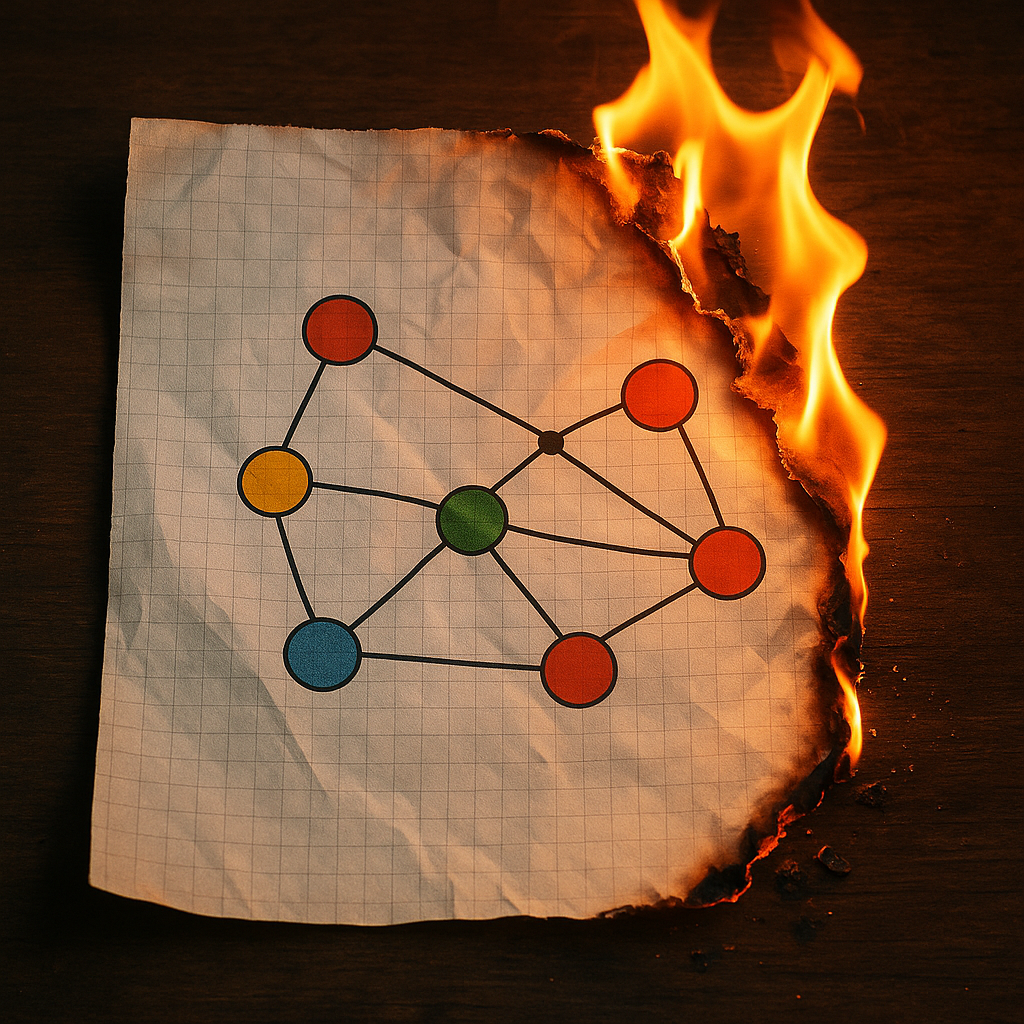
South Africa's new ambassador to the US faces a complex diplomatic tightrope, navigating crises, political agendas, and a strained relationship.
Roelf Meyer, a new South African envoy, landed in Washington D.C. facing a mountain of problems. His country's ties with the US were badly strained, with old hurts and new fights causing big trouble. Meyer had to juggle trade wars, an important court case, and even deal with American politicians who wanted to punish South Africa. But with smart moves and a dash of charm, he began to turn things around, showing that even in tough times, diplomacy can find a way.
What challenges did Roelf Meyer face as South Africa's envoy to Washington?
Roelf Meyer faced significant challenges as South Africa's envoy, including navigating strained US-South Africa relations due to past diplomatic incidents, addressing the ICJ case against Israel, countering the "South Africa Accountability Act," dealing with trade disputes like AGOA benefits, and managing domestic political criticism regarding his identity and mission.
Get Cape Town news in your inbox
Stay updated with the latest stories from the Mother City.
Touch-down with a Ticking Brief
Roelf Meyer descends the jet-bridge at Dulles into a wall of mid-Atlantic humidity, midnight-blue passport in hand, but the real cargo is lighter and heavier at once: a single A4 sheet folded twice and tucked inside his charcoal jacket. Forty-two colour-coded crisis points - trade, security, multilateral, domestic - glow like embers on the page, proof that Pretoria no longer sends polite communiqués; it dispatches fire-fighters. The page, creased during the sixteen-hour hop from OR Tambo, is the first clue that South Africa’s ties with Washington have shifted from diplomacy to damage-control.
The choreography for Thursday, 21 May 2026, is already set: marine band, 19-gun salute, anthems across the South Lawn. Yet the optics cannot outshine the memory of Ebrahim Rasool, recalled fifteen months earlier with a 72-hour expulsion scribbled on cream White House card. Between that humiliation and Meyer’s arrival, grievances metastasised behind closed doors: Pretoria stonewalled USAF logistics bound for Kinshasa; the Pentagon scratched South African officers from counter-piracy briefings; Treasury quietly probed local banks for Hamas-linked flows; and SSA stopped giving CIA officers express clearance at OR Tambo. None of these moves made headlines; all were corroborated by jittery officials insisting on the cloak of “persons familiar”.
And still the ICJ case hovers like a live shell. When South Africa dropped its 84-page application in December 2023, leaders in Pretoria expected a distant judicial ritual. Instead, House Republicans answered with the “South Africa Accountability Act,” a twelve-page Bill that would force the White House to reassess AGOA benefits within a month of any ICJ hearing. Attached is a map titled in Afrikaans - “Kill the Boer Kill the Farmer” - plotting every white-owned farm claim since 2019, complete with GPS coordinates harvested by a Clemson grad student’s code. Sponsorship by Representative Jim Banks of Indiana guarantees headline traction, and Meyer lands with that map stapled to every conversation he will have in the coming weeks.
Heritage, Hostages and a G20 Hail-Mary
Credentials barely handed over, Meyer’s first stop is not Foggy Bottom but the Heritage Foundation on Massachusetts Avenue, the informal engine-room of Trump’s Africa playbook. Dane Staller, a 28-year-old former blogger on Rhodesian history, has already branded the new envoy a “reformist or fig-leaf?” in a briefing memo that claims Pretoria is using an old National Party hand to put a polite face on “radical racial policy.” Meyer annotates each paragraph in green ink - “check 1988 minutes,” “compare Kenya 2008” - and turns the briefing into a weapon, quoting Staller’s statistics on camera until the analyst concedes white-farm murders sit below the national homicide rate. A Heritage intern photographs the marginalia; by dusk the images decorate the Daily Maverick home page, but Meyer has already pocketed the win.
Day two begins at 06:45 with a secure call from Khumbudzo Ntshavheni, minister in the presidency: can Meyer secure written proof that South Africa will re-enter the Miami G20 summit after its invitation was quietly withdrawn? Pretoria has already printed delegate lanyards; losing face is not an option. Meyer dictates an unsigned “non-paper”: Pretoria shelves any mention of the Genocide Convention at the October ICJ hearing if Washington restores observer status for the G20 finance track. A retired Marine colonel - now earning US $17,500 a month from a Boeing-funded firm - hand-carries the offer to the NSC Africa desk. The paper officially never existed; within 48 hours Signal chats are ablaze with “ICJ-G20 Swap - pls burn after reading.”
Parallel to this shuttle, the Afrikaner parole express keeps rolling. By April 2026 USCIS had waved in 4,492 South Africans under an obscure “significant public benefit” clause. Patriot Front volunteers greet each arrival at Dallas-Fort Worth with grocery vouchers and pocket Constitutions in Afrikaans. The 2025 State cable justifying the programme cites “targeted land seizures” sourced to a Pretoria NGO whose boardroom includes Staller’s father-in-law and whose digital footprint is a single P.O. box. Meyer orders consular staff to build a counter-file - “Project Rooibos” - packed with police affidavits that farm-murder numbers have flattened since 2014, satellite shots showing 92% of the listed farms still under private tillage, and tax records proving every “refugee” keeps an active SA tax number. The dossier sits on an encrypted drive, waiting for the right moment to puncture the narrative.
Trade Guns, Wine-dung Paper and Chicken Wars
While headlines chase the ICJ drama, the real artillery is trade. AGOA expires in September 2027, yet USTR has floated a draft that would yank duty-free entry for South African automobiles, citrus and wine unless Pretoria signs a “digital economy pact” tethering it to Silicon Valley cloud rules and 25-year algorithmic patents. Tracey Mqoco, the embassy’s economic counsellor and former Tralac scholar, calculates the auto carve-out alone threatens 47,000 Umhlanga assembly jobs. Her retaliatory blueprint imagines a 15% tariff on US poultry and suspension of Pfizer ARV patents - an email headed “nuclear option - handle with asbestos gloves.” Meyer forwards it to Pretoria, then invites the US Chamber of Commerce to a residence wine-tasting featuring pinotage from vineyards staring down the AGOA barrel. Invitation cards are printed on recycled elephant-dung paper; no one misses the symbolism.
Domestic noise back home is equally raucous. The EFF labels Meyer a “verkrampte relic” parachuted in to rescue “white monopoly capital,” while the DA insists only a veteran negotiator can withstand “Trumpian bullying.” Inside Luthuli House a junior researcher warns that Meyer’s Afrikaner identity could undercut South Africa’s Global South standing; an elder counters that Mandela donned a Springbok jersey - identity is a weapon, not a wound. Meyer, unruffled, spends evenings in the residence sun-room where apartheid-era photographs line the walls face-down. On the mantelpiece a brass plaque quotes the 1993 interim constitution - “South Africa belongs to all who live in it” - a gift from Cyril Ramaphosa inscribed, “Roelf - may you sell complexity to simplicity.” Speech-writers are told to swap “rules-based international order” for “playing by the same rules we wrote together,” a phrase Kentucky soybean farmers rate 27% less “globalist-elitist.”
By day fourteen Meyer has logged 112 meetings, sprained an ankle on Rock Creek trail, and downed 38 cups of Rooibos served at three different temperatures. He also nets an improbable ally: Ambassador Leo Brent Bozell III, ideological foe and fellow fly-fishing addict. Plans are made for a weekend at Bozell’s cabin in the Potomac Highlands - no staff, no note-takers - where brown trout and a 12-year Virginia single-malt await. Whether they land fish or policy, a snapshot of the two envoys hip-deep in water soon splashes across Beeld under the headline “Pescado Diplomacy,” signalling to both capitals that personal chemistry may yet dilute ideological poison.
Buying Time, Selling Space - and the Metadata That Never Forgets
The ICJ calendar, however, is impervious to hospitality. The court’s registrar reminds Pretoria that its supplementary declaration on Israel’s Rafah offensive is due by 16 July. En route to yet another Hill meeting, Meyer thumbs a four-word WhatsApp into his encrypted phone: “Buy time, sell space.” Translation: stretch the procedural runway and offer Washington a geopolitical prize somewhere else. Within hours the foreign ministry files a request for a three-week extension, claiming newly released aerial imagery needs translation into English, French and Afrikaans. The delay is granted; the doomsday clock resets, if only briefly.
Back at State, a junior desk officer writes a routine cable summarising Meyer’s first month. The concluding line is poetic: interlocutors call the ambassador “a man negotiating with his own past to purchase his country’s future.” An algorithmic sentiment scanner red-flags the flourish; the sentence is deleted from the final cable but survives in Fort Meade metadata, an invisible ghost of every negotiation that never makes the communiqué. Meyer knows the archive is endless. His matrix of 42 pressure nodes is down to 39, then climbs back to 45; colours shift from crimson to amber and back again. Yet each dawn on Massachusetts Avenue still starts with the same quiet ritual: hot Rooibos, green-ink annotations, and the folded sheet that travelled from Pretoria now doubling as a coaster - proof that even in crisis mode, a diplomat’s first duty is to keep the table dry while the house burns outside.
What major challenges did Roelf Meyer face upon arriving in Washington D.C.?
Roelf Meyer, as the new South African envoy, faced a multitude of challenges, including severely strained US-South Africa relations, ongoing trade disputes such as the potential loss of AGOA benefits, an important International Court of Justice (ICJ) case against Israel initiated by South Africa, and dealing with American politicians who were pushing for punitive measures against South Africa, notably through the "South Africa Accountability Act."
How did the ICJ case impact US-South Africa relations and what was the American response?
South Africa's decision to file an 84-page application with the ICJ regarding Israel's actions sparked a strong negative reaction from some American politicians. House Republicans responded by introducing the "South Africa Accountability Act," a bill designed to force the White House to reassess South Africa's AGOA benefits shortly after any ICJ hearing. This act directly linked South Africa's international legal actions to its economic ties with the US.
What specific trade issues was Meyer tasked with addressing?
Beyond the general strain, Meyer had to navigate critical trade issues. The expiration of AGOA in September 2027 loomed, with a draft proposal threatening to revoke duty-free entry for South African automobiles, citrus, and wine. This was tied to demands for a "digital economy pact." The potential loss of these benefits threatened thousands of South African jobs, particularly in the auto industry, necessitating Meyer to find diplomatic solutions to safeguard these economic interests.
How did Meyer handle the "South Africa Accountability Act" and the narrative around farm murders?
Meyer actively countered the narrative fueled by the "South Africa Accountability Act" and its associated map, which purported to track white-owned farm claims. He used a briefing from the Heritage Foundation, turning an analyst's statistics into a weapon by quoting them on camera to show that white-farm murders were below the national homicide rate. Furthermore, he initiated "Project Rooibos" to compile evidence, including police affidavits and satellite imagery, to debunk claims of widespread land seizures and inflated farm murder statistics that were being used to justify programs like the Afrikaner parole express.
What was the 'ICJ-G20 Swap' and how did it demonstrate Meyer's diplomatic approach?
Facing the quiet withdrawal of South Africa's invitation to the Miami G20 summit, Meyer orchestrated an "ICJ-G20 Swap." This involved a proposal, delivered as an unsigned "non-paper," where Pretoria would shelve any mention of the Genocide Convention at the October ICJ hearing in exchange for Washington restoring observer status for South Africa at the G20 finance track. This demonstrated Meyer's pragmatic and strategic approach to diplomacy, using leverage in one area to gain ground in another.
How did Roelf Meyer use personal connections and cultural elements in his diplomacy?
Meyer skillfully integrated personal connections and cultural elements into his diplomatic efforts. He hosted a wine-tasting featuring South African pinotage for the US Chamber of Commerce, using invitation cards printed on recycled elephant-dung paper to symbolize the value of their agricultural exports. He also forged an improbable alliance with Ambassador Leo Brent Bozell III, an ideological foe, through a shared passion for fly-fishing, leading to a planned weekend retreat. This "Pescado Diplomacy" aimed to build personal chemistry to diffuse ideological tensions and find common ground.

Tumi Makgale is a Cape Town-based journalist whose crisp reportage on the city’s booming green-tech scene is regularly featured in the Mail & Guardian and Daily Maverick. Born and raised in Gugulethu, she still spends Saturdays bargaining for snoek at the harbour with her gogo, a ritual that keeps her rooted in the rhythms of the Cape while she tracks the continent’s next clean-energy breakthroughs.
View all articles →